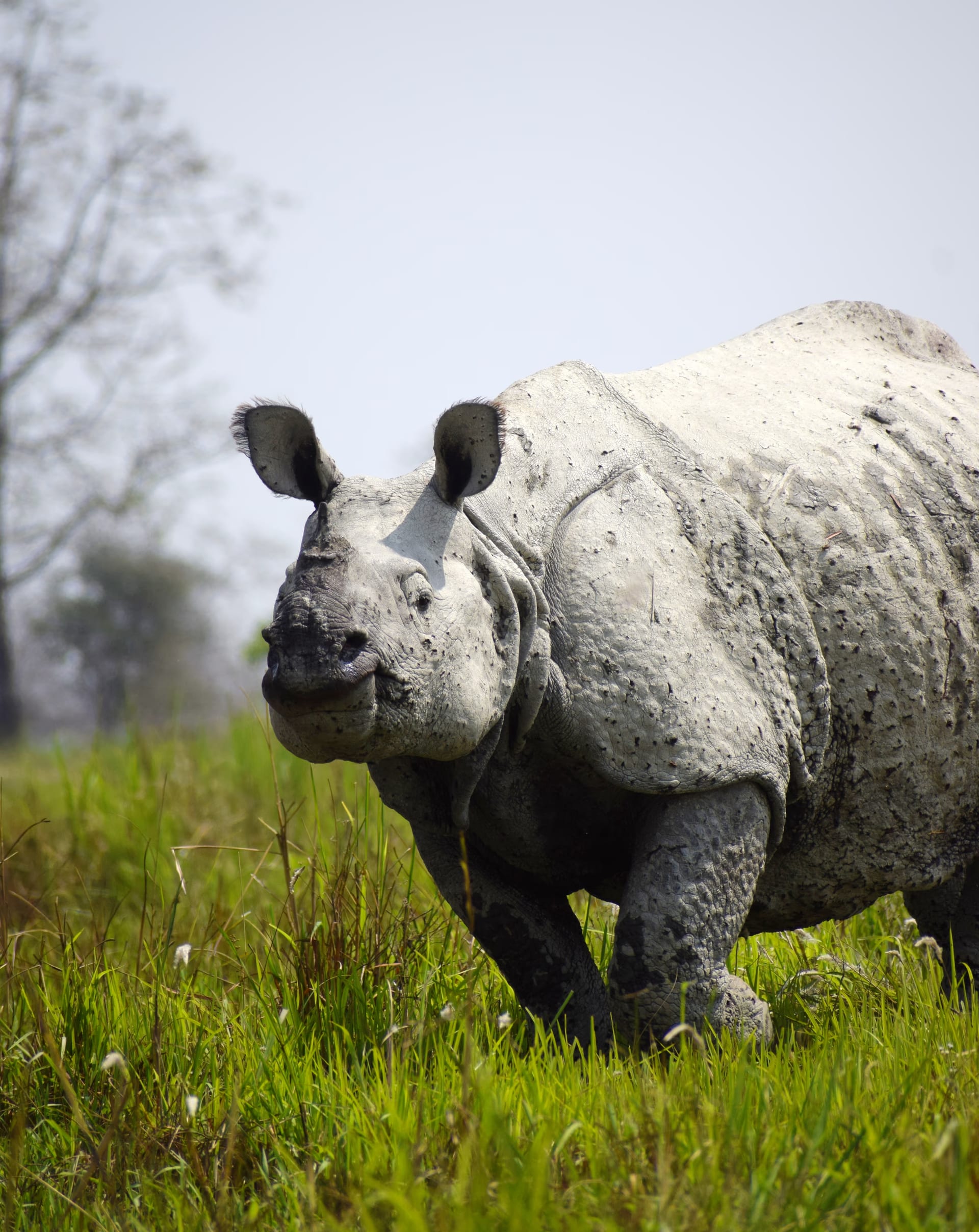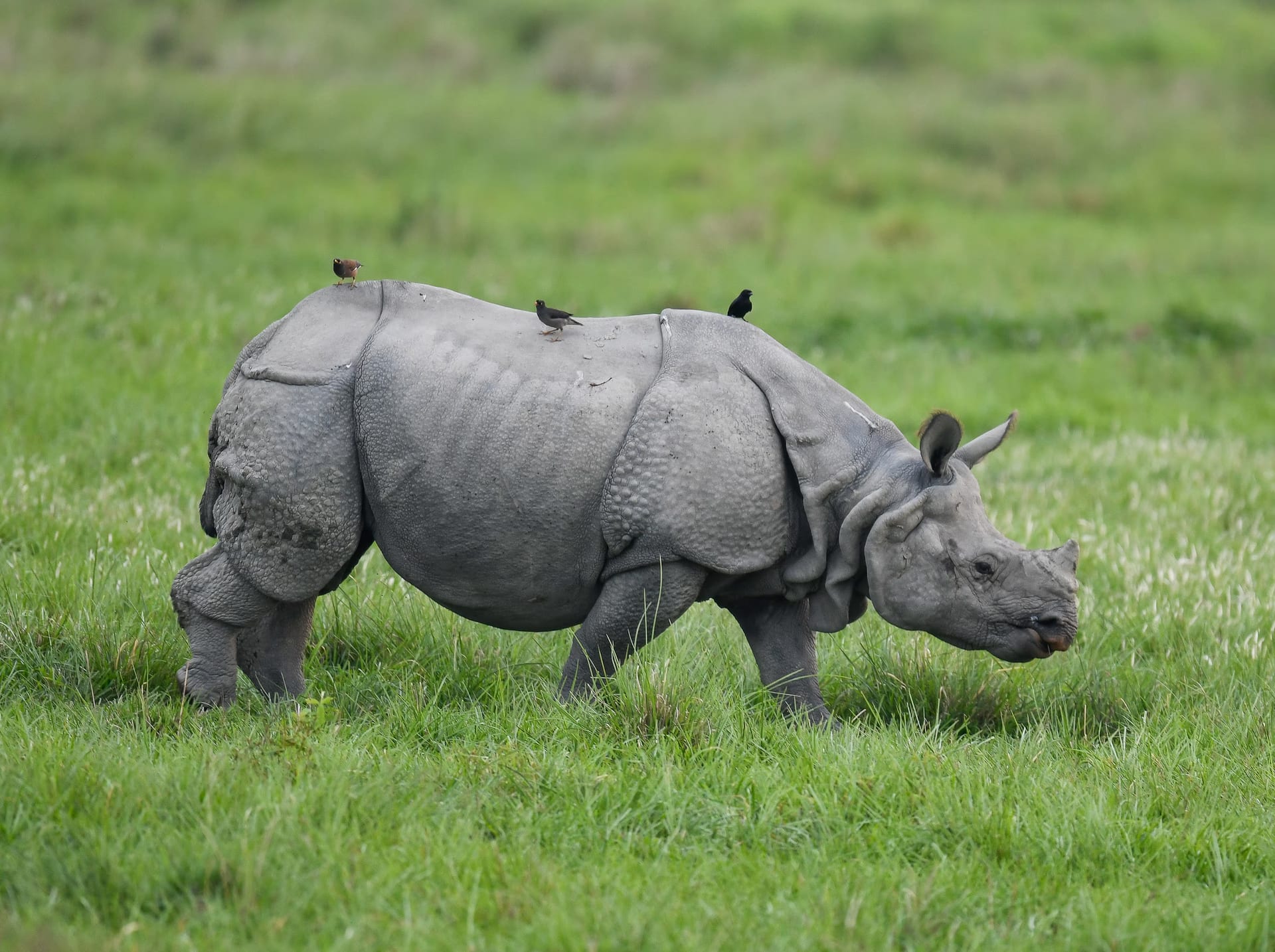
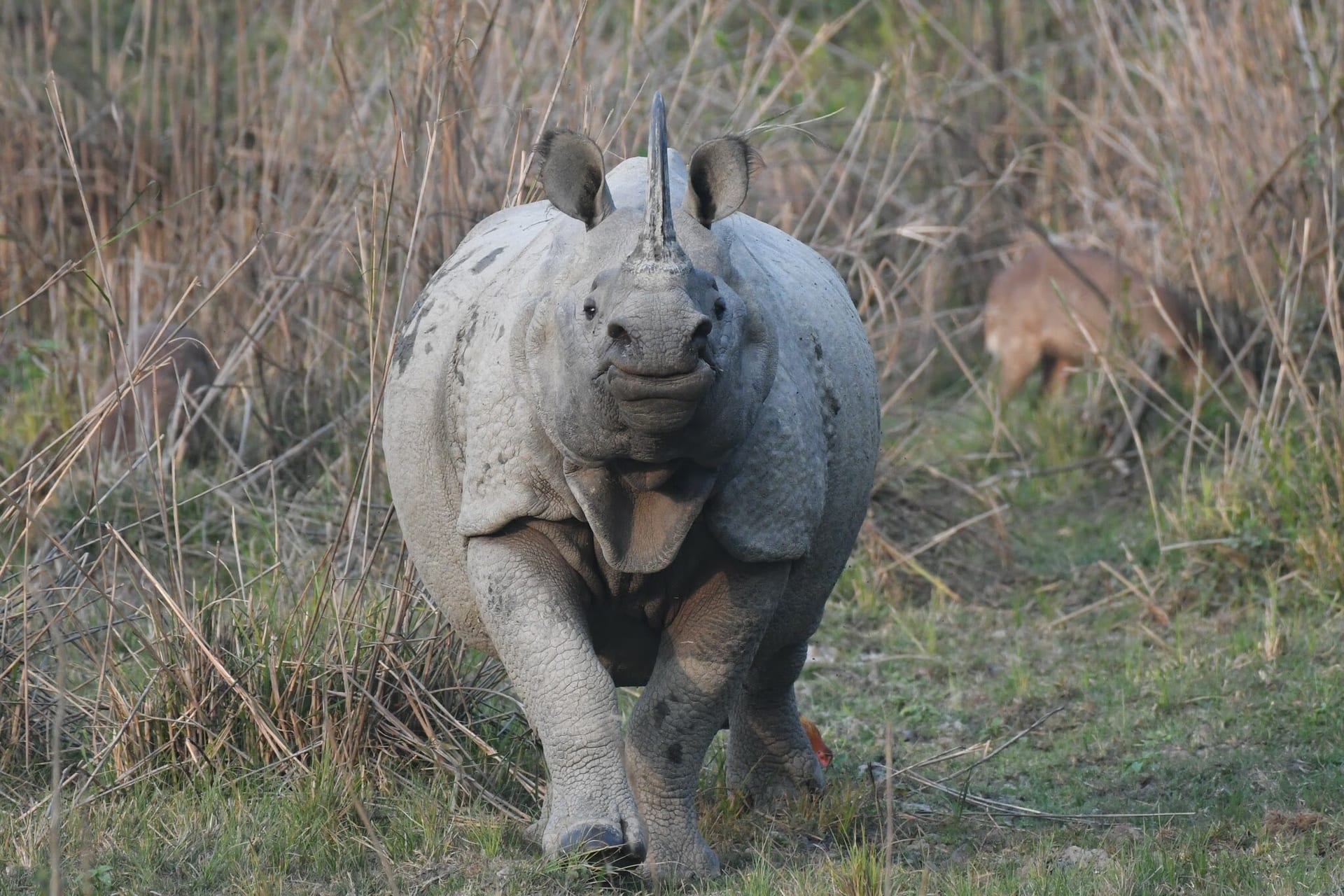
The greater one-horned rhinoceros looks like something that wandered in from a deeper, older age of the earth. It carries two tonnes of armoured grey hide, folded like riveted plate over its shoulders and haunches, a single blunt horn, and small, short-sighted eyes. It once roamed the whole northern plain of the subcontinent, from the Indus across to the Brahmaputra. By the start of the twentieth century it had been hunted down to a scatter of survivors, perhaps only a hundred or two in all the world. That the animal still exists at all is, more than anywhere else, the story of one flooded grassland on the river: Kaziranga.
An animal out of the deep past
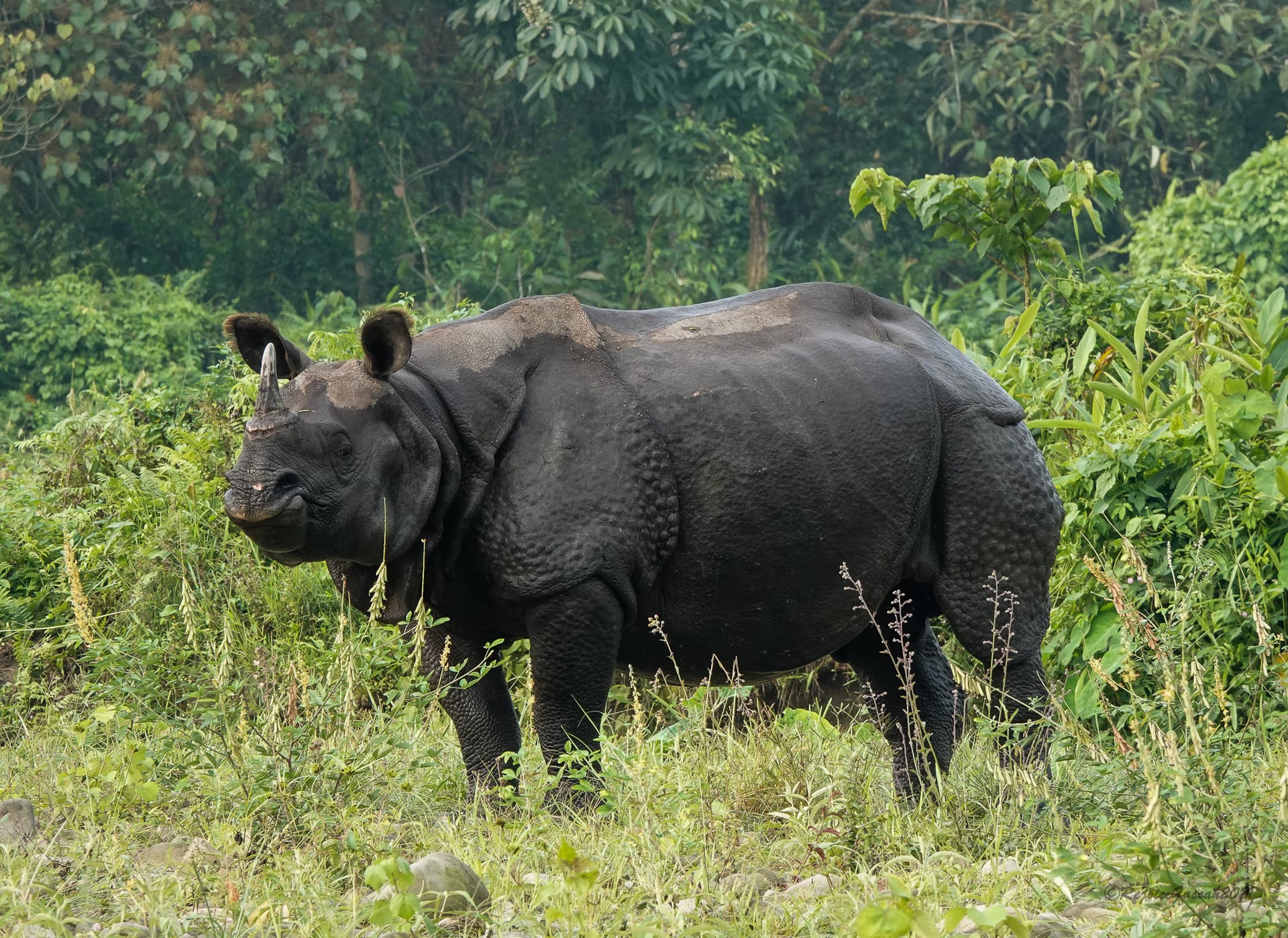
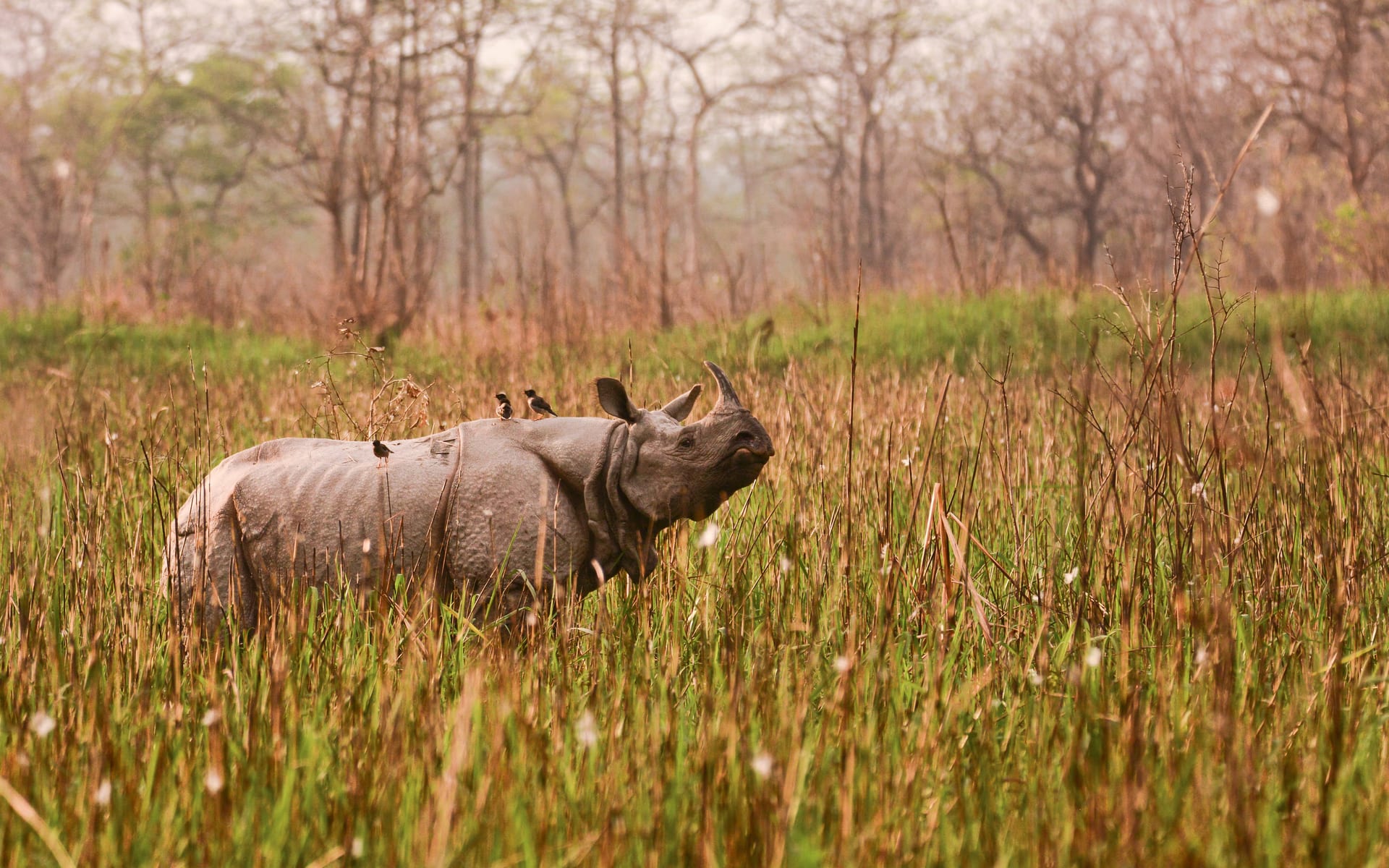
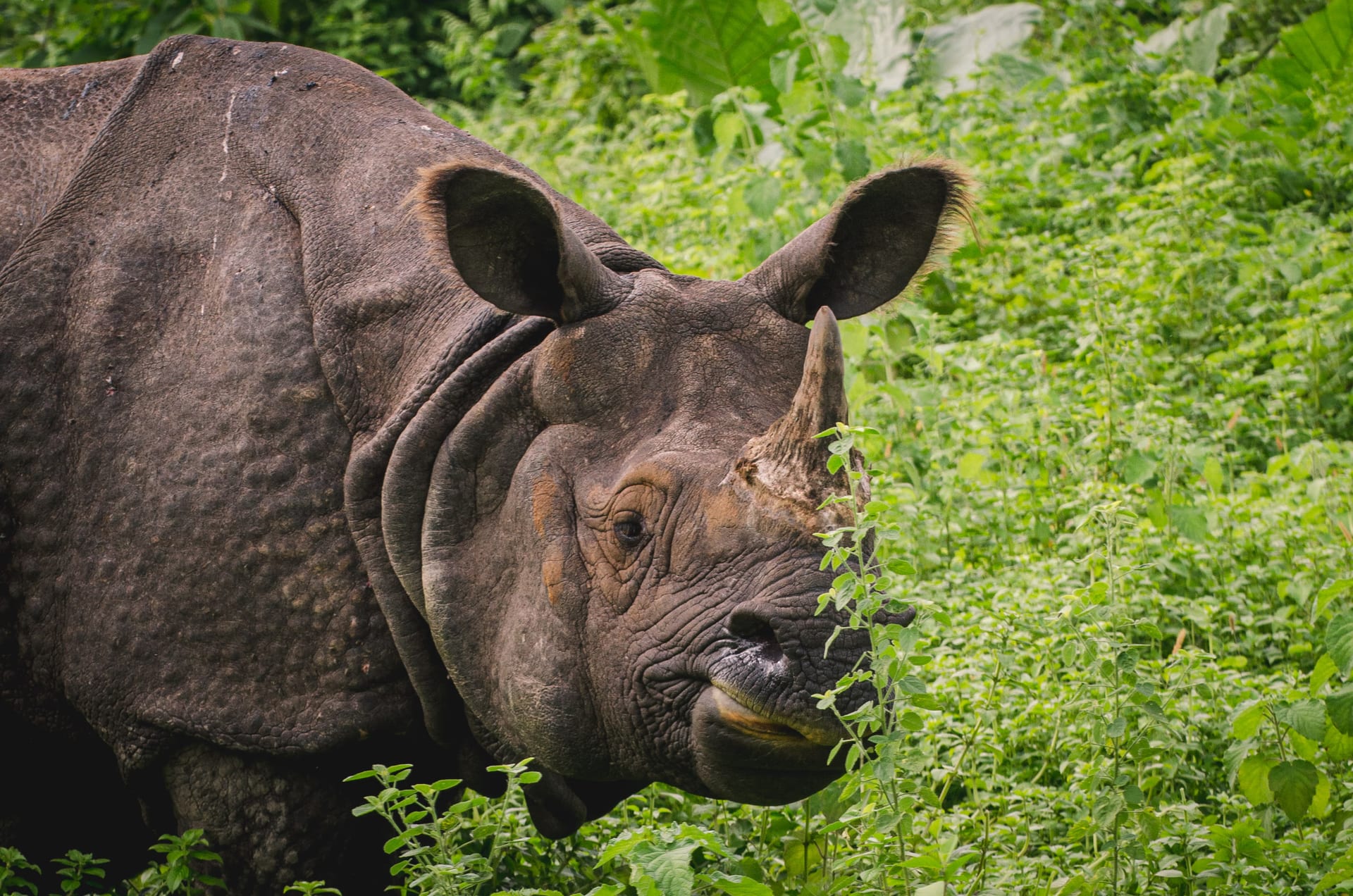
Rhinoceros unicornis is not literally a relic, but it wears its antiquity like armour. The hide hangs in great plated folds studded with rivet-like bumps, so that the animal seems buckled into a suit of grey iron. The single horn is not bone but keratin, the same stuff as hair and nail, growing straight from the skin. A bull can weigh well over two tonnes, the largest of all the rhinos of Asia. For all its bulk it can wheel and charge through grass and water at a speed that would run down a man. It is a grazer of the tall floodplain, a wallower in mud and warm water, solitary and short-tempered. The wet alluvial plain of the Brahmaputra is the country that grew it, and grew it once in great numbers, until the land itself began to vanish under the plough and the animal under the gun.

The vanishing
For most of recorded history the rhino ranged the length of the northern plains, along the Indus, the Ganga and the Brahmaputra. The Mughal emperor Babur, by his own account, hunted it in the country beyond the Indus. It lived across Bengal, the Nepal terai, and the whole Brahmaputra valley. Then, across the nineteenth century, two forces closed on it together. The wetlands and grasslands it needed were drained and cleared for farmland. In upper Assam they were cleared for the new colonial tea estates, which ate the very grassland the animal depended on. And the rhino itself was shot without mercy, as sport, as a crop-raiding pest, and above all for the horn.
By about 1900 the greater one-horned rhino had been wiped out of almost its entire range. What survived was a scatter of remnants in Assam and the Nepal terai, on the order of a hundred or two animals in total. The species that had once darkened the northern plains now stood within sight of joining the things that do not come back. It had run out of country, and it was nearly out of time.
A vicereine’s disappointment
The founding moment is almost too neat to be true, and yet it is broadly true. In 1904 Mary Curzon, wife of the Viceroy of India, came to the Kaziranga country. It was famous for the rhinoceros of Assam, the beast every visitor spoke of, and she came to see it for herself. She searched, and she could not find a single one. There were so few left that the great spectacle had simply gone.
Troubled by what that absence meant, she pressed her husband to act. Out of one disappointed visit grew a proposed reserve forest, notified on the first of June 1905 over some two hundred and thirty square kilometres of grass and swamp. It was a small, unglamorous seed, and it would be seventy years before Kaziranga became a national park in its own right. But it was a beginning. A species was pulled back from the edge because someone with power went looking for it and found it nearly gone. The reserve forbade the hunting that had done the damage, and recovery, slow and bitterly contested, could finally begin.
The curse of the horn
What had nearly destroyed the rhino never went away. It only changed hands. The single horn is worthless keratin in fact, no different from a fingernail. Yet distant markets prize it above gold, above all for use in traditional medicine, and a single poached horn can fetch a sum that would change a poor family’s life for a generation. That economics is the whole tragedy in miniature. A creature dragged back from extinction at enormous cost remains, every single night, worth more dead than alive to someone desperate or organised enough to take it.
Poaching at Kaziranga has risen and fallen in long waves across the decades. It ran especially high through the closing decades of the twentieth century. Between 1980 and 2005 alone, poachers killed more than five hundred rhinos in the park, and hundreds more were lost across the rest of Assam. The killing is rarely the work of a lone hunter with a rifle. It is the work of networks that reach far beyond the valley, out to the markets that set the price. So the rhino’s recovery has never once been a finished thing. It is a siege, and the siege has to be held again every season, in the grass, in the dark.
The men in the grass
Holding it has fallen to the forest guards. They walk the flood and the tall grass out of a web of small anti-poaching camps, often outnumbered, often outgunned, often alone in country where a person cannot see ten feet through the reeds. They go through leech and mud and the constant chance of walking into a tiger, a wild buffalo, or an armed man in the dark. Guards have been killed on that ground. So have poachers. Out of that hard arithmetic Kaziranga built one of the most aggressive protection regimes of any park on earth, and it has drawn praise and sharp condemnation in equal measure.
The work itself is grinding and unglamorous. It is long night watches in the wet, radios that fail, and boots that rot in the standing water. It is reading the grass for a bent stem or a fresh track, and knowing that the men on the other side grew up reading the same signs. In the flood months the guards move to raised platforms and patrol by boat, because the ground they defend is under water. The rhino they are protecting cannot tell them apart from its killers, and a charging two-tonne animal does not check a uniform. This is the daily texture of the siege, held by ordinary men on poor pay in one of the harshest patrol grounds anywhere.
The strong-arm defence includes a readiness to shoot suspected poachers on sight. It has undeniably saved rhinos. It has also raised real and unresolved questions about the rights of the people who live around the park, some of whom have been killed in the net meant for the poaching gangs. A widely reported estimate put the deaths at around twenty people a year at one point, and the coverage of it was unwelcome enough that a film crew was barred from India’s parks for years. The park lives inside that tension, between the animal it exists to protect and the human cost of protecting it. Pretending the tension away helps no one, least of all the people caught in it.

When the river comes
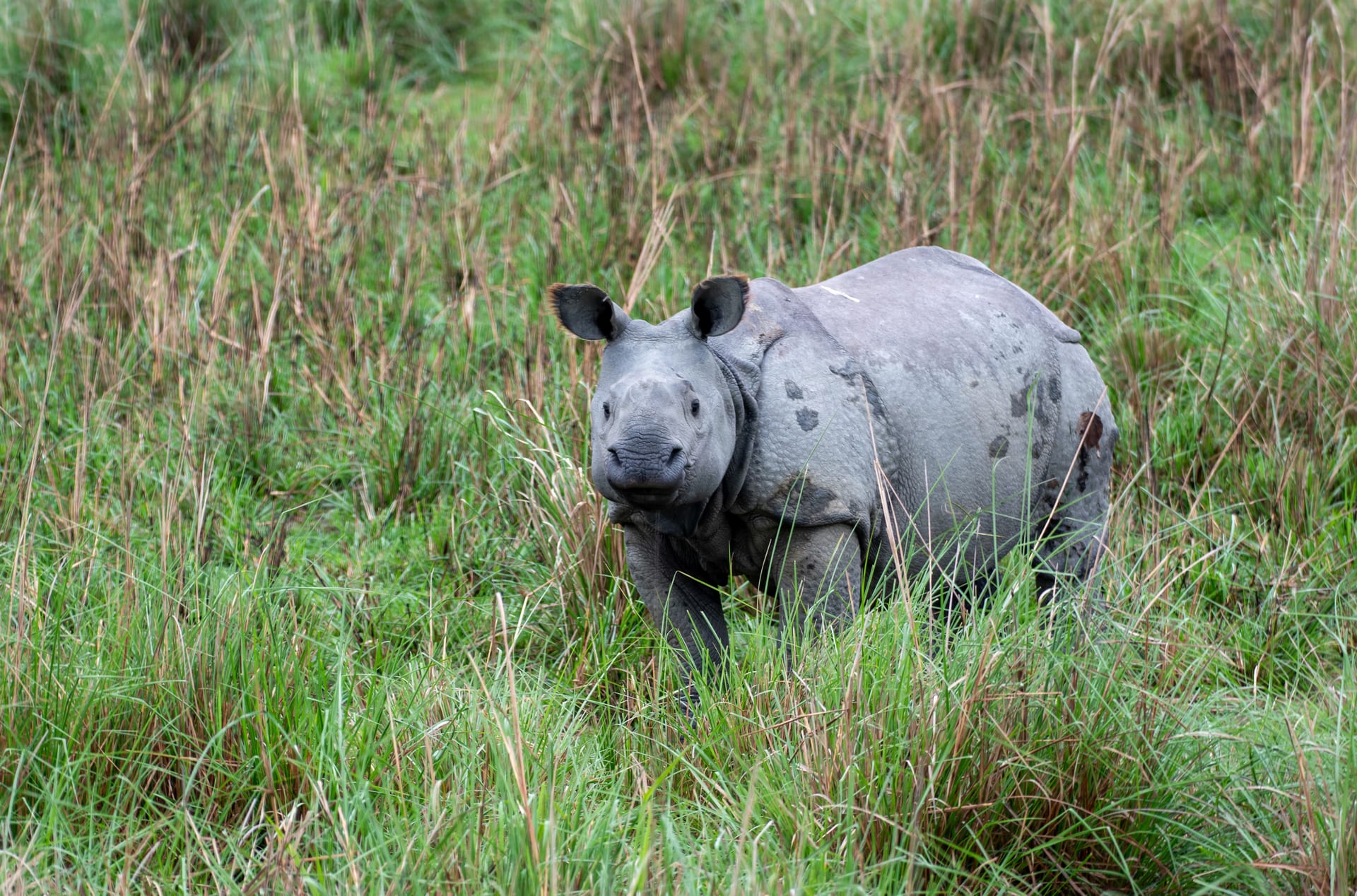
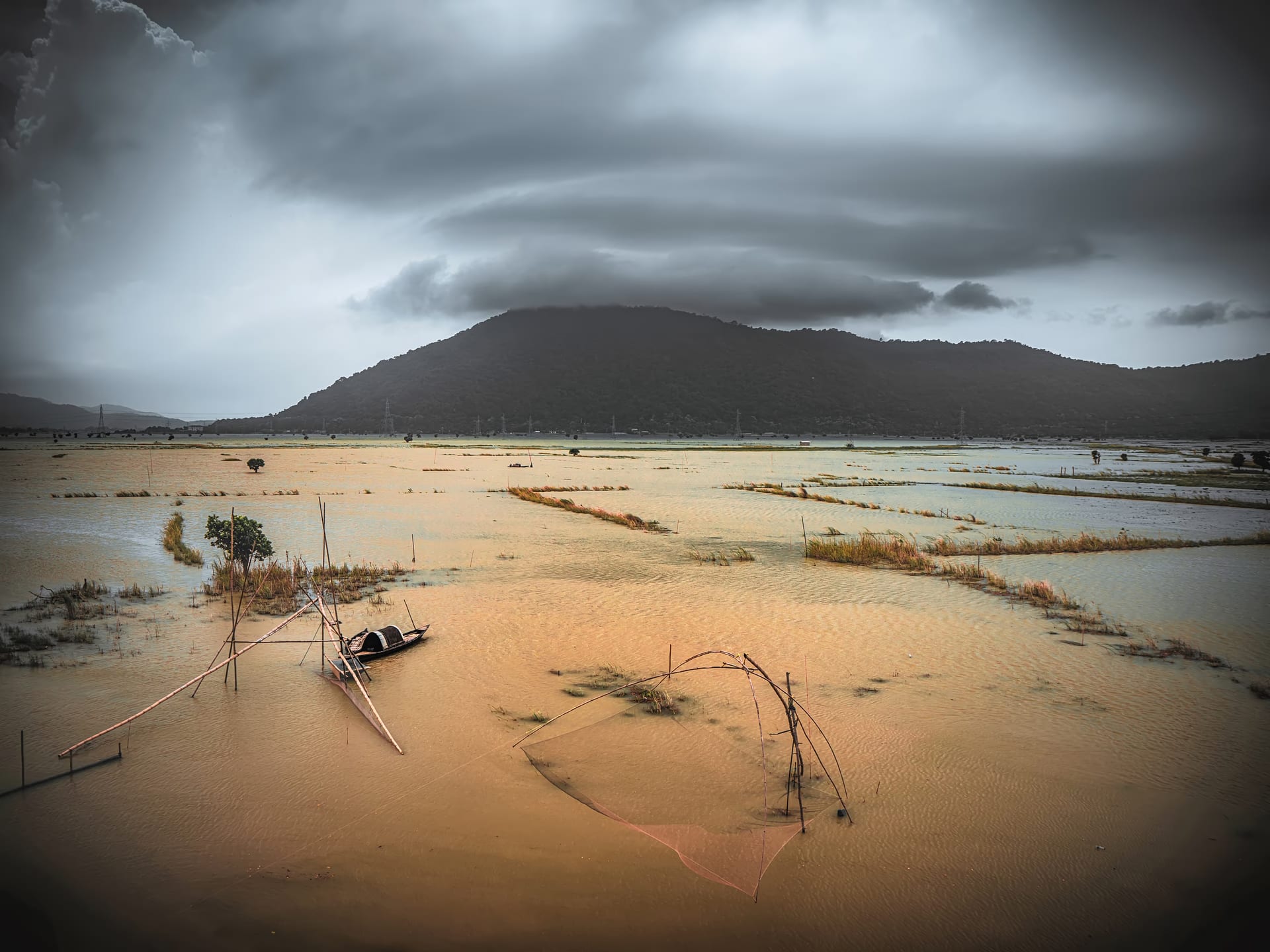
There is a second enemy, and it is the same river that made the grassland in the first place. Each monsoon the Brahmaputra rises and pushes over its banks, and in a bad year it drowns most of Kaziranga under muddy water for days at a stretch. The animals must move or die. They swim. They strike out across the flood for the high ground of the Karbi hills to the south, rhino and deer and buffalo and elephant all making for the same rising land. To reach it they must cross the national highway that skirts the park, and there, dazzled and exhausted on the tarmac, they are struck by traffic in the night.
The flood kills them in numbers. In the great flood of 2012, more than five hundred animals died in the park, hog deer mostly, along with more than a dozen rhinos. And the same flood is the reason there is a Kaziranga at all. The yearly drowning is what keeps the grassland open and rich and free of encroaching forest, what feeds the density of great animals no other place can match. Take the flood away and Kaziranga would slowly cease to be Kaziranga. The park’s life and the park’s dying run on the same pulse of the river, and there is no separating them.
Back from the brink
And against all of it, the rhino came back. From the scatter of survivors at the start of the twentieth century, the Kaziranga population alone climbed decade by decade, past a thousand animals, and then past two thousand. The park now holds the single largest population of the species anywhere on earth, about two-thirds of every greater one-horned rhino left in the world. It is the great stronghold of the animal, the one place where the species is not merely hanging on but thriving.
Measured in a single rising column of figures, it is one of the great quiet victories of the modern age. An animal that had run out of country and nearly out of time was hauled back into abundance on the banks of one river, by a century of people who refused to let it finish vanishing. It is easy to say and it was desperately hard to do, and it cost lives on both sides of the law to do it.
An archipelago of refuges
A single stronghold, however, is a single point of failure. One catastrophic flood, one sweeping epidemic, one collapse of protection, and a species kept in one basket can be lost in one stroke. So the rhino’s survival has come to rest on a scatter of smaller fortresses around the great one.
Pobitora, a small sanctuary near Guwahati, packs rhinos in more tightly than almost anywhere on earth, holding more animals per square kilometre than even Kaziranga. Orang, on the north bank, is often called a miniature Kaziranga and keeps its own breeding herd on the far side of the river. The once war-torn Manas, on the Bhutan border, was emptied of rhinos entirely by poaching and insurgency in the 1980s and 1990s, and has been restocked animal by animal and brought slowly back to life.


The hardest lesson of all was written on the south bank, at Laokhowa. In the disorder of the early 1980s, poachers fell on the sanctuary and killed its entire rhino herd, more than seventy animals, in a single spasm of slaughter. The grass was left silent. Now, with its neighbour Bura Chapori, Laokhowa is being readied to hold the animal once more, drawing on the herds across the water. Moving rhinos out to rebuild these other homes is now as much a part of the work as guarding the herd at Kaziranga itself. It is the whole strategy in one idea. The species must never again be staked on a single patch of grass, because it has already been shown, at Laokhowa, exactly how fast a single patch can be emptied.

What the river keeps
There is a thread that runs through everything in this valley, and it is the Brahmaputra. It carried Sukaphaa’s people to their first harvests and drowned the ambitions of invading armies. It bore Lachit’s war boats and Bhupen Hazarika’s songs. And here it carries an ancient armoured animal through one more century of survival. The flood that feeds the grass still drowns rhinos in its worst years. The horn is still worth a fortune in the dark, and the guns still come. The kingdoms rose and fell on these banks, and the rhino outlasted them all.
It is still here, like the goddess on the hill of Kamakhya and the people of the valley themselves. It is still here because the river that takes is also the river that gives. And it is still here because, for well over a century, enough people have refused, season after bloody season, to let it go.