On the western marches of the old region, the Brahmaputra valley narrows toward Bengal. There the rivers run down out of the Himalaya in a braid of channels, and whoever holds that ground holds the gate between the plains and the upper valley. Through the fifteenth century that gate was held by the strongest power the west had known since the breaking of ancient Kamarupa. This was the kingdom of Kamata, ruled by the Khen kings from the vast fortress-capital of Kamatapur. In 1498 it met the army of Alauddin Husain Shah, sultan of Bengal. The siege that followed ended the last great state of the old west. It left only miles of earthen rampart to mark where a city had been.
The Khen kings of the west
Kamarupa fragmented in the centuries after 1140. The western valley then spent generations passing among short-lived houses, none of them able to hold the whole of it for long. At last a single durable power rose out of the disorder. That power was the Khen dynasty, a line of three kings, Niladhwaj, Chakradhwaj, and last of all Nilambar. They built the kingdom of Kamata and gave the west its first stable medieval state in the fifteenth century. By tradition their realm reached from the Karatoya in the west far into the valley in the east, the same broad corridor the Koch would later hold after them.
The Khen were a new kind of dynasty, and they knew it. They rose from the soil of the western valley rather than from any imported royal house, and where the older kings had reached back to the demon-king Naraka of Pragjyotisha to justify their rule, the Khen looked to the land under their feet. They took the tutelary goddess Kamateshwari for their own, and the shrine of that goddess stood beside their capital at Gosanimari, so that the seat of the kingdom and the seat of its deity were one and the same. That was a way of saying they were a country of their own, named for its goddess, and not the heirs of the ancient valley kings.
The chronicles remember Nilambar, the last of the three, as a capable and well-served ruler who came to the throne with the state at its height. In his time the kingdom was rich, its capital strong, and its frontier quiet, and the accounts allow him a reign of some substance before the blow fell. He had no reason to expect that he would be the last of his line, or that the end would come not from a rival within the valley but from the west, out of Bengal.
The fortress on the western marches
The seat of that kingdom was Kamatapur, and its ruins survive today at Gosanimari, now just across the modern boundary in the Cooch Behar district of West Bengal. It was no ordinary capital. It was a city built to command the corridor between Bengal and the upper valley, and it was built on a scale meant to overawe. Its earthworks were so large that their line still runs for miles across the open country. A great bank and a wide moat enclosed the whole, and around the town rose a circuit of ramparts of earth and brick. The walls were thick, and the defences were laid in depth.
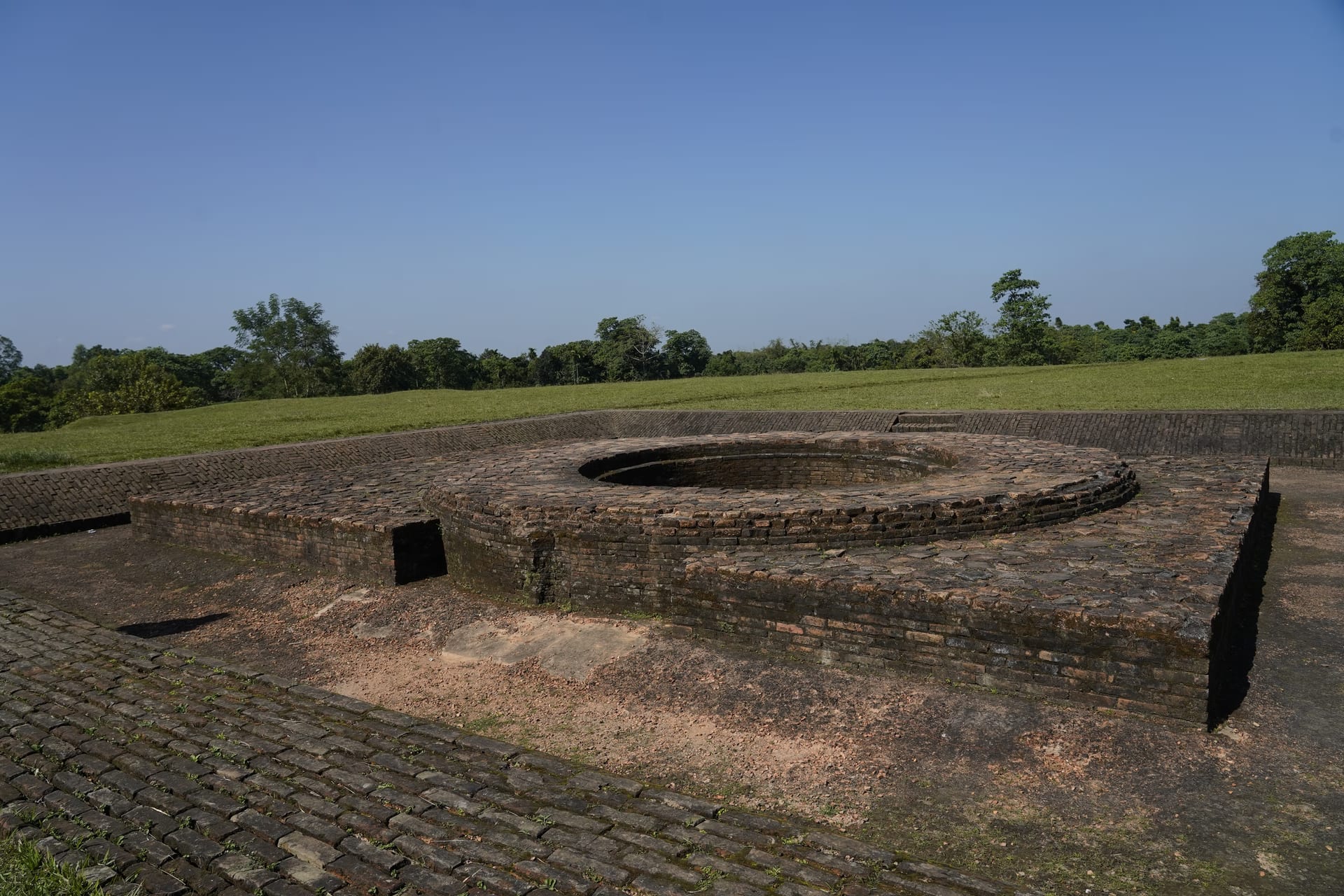

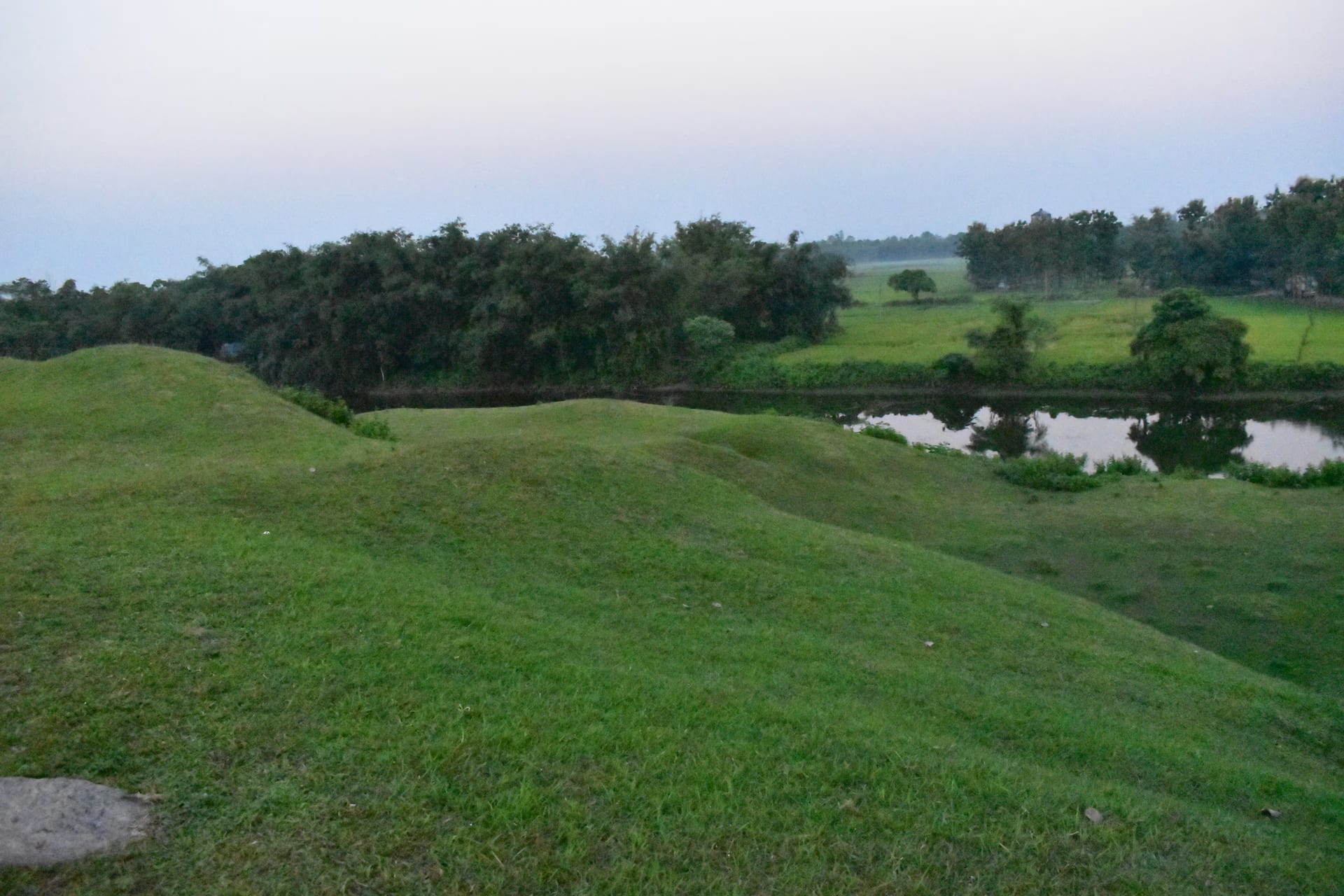
The brick and timber of the houses within have long since vanished, taken for other buildings or swallowed by the soil. Yet the defensive works endure, and they are the truest record we have of the power that raised them. To stand on those grass-grown banks now is to read the scale of a vanished kingdom. This was a fortress meant to be impregnable, thrown up by kings who fully expected to hold the gate of the west for a very long time. The size of the ramparts is a kind of confidence, set down in earth. That confidence is exactly what the story is about to test.
The sultan who looked east
In Bengal a new power was rising to test them. Alauddin Husain Shah had seized the throne of the Bengal Sultanate in 1494, rising through the court of the sultan he replaced, and founding the Hussain Shahi line that would rule Bengal for the better part of a century. He is remembered as the greatest of the independent sultans of Bengal, a ruler under whom that kingdom reached a high point of its power and its culture. Such a ruler looks for room to grow. He looked east, toward the rich Kamata country and the road beyond it into the upper valley.
This was the same gateway that empires before and after him would covet, the Turks who came before and the Mughals who would come long after. It is a door that has drawn ambitious men in every age, and few of them who forced it ever kept what lay behind. By the late 1490s the moment seemed right to Husain Shah, and he turned his army toward the fortress of the Khen. He came with more than an army on land. By one account his force numbered some twenty-four thousand horse and foot, and a war-flotilla came up the rivers alongside it, for in this country the rivers are roads and no campaign moves without them.
The siege and the legend of treachery
The chronicles preserve a story of how the impregnable city fell, and honesty requires that its seams be shown, for it sits exactly where record shades into legend. By the tradition, Kamatapur could not be taken by storm. It stood a long siege and held. It fell in the end not to force but to treachery from within. The tale names a disaffected Brahmin minister of Nilambar, called Sachipatra in some tellings. The king, this version runs, had put the minister’s son to death over a scandal that touched the queen. Wild with grief and rage, the minister went over the wall and into Bengal, and there he did the unforgivable thing. He invited the sultan to come and take the city, and he showed him how.
With the gate opened by a hand from inside, Husain Shah’s soldiers broke at last into the fortress that had defied them. The romantic detail of the wronged minister belongs to the later chronicle tradition rather than to any contemporary record, and it should be held at arm’s length. It is the kind of story that grows up around a fortress too strong to have fallen honestly, a way for later memory to explain the unexplainable. But whether by a single traitor or by the ordinary slow attrition of a long siege, the essential facts are not in dispute. The win was a hard one, the siege was long, and the impregnable city fell.
The end of the Khen line
What is not in doubt is the result. In 1498 Kamatapur was stormed and sacked, the town given over to destruction, and the kingdom of the Khen brought to its end. King Nilambar was taken, and here the accounts scatter, as they do around every defeated king whose own record-keepers have been killed or driven off. Some say he was captured and imprisoned for the rest of his days. Some say he was killed in the fall of his city. Some say he slipped away into the hills in the confusion and was never heard of again. The truth was lost in the sack along with the city, and the three endings the tradition offers are really an admission that no one knows.
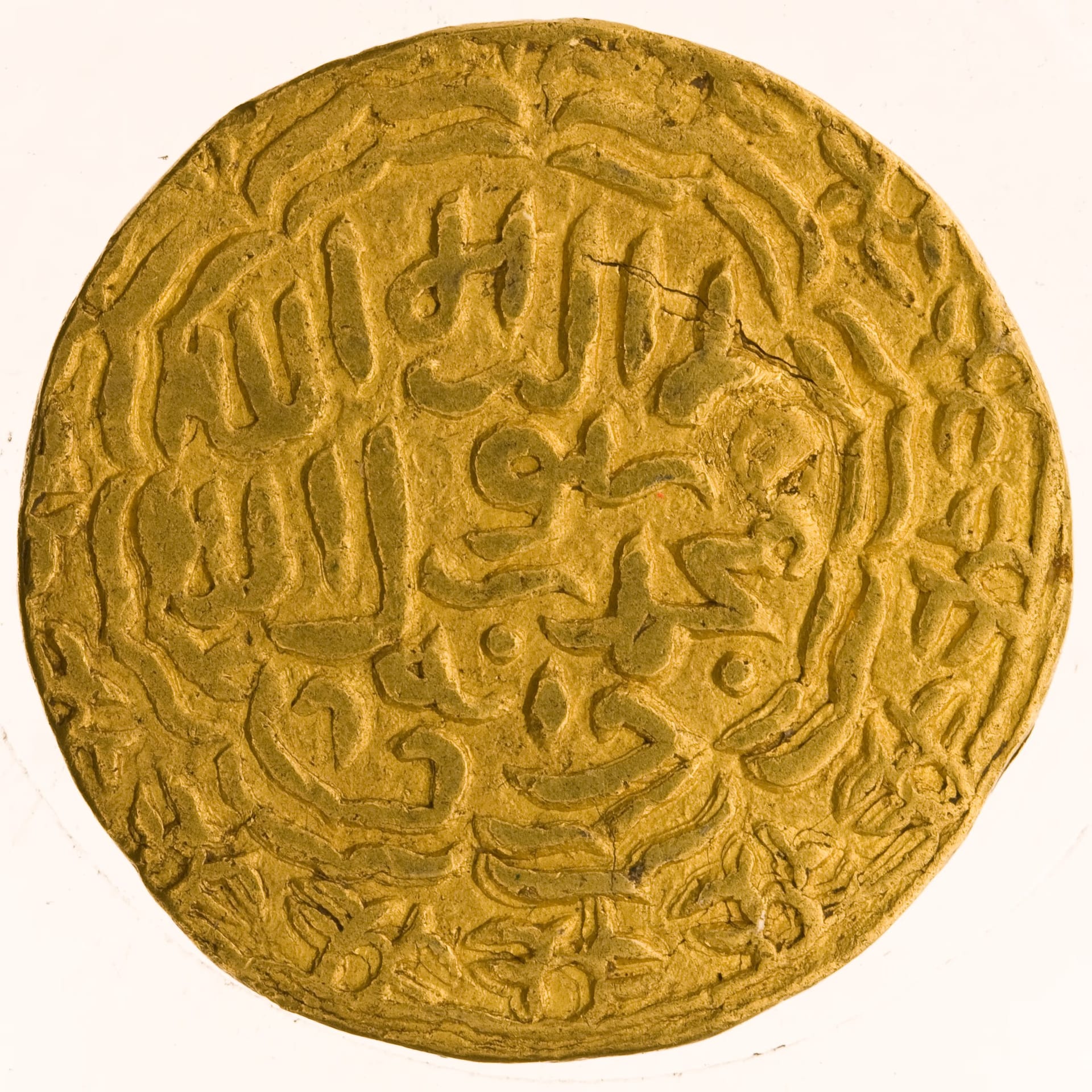
With Nilambar fell the dynasty, and with the dynasty fell the last independent power of the old west. Husain Shah proclaimed the victory in his royal titles, styling himself now the conqueror of Kamrup and Kamata, and struck coin to say so. This was the high-water mark of Bengal’s reach into the northeast.

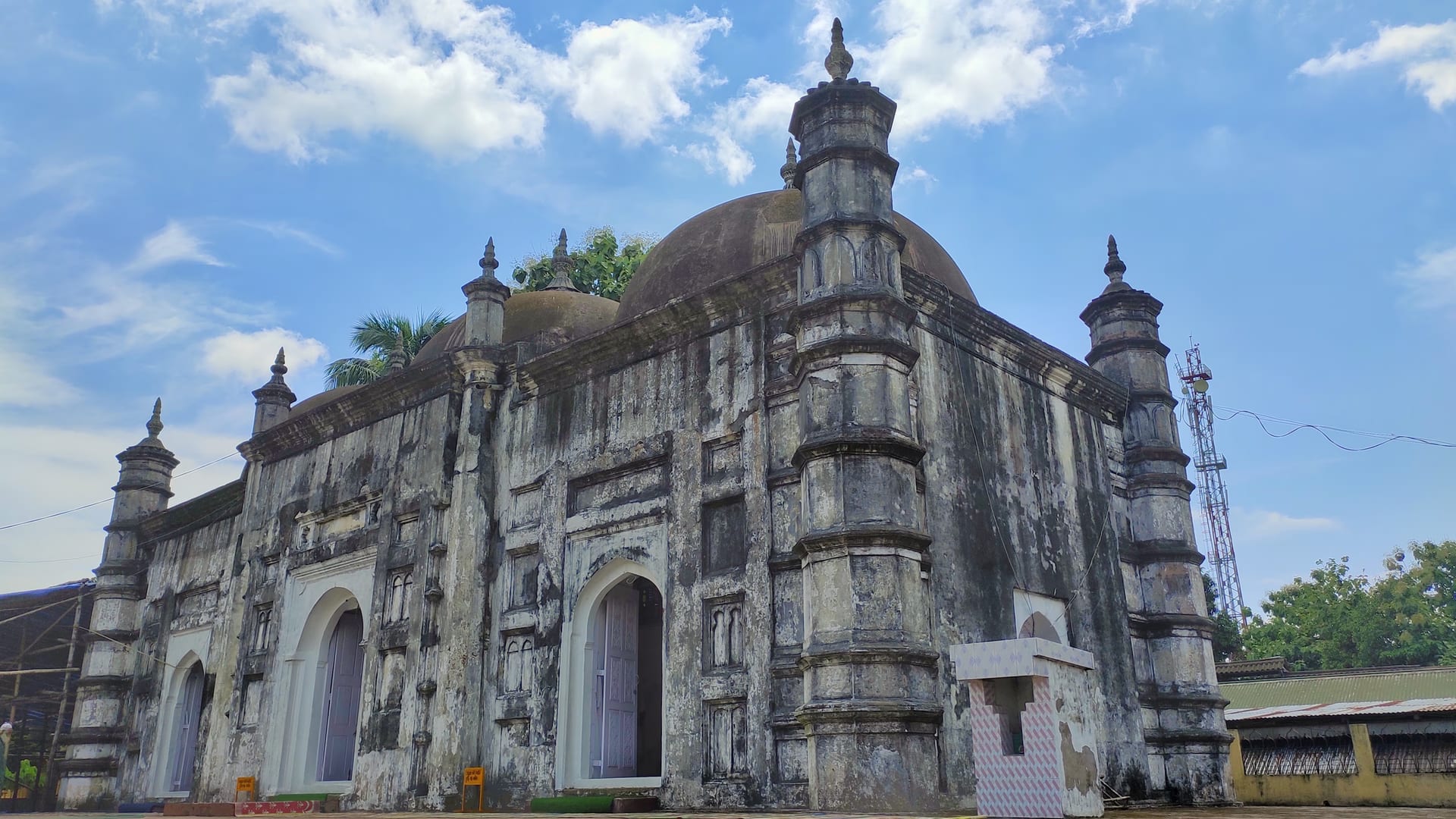
To govern his new prize the sultan planted his own son as viceroy in the captured country. By tradition he also settled a colony of Afghan soldiers in the conquered land toward Hajo, to hold it for him. The three-domed brick mosque at Panbari near Dhubri, reckoned the oldest surviving mosque in Assam, is by one tradition a relic of this very push up the valley.

What the occupation could not hold
Yet the sultan had won a country he could not keep. The geography of the valley defeated his garrisons, as it had defeated invaders before him and would defeat them again. The rivers that had carried his flotilla in now flooded and shifted under his supply boats. The rains rotted the lines that fed his soldiers so far from home. And the landed chiefs of the central plain, the Bara-Bhuyans, who had bent low before the storm while it raged, did not stay bent once it had passed. They rose against the occupiers. In the early years of the new century they harried the Bengal soldiers out of the country and destroyed the garrison the sultan had left. His son who had governed Kamatapur did not survive the campaign, and the shallow authority Bengal had planted dissolved well before 1515. The frontier receded westward again, and the rich corridor of the old Khen kingdom lay open and masterless, waiting for a hand strong enough to gather it up.

That hand belonged to the hill clans of the western foothills. Out of the wreck of the Khen kingdom and the expulsion of Bengal a chief named Bisu rose, and he did what no one since Nilambar had managed. He welded the Koch and the Mech peoples and the quarrelling Bhuyan country into a single state. He took the throne-name Biswa Singha and founded the Koch dynasty, and that dynasty would rule the western valley for the next four centuries and reach its glory under his son Naranarayan. So the Khen had been destroyed, but the kingdom they made did not so much vanish as change hands. The name Kamata and the gateway it commanded passed on to new masters. And through all of it, the sultan’s brief triumph and the long Koch centuries that followed, the great earthen ramparts of Kamatapur stood on, the chief survival of the power that had ruled the old west before the sultan ever came.