Sualkuchi stands on the north bank of the Brahmaputra, about thirty-five kilometres from Guwahati. It is the great weaving centre of Assam. Here the valley's golden muga, white pat and warm eri silks are turned into cloth on thousands of household handlooms. It is a craft town whose life is organised around silk. Thread from the countryside becomes the mekhela sador, Assam's bridal drape, and the gamosa in which the valley recognises itself.
A weavers' town by royal design
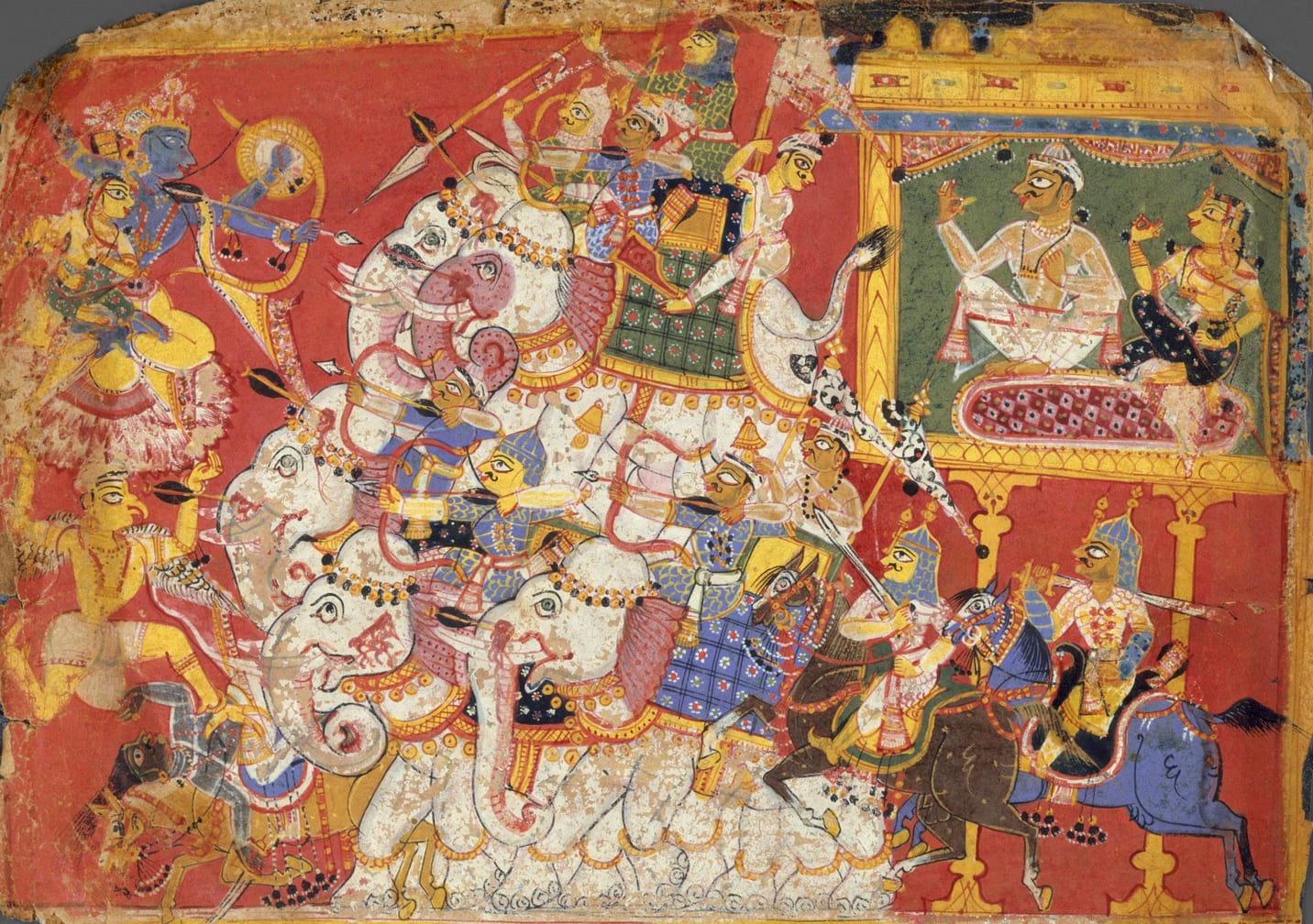
The origins of Sualkuchi as a silk town are traced, in the well-known tradition, to royal patronage in the medieval period. By one account it began with the Pala king Dharmapala, who is said to have settled weaver families from Tantikuchi there, gathering scattered skill under the crown's eye. Whatever the precise founding, the town owes its character to a deliberate act rather than to slow accident. Weaving was practised in ordinary households the length of the valley, at looms set under the house, so that a girl's skill at the loom was long held to be a measure of her accomplishment. Successive rulers gathered weavers into it. Under the Ahom kings that concentration hardened into a settled specialism. By tradition the great administrator Momai Tamuli Borbarua, working under Swargadeo Pratap Singha, settled master weavers at Sualkuchi to supply the court. A town given over almost wholly to the loom could hold the finer skills, the tools, and above all the market that a true silk centre needs and that a single household loom cannot. Sualkuchi became the place where the valley's most demanding silk work was done, and where buyers knew to come for it. The cloth that leaves the town today is the direct heir of the silks that dressed the Ahom court.
The three silks at the bench
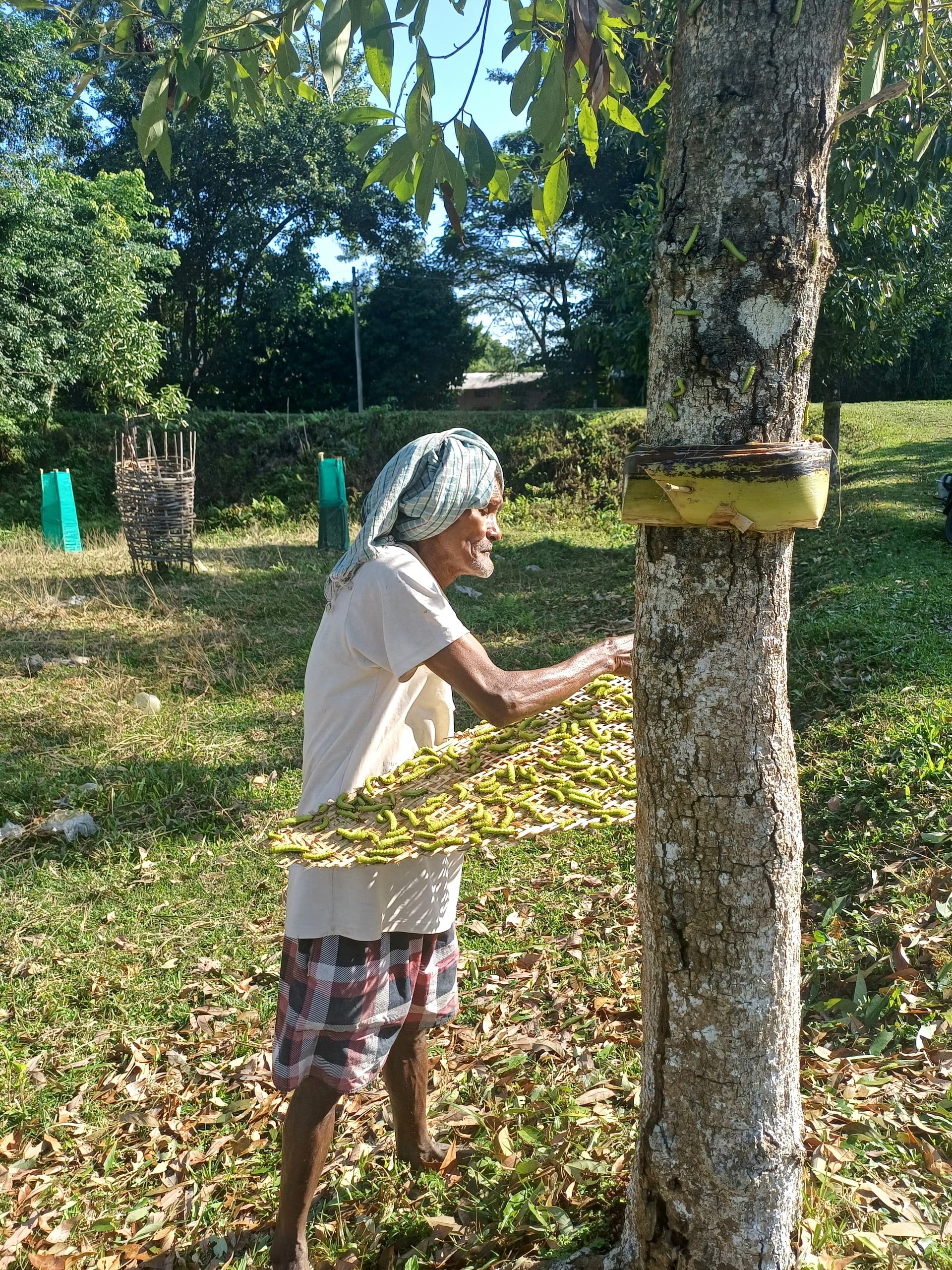
Sualkuchi works all three of Assam's silks. Golden muga, white pat and warm, matte eri reach the looms as thread. How each is reared and made into thread belongs to those articles. What this town is known for is taking that thread, dressing and dyeing it, and weaving it into finished cloth at scale.
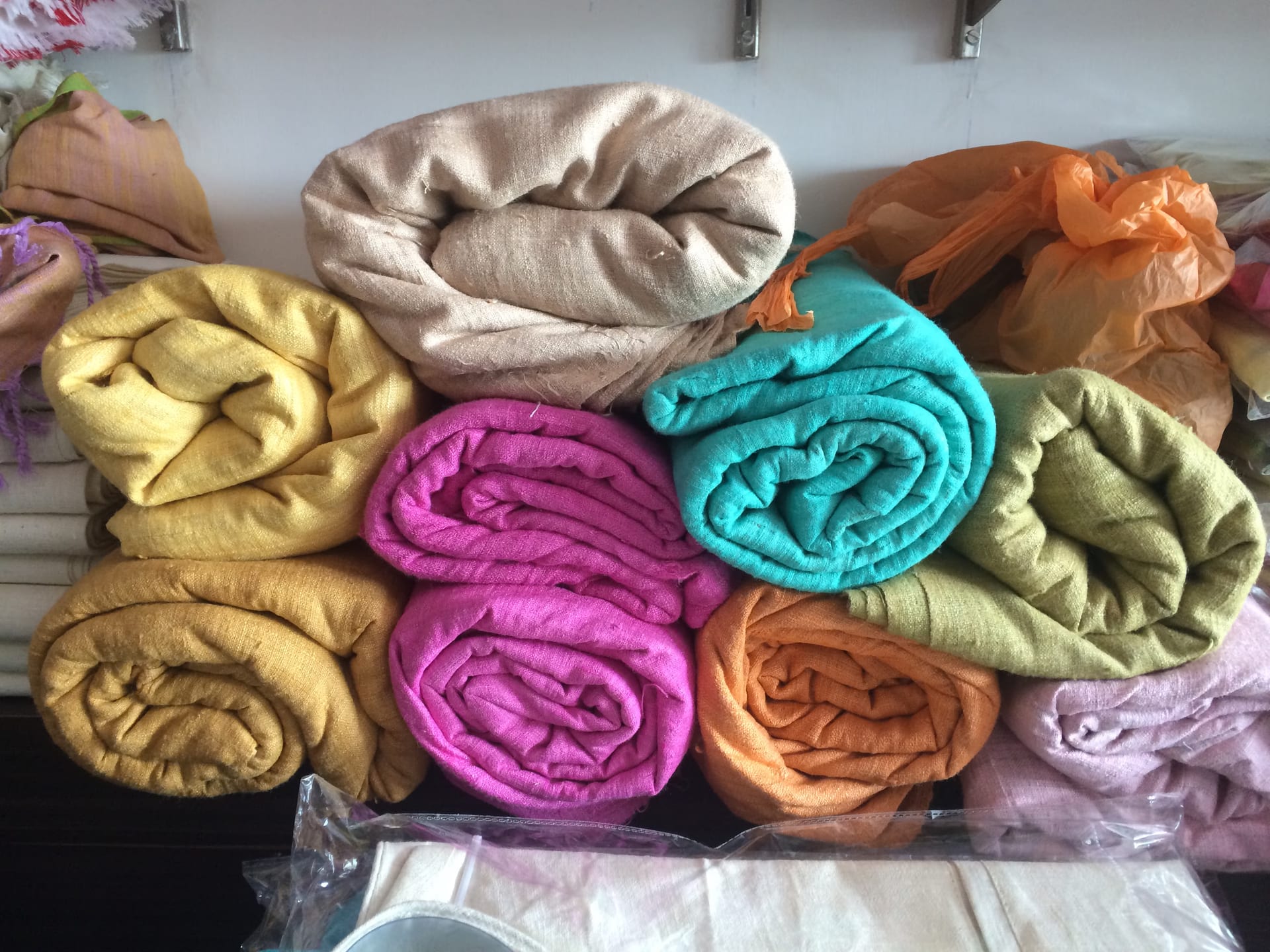
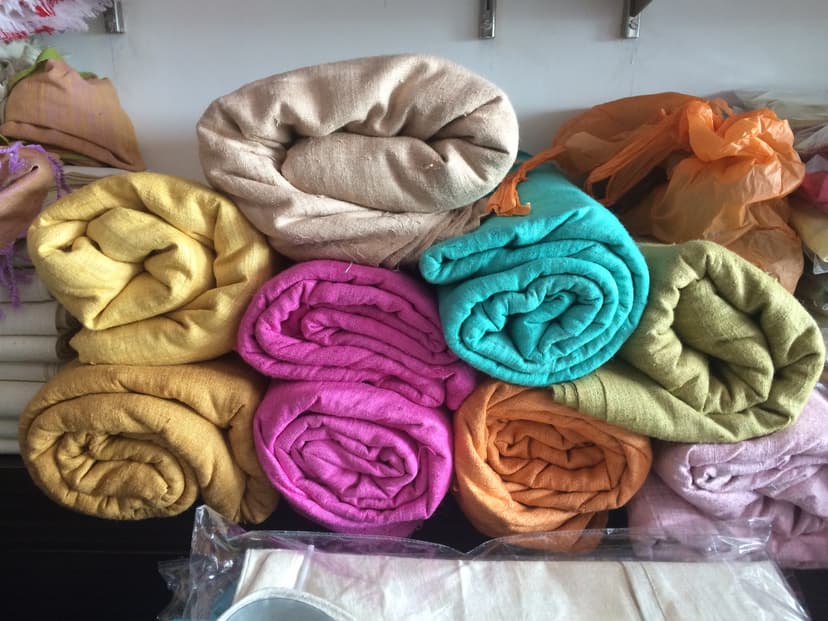
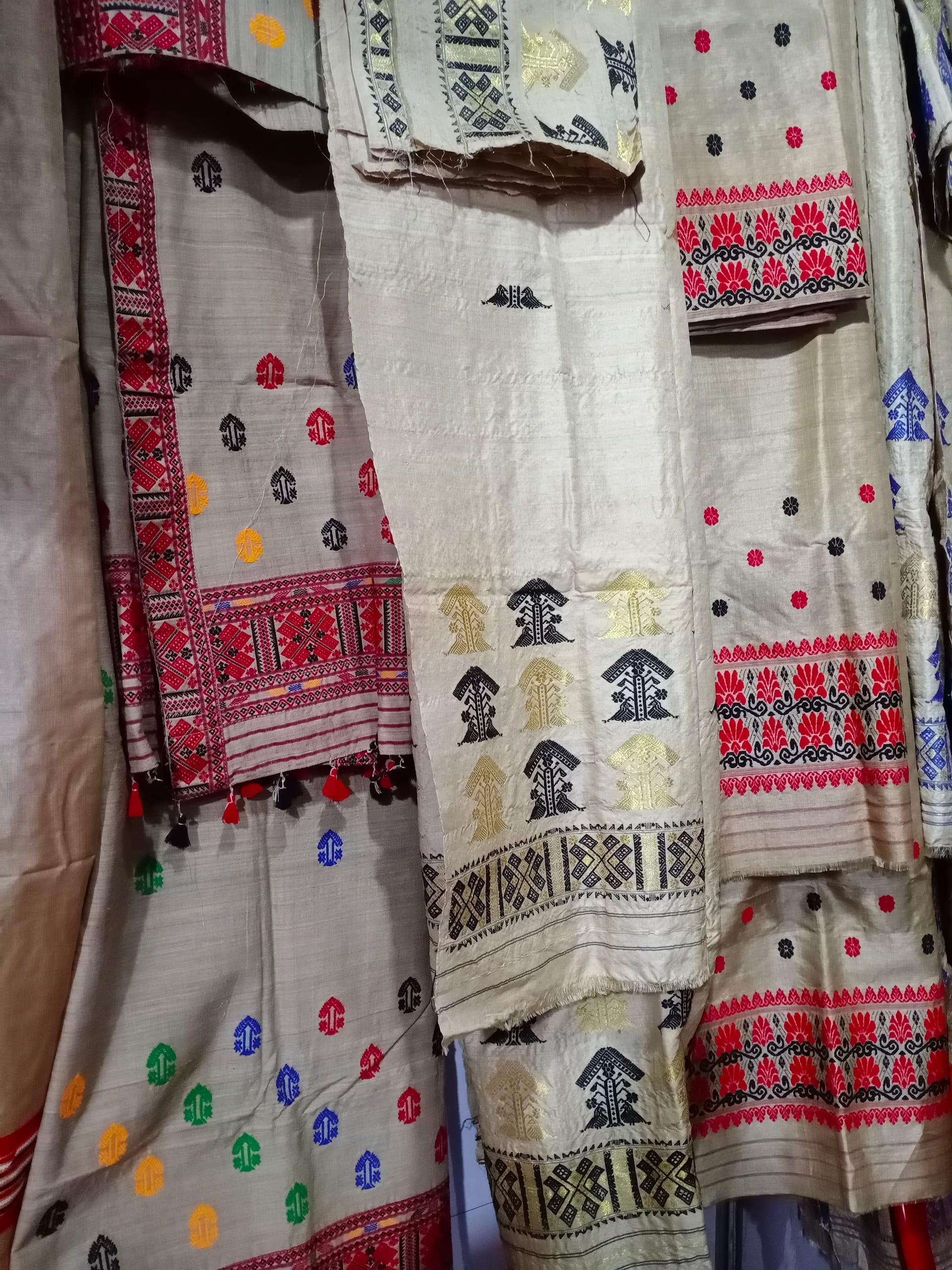
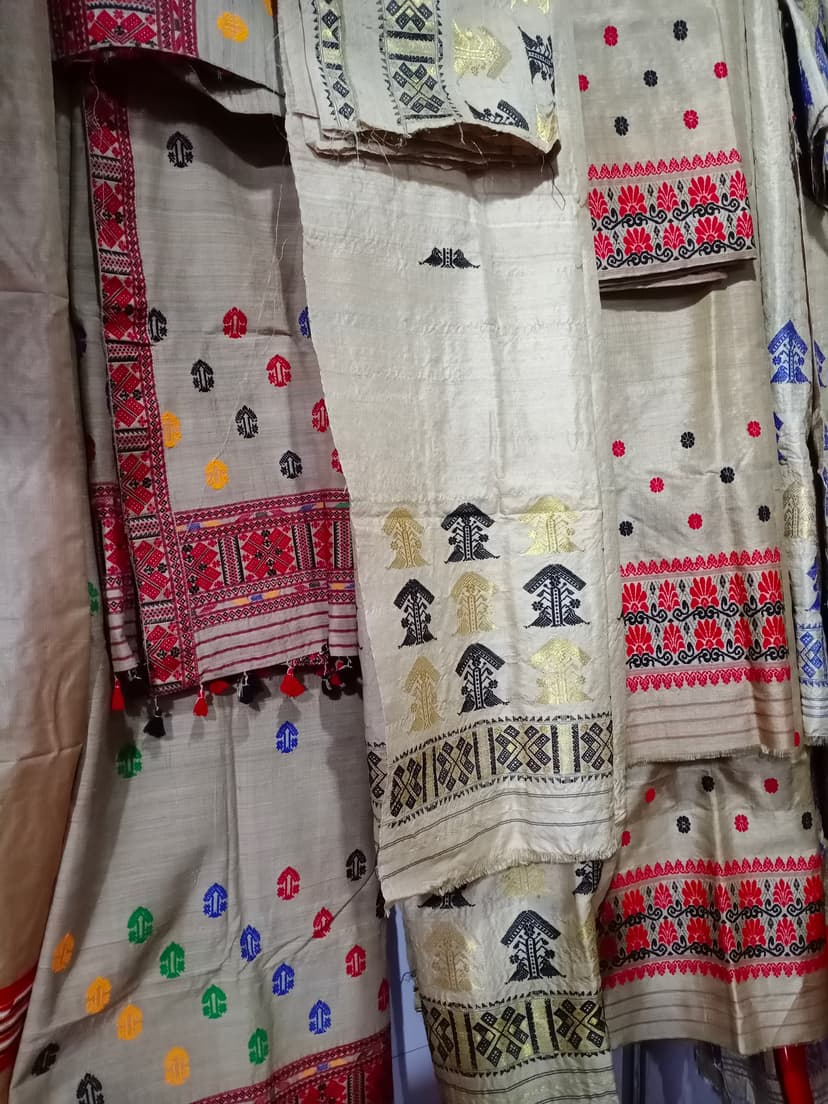
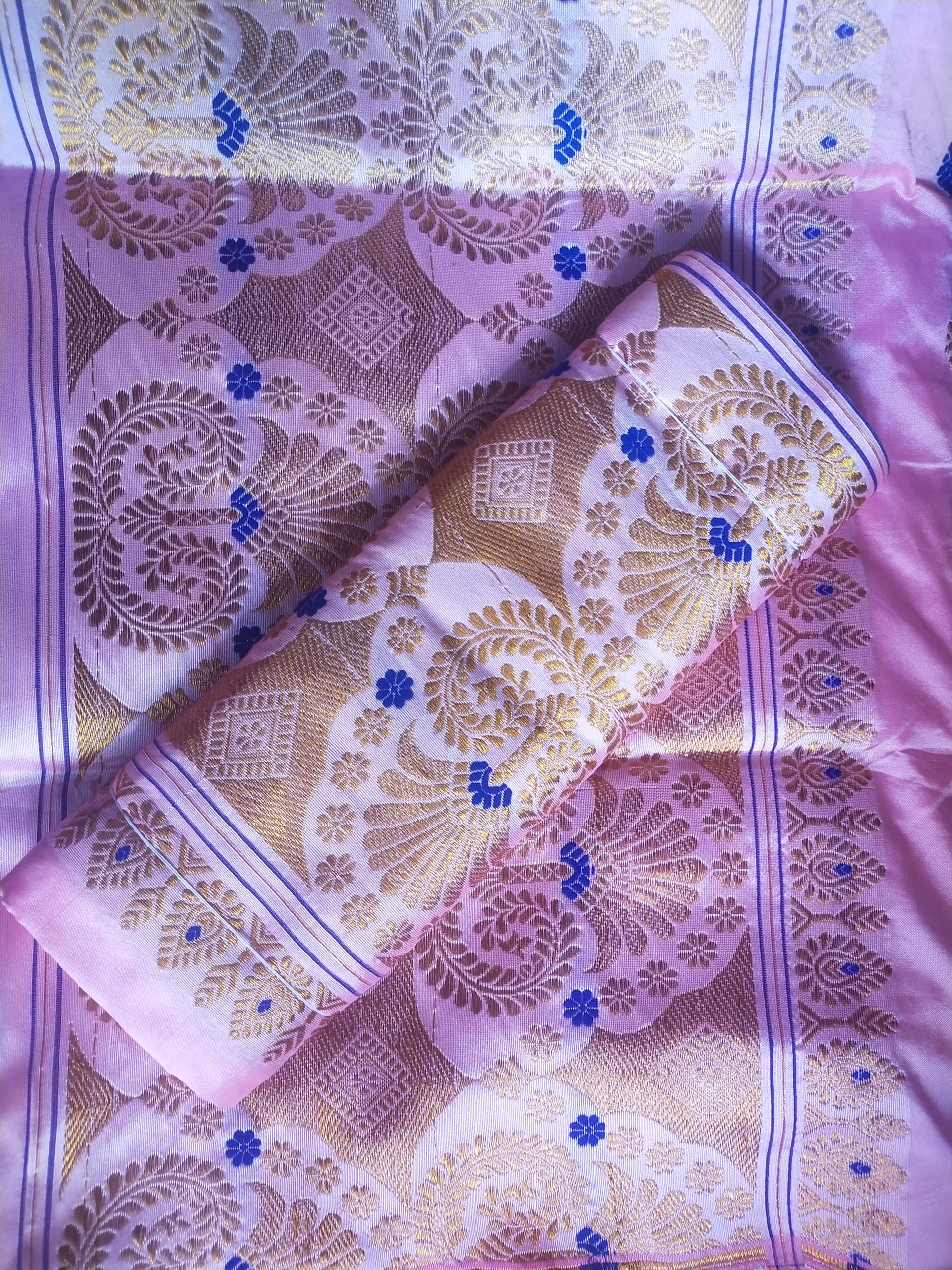
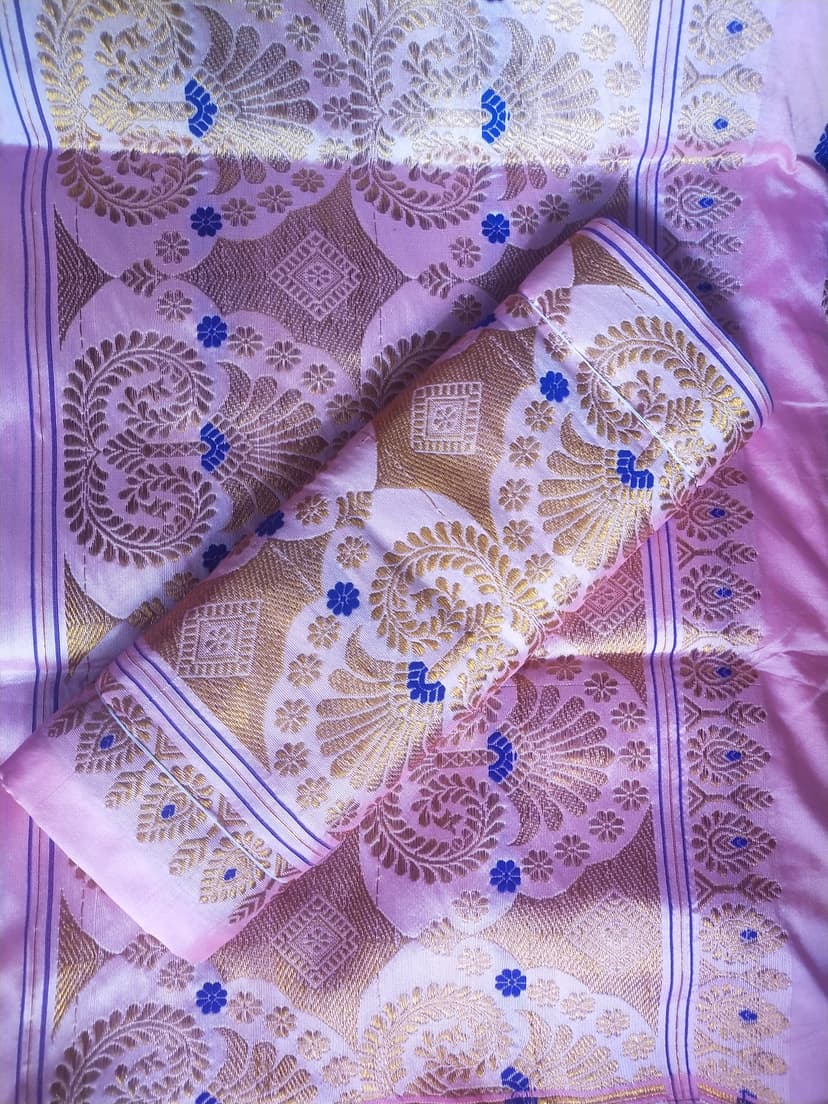
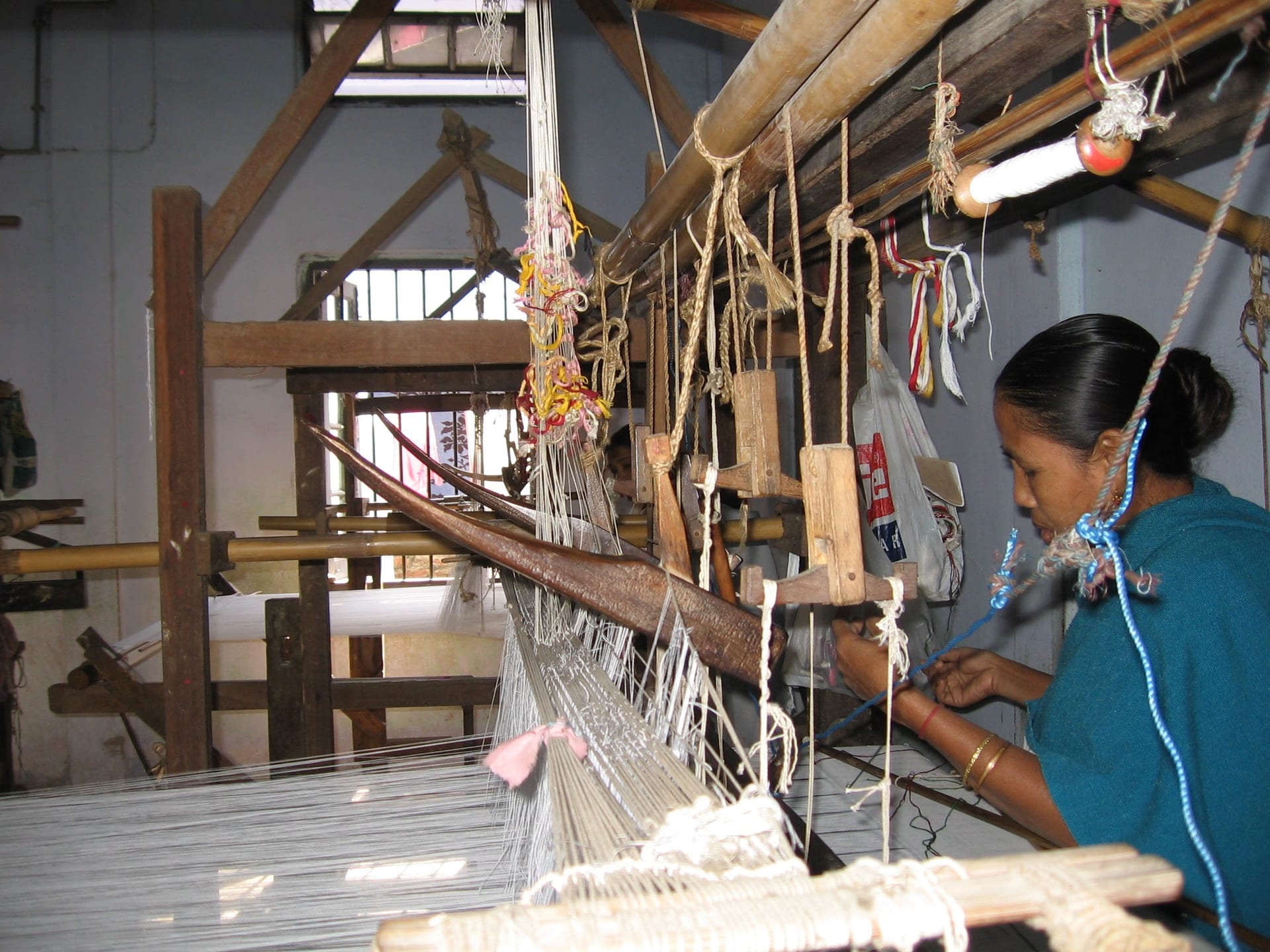
In the town, looms stand in the home and the labour is the family's. Muga is woven into the mekhela sador, into gamosa borders, and into stoles and fine silk lengths that carry the town's name. Pat is woven into the same forms, and above all into pat-and-muga cloths in which the white field carries a golden border or motif, the dress of the formal welcome. Eri lends itself to shawls and heavier household cloth. The finished lengths are often patterned with woven motifs that are the signature of the town's looms, among them flowers, creepers and the lotus. The making of a single mekhela sador is the shape of the town. The thread is dyed, the warp is dressed and mounted, and the long days at the loom begin. Over the last century the throw-shuttle has given way to the fly-shuttle. At the end comes the finishing of the cloth. Households own a few looms each. Master weavers and small cooperatives organise the trade. A seasonal workforce, much of it drawn from elsewhere in the valley, swells the town in the wedding and festival months, when demand for fine cloth is highest. Almost every home gives onto a loom shed, and the clack of the shuttle is the background sound of the streets. Weaving is not a craft beside other work. It is the work itself.
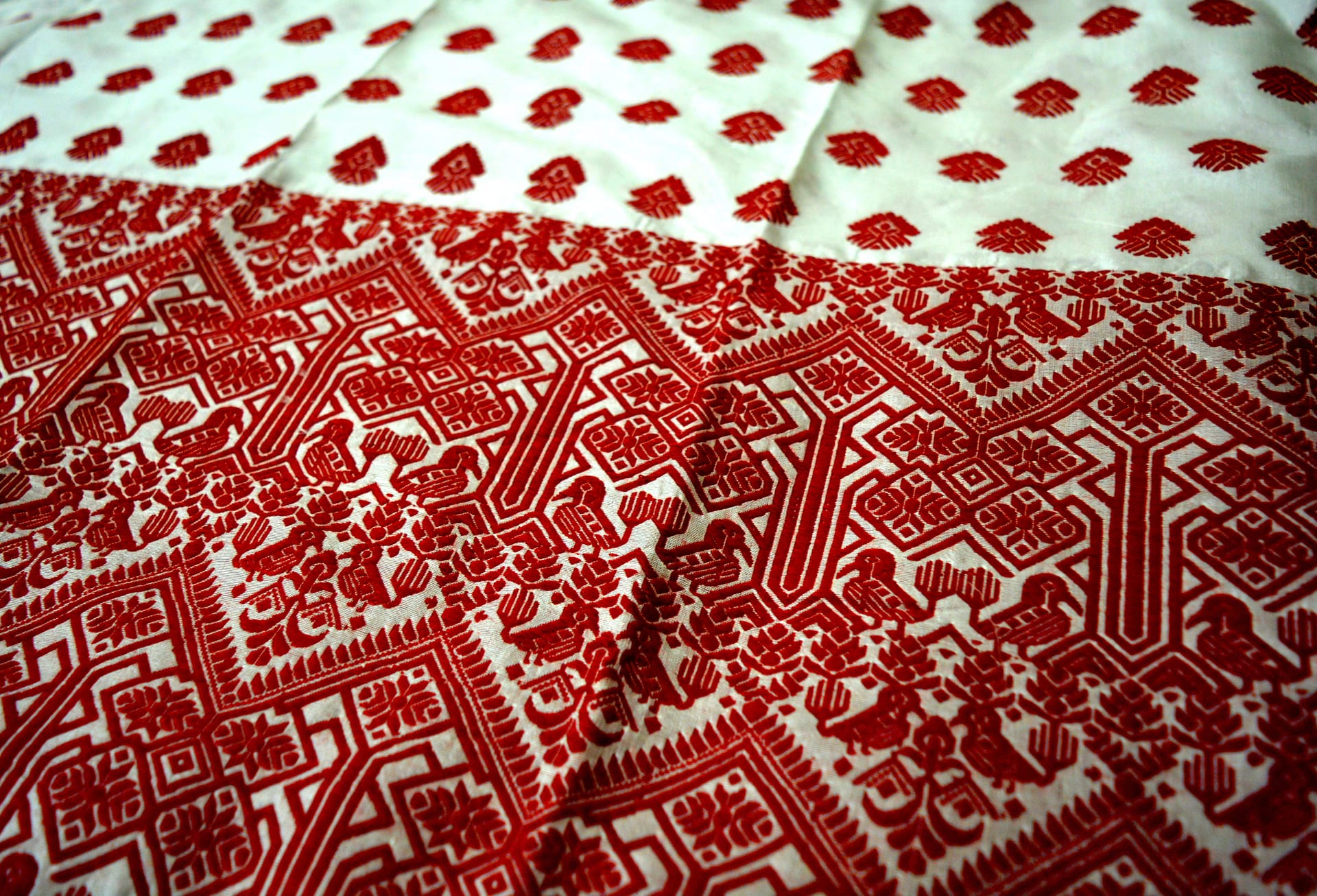
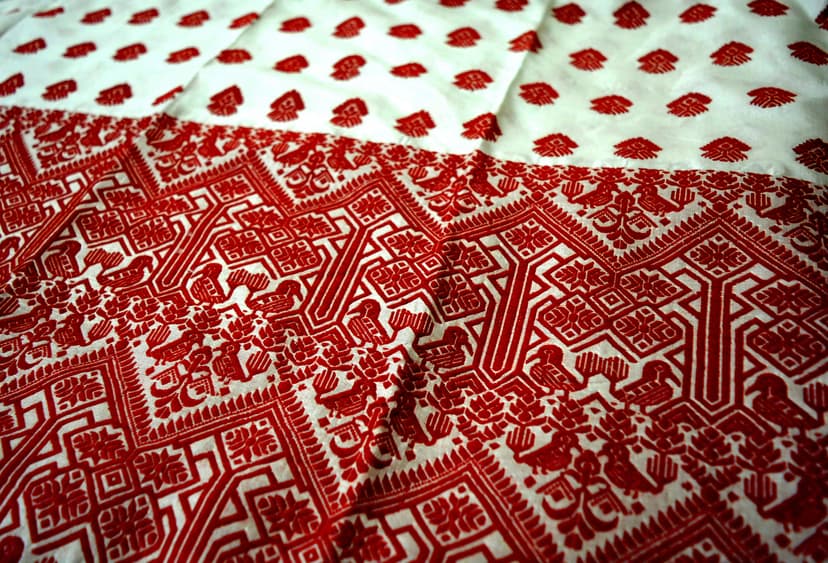
Across the twentieth century that household craft grew into one of the largest weaving clusters in the region. An early-2000s handloom census counted well over ten thousand commercial looms in the town alone, and its cloth now travels to markets across India and among the Assamese diaspora abroad. That output earned it the old epithet of the Manchester of the East, also called the Manchester of Assam. The fame sits under real pressure. Cheaper power-loom cloth undercuts the household handloom on price, and the wider strain on muga, from short supply to imitation sold under its name, is felt first at these looms. Local weavers have answered with their own marks of authenticity. The Sualkuchi Tant Silpa Unnayan Samiti, formed in the 2010s to protect the town's cloth from fakes sold under its name, secured the registered trademark SUALKUCHI'S for genuine local weaves. In 2024 India's Ministry of Tourism named Sualkuchi one of the country's Best Tourism Villages in the craft category. The town's future still turns on whether buyers will pay for the real handloom cloth that made its name.
Visiting and buying
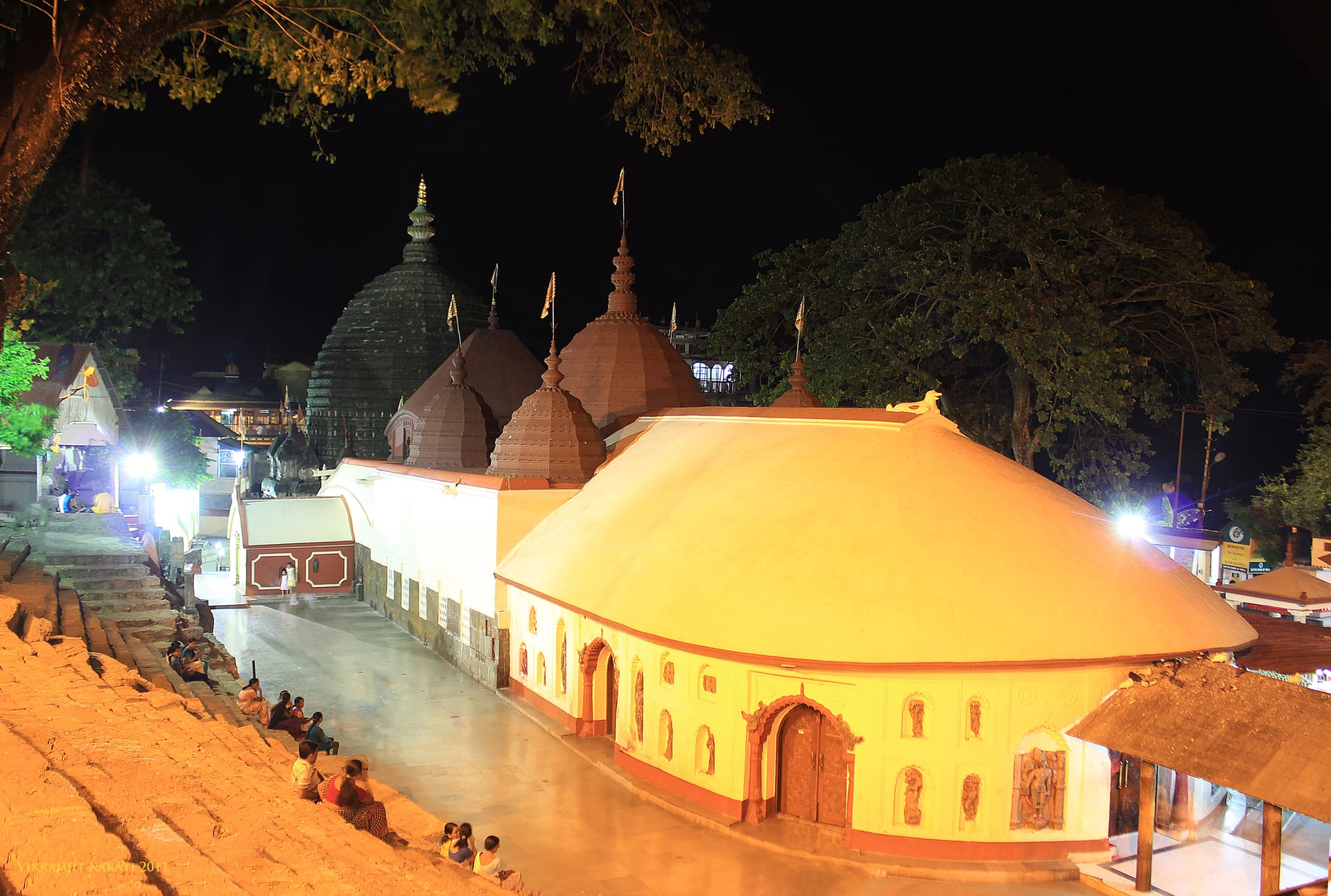
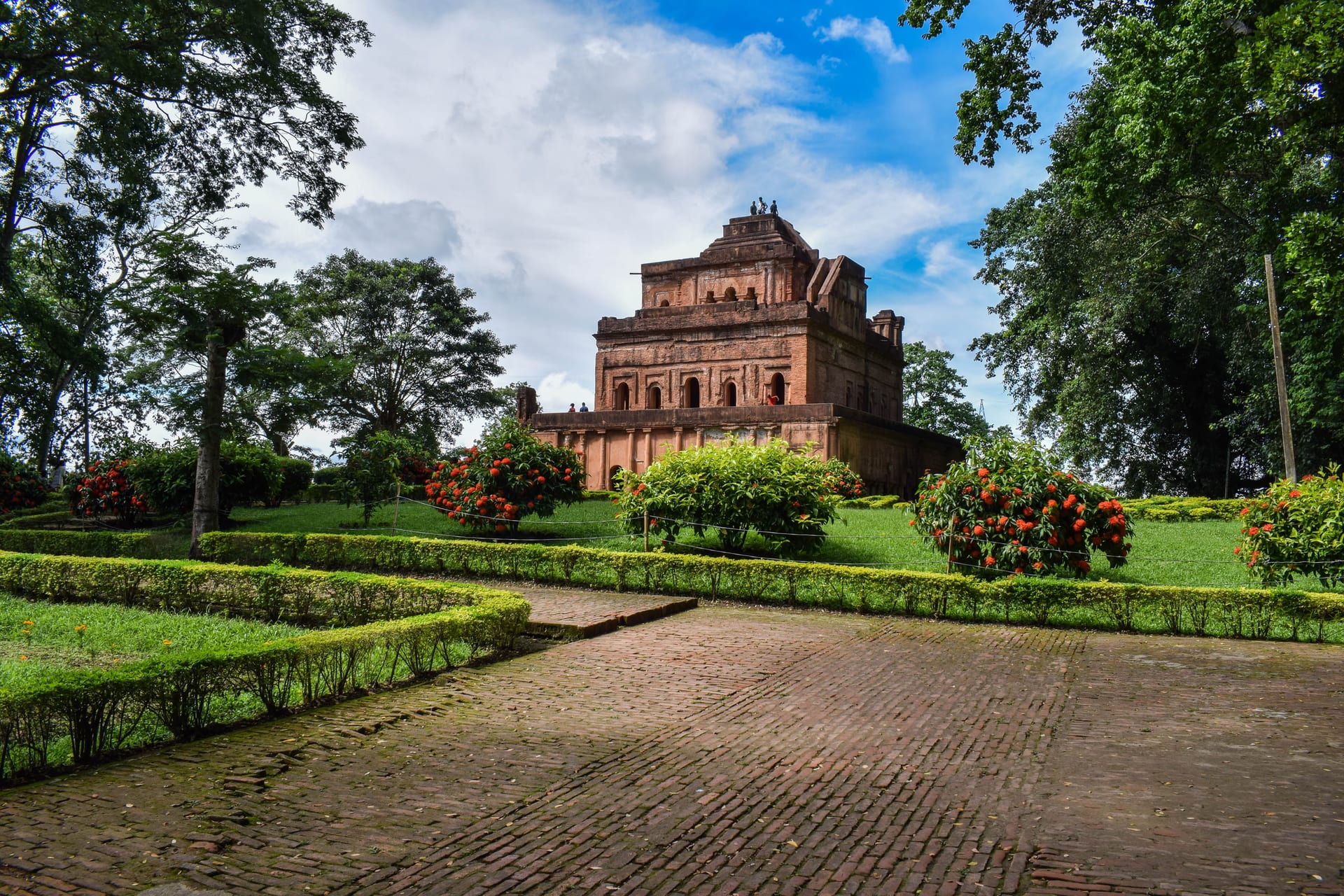
Sualkuchi lies on the north bank a short drive from Guwahati and can be seen in half a day. Many households and cooperatives welcome visitors to watch the looms and buy directly. Genuine muga is costly and often imitated, so buy from a known weaver or cooperative and ask about the silk's origin. Look for the SUALKUCHI'S mark where it is used. That is the surest way to support the craft and avoid the substitutes. The town also holds the Sidheswar Devalaya, a Siva shrine on a low hill, rebuilt under the Ahom king Siva Singha. Sualkuchi pairs most naturally with the sacred ridge of Hajo a little upstream on the same north bank, a single day of the woven and the devotional, and with the great Sakta hill of Kamakhya across the water from Guwahati.