

The Young Sankardev
Before he was a saint, Sankardev was an orphan at Bardowa who swam the flooded Brahmaputra and wrote his first hymn to God with only the letters he had yet been taught.
Srimanta Sankardev founded the neo-Vaishnava faith of Assam, wrote its literature and built its theatre. This is the story of the boy before any of that. By the traditional reckoning he was born in 1449 at Alipukhuri, in the Bara-Bhuyan country of what is now Nagaon. The date is not certain, and some modern scholars doubt the very long life the biographies give him and would put his birth several decades later. His people were the Bhuyans, a loose confederacy of landed chiefs, and his father Kusumbar held the first rank among them, the title of Siromani. Sankardev's own childhood was not an easy one. Smallpox took his father when he was about seven, his mother Satyasandhya died in the same early years, and his grandmother Khersuti raised him. What we know of the boy comes from the charit-puthis, the devotional biographies written a century and more after his death. They are legend as much as record. The plainest of them describe a gifted student. Others tell of a child who could do things no child could do. All of them agree that he was out of the ordinary from the start.
The prodigy in the schoolroom
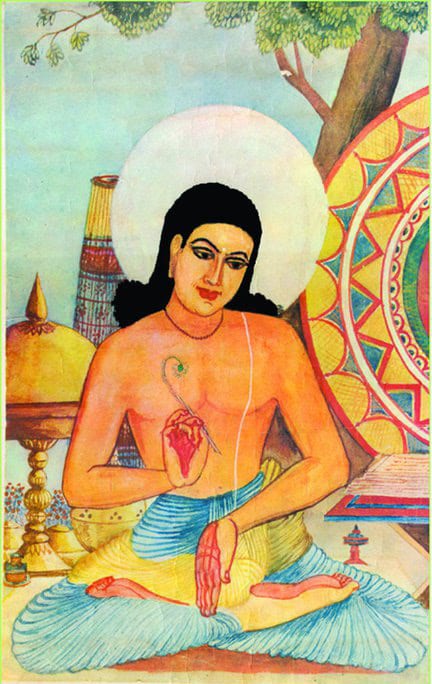
He was twelve before he was sent to the tol, the Sanskrit school of the pandit Mahendra Kandali at Bardowa. That is where the most famous of all the stories is set. He was the new boy, seated among students years older than himself, and the class had been set to make a verse. He had learned the consonants and no more. The vowel signs were still ahead of him, and he made a verse anyway. It was a hymn to Vishnu, and the wonder of it lay in its making. Every word was built from the letters he already had, with none of the vowel signs a poet would reach for. That hymn is still sung, five and a half centuries later. The tradition calls its four stanzas the Komal Geet, the soft song, and it is best recognised by the opening line, the one quoted below.
Karatala kamala kamaladala nayana, bhavadava dahana gahana vana sayana.(Assamese)
“Thy palms are lotuses, thine eyes the petals of the lotus. Quencher of the forest-fire of worldly life, who lies asleep in the deep wood.”
Mahendra Kandali read it and was astonished. The boy had been born Sankaravara, after Shiva, the god his family worshipped. The teacher changed that name to Sankaradeva, adding the “deva”, the god, to the name of an ordinary boy. By the older tradition he told the whole school to address him so.
The boy outside the schoolroom
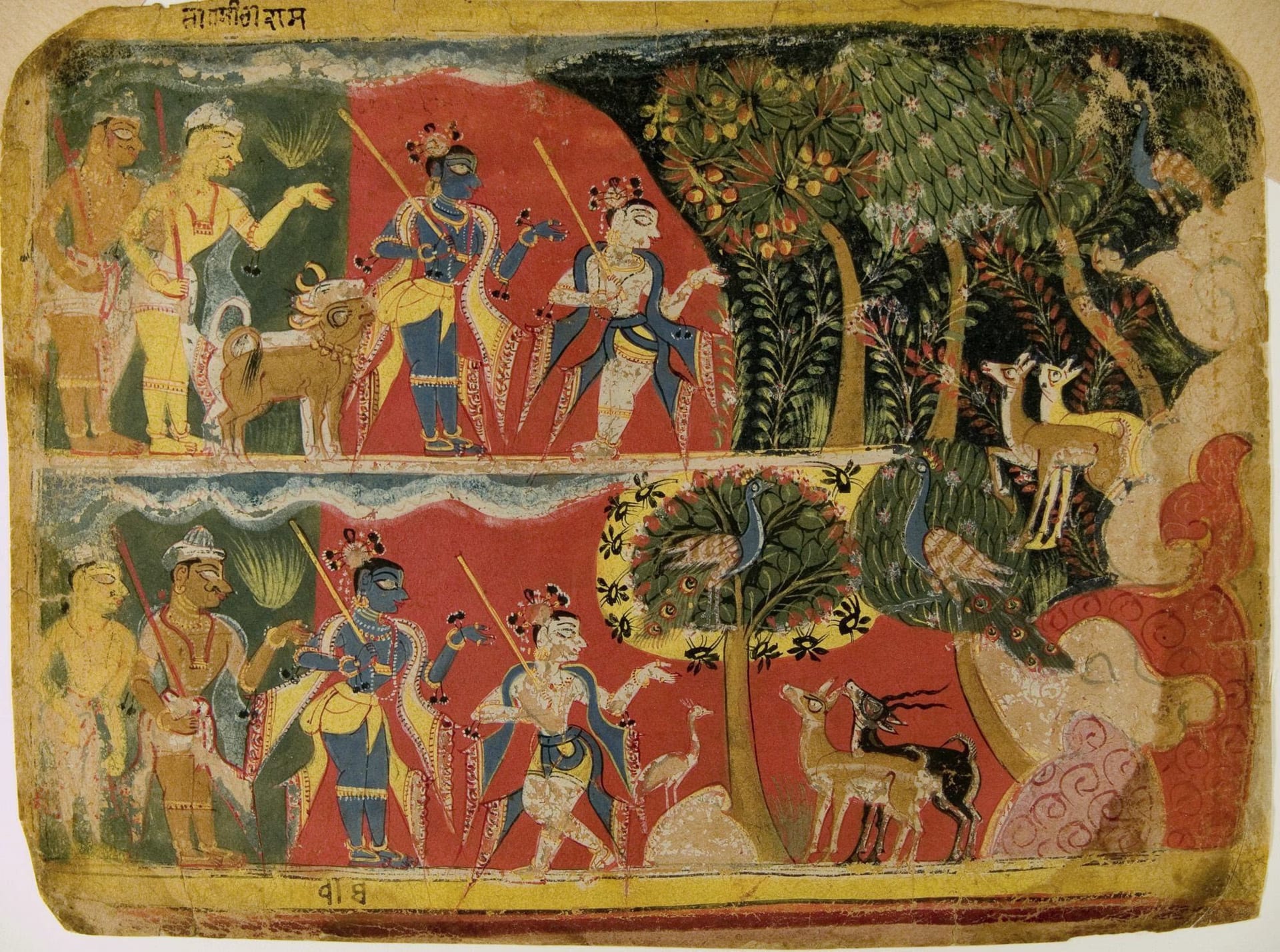
Beside the student the biographers set another boy, one of unusual physical strength. The month of Bhadra brings the monsoon flood, when the Brahmaputra runs at its fullest and most dangerous. He is said to have swum across it and back, unaided, at an age when grown men would not go near the water. The other feat the tradition keeps is the bull. Warned of an animal as large as a buffalo, the boy did not run from its charge. He caught it by the horns and forced its head round until it broke away, and it ran from him on sight ever after. The biographer Bhusan Dwija tells it as a village would want it told, in the shape of a Krishna story. The boy had thrown the beast, he writes, as Krishna once threw the bull-demon Arishta.
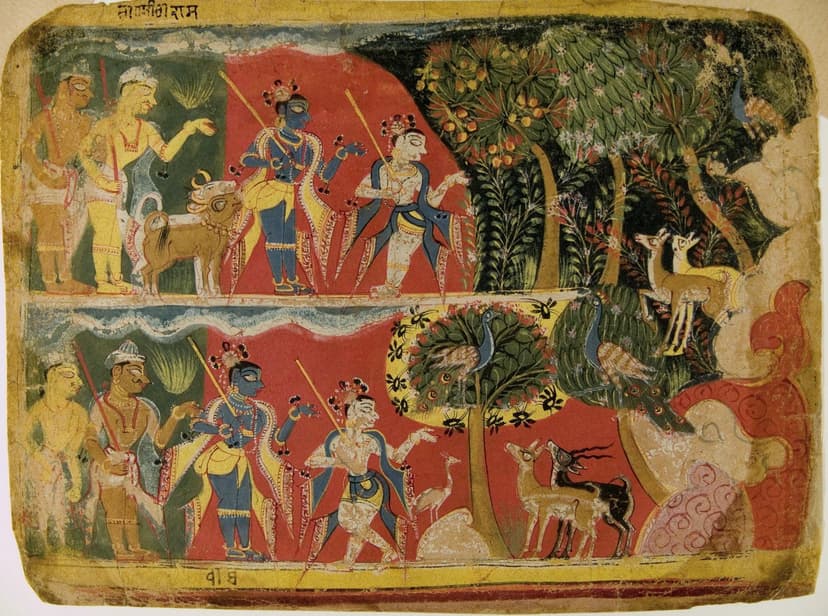
These are the miracles that grow around a saint's childhood, and historians set them aside. What is not in doubt is that he was unusual in mind and in body both. In his late teens he came out of the school to take up his father's office as Siromani, and he held it for about fifteen years. He wrote and staged for the gods in that time, so he was never an unreligious man. He was a chief who wrote, and not yet a preacher. Then his young wife died, and the grief turned all of that devotion to Krishna alone. What he built on it is the whole of his life.