Srimanta Sankardev
The fifteenth-century saint who founded Assam's neo-Vaishnava (Eka Sarana) movement and, with it, much of modern Assamese culture.
Srimanta Sankardev was a saint, poet, playwright, composer and reformer who founded the neo-Vaishnava faith of the Brahmaputra valley. Preaching it, he gave the valley a written literature, a body of song, a form of theatre, a school of dance, and a village institution that still stands at the centre of Assamese life. By the traditional reckoning he lived from 1449 to 1568, a span of some 120 years. These dates are disputed, but the influence is not. He did all of it inside one lifetime, in a valley whose scripture was locked in Sanskrit and whose worship ran through a priesthood. He took the scripture out of Sanskrit, the priest out of the way, and the bar of caste off the door of the prayer hall. Much of the valley has worshipped that way ever since.
The Bhuyan world he was born into
Sankardev was born at Bardowa in the country of the Bara-Bhuyans, a confederacy of landed chiefs. They held the central valley in the gap between two powers, the old Kamata kingdom that had collapsed to the west and the Ahom kings pushing down from upper Assam. His family were Kayastha chiefs of that order and his father Kusumbar held the first rank among them, the title of Siromani. It was a world of small lordships with no settled centre, no capital and no single authority above the chiefs themselves. A man born into it was expected to hold land and administer people, not to remake a religion.
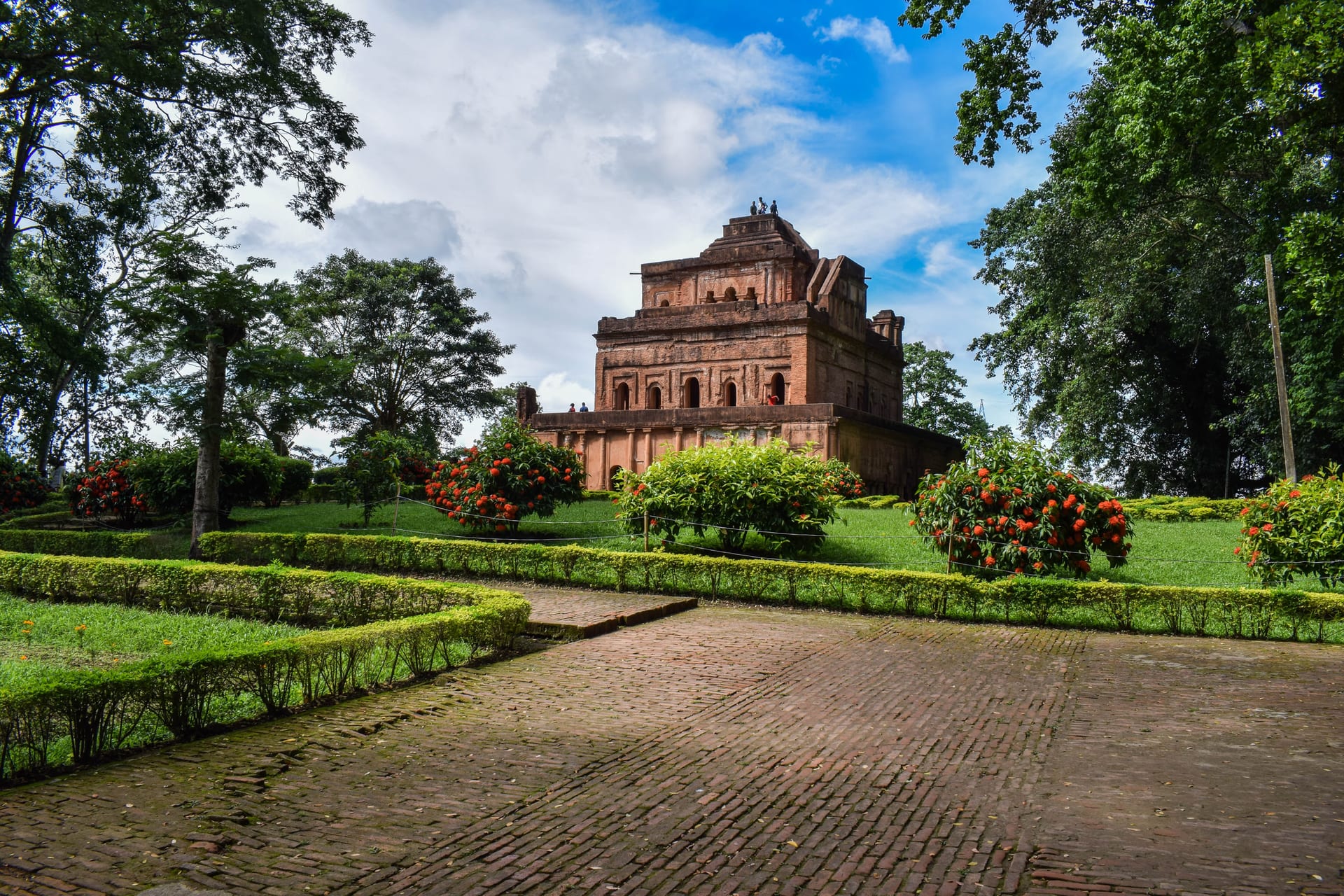
He lost both parents young and was raised by his grandmother. He was twelve before he was sent to the tol of the pandit Mahendra Kandali, the village school where a boy of standing learned Sanskrit grammar, the epics and the puranas by heart. Stories grew up around that schooling. In the best known of them the boy composes a hymn before he has been taught the vowel signs, using only the consonants he knows. These lores come from the charit-puthis, the devotional biographies written a century and more after his death, and they are told as a story below.
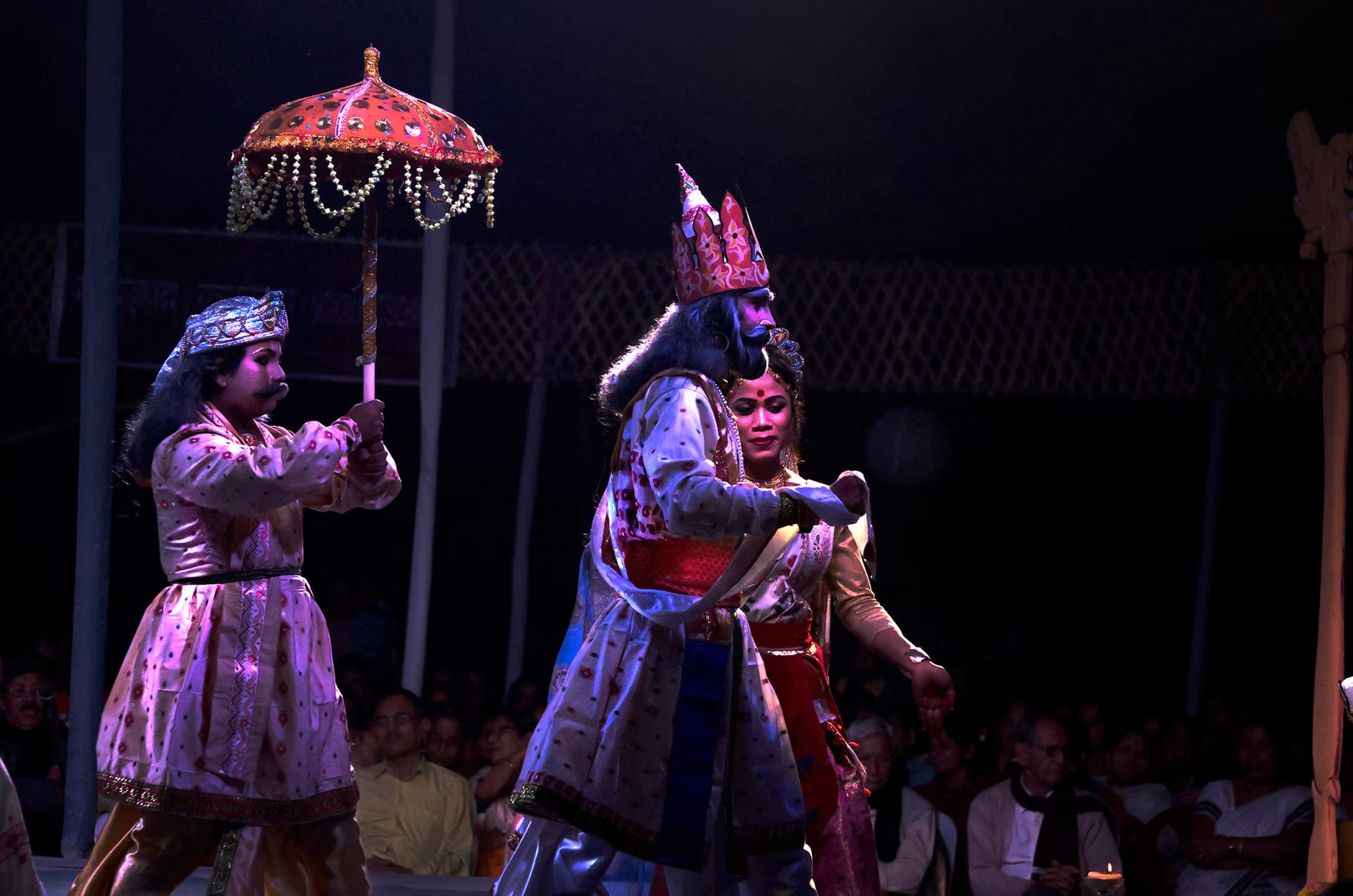
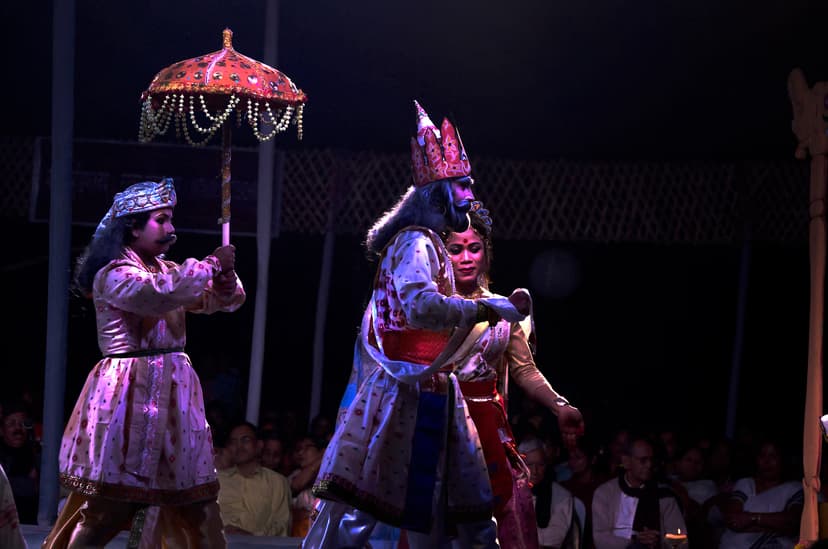
Out of the tol he stepped into the life he had been born to, taking up his father's office as Siromani of the Bhuyans in about 1466. The cast of mind that would define him showed itself almost at once. In 1468, at nineteen, he wrote and staged a play at Bardowa, the Chihna Yatra. He painted the seven heavens of Vishnu on sheets of cloth and hung them behind the acting floor, had the drums and cymbals built to his own design, trained the singers and drummers himself, and acted in it. The form he was borrowing from was the Oja-Pali, the old Assamese performance of a lead singer and his answering chorus, which the valley had long had. Plays of the kind he began writing that year are called the Ankiya Naat, and a staging of one is called a bhaona. The Chihna Yatra is counted the first of them.
Not long after, he married Suryavati. A daughter, Manu, was born about three years later, and his wife died some nine months after that. The grief turned him out of the life of a chief. He gave Manu in marriage, handed the household to his son-in-law Hari, and walked out of the valley.
What he went looking for
Sankardev went looking for the religion itself. His wife's death had deepened a turn of mind he already had, and what he set out to see were the great seats of Vaishnavism in the rest of India. He left in 1481, at thirty-two, with seventeen companions, among them his friend Ramaram and his old teacher Mahendra Kandali. The journey lasted twelve years and took him to Puri, Gaya, Mathura, Vrindavan, Dwarka, Ayodhya, Rameswaram and Badrikashram. He was walking into the Bhakti movement at its height, the wave of personal, congregational devotion then remaking Hinduism from the Tamil country to Bengal. Its argument was simple. God is reached by love and by the singing of his name, and not through ritual or a priest. Sankardev came back holding that argument as his own.
He was home again in about 1493. Soon after, a Brahmin scholar from Mithila named Jagadisa Mishra came to Bardowa carrying a copy of the Bhagavata Purana. Mishra read the whole book aloud to Sankardev and explained it to him as he went. That reading settled what Sankardev would preach. The Bhagavata, and no other book, became the scripture of everything he built afterwards. He had his book. What he did not yet have was a plan for the valley he had come back to.
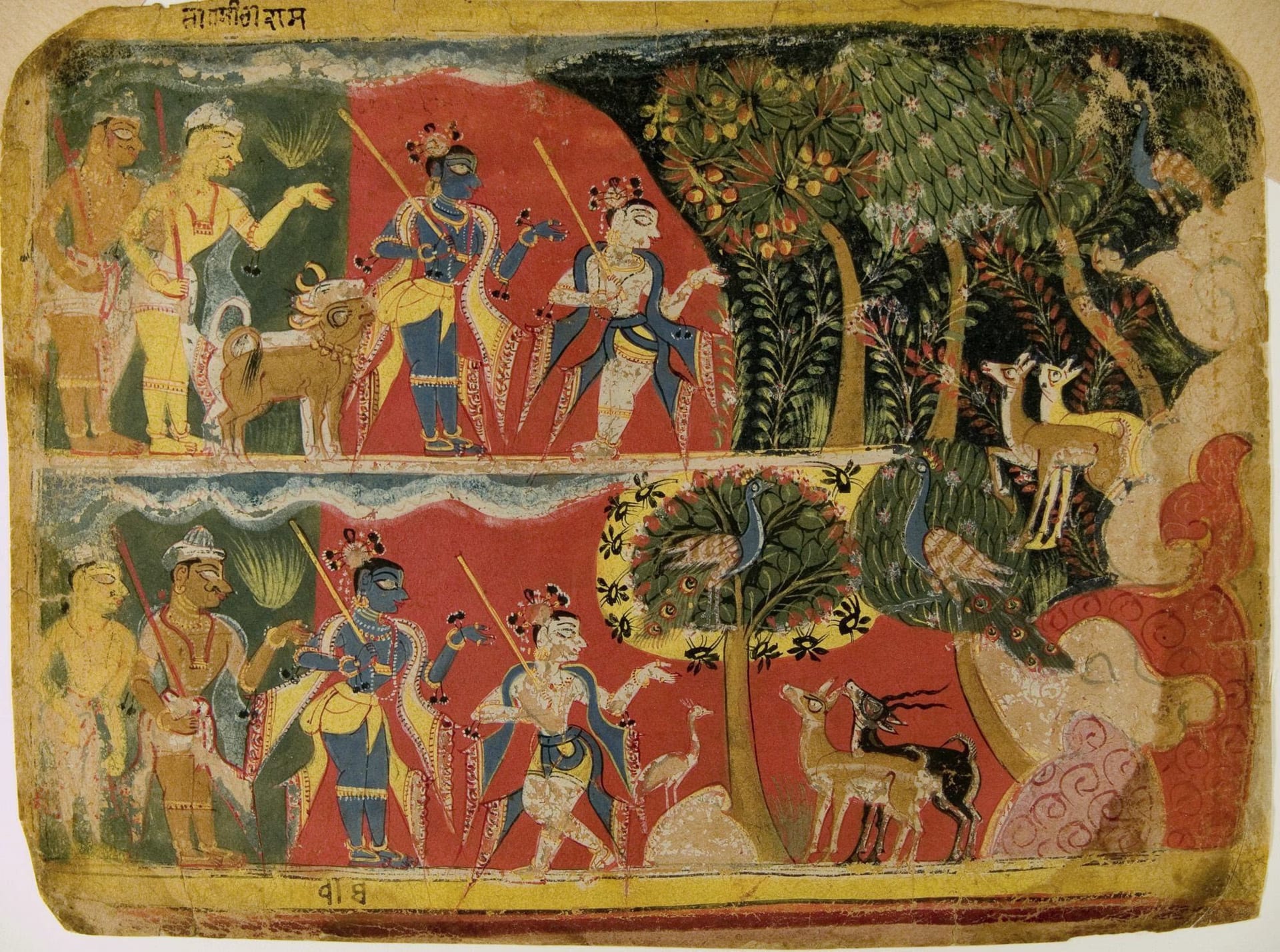
The valley itself supplied it. Religion in Assam then meant the goddess cults and the Tantric schools. Animal sacrifice stood at the centre of worship, a priesthood controlled access to the gods, and scripture was locked inside a Sanskrit almost nobody could read. Caste ranked who could approach what, and whole peoples of the hills and the riverbanks stood outside the caste order altogether. Sankardev's answer was to take every one of those obstacles away.
The founding of the faith
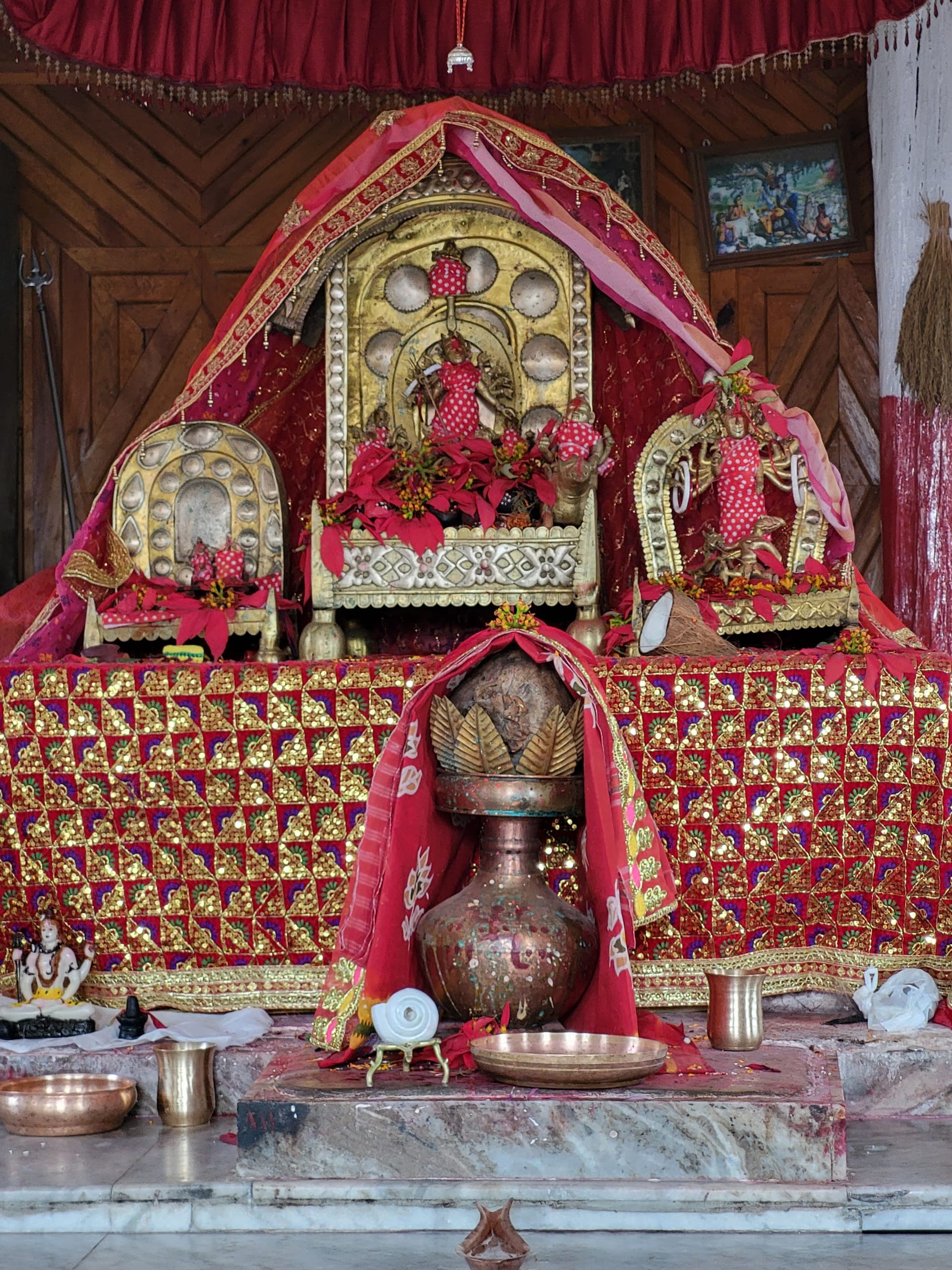
He raised his first house of prayer at Bardowa and began to gather a congregation. What he preached was the Eka Sarana Nama Dharma, the religion of taking sole refuge in one God through the chanting of his Name. Its God was Krishna, understood not as one incarnation among many but as the supreme being himself, Narayana, of whom every other god and avatar was a partial expression. Of the nine traditional forms of devotion he rested the path on two, sravana and kirtana, the hearing and the singing of God's names and deeds. Of these he made congregational song the heart of worship. The mood was dasya bhava, the love of a servant for his master, sober and reverent. Here his path parted from the Gaudiya Vaishnavism of Bengal, which takes the romantic love of Radha for Krishna as its highest key. Sankardev did not worship Radha at all. His Krishna was lord and not lover. There was to be no image, no sacrifice, no priestly intermediary and no bar of birth. The doctrine came to rest on four things, the char vastu. They are nama, the Name, deva, the one God, guru, the preceptor, and bhakat, the congregation of the devout.
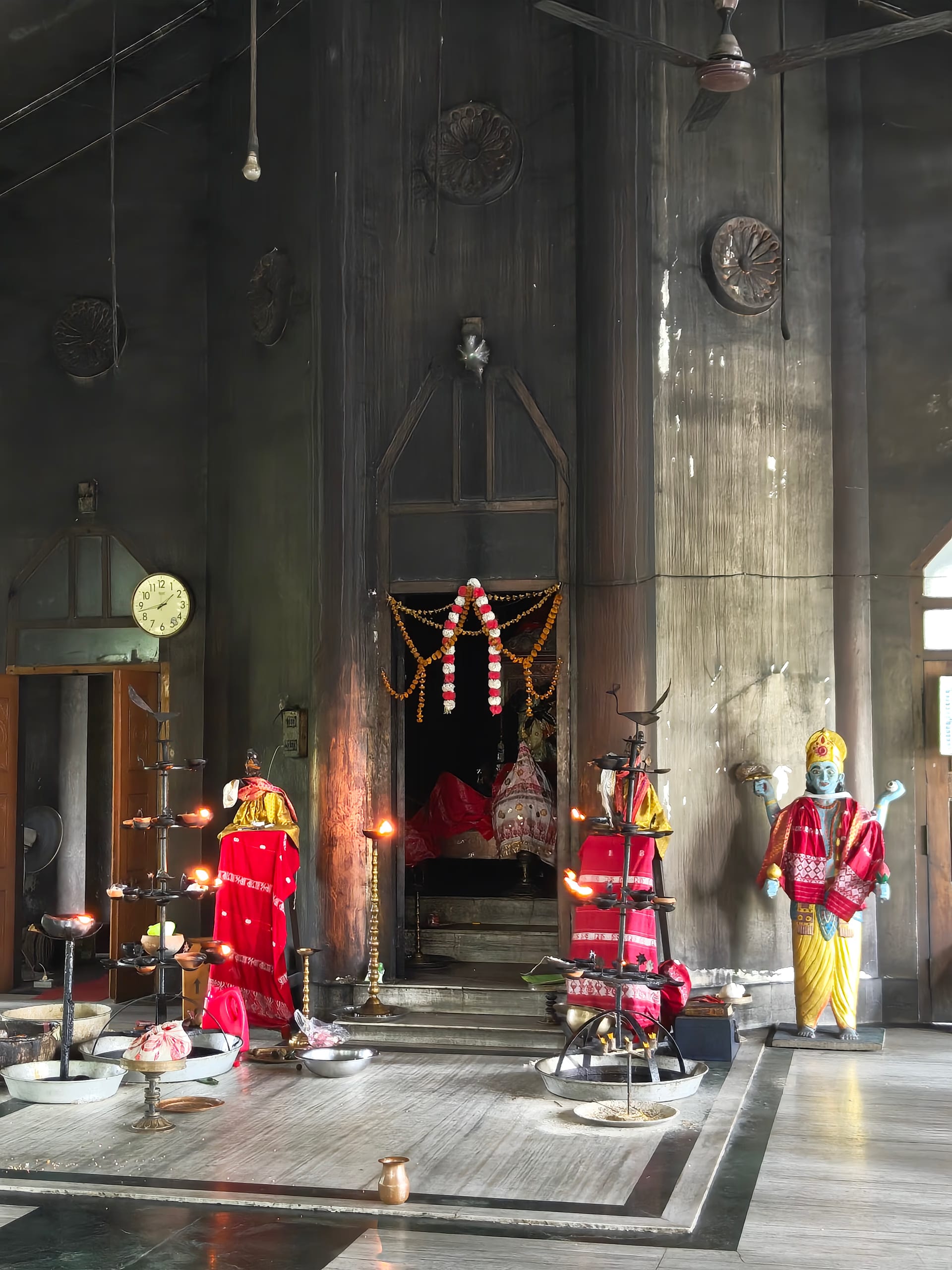
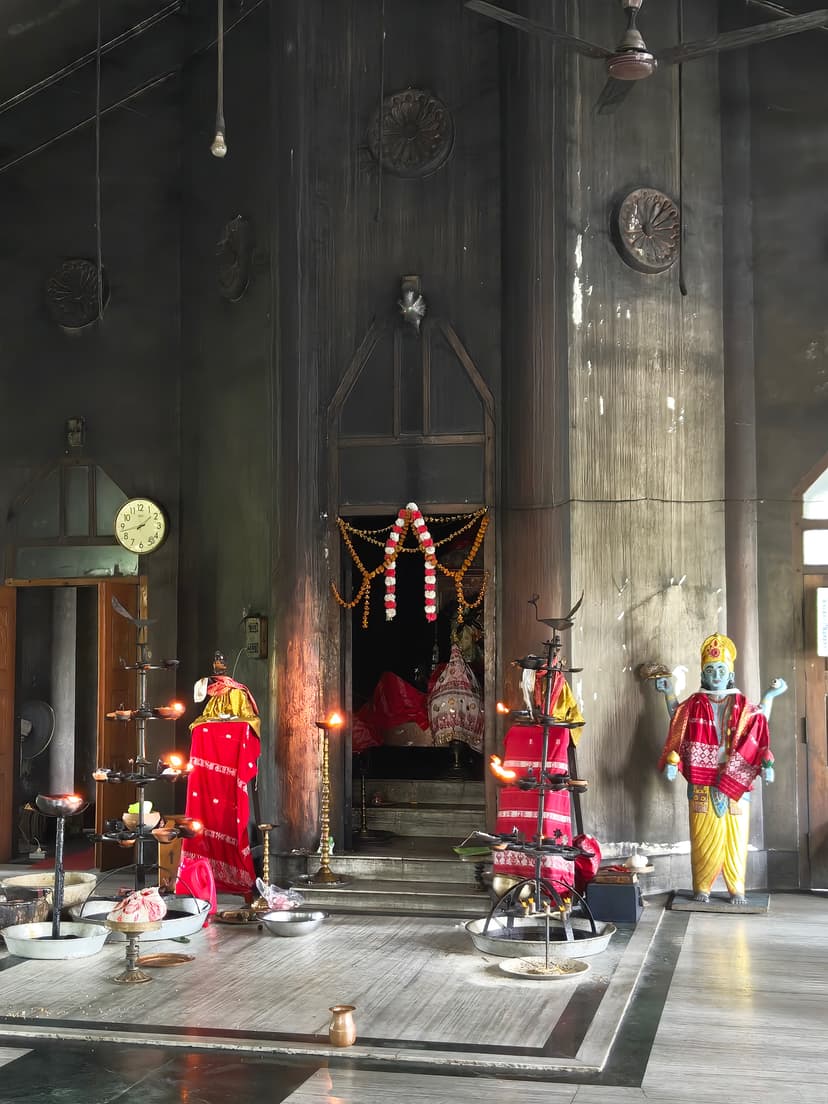
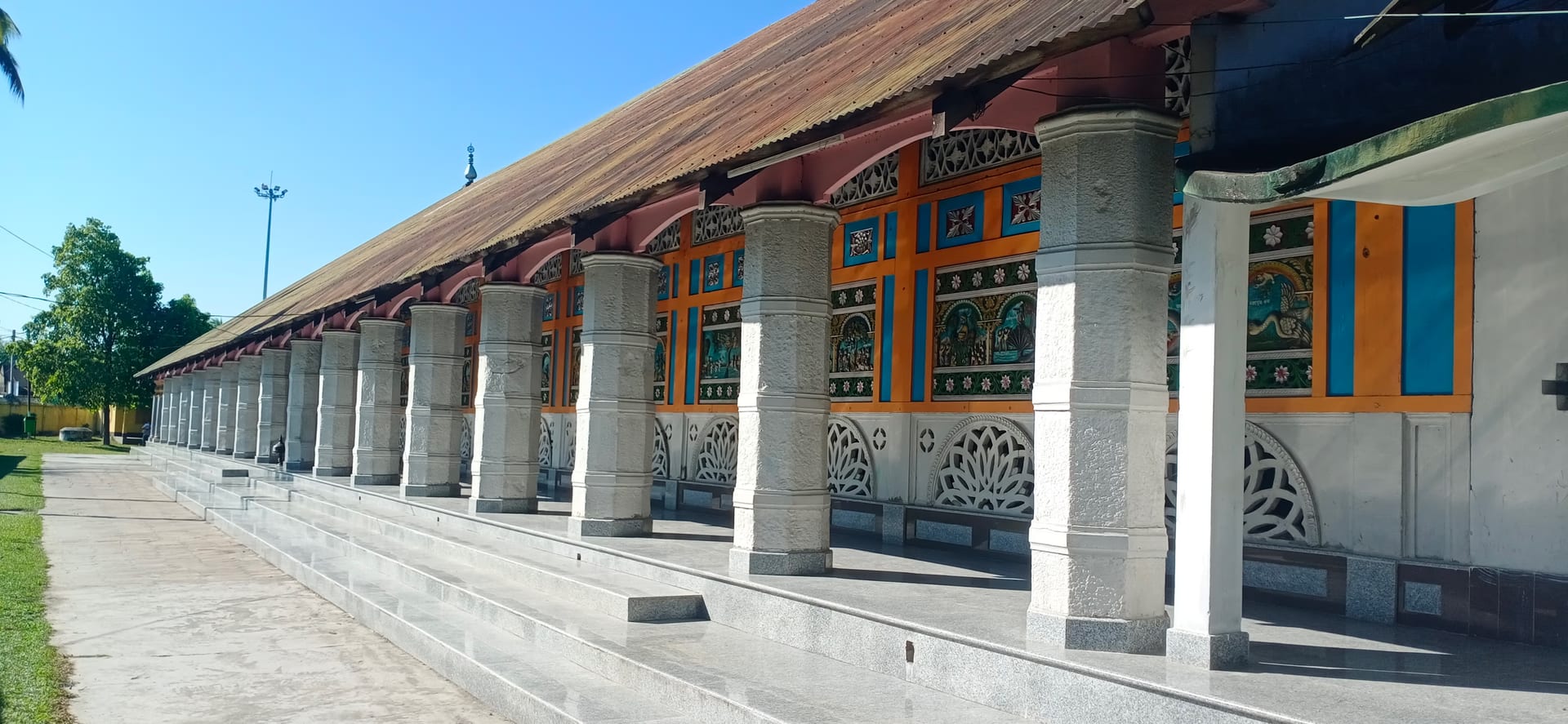
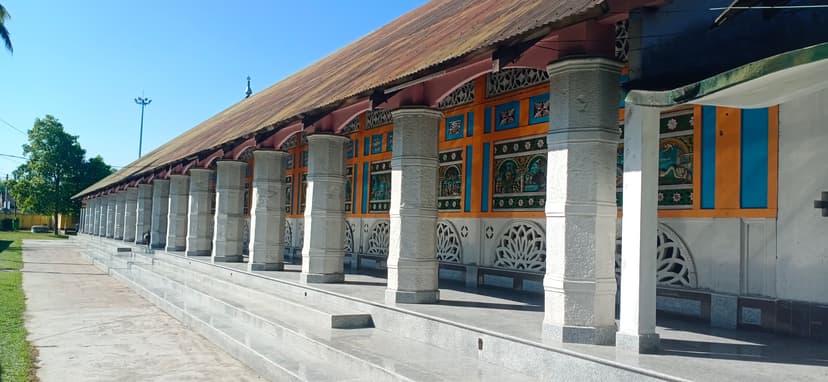
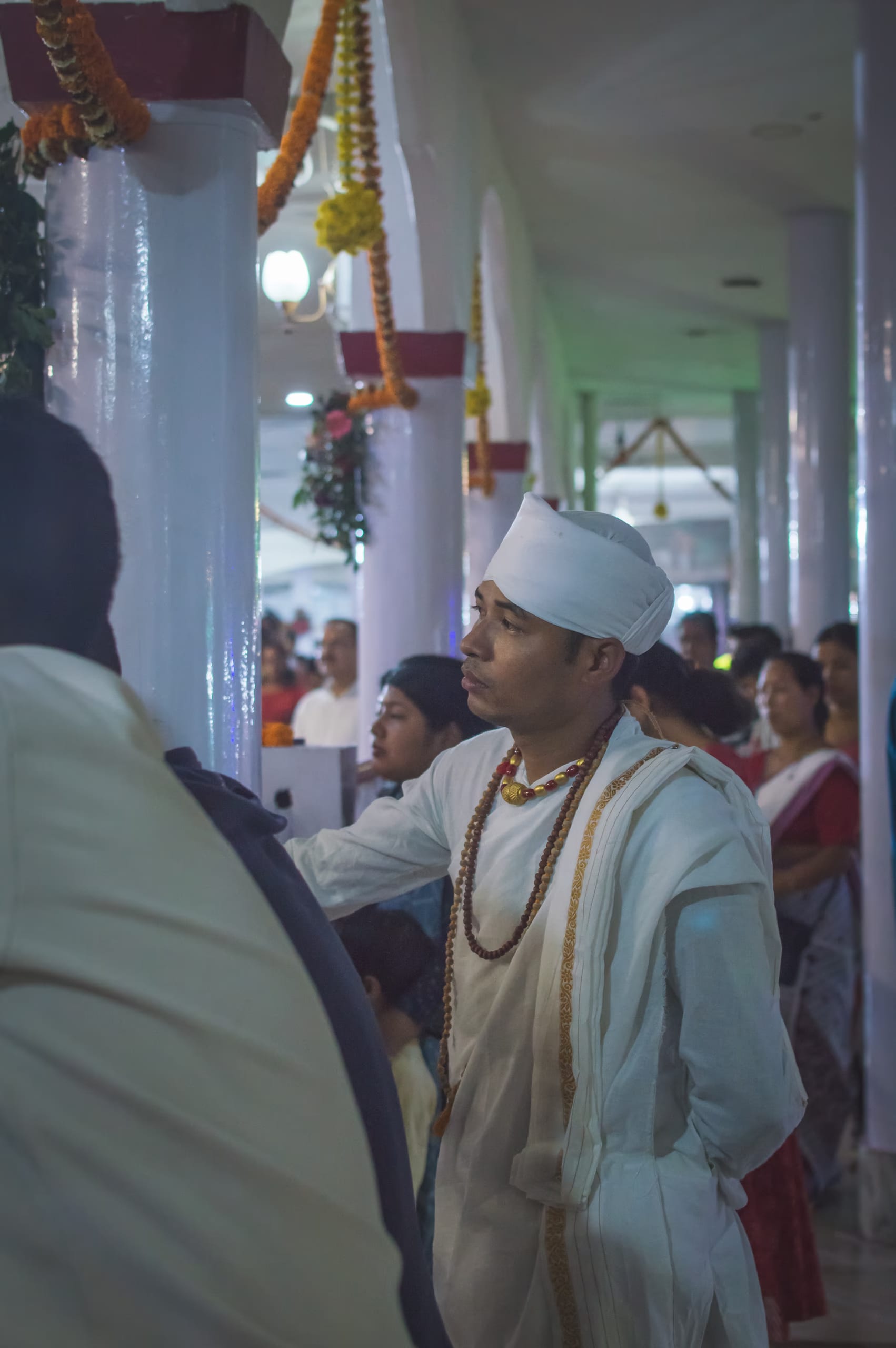
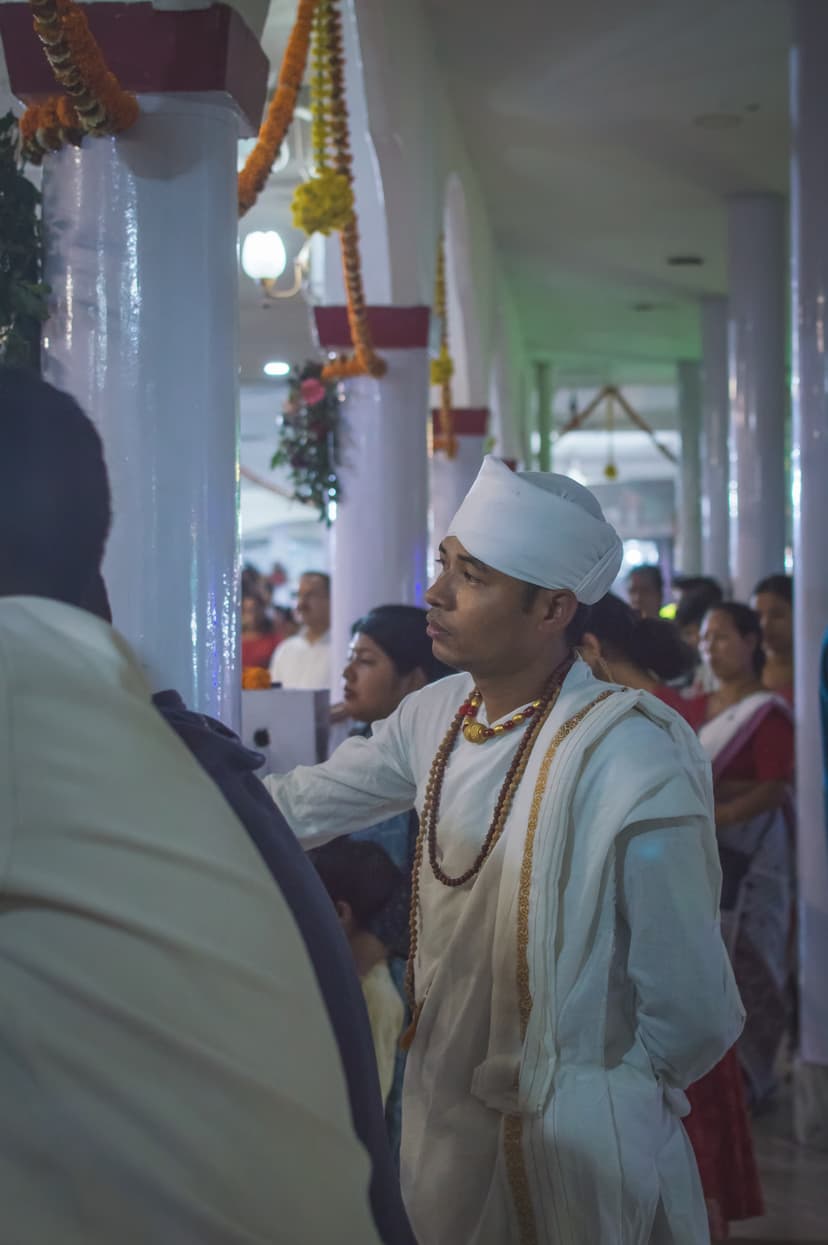
A faith with no image and no priest still needs somewhere to happen, and his answer was the namghar, the village prayer-hall. It is a long open hall of wooden pillars under one roof, with a small sanctum, the manikut, at its eastern end. On the guru-asana inside the manikut stands not an image but the book, the Bhagavata itself. Putting the book where the image would stand is the whole theology in one piece of furniture. Every village raised one. Because the hall belonged to no priest and no caste, it became the place where the village met, judged its disputes and settled its affairs as much as where it prayed. It is still the working civic centre of the Assamese village.
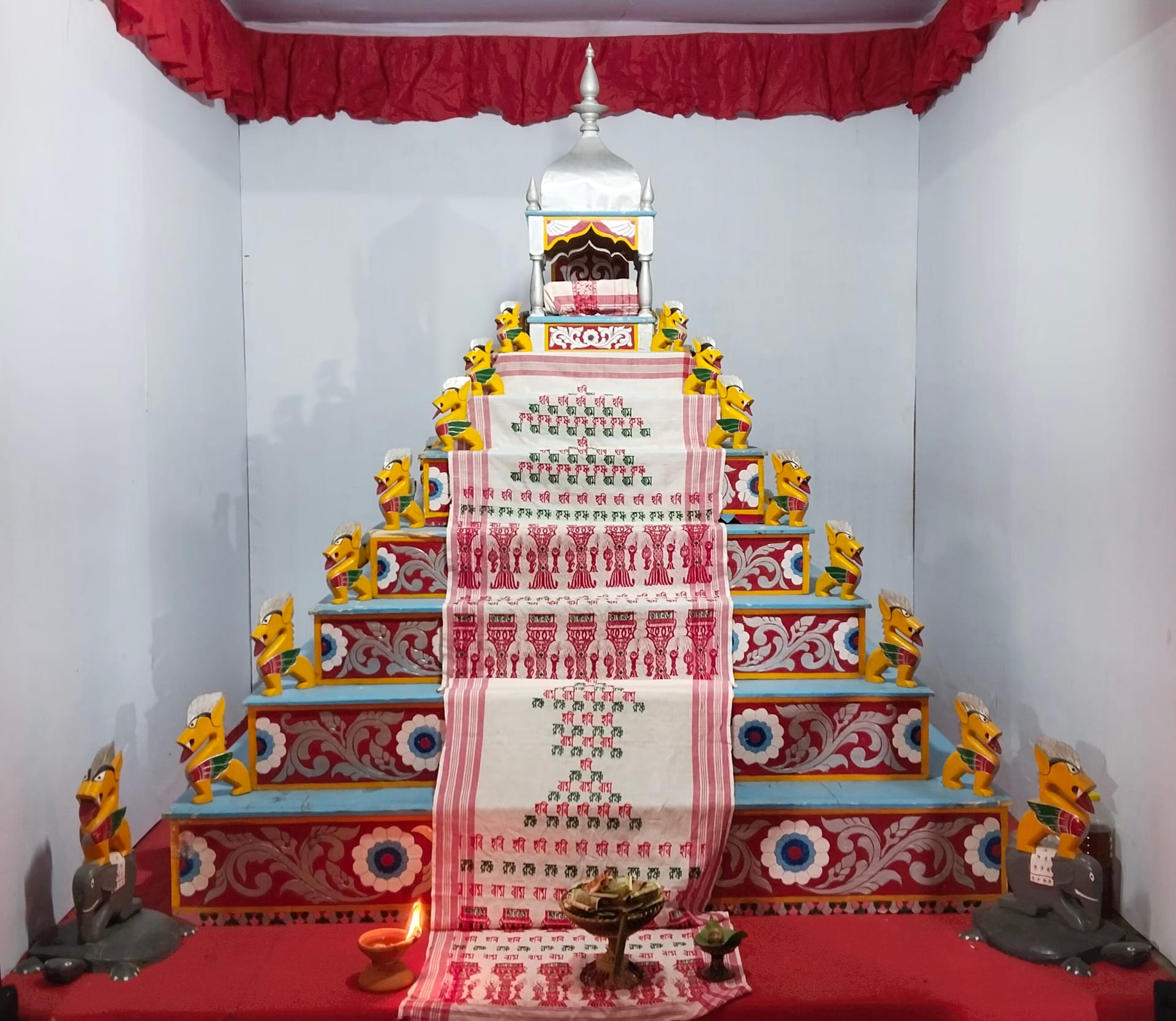
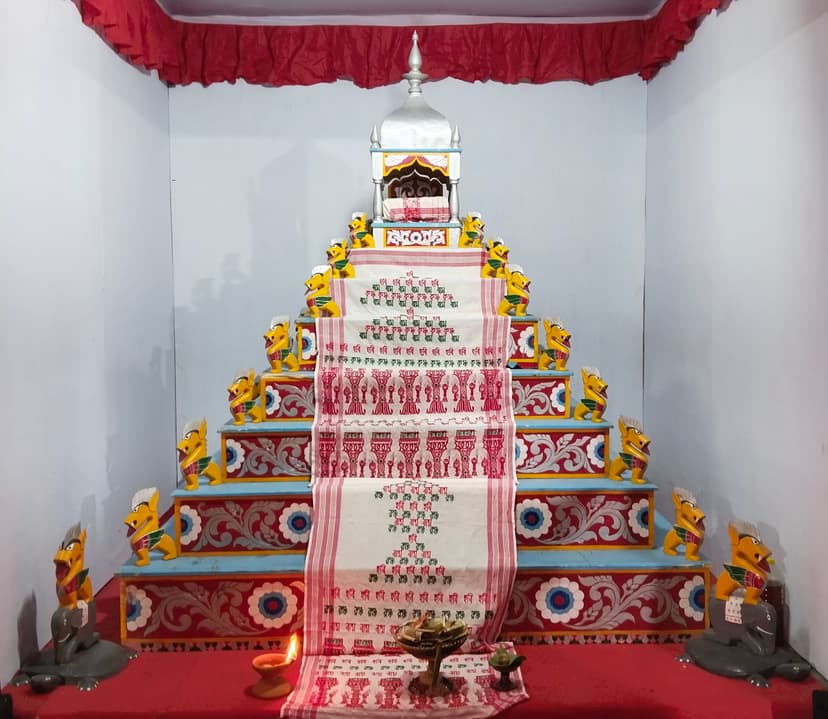
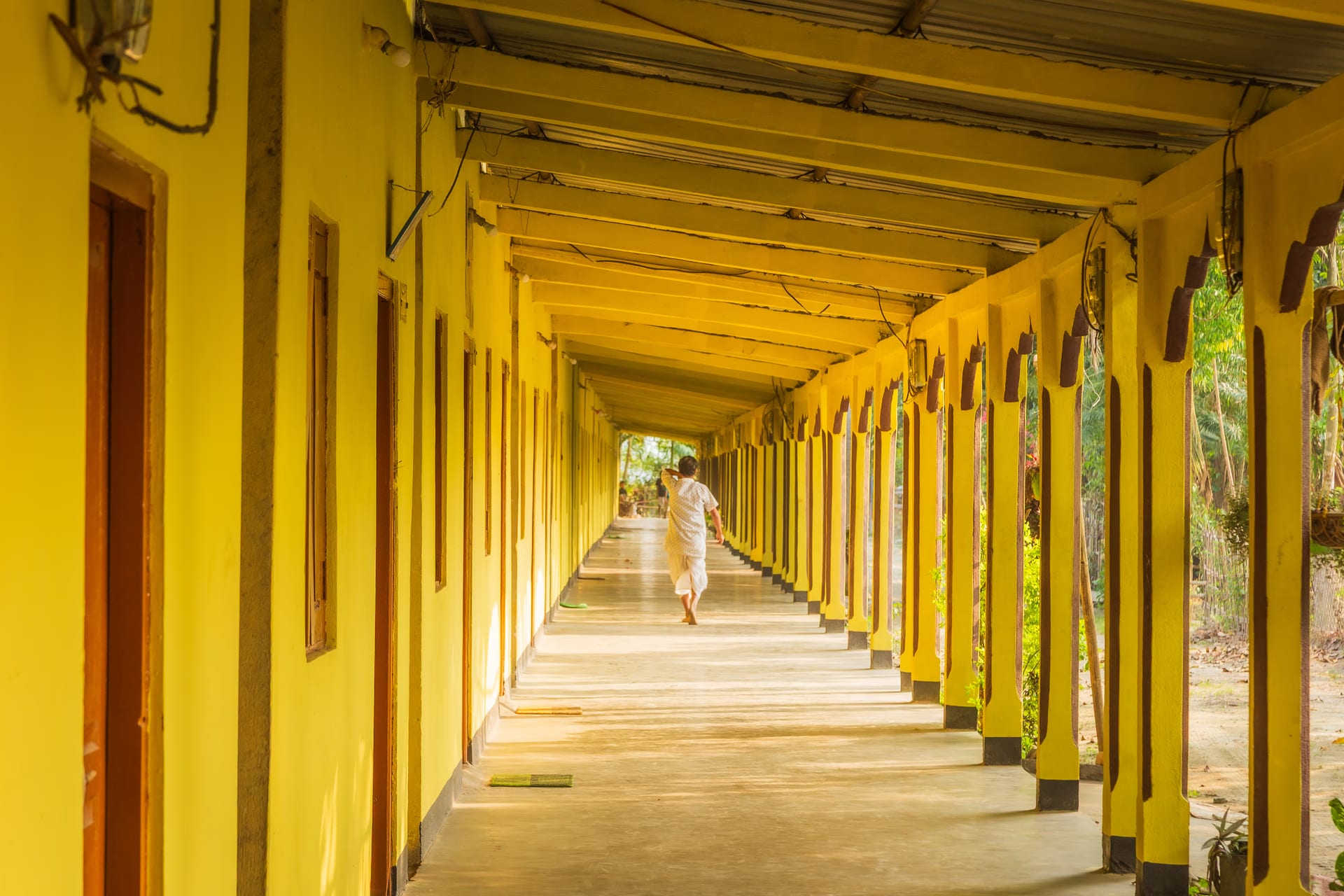
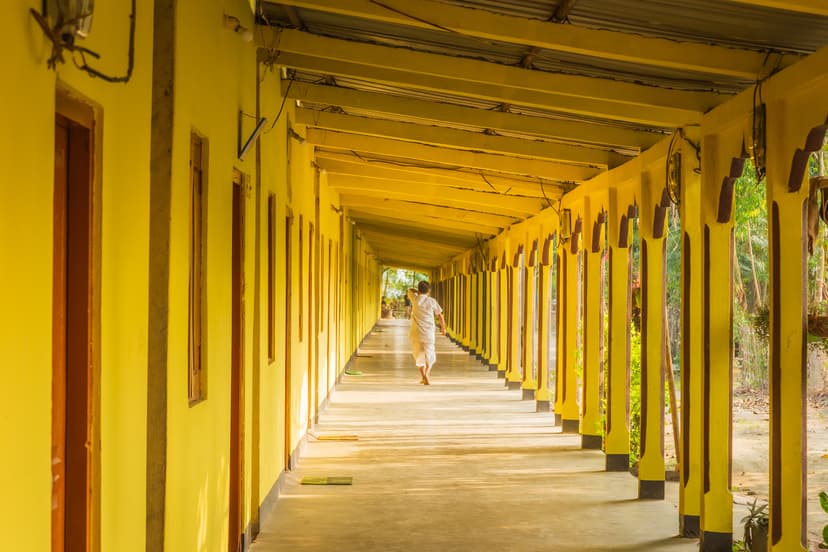
The sattra is the monastery that grew up beside the namghar, and it is a distinctly Assamese institution. A sattra is headed by an adhikar in a line of succession from its founder, and houses bhakats who may be celibate or householders. It holds land and disciples, and works at once as a seminary, a manuscript library, a school of art and a unit of rural government. The sattras are why the movement did not thin out into folklore. They kept the songs in tune, the plays in repertoire and the dance in training through four centuries when almost none of it was written down. Majuli became their heartland. Its houses include Auniati and Dakhinpat, the celibate Kamalabari whose troupes carried Sattriya to the outside world, and the mask-making sattra of Samaguri.
Persecution, flight, and the twenty Koch years
A preacher who gathered thousands and dismissed the rituals of the Brahmins was a problem for both the orthodoxy and the state. The second half of his life was spent moving ahead of that trouble. The Bhuyans left the Bardowa country in about 1516 and he moved east with them by stages, to Singari, to Routa, to Gangmau, and on to Dhuwahat near Majuli in Ahom territory. He stayed at Dhuwahat for years, and it was there that he met Madhavdev, a young Sakta who came to argue against him over the sacrifice of a goat. Madhavdev lost the argument and became the movement's finest poet and his successor.
The blow fell in the 1540s, under the Ahom king Suklenmung. Sankardev's own son-in-law, Hari, was put to death, and Madhavdev was imprisoned for a year. Around 1546, with the Koch armies pressing east, Sankardev crossed west out of Ahom reach and into Koch territory. He settled at Patbausi near Barpeta and built a kirtan-ghar there, and Patbausi became his base for the rest of his life.
Trouble followed him across the border. His Brahmin opponents carried a complaint to the Koch king Naranarayan, that this preacher was corrupting the people with a new religion, and the king ordered his arrest. Sankardev went into hiding. Two of his disciples, Narayan Das Thakur Ata and Gokulchand, were seized instead, taken to Cooch Behar and tortured, and neither gave up where their teacher was. What saved him was the court itself. Chilarai, born Sukladhwaj, was the king's brother and the general who won the Koch kingdom its empire. He was also married into Sankardev's family, which made the hunted preacher kin to the most powerful soldier in the kingdom. Chilarai sheltered him and won him a hearing rather than a sentence. The king put the accusers to proof, Sankardev answered them in open debate, and Naranarayan cleared him of the charges. Chilarai would eventually take initiation into the faith. Tradition remembers a man once sent to seize Sankardev, who ended by kneeling to him.
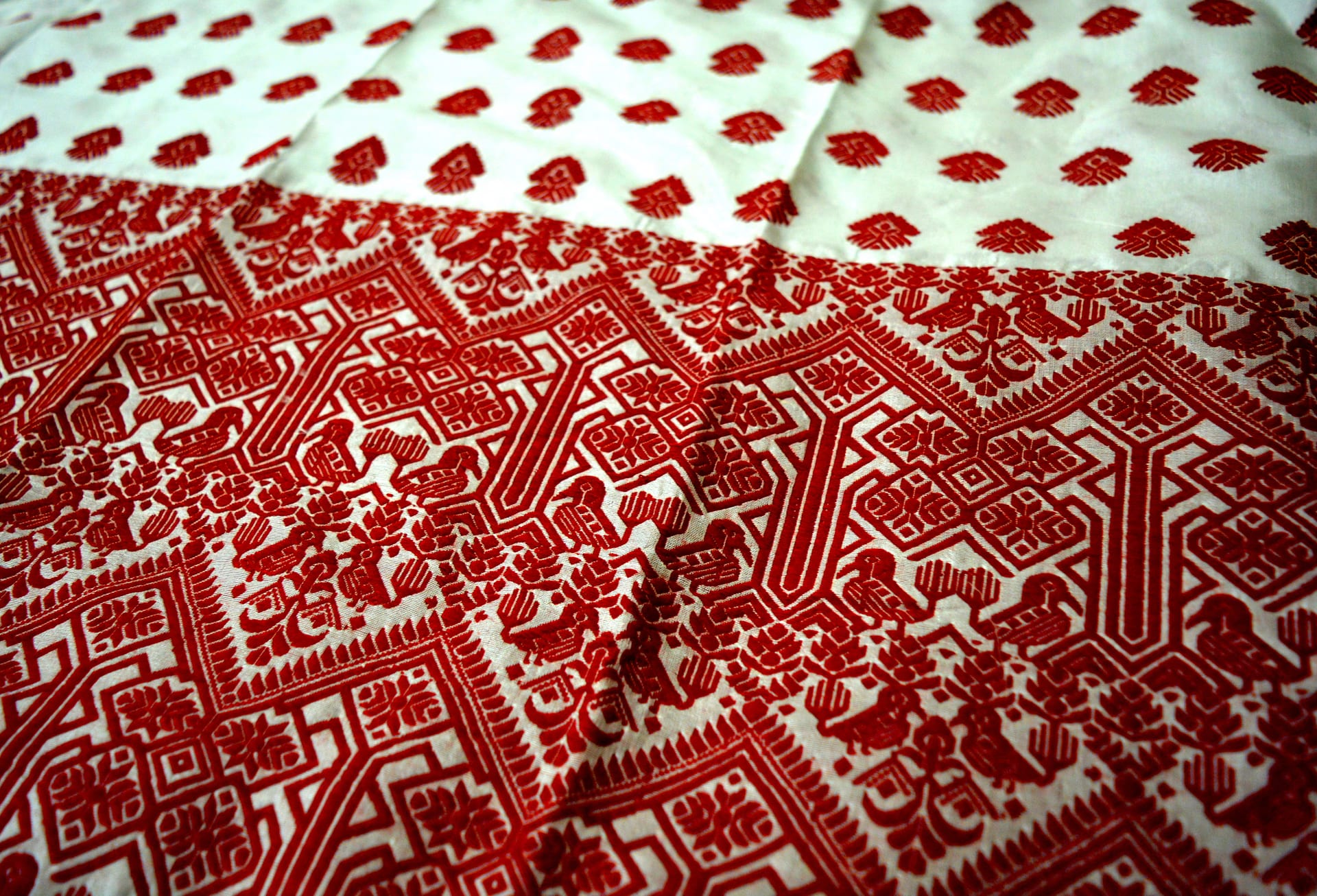
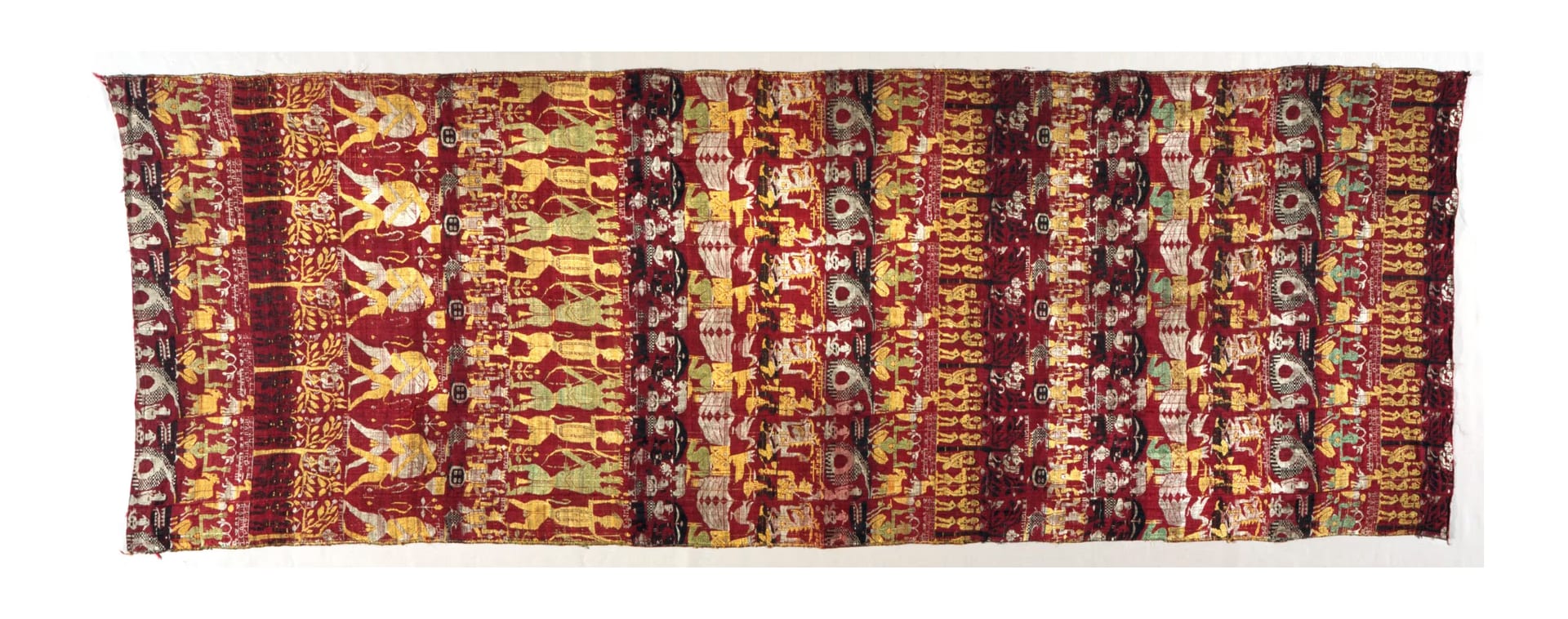
The hearing changed Sankardev's position from fugitive to guest. Naranarayan asked him to attend the court, and in his last years he moved between Patbausi and the Koch capital at the king's request. Sankardev made a second pilgrimage to Puri in 1550 with more than a hundred disciples, returning within months. It was in this period that the king commissioned work from him. Chilarai commissioned the Vrindavani Vastra, a great figured cloth of woven pat silk carrying the exploits of Krishna at Vrindavan, woven at Barpeta under Sankardev's own supervision. That cloth later left Assam for Tibet, and it is in the British Museum today.
The literary work
Almost everything Sankardev wrote was in the language of the people rather than in Sanskrit, and that break is the single most consequential literary act in the history of Assamese. The work spans his whole adult life, from a narrative poem written while he was still at the tol to the books he was still completing in his eighties. The largest single share of it was written in the Koch years at Patbausi. But it was not all in one language. He used two, for two different jobs. The scripture went into Assamese. He rendered much of the Bhagavata Purana into it, freely adapting as he went rather than translating line for line. The Sanskrit came out in the words and idioms of the valley in his own day. His own hand covered Books I and II, parts of Books VI and VIII, Books XI and XII, and the celebrated first half of the tenth Book, the Adi Dasama, on the childhood of Krishna. The rest of that Book, and others he had begun, were finished by his disciples, so the Assamese Bhagavata is the labour of more than one generation. He also took up the Ramayana where the earlier poet Madhava Kandali had left it.
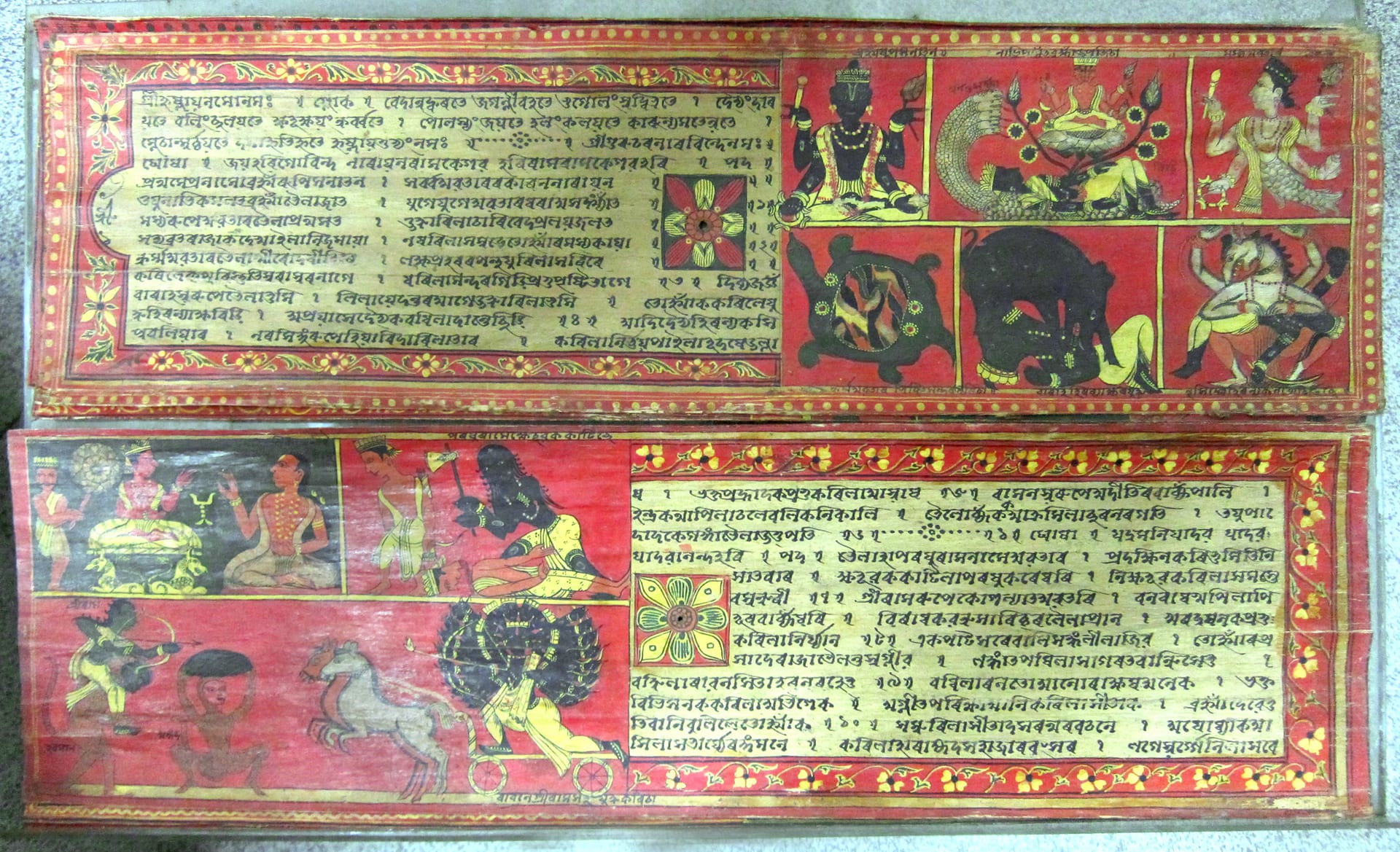
Song, drama and devotional verse went into the other language. The Borgeet, the plays and the Kirtan Ghosha itself are not in Assamese but in Brajavali, an artificial literary idiom that was nobody's mother tongue anywhere. It belongs to the family of Brajabuli, the devotional song-language of the eastern Vaishnava world. The prestige of the Maithili poet Vidyapati carried it east, and poets from Mithila to Bengal and Odisha imitated it. Scholars describe its mixture differently, some as Maithili inflection carrying Assamese, others as Braj and Assamese blended with Sanskrit, but they agree on what it was for. It was a sacred register, deliberately archaic and slightly foreign, and it tied the valley's new faith to a devotional world much larger than the valley.
Beside the scripture he translated and the verse he wrote to be sung stands a third body of work, the books in which he argued the teaching in his own voice. The difference from the scripture is the difference between handing on a received text and writing a new one. The Bhagavata and the Ramayana came to him from the tradition and he put them into Assamese. The books that follow he made his own, some arguing the teaching outright, others lifting a single episode out of the Bhagavata and making a poem of it. The doctrinal treatises are the Bhakti Pradipa, the Anadi Patana, the Nimi Navasiddha Samvada and the Sanskrit Bhakti Ratnakara, which set out what devotion is and argue it against the worship of other gods. There is the Gunamala, a jewelled verse epitome of the whole Bhagavata, written at speed for the Koch king and short enough to carry in the memory. There are the narrative poems, from the Harischandra Upakhyana of his youth to the Rukmini Harana Kavya, the Ajamil Upakhyana, the Bali Chalana, the Kurukshetra, the Amrita Manthana and the Gopi Uddhava Samvada. And there is a verse form he invented outright, the bhatima, a poem of praise addressed to God, to the guru or to a king. Inside one lifetime a spoken vernacular acquired a scripture, a songbook, a dramatic repertoire and a reading public.
The arts that came with the faith
The movement arrived complete with its own arts, and each of them is now a discipline in its own right. The Borgeet are Sankardev's devotional songs, grave and slow, each fixed to a raga and a beat, sung in the prayer hall before the scripture is read. He composed the first of them at Badrikashram in 1488, on his first pilgrimage, and went on composing them for the rest of his life. The tradition holds that he wrote 240, that a fire destroyed the manuscript, and that thirty-four were recovered from memory. They are carried by the khol, the two-headed clay drum, and the taal, the heavy brass cymbals, in the ensemble of gayan singers and bayan drummers that still opens a service.
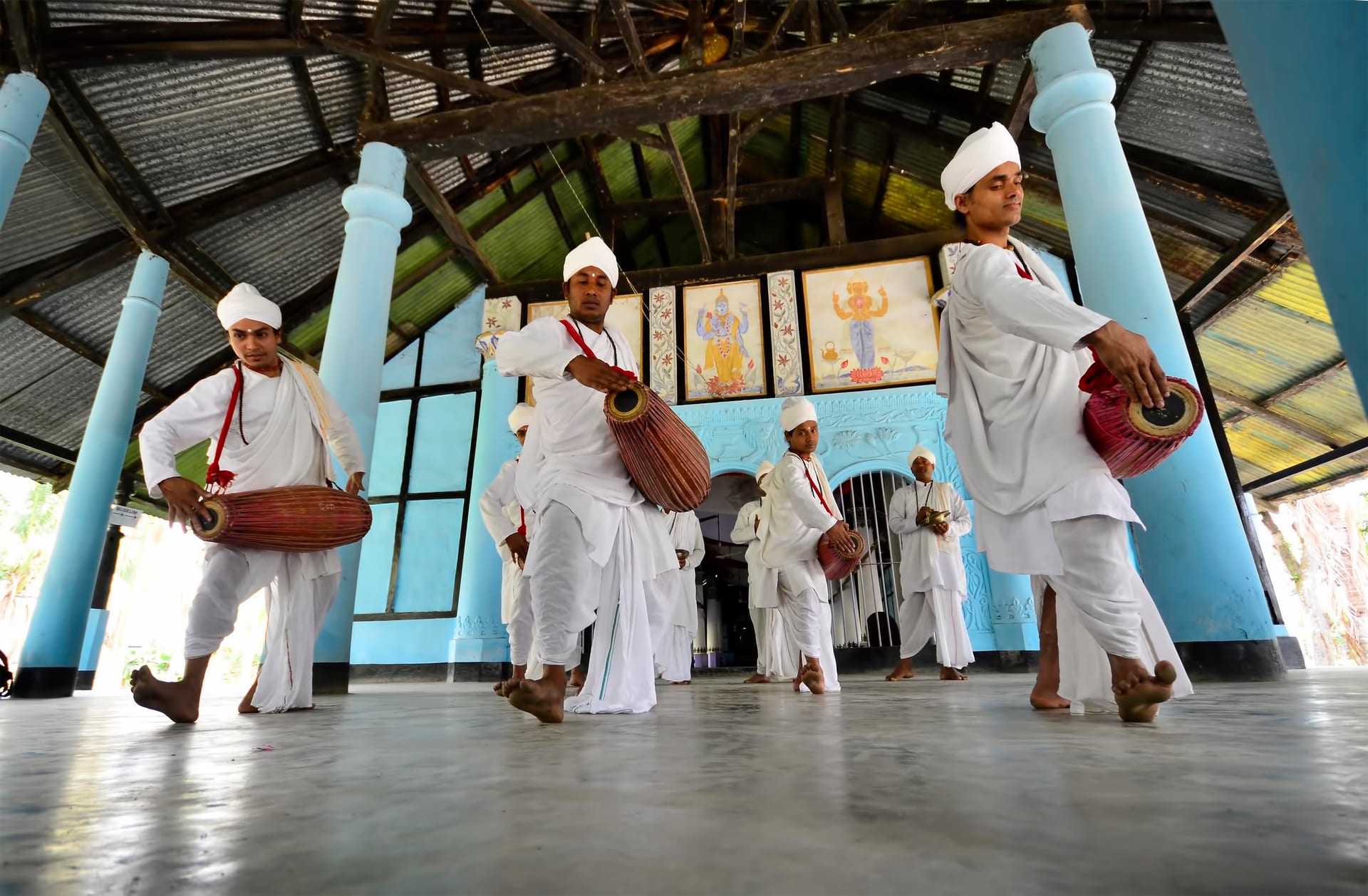
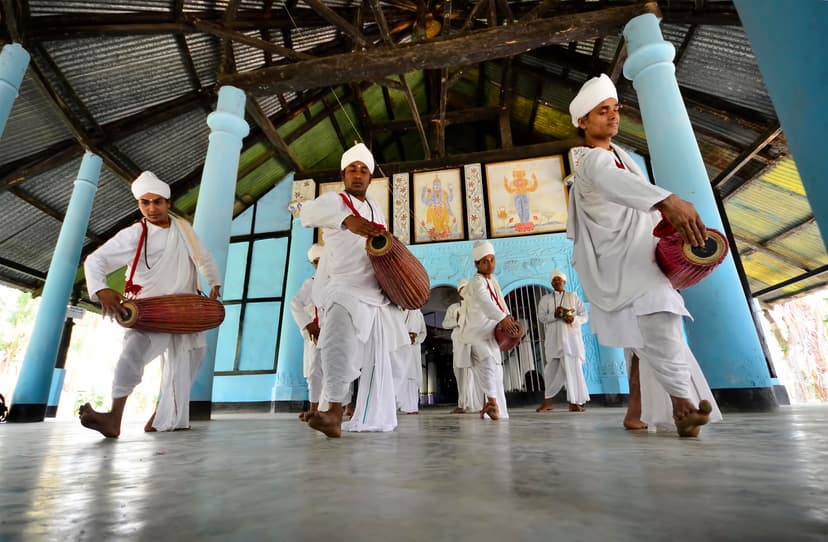
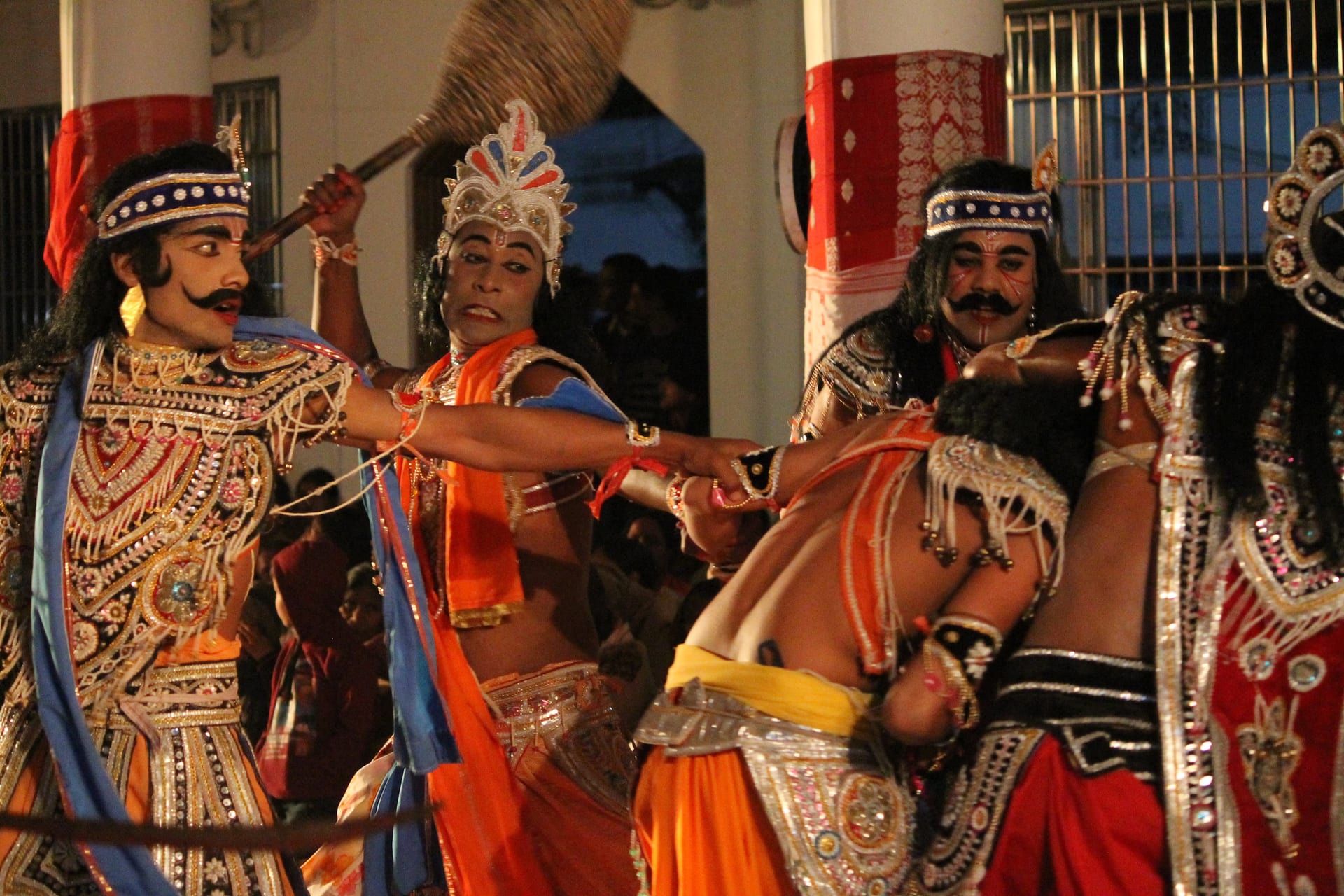
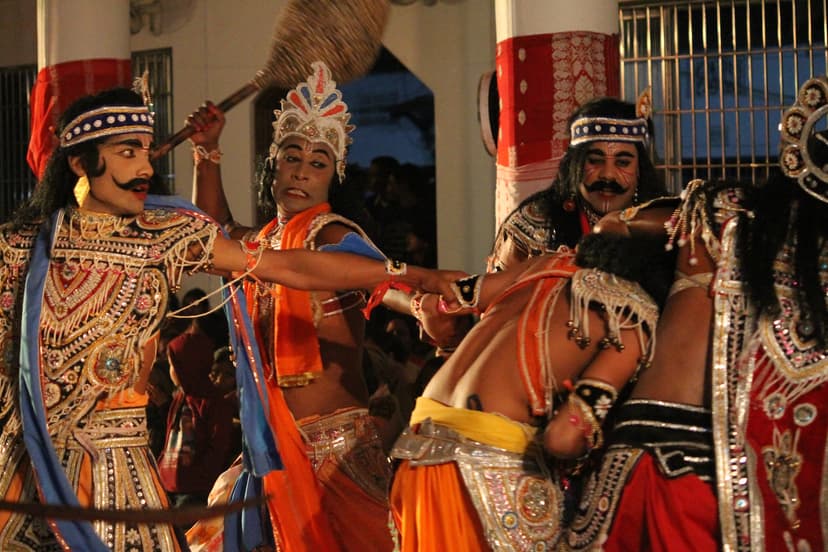
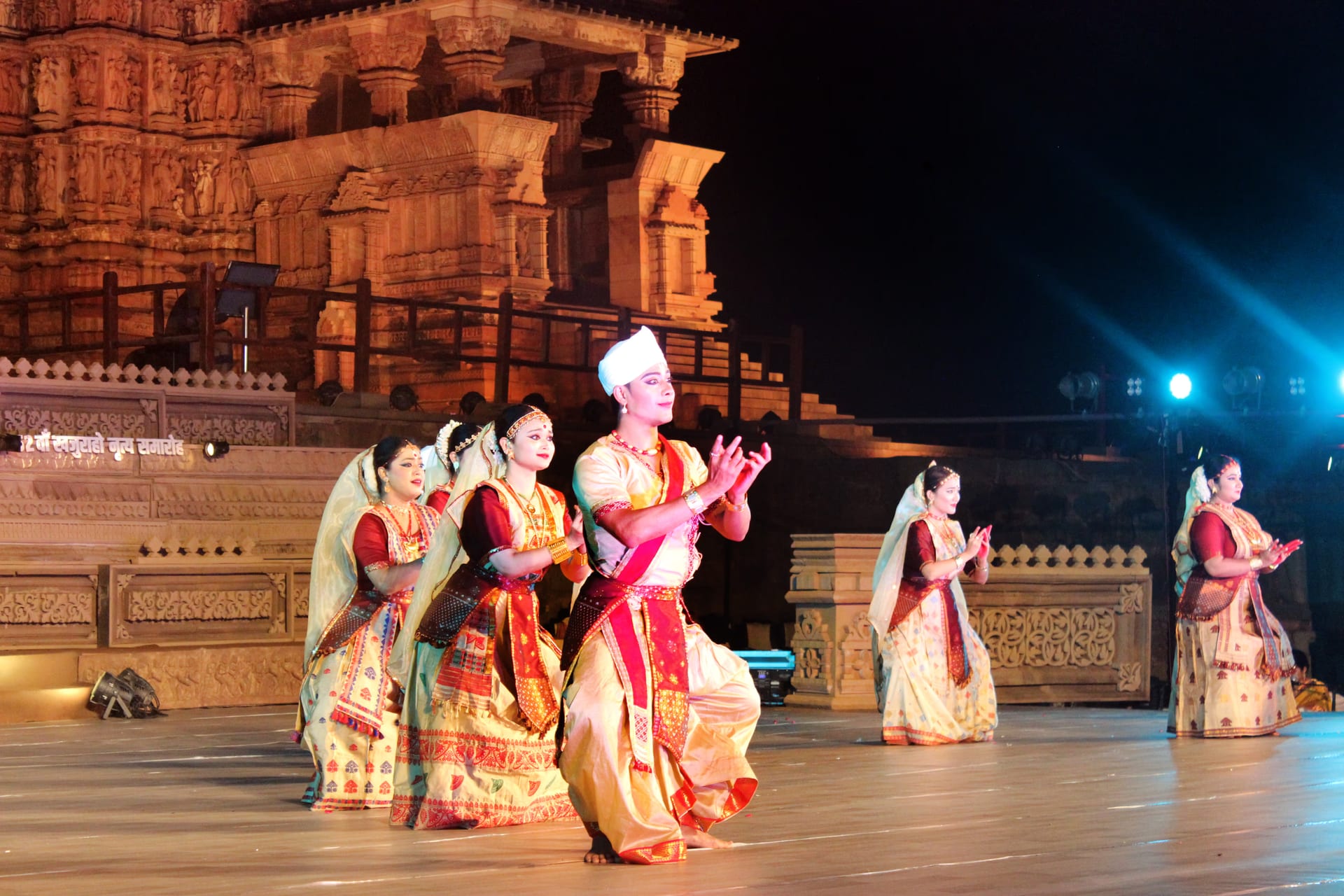
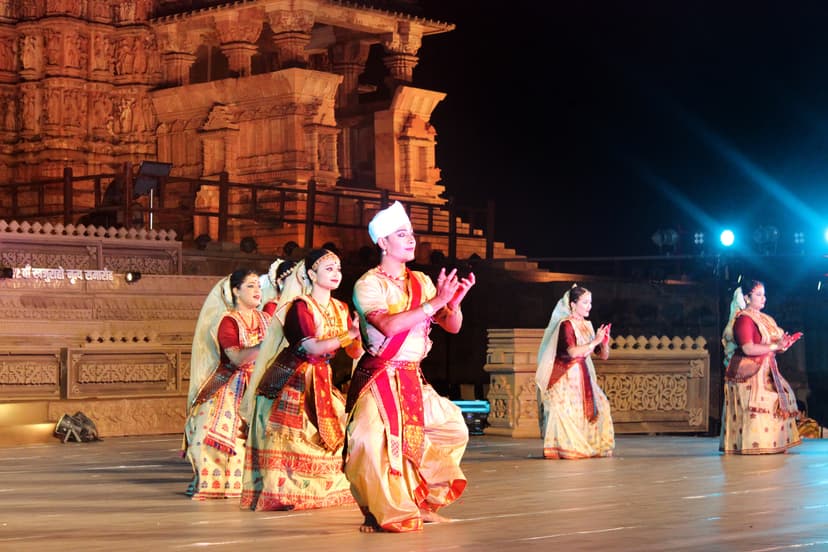
The theatre he had begun at nineteen he came back to as an old man. His Ankiya Naat are one-act pieces on the deeds of Krishna and Rama, staged as a Bhaona. Six of the plays survive, the Patni Prasada of 1526, the Kaliya Daman, the Keli Gopala, the Rukmini Harana, the Parijata Harana, and the Ram Vijaya, which he wrote in the year he died. The Chihna Yatra of his youth is counted the first of them and is lost. A bhaona runs all night, in the prayer hall itself rather than in any theatre, with a Sutradhar who narrates, sings and dances the audience through the play. Because gods and demons had to be shown, the sattras developed the mukha, the built-up cane-and-clay mask still made at Samaguri on Majuli. Out of the movements of these plays grew Sattriya, danced for four centuries inside the monasteries by celibate monks. The Sangeet Natak Akademi recognised it in 2000 as one of the classical dance forms of India.
A grand assimilation
Sankardev's faith was open by design and he enforced that opening himself. It set aside the claims of birth and drew Brahmin and Kaibarta into the same hall to sing the same lines, which is what made it dangerous to the caste society around it. His two greatest disciples came from opposite ends of that caste spectrum. Madhavdev, the Sakta youth who had come to argue him, became his successor and wrote the Naam Ghosa. Damodardev, a Brahmin scholar, was given charge of initiating Brahmin disciples and later founded an order of his own.
Beyond the caste order the door stood open too, and the charit-puthis are careful to record who came through it. Chand Sai, a Muslim tailor in the service of the Koch king, took initiation at Cooch Behar and followed him back to Patbausi. The tradition remembers Chand Sai there arguing the movement's case against Brahmin opponents. Among those Sankardev initiated, the biographies name Govinda, a Garo, Narottam, a Naga, Jayaram, a Bhutia, Madhai, a Jaintia, and Murari, a Koch, alongside Brahmin scholars such as Chakrapani Dwija and Sarvabhaum Bhattacharya. For a sixteenth-century religious movement in the eastern Himalayan foothills this is an unusual roll of names. It is also the practical reason a faith preached in one Bhuyan village became common to a whole valley rather than to one caste within it.
Legacy
Sankardev died in 1568 at Bheladonga, near the Koch capital in what is now Cooch Behar. The movement he left behind settled into two centres. The sattra at Barpeta that had grown out of the Patbausi years became its western capital, as Majuli became its eastern one. But the faith did not stay one after the second generation. Differences over the place of Brahmins, over image-worship and over the true line of succession split the sattras into four orders, the samhatis, which persist today. The Brahma samhati, led by Brahmin teachers in Damodardev's line, readmitted much of the Brahmanical and Sakta usage the founder had set aside. The Purusa samhati gathered around Sankardev's own descendants. The Nika samhati, from Madhavdev's line, held to the strictest observance. The Kala samhati, founded by Gopala Ata of Bhawanipur, spread furthest among the tribal and lower-caste populations and became the most numerous. Its Mayamara sattra drew its lay disciples from the Moran and Matak of upper Assam, whose Moamoria rebellion of 1769 would break the Ahom state. The unity Sankardev built began to divide almost as soon as he was gone, and the four orders are what survived of it.
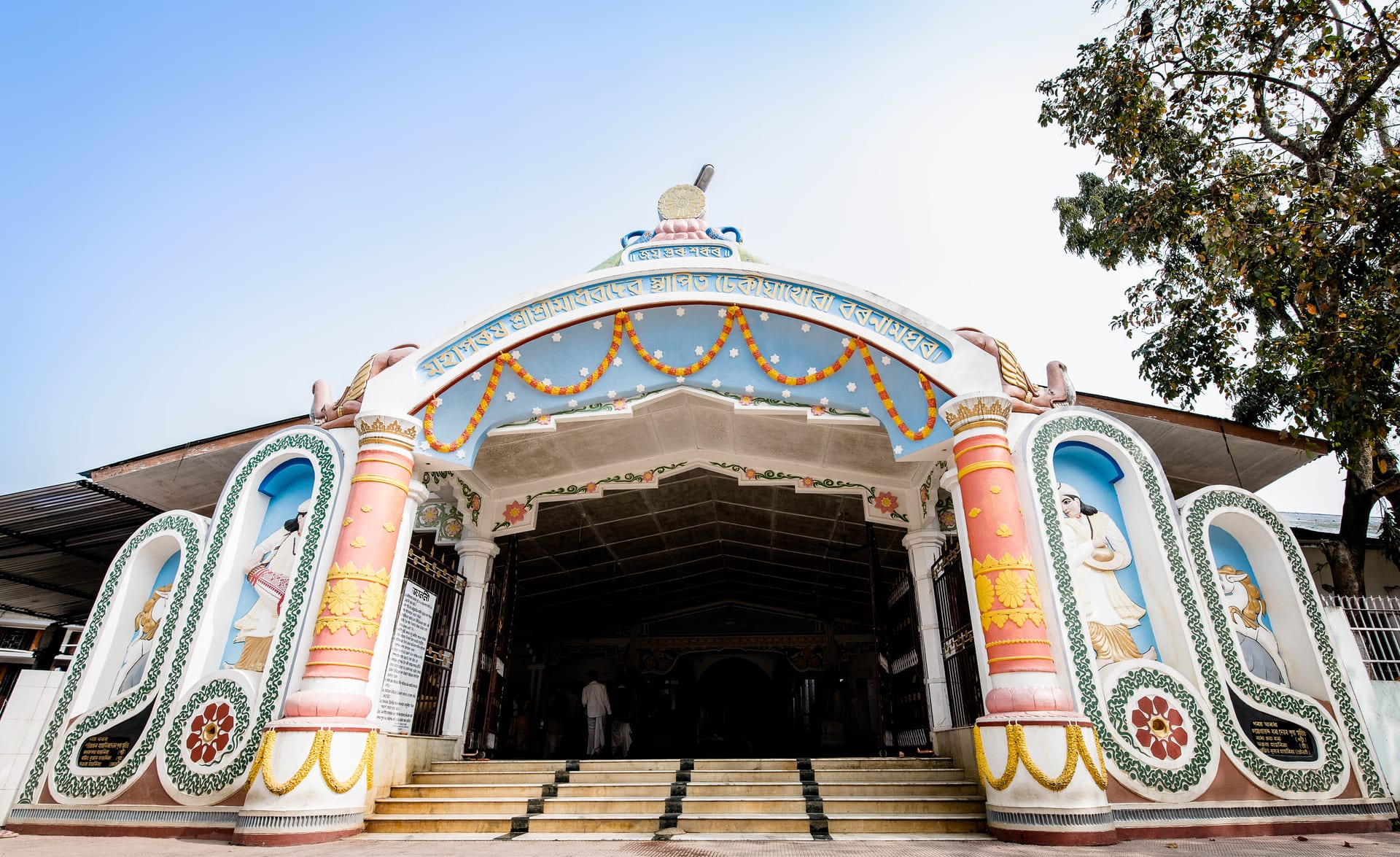
The doctrine split, but the culture built on it did not. Assam remembers him as the Mahapurusha, the great soul. The historians of Assam credit him, more than any king or any conquest, with drawing the valley's many communities into one cultural life, and so with the making of the Assamese people. His namghar gave every village a hall where caste did not decide the seating, and four centuries later it is still there. No other figure of the valley is remembered on this scale. His birthplace at Bardowa is a pilgrimage in itself.
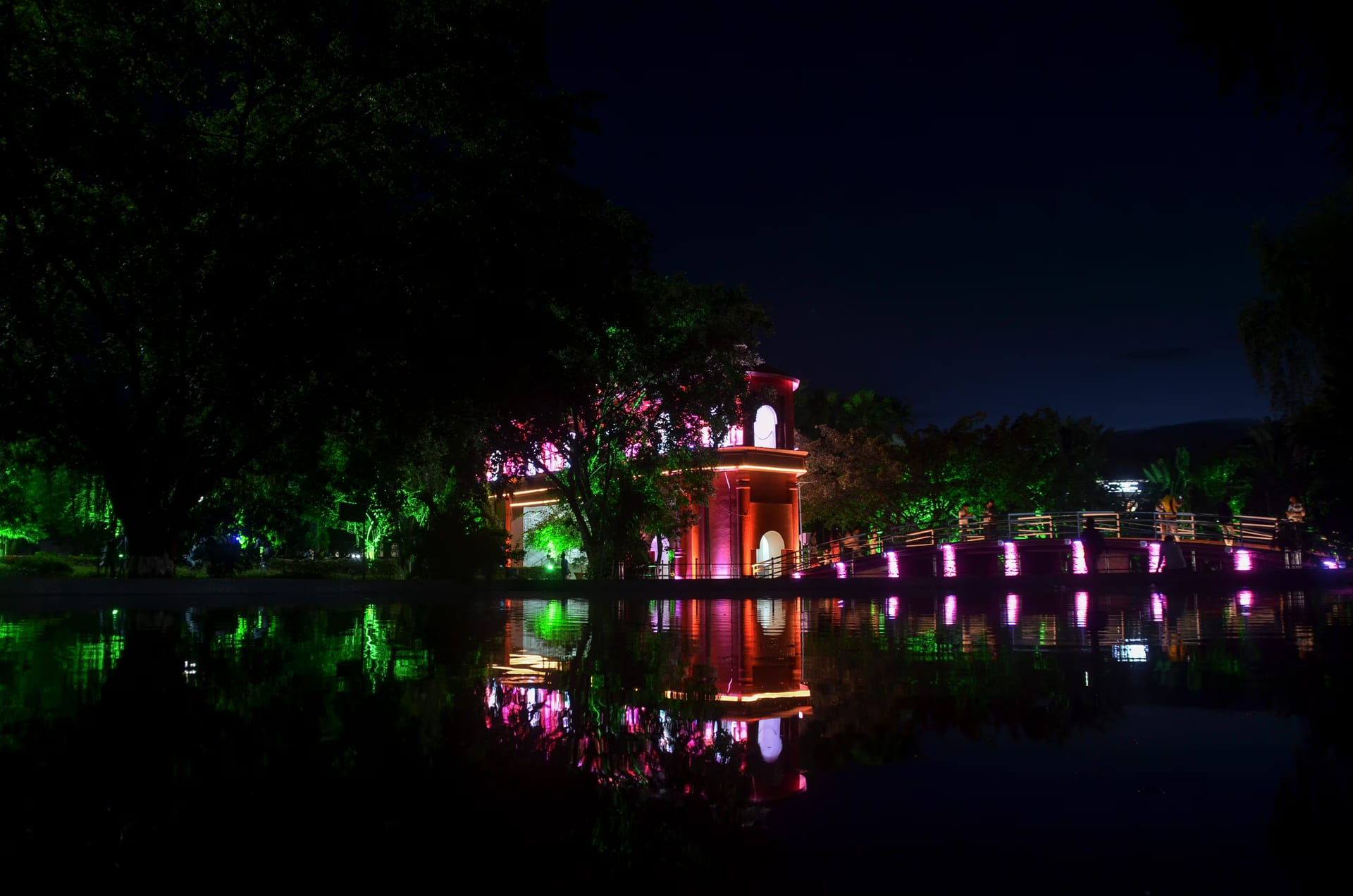
The Srimanta Sankaradeva Sangha, founded in 1930, is among the largest religious organisations in Assam, and its annual session draws crowds in the hundreds of thousands. The Srimanta Sankaradeva Kalakshetra, raised at Guwahati in the 1990s, gathers the dance, drama, craft and music of the whole valley into a single campus under his name. His birth anniversary is a public occasion across the state. The plays he wrote are still staged through the night, the songs he composed still open the service, and the language he chose to write in is still the language of Assam.