One phrase survived in the Assamese countryside long after the events that made it. It was Manor Din, the days of the Burmese. Families passed it down at hearths long after they could name the relative it referred to. A disgraced viceroy opened the door. Badan Chandra Borphukan governed Lower Assam for the Ahom court until it moved to arrest him. He carried his grudge to the Burmese court at Ava and came back at the head of a foreign army. Three invasions followed between 1817 and 1822. They used up the kingdom Sukaphaa had founded six centuries earlier. That story is told in the chapter on the Burmese invasions. How it ended is told in Yandabo, in a treaty signed on the Irrawaddy that no Assamese attended. This is about the years in between. The buranjis, the kingdom’s own chronicles, record them and then decline to describe them. A century and a half earlier this country had thrown the Mughal empire back on the water at Saraighat. Now it had no word for what was being done to it but the plain one, the days of the Burmese.
The days themselves
It is the occupation, not the invasions, that scarred the memory. From the middle of 1822 the Burmese stopped propping up Ahom kings and governed the valley directly, and they governed it by display. The buranjis, and the British who came after them, record the method without much comment. Noses, ears and lips were cut away. Men were blinded. Those who led resistance were impaled or beheaded. None of this was punishment in any ordinary sense. It was done so that a district would understand, once, what disobedience was going to cost. It worked.
One man who saw it wrote it down. Maniram Dewan lived through the occupation as a young man of the Ahom nobility. He went on to become the first Assamese to plant tea commercially, and was hanged at Jorhat in 1858 for his part in the great rising of 1857. In his Buranji-vivek-ratna he set down what the soldiers did, and his is the closest witness the valley has.
“...in attacking the house of a rich man, would tie him with ropes and then set fire to his body. Some they flayed alive, others they burnt in oil and others again they drove in crowds to village Naamghars or prayer-houses, which they then set on fire.”
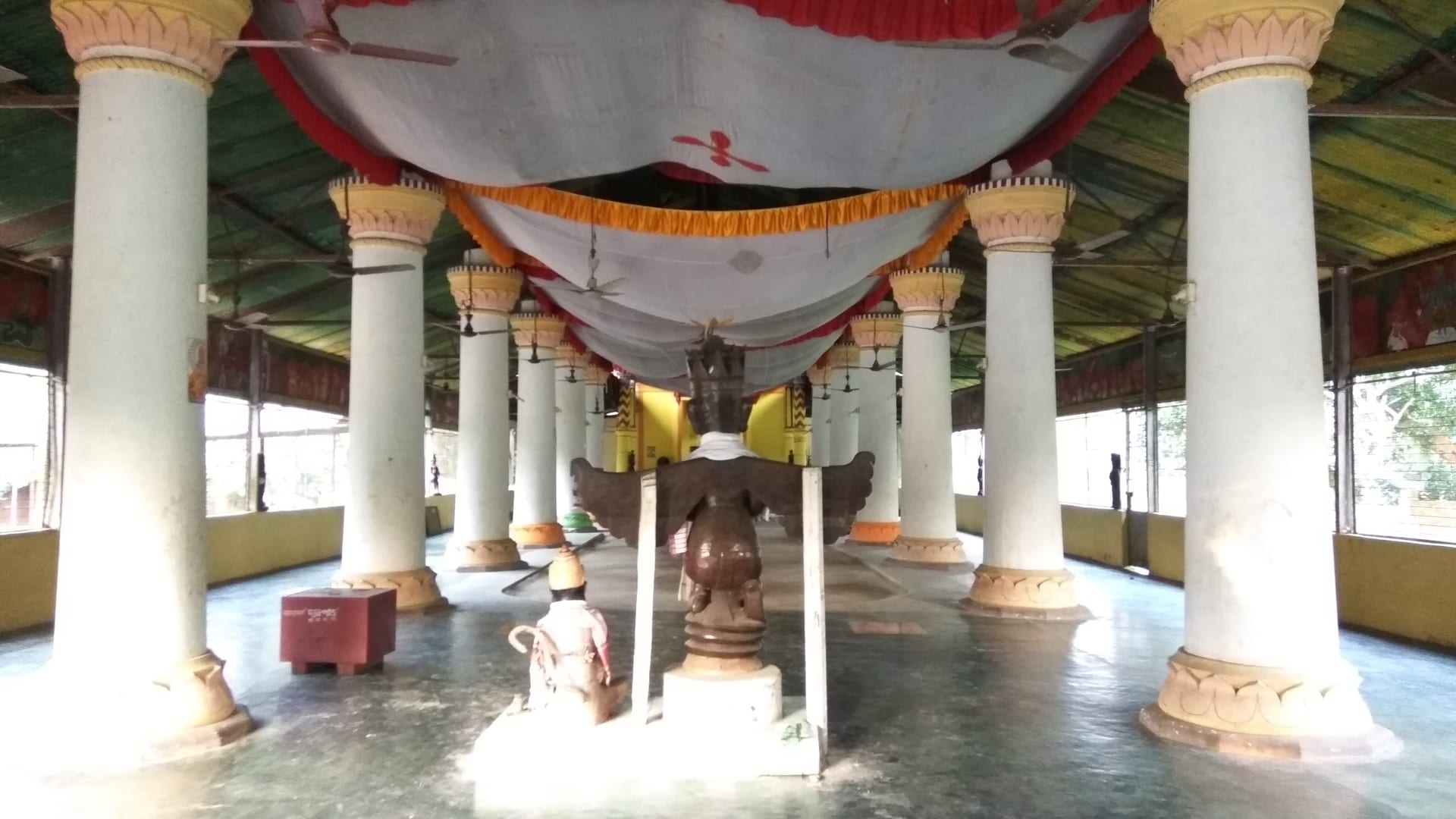
The last line of that passage is the one that matters most. The namghar is the building every Assamese village has, the open prayer-hall where the community gathers to chant the name. In a countryside with no forts left, it was where people ran. That is precisely why they were driven into it and the doors were set alight.
The roads to Ava
What was not killed was carried off. Captives went in ropes over the eastern hills toward Ava. Women and children went with them, to be sold at the other end or set to labour. Many died on the road of exhaustion and exposure. The carrying-off had begun at the top. As early as 1817, the peace that ended the first invasion gave a princess of the Ahom royal house, Hemo Aideo, to the Burmese king Bodawpaya, along with fifty elephants and an indemnity. She was sent over the hills to his court and into his harem. The country emptied behind them. Refugees went out in every direction the mountains allowed, down into British Bengal, west toward Cooch and Bhutan, south over the hills into Cachar, and the fields went back to jungle. The terror was not the Burmese alone. In the breakdown, local marauders and hill bands came down on the defenceless lowlands too. How many were killed, how many were roped away and how many simply ran, nobody has ever been able to say. The record does not count them, because it could not. The deepest mark of the Manor Din was never constitutional. It lay in the empty villages and the broken families. It lay in the relatives who never came back from the long roads to Ava. And it lay in the phrase itself, which mothers went on using for the worst thing they could imagine, long after they had forgotten who it had happened to.