In the autumn of 1661 the most formidable soldier in Aurangzeb’s service turned his face toward the upper Brahmaputra. He was Mir Jumla, the emperor’s governor of Bengal. With him went some twelve thousand cavalry, thirty thousand foot, and a war-fleet the accounts number at more than three hundred ships and boats. Portuguese, English and Dutch gunners crewed part of it. He came to take the Ahom kingdom that had defied the empire for a generation, and at first the country folded before him. Yet within a year the same army that had walked into the Ahom capital would be rotting in the rain, and the man who led it would be dead. This is the story of how the monsoon beat an empire. It is also the prelude to a greater reckoning on the water below Guwahati a decade later.
The river road to the capital
Mir Jumla moved up the valley with the patience of a man who had broken kingdoms before. He took the Koch capital at the end of December without a fight. He renamed it for the emperor and crossed into Ahom country in the new year of 1662. Jogighopa fell in January. He reached Guwahati early in February and occupied the gateway where the river narrows, the door to the upper valley.
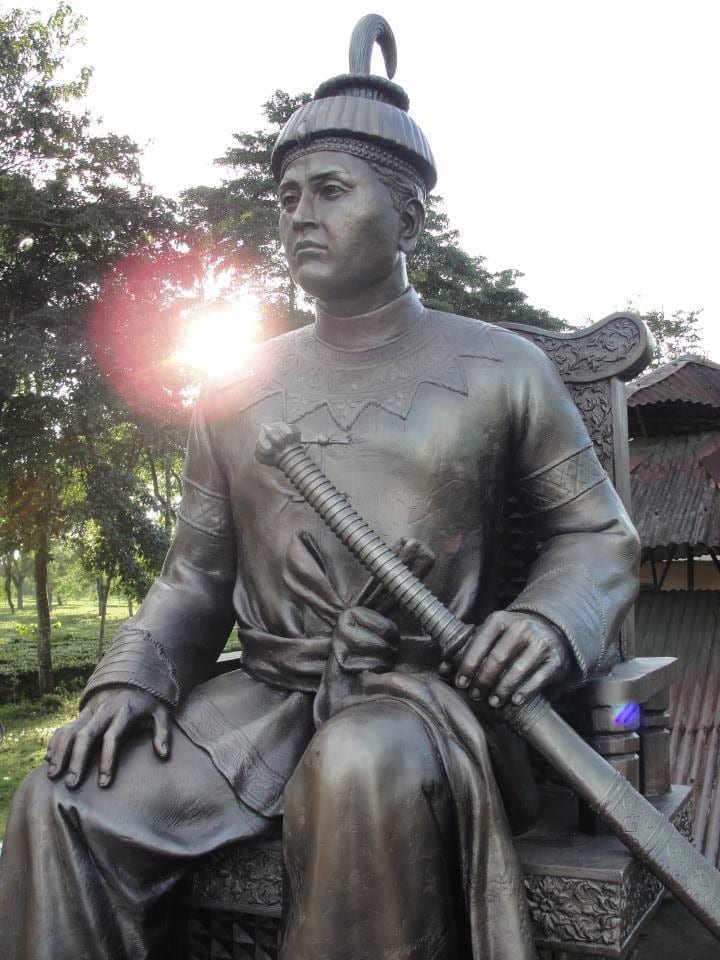
From there he pressed east along the Brahmaputra, fort by fort, his fleet keeping pace with the land army. The Ahom king was Jayadhwaj Singha, whose Tai name was Sutamla. He found that his commanders could not hold the line. The river forts were stormed or abandoned. The defenders tried to fight the fleet in the dark, in the old Ahom way, and one such night action on the water at Kukurakata went badly for them. The boats they lost there could not be spared. With the river guard broken, the road to the heart of the kingdom lay open, and Mir Jumla took it.
The empty palace
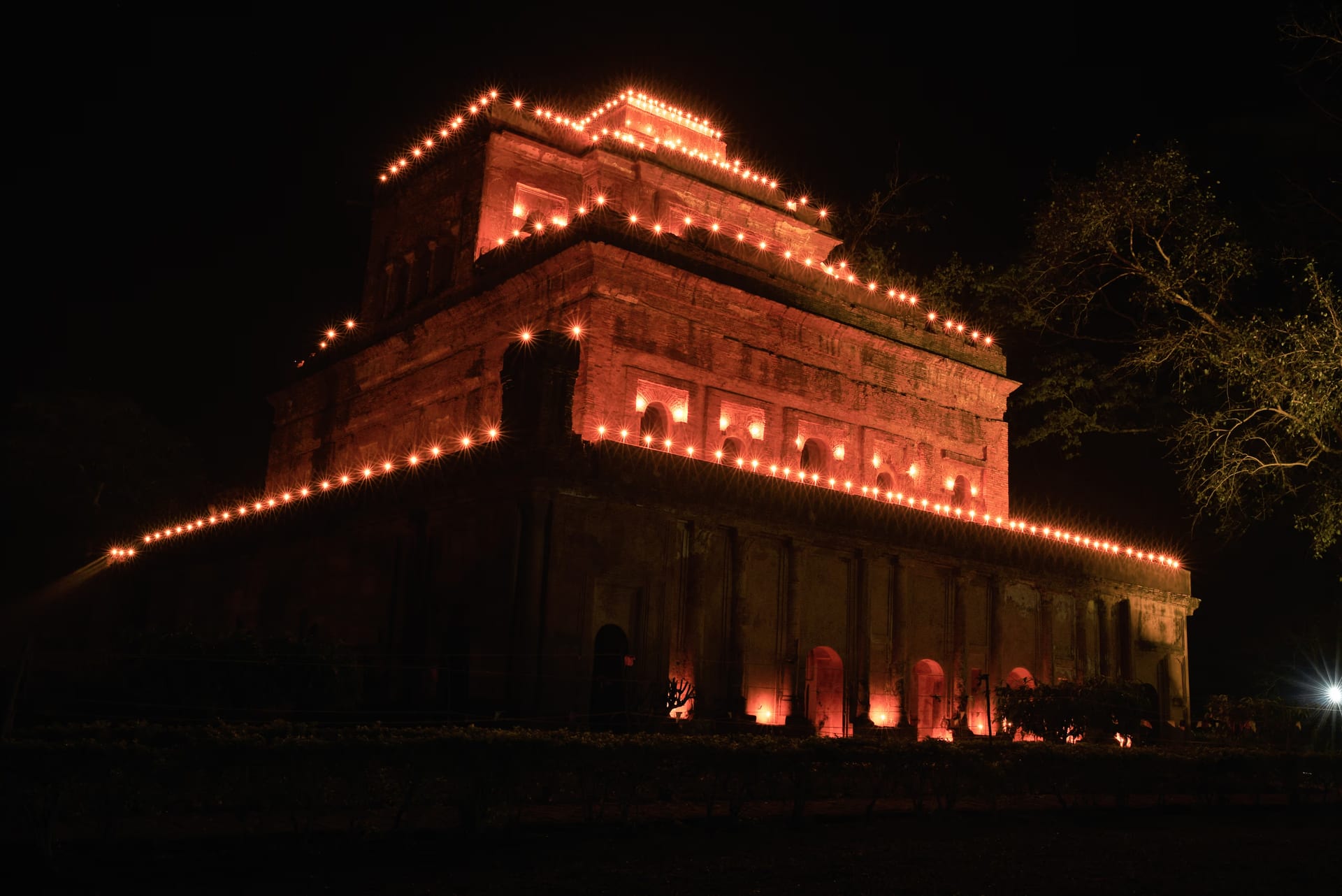
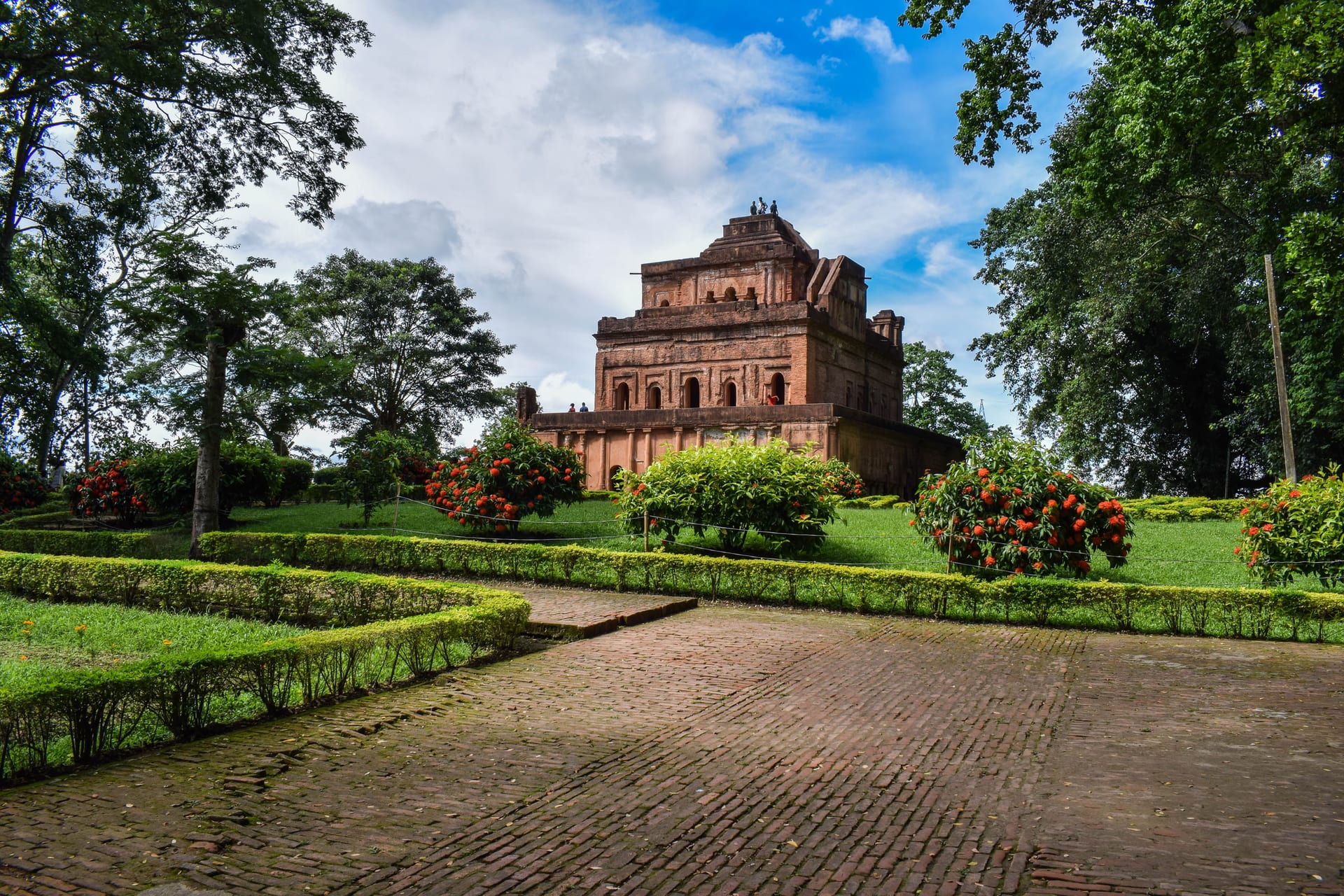
On the seventeenth of March 1662 Mir Jumla rode into Garhgaon, the fort-village that had been the seat of the Swargadeos for more than a century. He found it abandoned. Jayadhwaj Singha had not waited for the siege. He had emptied the timber capital and withdrawn, first into the country behind it and at last into the hills of Namrup in the far east. The buranjis would remember him afterwards by the bitter nickname of the king who ran.
The Mughals took the prize the king had left behind. By the contemporary accounts it was something near a hundred elephants, three hundred thousand coins, thousands of shields, a great fleet of boats, and more than a hundred and seventy storehouses heavy with rice. It was the deepest humiliation the kingdom had yet suffered. The capital of the Tai-Ahom was the command centre of a war-state that had swallowed its neighbours for three hundred years. Now it lay in the hands of a foreign army. Mir Jumla settled into the palace the Swargadeos had built and prepared to winter there and finish the conquest.
What the chronicler saw
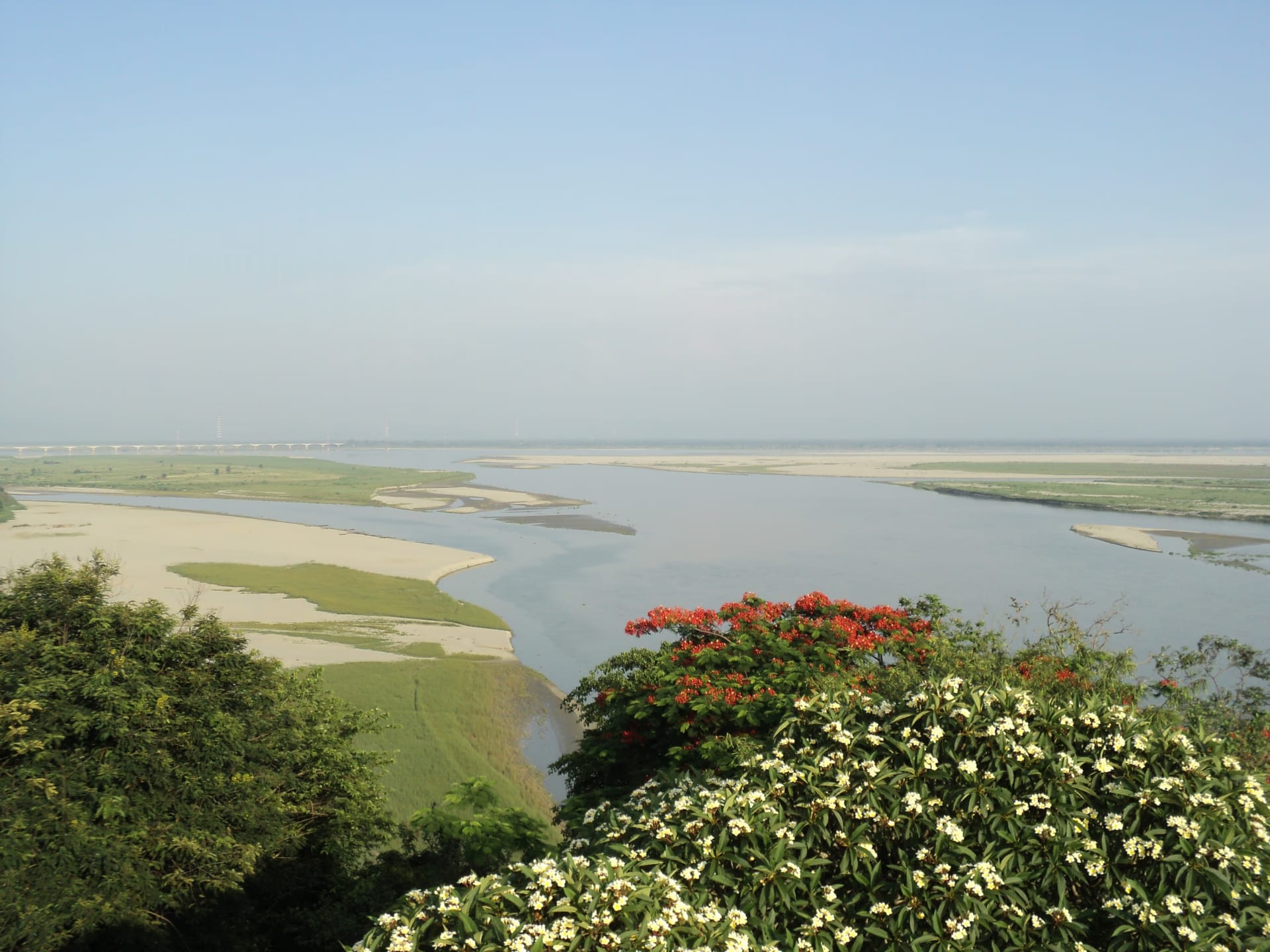
Among the men who came up the river with him was a Persian secretary named Shihabuddin Talish. His eyewitness account gives the campaign its terrible texture. Talish wrote of a green and watered country unlike anything his companions had known. It was a land of endless rain. The rivers did not stay in their beds, and in the wet season the whole face of the earth turned to water.
He set down the wealth of the kingdom and the strangeness of its customs with a foreigner’s wonder. He described a people who fought from boats and vanished into forest, who would not meet a proper army in the field. Then, as the season turned, his account darkens. It becomes the record of a slow undoing. For the rains came early in 1662, earlier than the invaders had reckoned, and once they came they did not stop. Talish was writing, without yet knowing it, the diary of a trapped army.
The country fights back with water
The Ahoms had never meant to fight the empire on open ground. There the imperial cavalry and the imperial guns were lethal. They meant to let the country fight for them, and the country obliged. The monsoon swelled the Brahmaputra and its tributaries. The floodwater rose over the plain and drowned the roads. The Mughal horse had been irresistible in the dry season. Now it floundered uselessly in mud and standing water.
The Ahoms knew this water the way the invaders never could. They cut the supply lines between the river forts and the occupied capital. They struck in the dark in their light boats and slipped away before the garrisons could form. They let the rising river do the rest. Grain could not get through. By summer the posts at Garhgaon and the forward positions were cut off and half starving. Men who had marched in as conquerors found themselves besieged by the weather in the palace they had seized. In distant Delhi it was assumed for a time that Mir Jumla’s whole army had perished in the swamps, and no certain word of him came out of the drowned country for months.
The army rots
Then came the sickness, and it was worse than the hunger. In the steaming heat of the flooded summer a wasting fever broke out among the trapped and ill-fed troops. By tradition a bloody flux ran with it, the dysentery that follows foul water and crowded camps. Men who had survived the marches and the storming of forts now died in their tents without a blow struck. The dying ran into the hundreds each day.
The rot went through the army like the flood through the fields. By the accounts that survive, the great host lost something like two-thirds of its strength, most of it not to the enemy but to disease and starvation together. The proud army had walked into Garhgaon in the spring with drums and elephants. By the autumn it was a column of fevered, hungry men, hemmed in by water and harried every night by an enemy that would not stand and be killed. The conquest had become a trap, and the trap was the climate itself. Mir Jumla was ailing now, worn by the same fevers that were killing his men. He held on until the floods fell back in late September and a thin trickle of provisions reached the capital. But the back of the occupation was broken. He had taken the country and he could not hold it.
The price of going home
In January 1663 the two sides came to terms at Ghilajharighat. The price the Ahoms paid was meant to humble them for a generation. They ceded the western marches of the kingdom. They swore to hand over a crushing indemnity in gold, in silver many times its weight, and in scores of war-elephants, with more to follow within the year. They gave up sons of the chief nobles as hostages.
And they gave up a child. By the treaty Jayadhwaj Singha sent his young daughter, Ramani Gabharu, still only a small girl, to the imperial court. There she was raised in the harem and given the name Rahmat Banu Begum. In time she was married into Aurangzeb’s own family, to one of the emperor’s sons. A daughter of the Ahom house would live out her life in Delhi as the price of her father’s defeat, and never see the valley again. The king himself did not long survive the shame. He died later that same year, and the tradition holds that he died of grief.
The retreat and the reckoning to come
The empire’s triumph turned to ash on the road home. Mir Jumla was worn down by the fever he had caught in the flooded country. He led his thinned and exhausted army back down the river toward Bengal. He got no further than Mankachar. He died there on the last day of March 1663, within weeks of the treaty that was supposed to be his crowning victory. He had taken the Ahom capital and won a princess for the emperor’s son. It had cost him his army and his life. The valley had not been conquered. It had merely waited, and let the monsoon and the sickness and the dark water do what its soldiers could not.
The humiliation of Ghilajharighat did not break the kingdom. It hardened it. The dying king laid a vow on his successor. That vow would pass to Chakradhwaj Singha, who declared that he would rather die than live as a foreigner’s subject. It would pass too to the general who would carry it onto the water. The ceded gateway at Guwahati would be won back. The empire would come up the river one last time. The long account opened in the rains of 1662 would be closed in the spring of 1671, in the narrows at Saraighat.