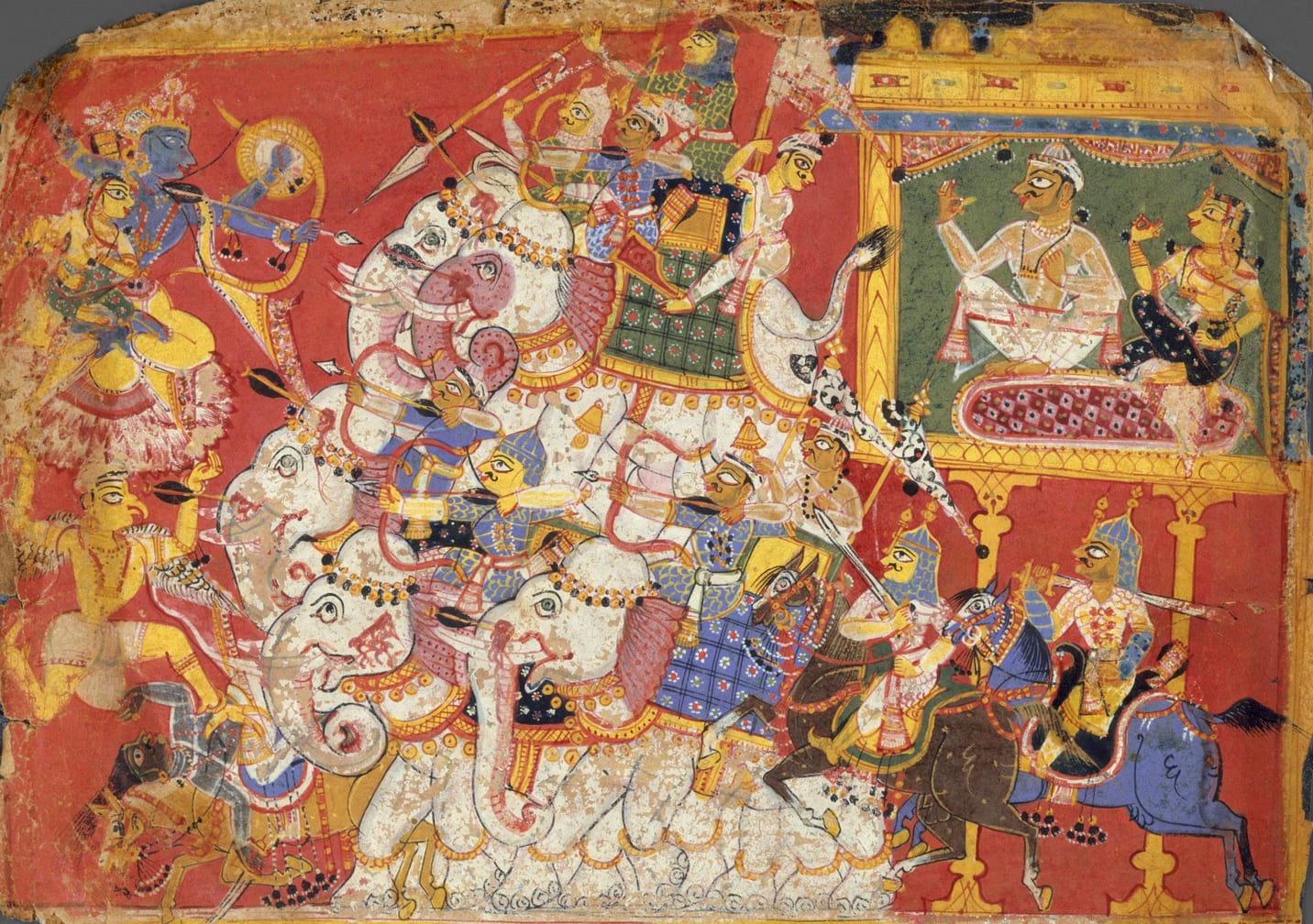
Almost everything known about the deep past of the Brahmaputra valley comes to us from the inside, from copper plates, from chronicles, and from the memory of the land itself. For one brief moment in the middle of the seventh century, a stranger looked at Assam from the outside and wrote down what he saw. He was a Chinese Buddhist monk who had walked the width of Asia to reach the libraries of India, and he came east from Nalanda to the kingdom of Kamarupa around the year 643, at the repeated invitation of its king, Bhaskaravarman. His name was Xuanzang, and his account is the first eyewitness description of this land. Everything before him is legend or inference. He brought the moment when the lights came on.
A monk who crossed a continent
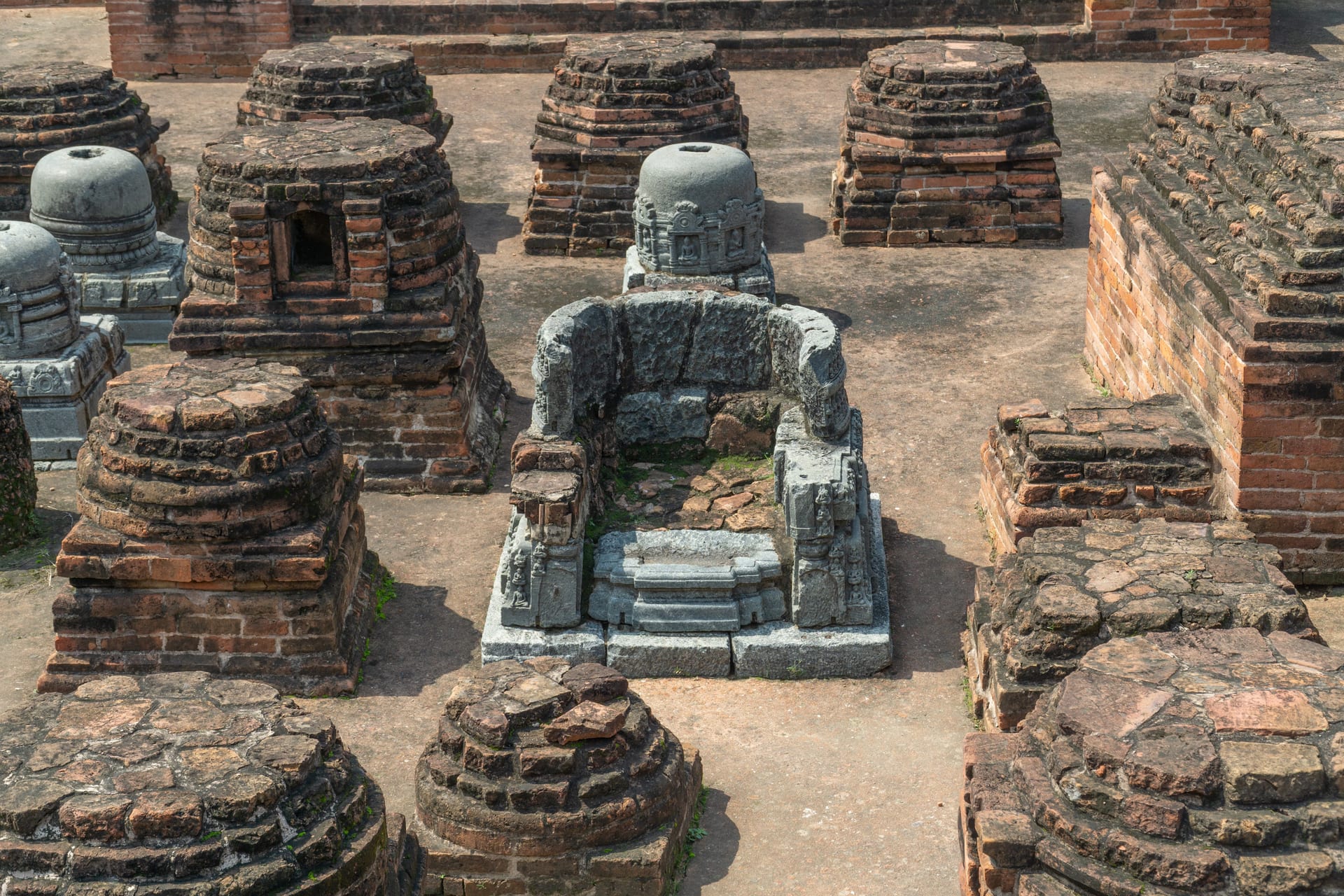
Xuanzang left Tang China around 629, in defiance of an imperial ban on foreign travel. He was young, and he was troubled. The Buddhist scriptures reaching China were confused and incomplete, and contradicted one another, and he had resolved to go to the source and bring back the truth of them. What followed was one of the great journeys of the medieval world, made almost entirely on foot. He crossed the deserts north of the Silk Road, went on over the snows of the Tian Shan, and passed through Tashkent, Samarkand and Bukhara, the great cities of Central Asia. He crossed the Pamirs, paused at Bamiyan beneath its colossal Buddhas cut into the living cliff, and entered India through the valley of Peshawar. At last he reached Nalanda in Magadha, the greatest monastic university of the Buddhist world, and there he studied for years under its aged master, Silabhadra, until he was reckoned one of the finest minds in the whole community.
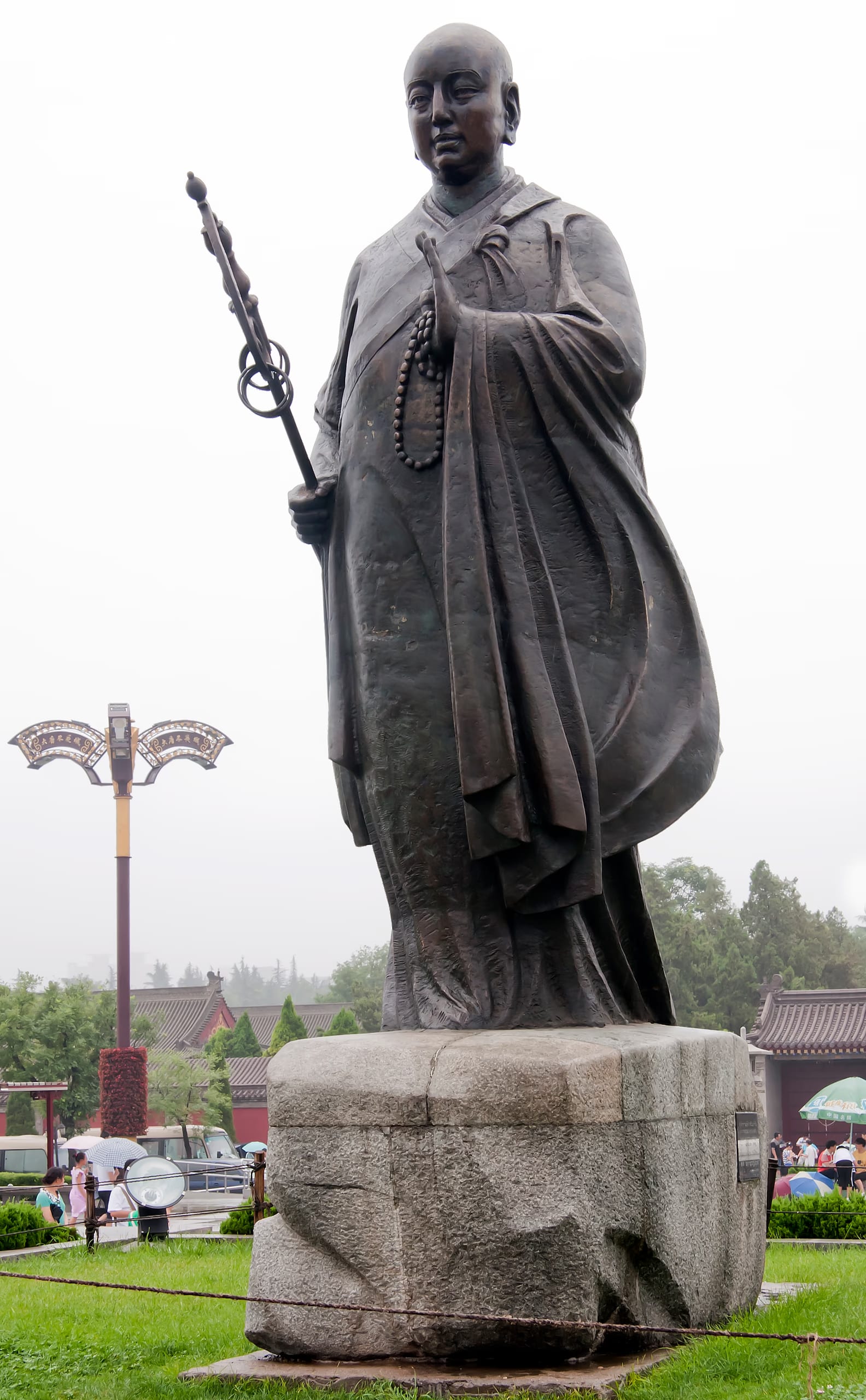
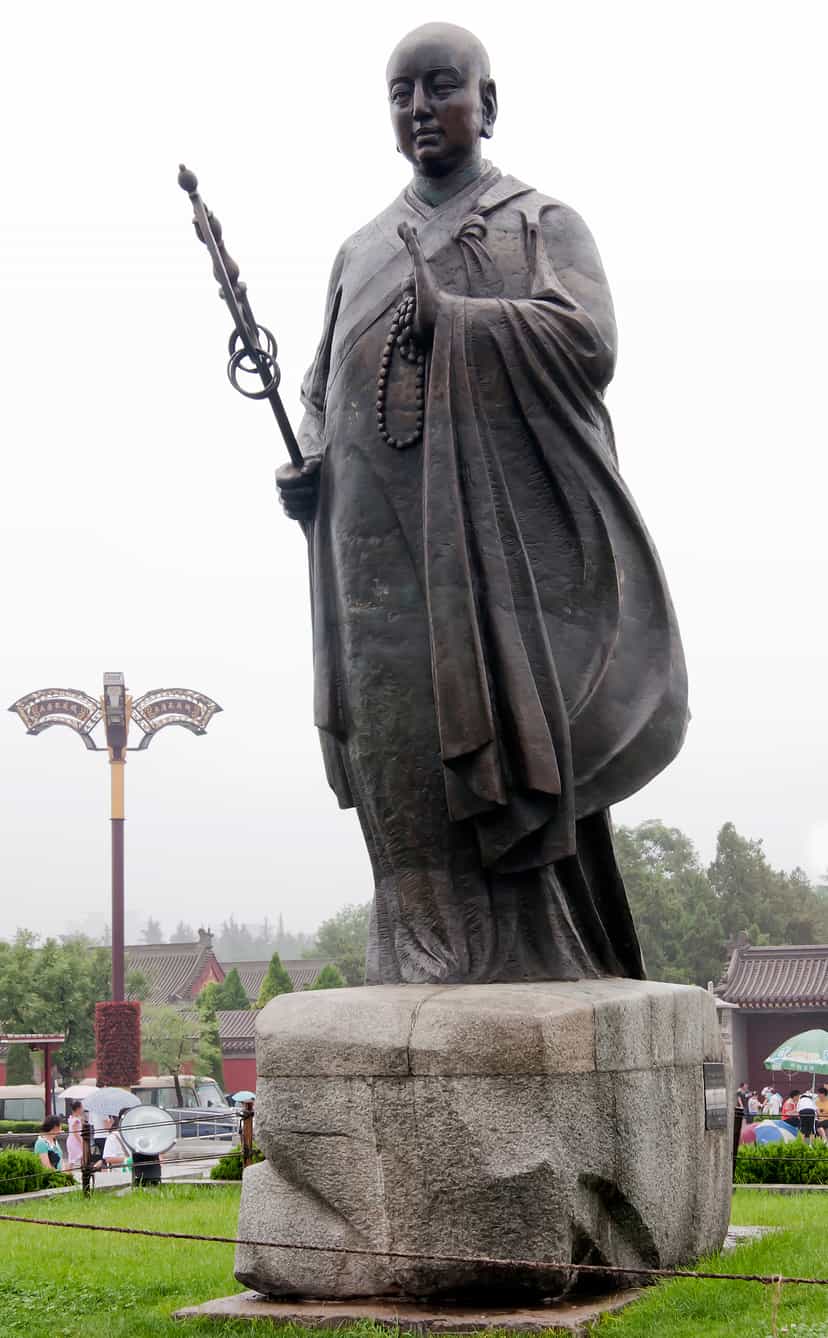
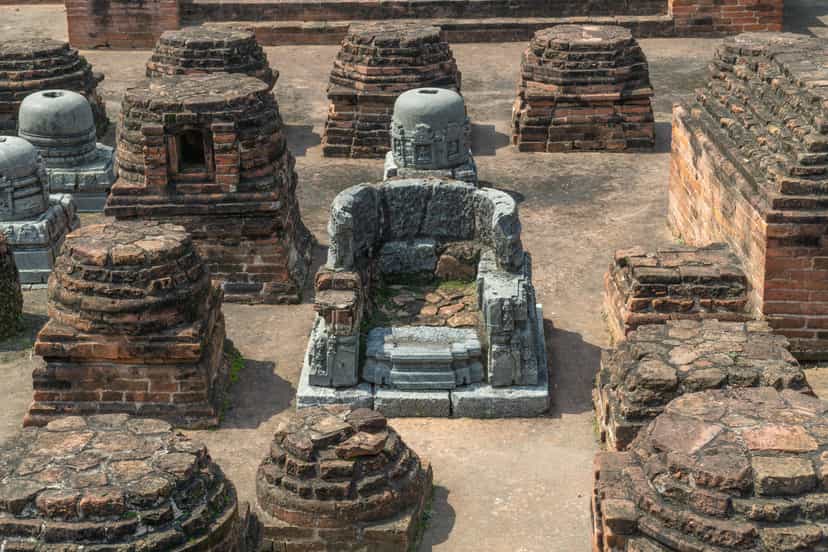
It was while he was at Nalanda that an invitation came from the east. Bhaskaravarman, king of Kamarupa, had heard that a Chinese monk had crossed an impossible distance to study the law of the Buddha, and he wanted the man at his court. A learned foreigner was an ornament to a kingdom, and a Chinese one was a marvel. By Xuanzang's own account the king sent for him not once but three times. Three times the monk hesitated, for he had come to India to study and gather scriptures, not to be a curiosity at a distant court, until word came at last that the king might take offence. It was Silabhadra himself who told him to go, reading in the invitation a rare chance to turn a powerful and learned ruler toward the faith. So Xuanzang went east, crossed the Karatoya river that marked the old western edge of the Kamarupa kingdom, and presented himself before the last and greatest king of the Varman line.
What Xuanzang saw in Kamarupa
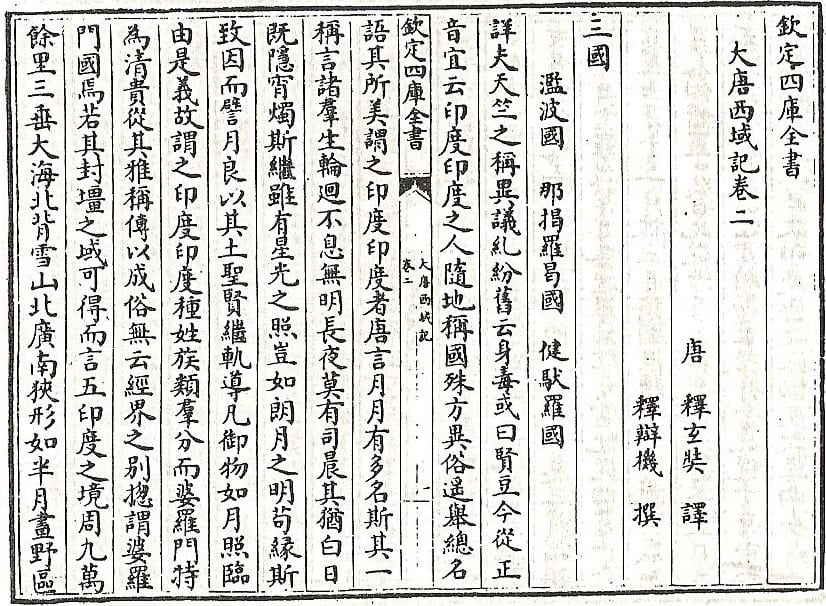
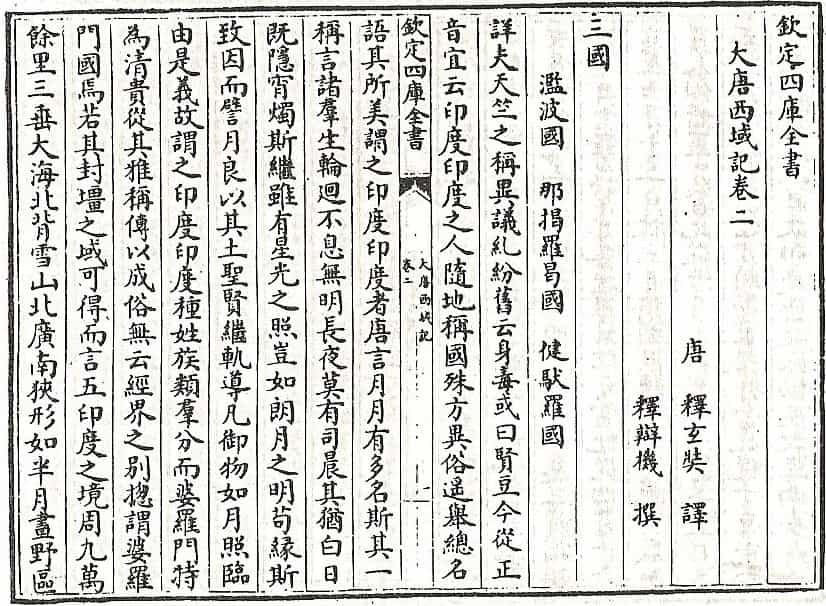
Xuanzang set his description of the kingdom in his travelogue, the Da Tang Xiyu Ji, the Records of the Western Regions, compiled around 646. The numbers in it are his own, an outsider's estimate rather than a surveyor's measure. By the Records, Kamarupa ran about ten thousand li in circuit, and its capital, the old Pragjyotishpura that stood on the site of modern Guwahati, about thirty li around. It was a low and fertile country, he wrote, regularly cultivated and watered from the river and from banked reservoirs, with a soft and temperate climate. The people he found simple and honest, small of stature and of a dark yellow complexion, their speech differing a little from that of mid-India, impetuous in nature but earnest in their love of study.
On one point he was precise, because it mattered to him. The people worshipped the gods of the Hindu pantheon, the Devas, and had no faith at all in the Buddha. In the whole kingdom, he noted, not one Buddhist monastery had ever been raised, though there stood as many as a hundred temples to the gods. It is a portrait drawn by a devout Buddhist of a country that was firmly not Buddhist, and that honesty is exactly what makes it valuable. Of the king himself the monk wrote with warmth. Bhaskaravarman was fond of learning, and his people studied in imitation of their ruler. Such a court drew men of talent from distant regions. He had no faith in the Buddha, but he honoured this learned monk above the rest, and that respect, more than any conversion, is the true note of the encounter. At their meetings the king pressed the pilgrim with questions about his far country. Bhaskaravarman said that songs praising the virtues of the Chinese sovereign were sung even in India, and that he had long looked east and wished to see that land, but that the mountains and rivers between were a barrier no traveller could cross.
Departure, and the precious records
Their time together was brief, because a greater summons came. Harsha of Kanauj, the most powerful ruler of northern India and an ally, was holding a vast distribution of alms near the Bengal border and sent for Bhaskaravarman to attend. Bhaskaravarman would not go without his guest Xuanzang, and so the two set out west together. That is the last the story sees of them, the Assamese king and the Chinese monk on the road west. What their meeting left behind was not a monument but a record, and that record is precious. For the seventh century, Assam steps out of legend and into reported history. Kamarupa was a settled, irrigated, prosperous kingdom, large enough to matter to the great powers of the Gangetic plain, its religious life turning on the Hindu gods, and its king able to stand as an equal beside the emperor of Kanauj.