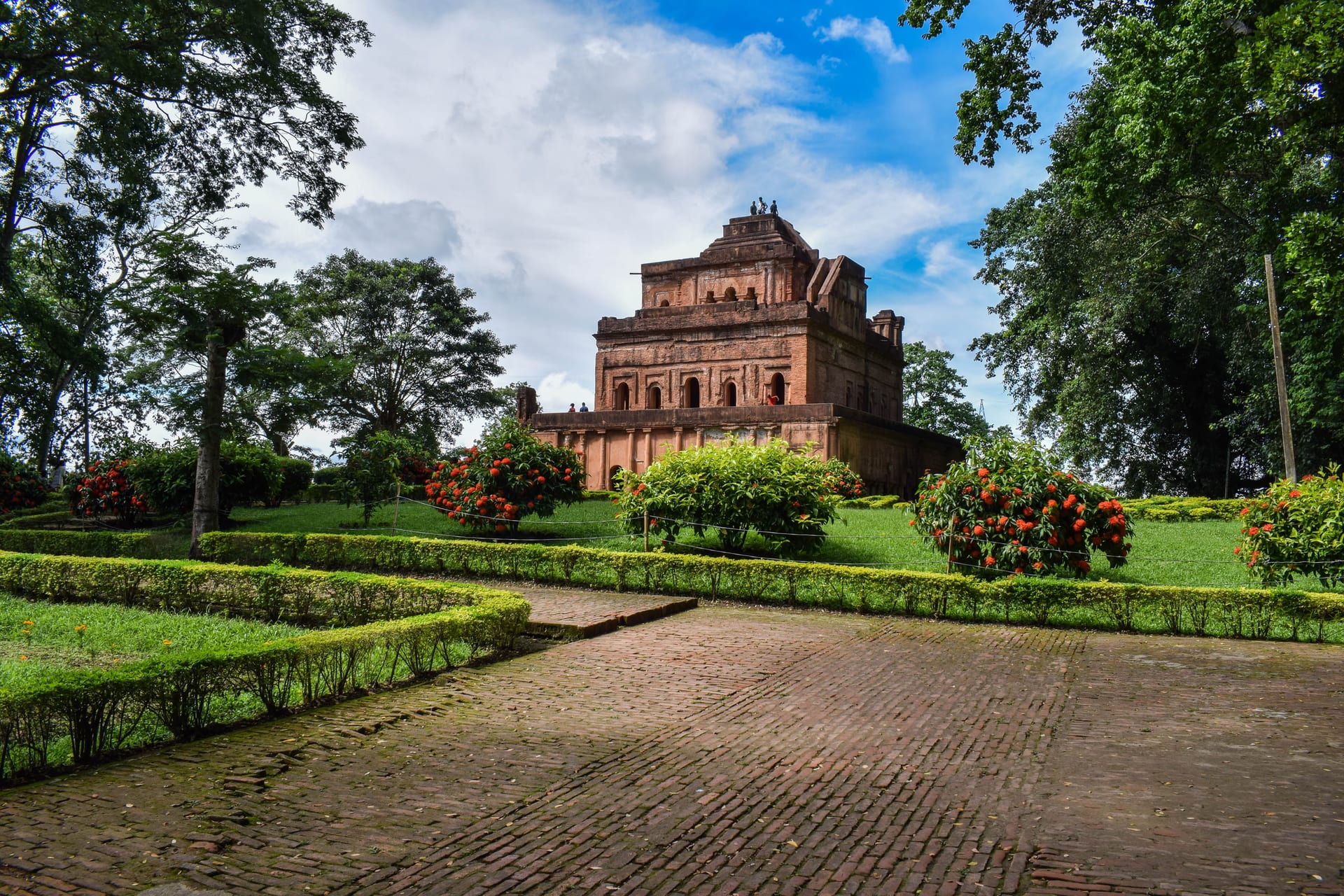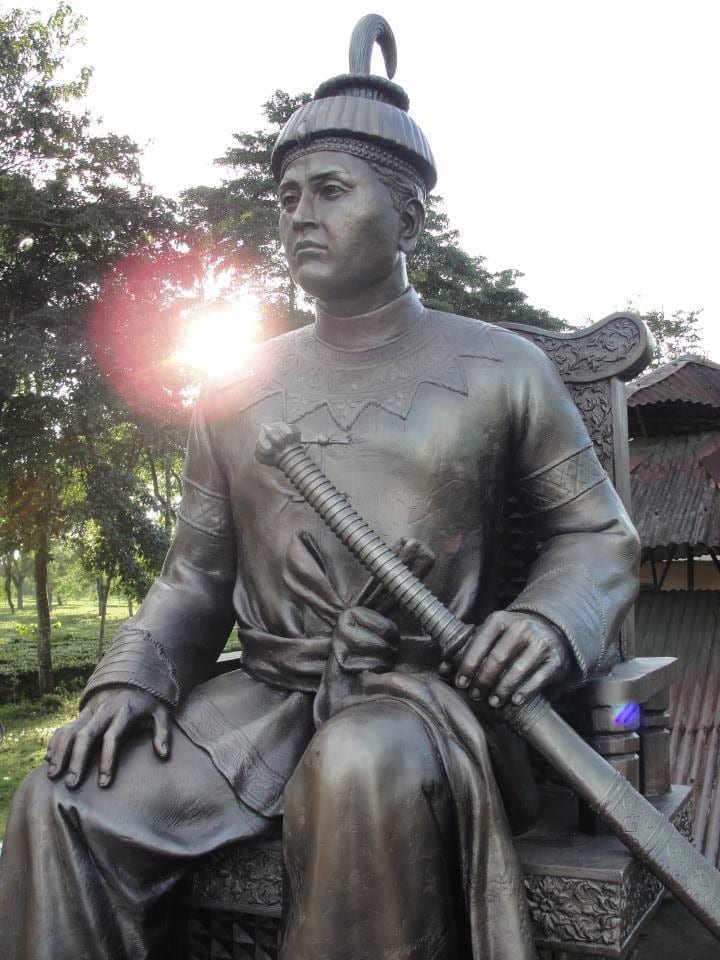
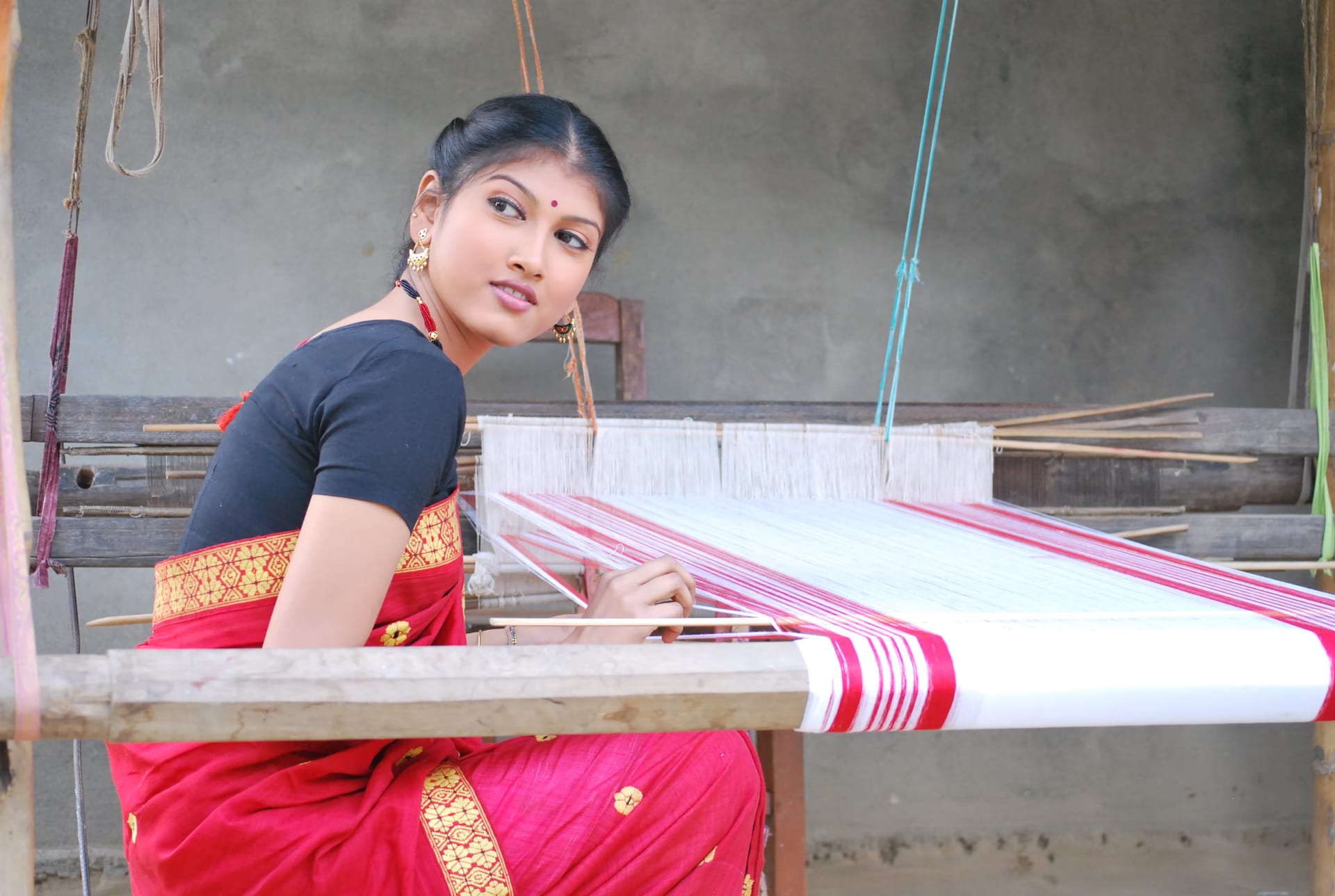
There is a kind of cloth in the old Ahom world that no loom could make by daylight. It had to be begun and finished inside a single night. The cotton was ginned, the thread spun, the warp laid, and the whole length woven through before the next dawn touched it. A wife made it for her husband when he went to war, and over it she spoke the words that turned cloth into armour. The Assamese called it the kavach kapor, the armour-cloth. The belief that went with it was absolute. A warrior who marched out in one, consecrated by his own wife’s hands in a single night’s work, could not be beaten. He would come home. This is the story of Mula Gabharu, who could not weave one in time, and of what she did instead.
The cloth that was not woven
Her husband was the Borgohain Phrasenmung, one of the great hereditary councillors of the kingdom. The war that took him was Turbak’s. Around 1532 the Sultanate of Bengal sent a Turco-Afghan commander of that name up the valley against Suhungmung. He came with cavalry, elephants and guns of a kind the valley had barely seen, and the first encounters went badly for the Ahoms. That campaign is told in Consolidation.
Mula Gabharu was of royal blood herself, by tradition a daughter of the king Supimphaa and a sister of Suhungmung. When Phrasenmung was called to the front, she was unwell. She could not do the night’s work the armour-cloth demanded. The ginning, the spinning, the weaving and the consecrating all had to be finished between dusk and dawn, and she could not finish it. So her husband rode to war without the one thing held to make an Ahom warrior unkillable. He did not come home. Phrasenmung Borgohain fell in the hard fighting against Turbak, one of several Ahom commanders killed in a run of defeats that nearly cost the kingdom its army. To Mula Gabharu the reason was not in doubt, and it was not the enemy’s guns. He had died because she had failed to weave his cloth. The grief and the guilt were one thing. She did with them what almost nobody in her place and her century did. She did not go behind the walls to mourn. She decided to go to the war herself.
The band of women
What she raised was not an army but a company, and not of soldiers but of women like herself. They were the wives and daughters of the other noble households of the court, who had also sent husbands and sons to the Bharali. Tradition keeps a few of their names, Jayanti, Pamila and Lalita. She armed them and led them out toward the front. She took up the hengdang, the long single-edged sword of the Ahoms, and by tradition rode to the field on an elephant, in the place a commander rode. She was a widow with no training in arms, at the head of a band of women who had none either, going deliberately into a war the kingdom’s trained men were losing.
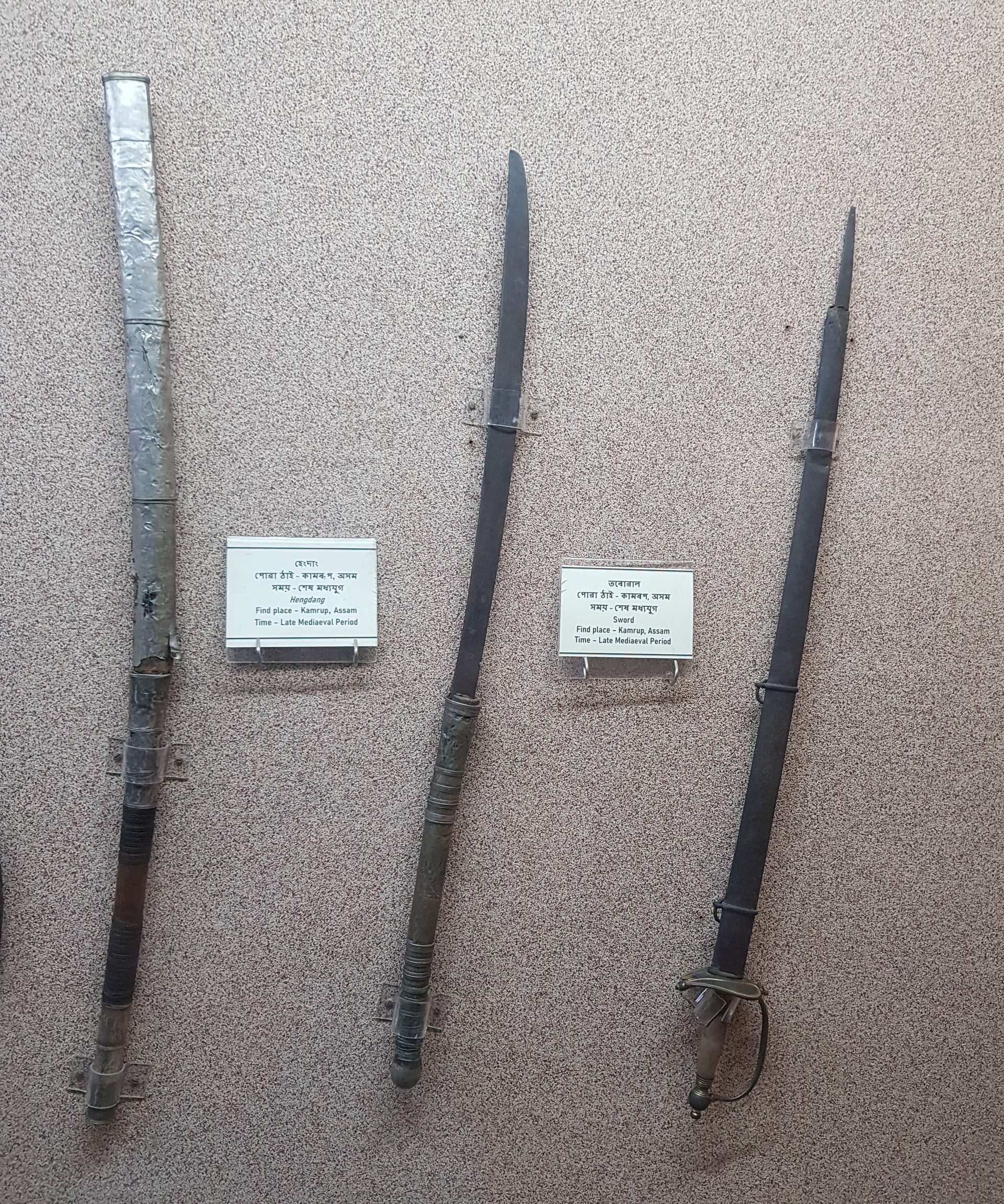

The buranjis remember that the effect was not small. The sight of the noblewomen riding to the fight is said to have shamed and steadied ranks that had been beaten and were wavering. Mula Gabharu fought, by every account, with a courage that had nothing to do with skill. By tradition she cut her way forward until she reached Turbak himself, and there it ended. He was a trained soldier at the height of a winning war, and he killed her. She fell where she stood, in the fighting tradition places at Kachua, and the women who had ridden out with her fell around her. She had gone expecting exactly that. The army she rode to join had been broken by powder, and she knew what it could do. Her death was not the end of the story but its hinge. The shame and the fury of it are remembered as part of what put the Ahoms back on their feet, and within the year they turned the war and killed Turbak. She is among the earliest women the valley remembers by name for dying in arms. Her name is still spoken as an emblem of valour among the Tai-Ahom and the wider Assamese.