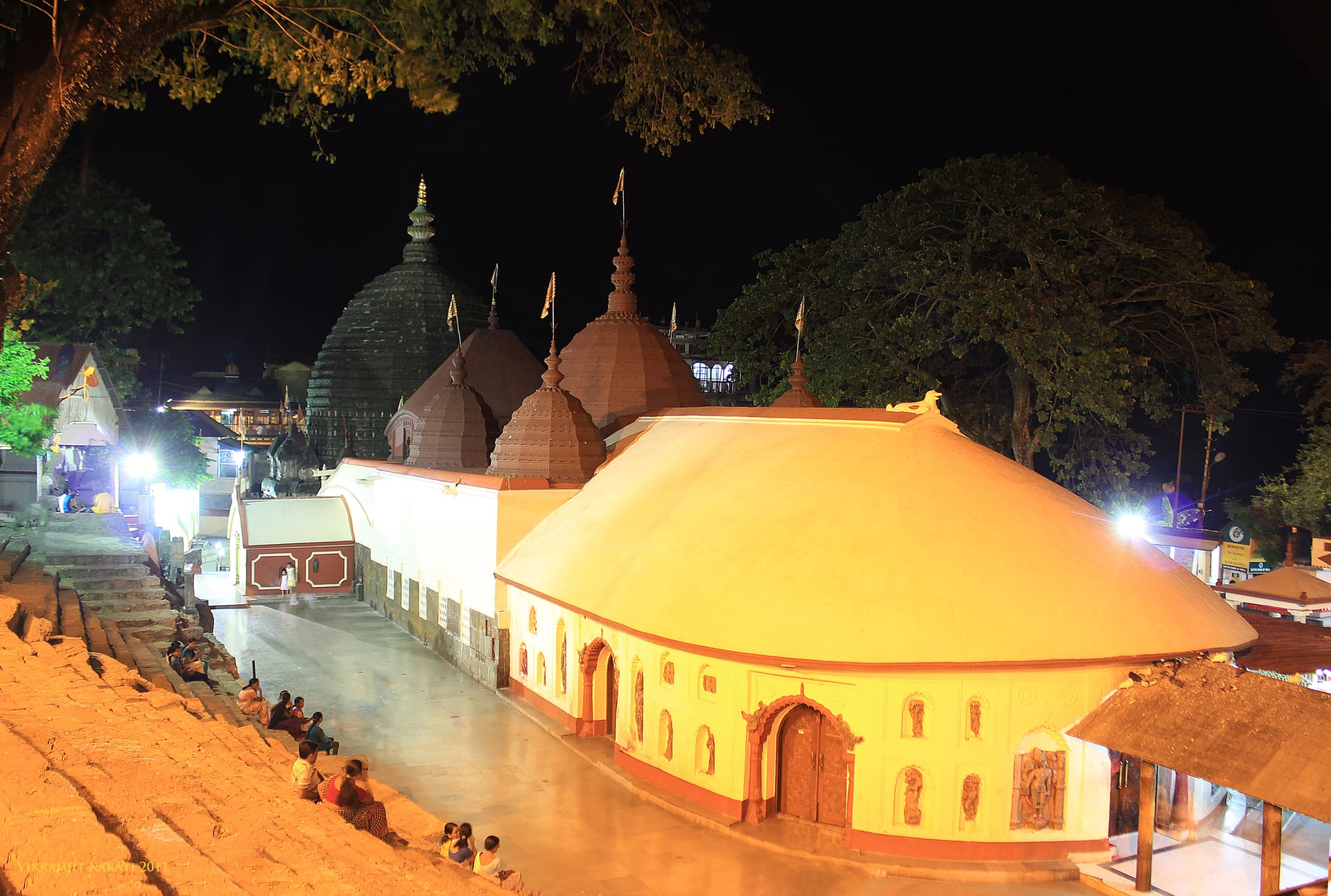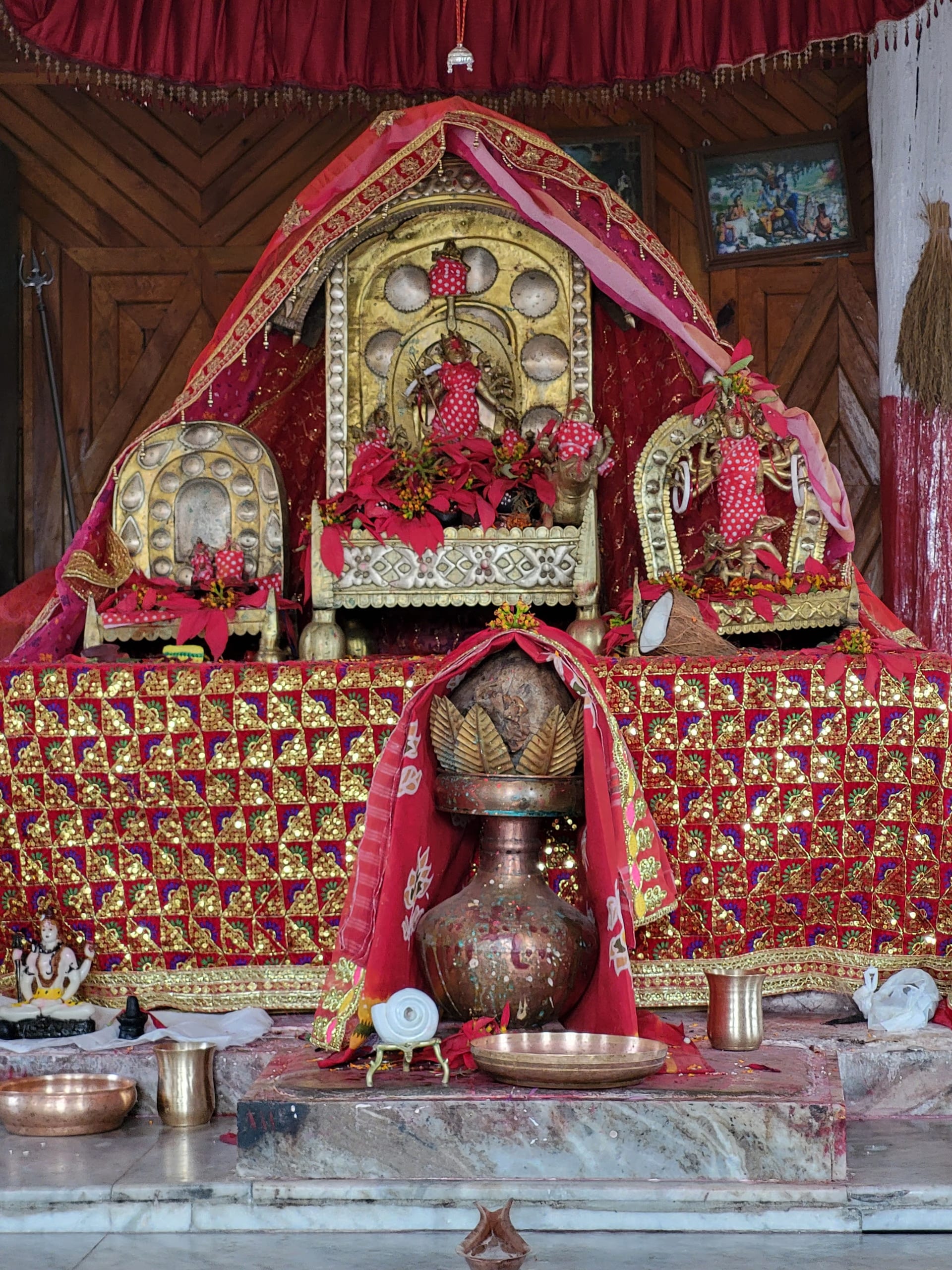
Assam’s first king was a demon. His name was Naraka, and he ruled a city called Pragjyotisha, the city of eastern light, that would one day be known as Kamarupa. This is where Assam’s myth ends and its memory begins, and the figure who stands at that doorway is one of the strangest first kings in all of India. He was no hero. Yet his story is not a simple monster’s tale. He raised the first shrine of the goddess on her hill. He came within a few steps of winning her hand, and lost her to a rooster’s cry in the dark. And with his dying breath he asked for, and was granted, a festival of light that the whole subcontinent still keeps. To understand how the valley thought about its own kings for a thousand years, you have to start with him.
The son of the Earth
The myths give him an extraordinary parentage. He was the son of Vishnu, in his boar incarnation, and of Bhumi, the Earth goddess herself. So the first king of the valley was quite literally a child of the ground he ruled. Born of the Earth, he was raised far away in the kingdom of Mithila, safe from the dangers that gather around a divine child. When he came of age, he was sent east to take the throne of Pragjyotisha, on the Brahmaputra below the hill of the goddess. For a time he was everything a king should be. He was strong. He was righteous. He was a devout worshipper of the great Mother on the Nilachal hill. In the tradition of the valley he is even remembered as the builder of her first temple there, the ancestor-patron of the shrine that later ages knew as Kamakhya. That detail matters more than it looks. It ties the demon-king not to the crimes for which he would later be famous, but to the holiest ground in the whole eastern country. And it set the stage for the strangest episode in his story, the one the hill still tells about itself.
A staircase before cockcrow
The king’s devotion did not stay devotion. Naraka looked at the goddess he served and wanted her not as her servant but as her husband, and he asked Kamakhya to marry him. The tradition says she did not refuse him outright. A goddess does not need to. Instead she named her price. Let him build a staircase from the foot of the Nilachal to her shrine at the summit, a stone road up the whole sacred hill, and let it be finished in a single night, before the cock crowed for dawn. If the stair stood complete by first light, she would be his.
It should have been impossible, and that was surely the point. But Naraka was a son of the Earth, and stone answered him. Through the night the staircase climbed the hillside, cut and set at a speed no human gang of masons could match, and by the last watch of the night the goddess looked down and understood that he was going to finish. What she did next decided the whole story. She created a cock, and made it crow long before dawn. The false cry rang down the dark hillside, and Naraka, believing the sun had beaten him, threw down his tools with the stair a few steps short of her door.
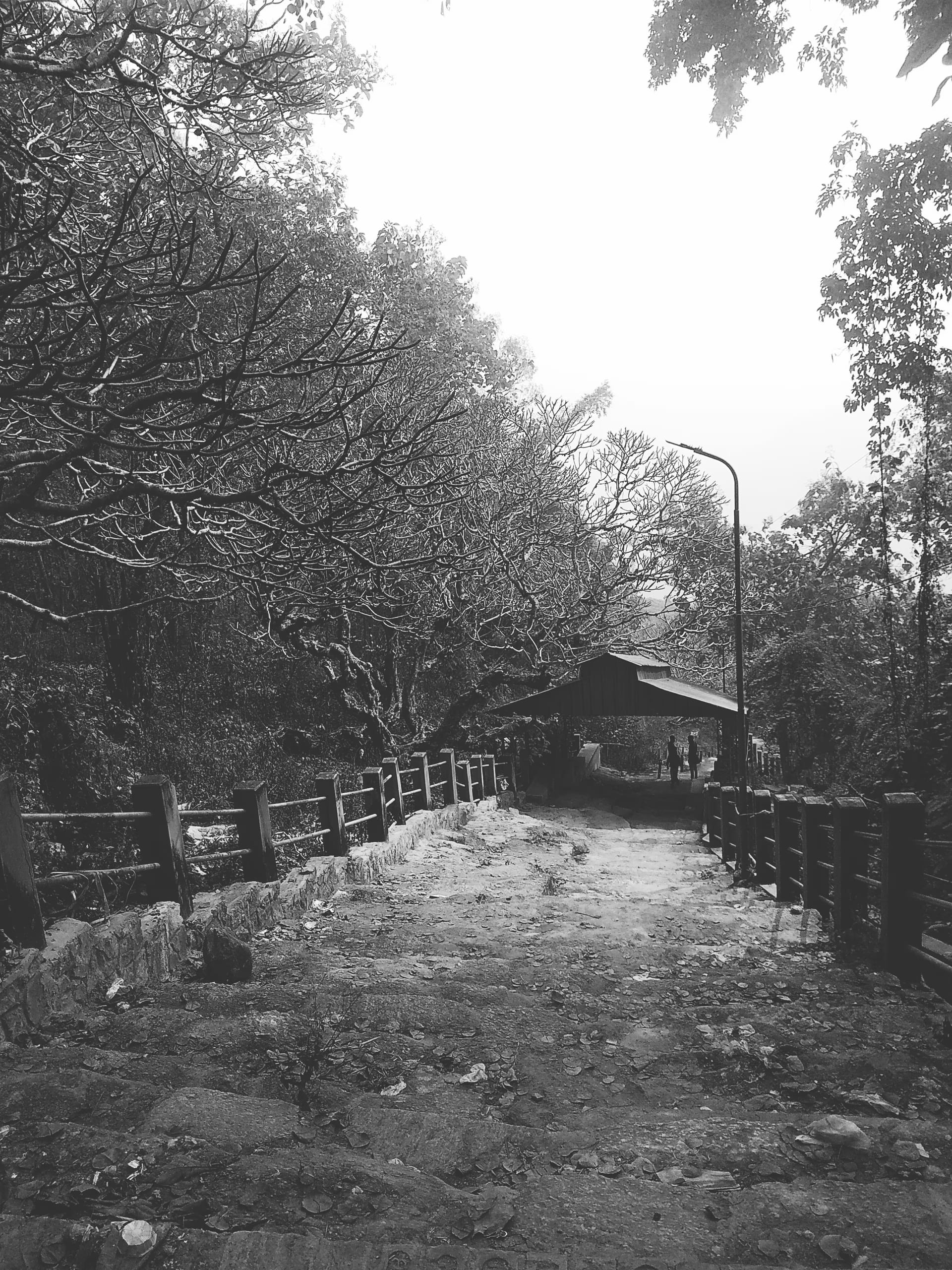
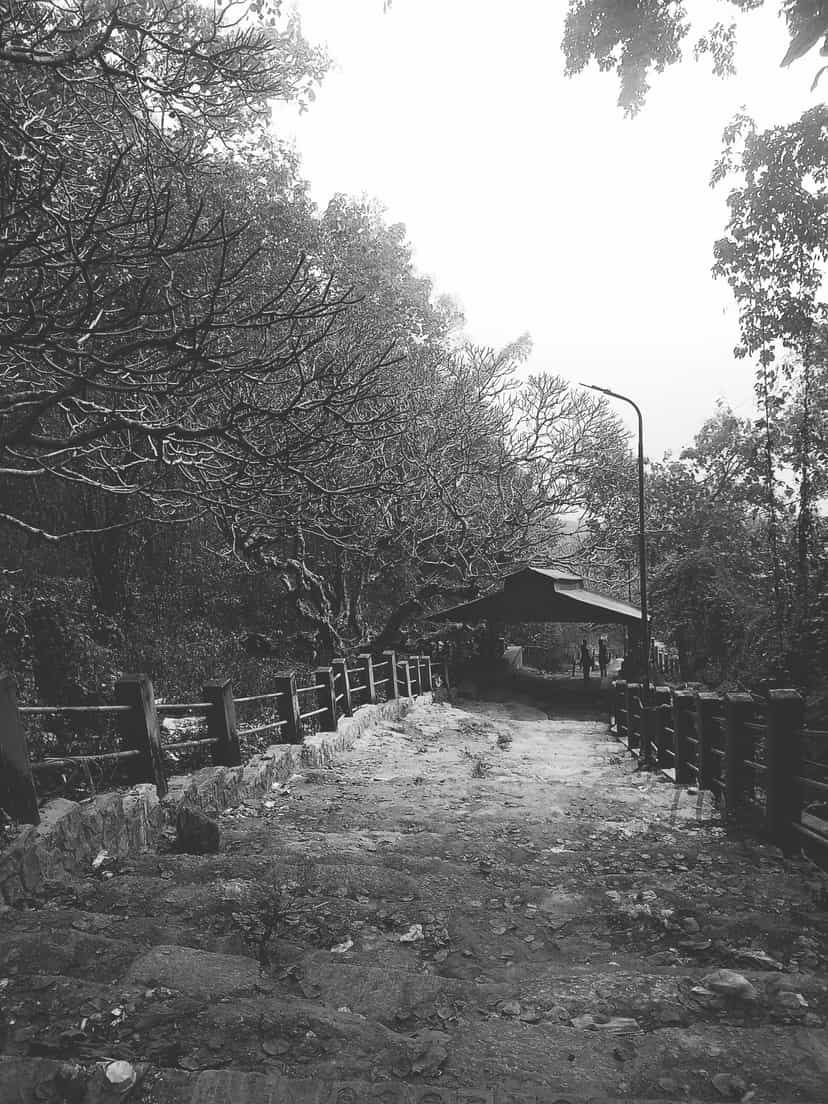
When he understood the trick, his grief turned to fury. He chased the bird and cut it down, and tradition still points to the place of the killing, remembered as Kukurakata, the spot where the cock was cut. The staircase itself he never finished. The old stone way up the hill is still there, and the hill’s tradition knows it as the Mekhela Ujua path, the stair of the king who nearly married the goddess. Pilgrims who climb it to Kamakhya today are climbing the work of that one night. The goddess kept her hill, and kept it unwed, and the mightiest builder in the valley’s memory was beaten by a bird that never saw a real dawn.
The fall of the earth-born king
A king who reaches for a goddess has already begun to fall, and the tradition is blunt about what finished the work. It was power, and bad company. Naraka fell in with the enemies of the gods, above all Bana, the demon king of Sonitpur, and the friendship changed him. Slowly, then not slowly, the once-righteous king slid into a tyrant of the classic mould, the kind whose arrogance finally reaches all the way up to heaven. The myths pile up his crimes without mercy. He tormented sages and holy men. He made war on gods and kings alike and took their treasures. He seized women in their thousands and shut them away in his fortress as captives. At last he reached for the sacred itself and stole the earrings of Aditi, the mother of the gods. A demon harassing mortals is a local problem. A demon robbing the mother of the gods is a cosmic one, and heaven has only a few answers to an offence like that.
The gods appealed to Krishna, and Krishna came. He flew east to Pragjyotisha on the eagle Garuda, and by his side rode his queen Satyabhama, herself a warrior. Naraka had not been idle. He had made his capital the strongest place in the east, a fortress the stories say was ringed with mountains, walled with fire and water, and choked about with snares and the coils of a monstrous serpent. None of it held. Krishna broke the outworks one by one, cut through the defending generals, and came at last upon the king himself. Most tellings say Krishna struck him down with the Sudarshana, his discus, and that is the standard account. In some tellings it is Satyabhama who deals the final blow. There is a quiet logic to that version. Naraka was a son of the Earth, and Satyabhama is herself an aspect of the Earth goddess, so in killing him she takes back what she had once brought into the world. Either way, at the height of his power, the first king of the valley was brought low.
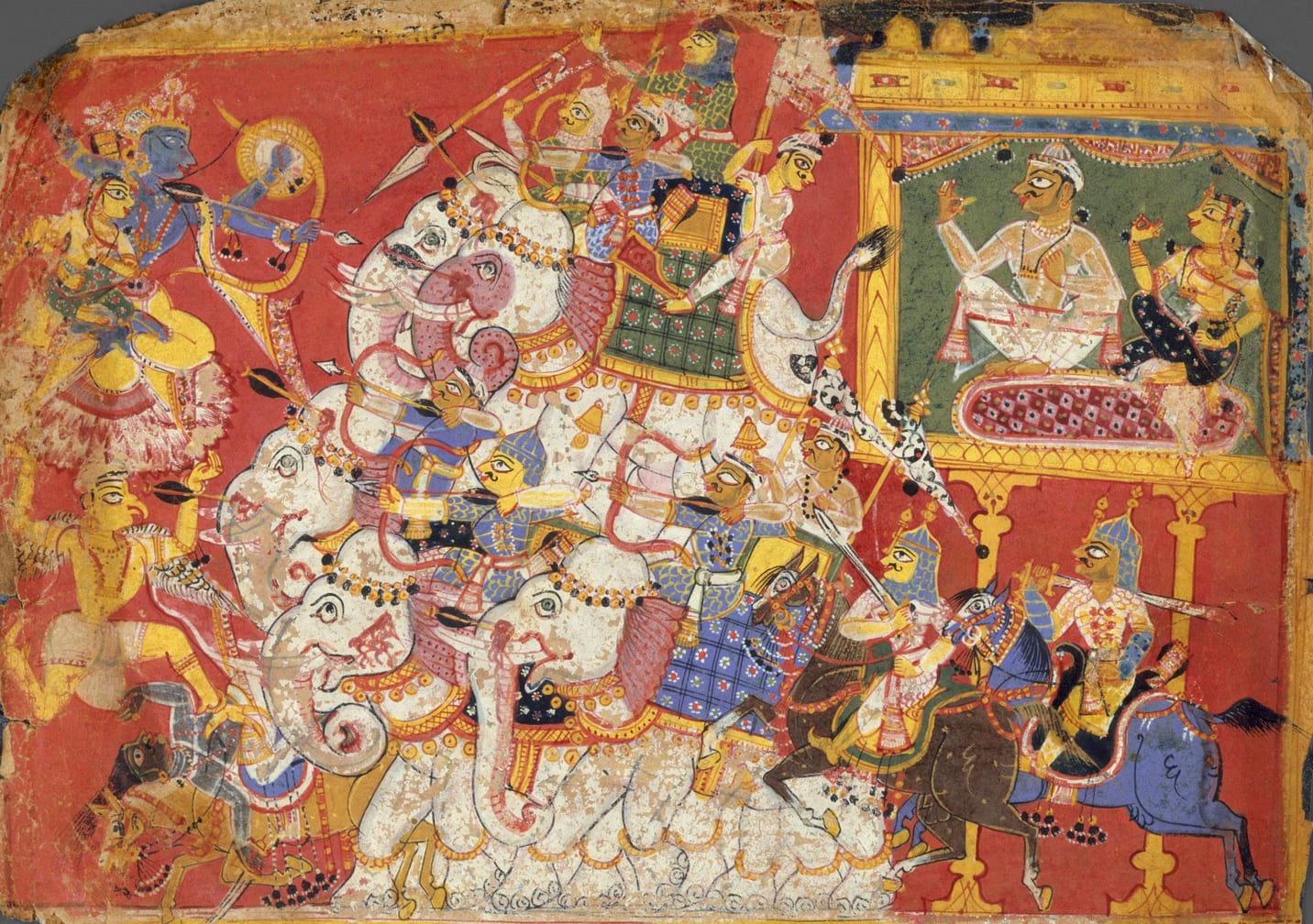
A death that became a festival of lights
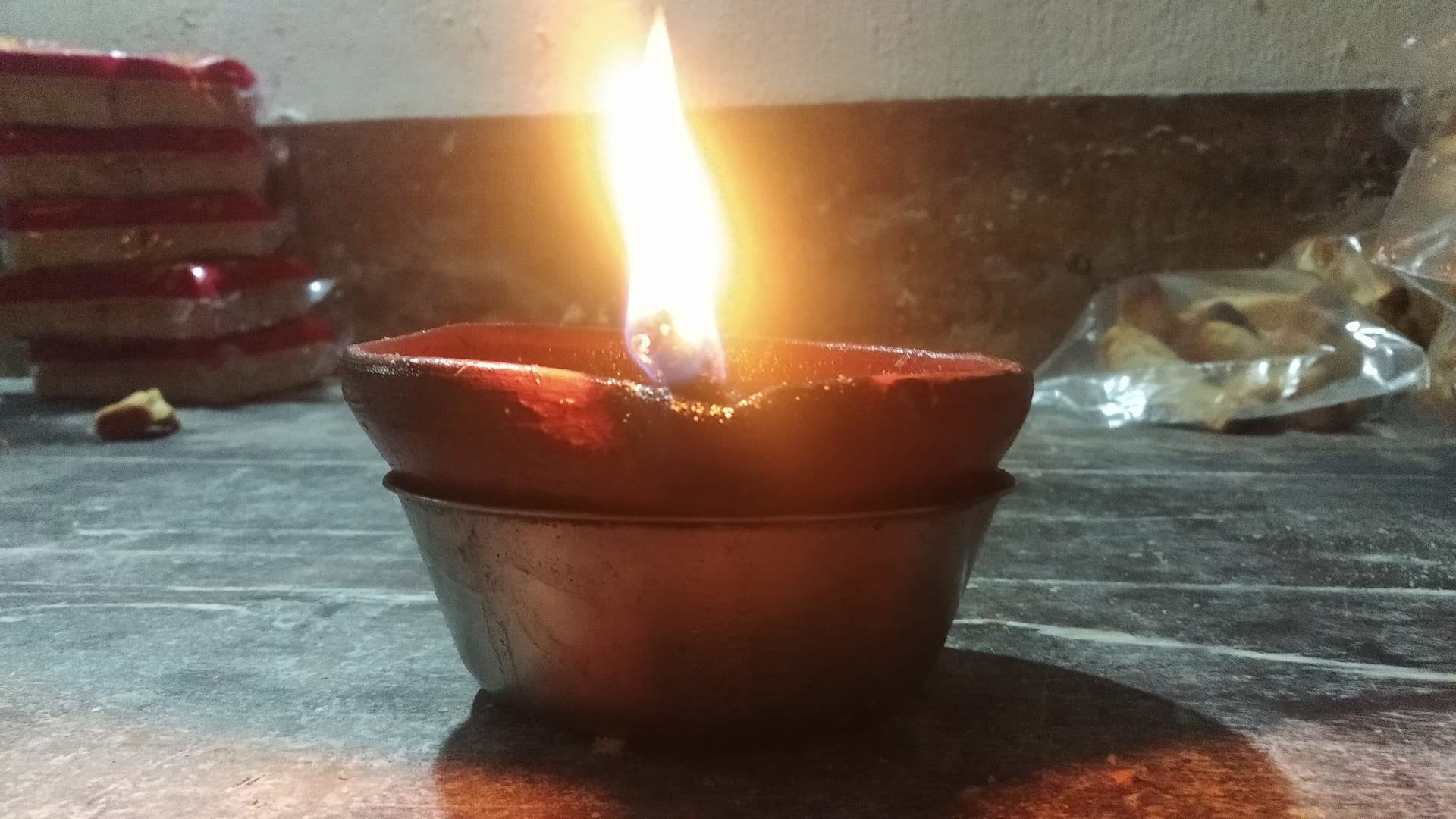
Here the story turns, and it is the turn that makes it Assamese. It stops being a simple tale of a slain monster and becomes something far more generous. As he lay dying, Naraka asked for a boon. Let my death, he said, not be mourned but celebrated. Let people light lamps and rejoice on this day, year after year, so that my fall is remembered as a brightness and not as a shame. And the boon was granted. The day of his fall, Naraka Chaturdashi, is kept across India on the eve of Diwali, the great festival of lights. A defeated demon asked to be remembered in flame, and a whole civilisation agreed to do it.
Then Krishna turned to the women the king had held. There were sixteen thousand of them by tradition, and their long captivity had ruined them in the eyes of the world they would return to. Society would not take them back. So Krishna did the thing the story is most remembered for. By tradition he married them all himself and gave each one the full honour and standing of a queen, so that no woman who had suffered in Naraka’s fortress would spend the rest of her life as an outcast.
Nor did the king’s line end on that battlefield. His son Bhagadatta inherited Pragjyotisha, grew into one of the great warriors of the Mahabharata, and carried the house into the epics. For a thousand years afterwards the real kings of Kamarupa reached back to claim descent from Naraka, Bhaskaravarman sealing the pedigree in his own copperplates, because to rule the valley was to sit on Naraka’s seat and serve the goddess he had served at Kamakhya. That is the demon-king’s strange afterlife. The goddess he could not marry still keeps her hill. The staircase he could not finish still lies broken on its slope. And the man who had once been righteous, before power spoiled him, is recalled every single year in light.