A country usually has one name and a story to go with it. This one has had at least three. Each came with its own legend. So the history of the land between the eastern hills and the Karatoya can be told simply as the history of what it has been called. First it was Pragjyotisha, the place of eastern light. Then, for the better part of a thousand years, it was Kamarupa, the form of desire. And then, in the medieval centuries, it became Asam, the name we now write as Assam, in the age of the people who came over the mountains to rule it. Three names, three ages, and three ways a place explained itself to itself.
The names did not replace one another cleanly, the way a new king replaces an old one. They overlap and echo. A poet in the age of Kamarupa still reached back for Pragjyotisha when he wanted the grand old word. A charter in Sanskrit still called the land Kamarupa long after the people on the ground had begun to say Asam. So the three names are less like three coats a country put on in turn, and more like three layers of paint, each showing through the next. Read together, they are a short history of who was looking at the valley, and from where.
Pragjyotisha: the place of eastern light
The oldest name is the one that reaches furthest back. It belongs to the world of the Mahabharata and the Puranas. There the valley appears as Pragjyotisha, and its king, Bhagadatta, brings an army of war-elephants to fight on the Kaurava side at the great battle of Kurukshetra. The name is usually read in two parts. Prag means eastern, or prior, and jyotisha means the science of the stars, or simply light. So the name means the place of eastern light. It marks the easternmost edge of the known world of the epics, the spot where the sun first touched the land.
That tells you at once whose name it is. It is a name given from the outside, and from the west. It came from people for whom this was the far frontier, the country the morning came from, beyond which the maps grew vague. There is no drama in it, no founding hero, only a direction and the dawn. Pragjyotisha is the valley seen from a great distance, a bright rumour at the eastern rim of the world. Behind the name, though, stands the oldest of the valley’s charter myths. This is the demon-king Naraka, the father of Bhagadatta and born of the Earth, who made the place his capital and his throne. His city was Pragjyotishpura, the city of eastern light, standing on the ground where Guwahati stands today. In the tradition every later dynasty of the valley claimed descent from him, reaching back to root their kingship in the deepest legend the land had. He is the first owner of the land in story, if not in record, and the shrine of the goddess Kamakhya on the hill above the river was in his keeping.
He is told in full in his own lore, for he deserves it. He is no simple villain, and the manner of his death made him, of all things, the reason for a festival of lamps.
Naraka, King of PragjyotishaBefore there was history there was a demon-king, born of the Earth, who nearly won the goddess of the hill with a staircase built in one night, and asked with his dying breath to be remembered in lamps.Open the lore →Kamarupa: where desire got its form back
In time, the tradition holds, Pragjyotisha gave way to a second name. This was Kamarupa, the form of desire. The Kalika Purana, the great Sanskrit text of the valley, gives the name its charter, and the tale it tells is one of the strangest explanations any country has ever kept for itself. It runs in a single chain: a goddess dies, her widowed god sinks into grief, and to break that grief the god of desire is burned to ash and then made whole again on this ground. Every link matters, so it must be told from the beginning.
The chain begins with the goddess. Shiva’s wife was Sati, daughter of the great patriarch Daksha. Daksha held a vast sacrifice and invited all the worlds, heaven and earth and the realm below. But he pointedly left out his own son-in-law, Shiva, whom he despised as a wild ascetic of the cremation grounds. Sati went uninvited to her father’s rite. There she had to stand and hear her husband abused to her face. Unable to bear the dishonour, she gave up her body on the spot. When the news reached Shiva, he came with his hosts and destroyed the sacrifice. Then, mad with grief, he lifted her dead body onto his shoulder and wandered the whole of the land, unable to put her down.
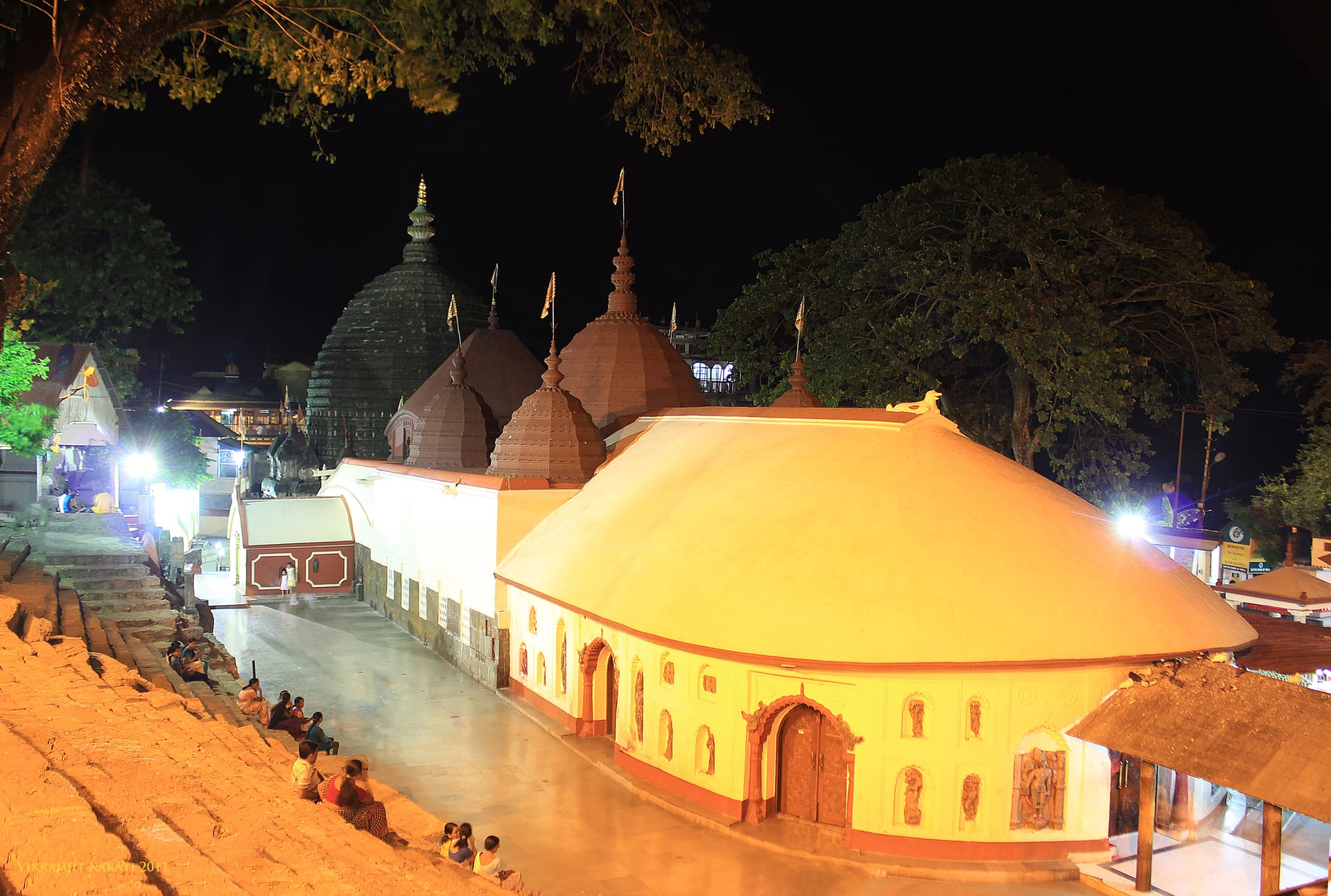
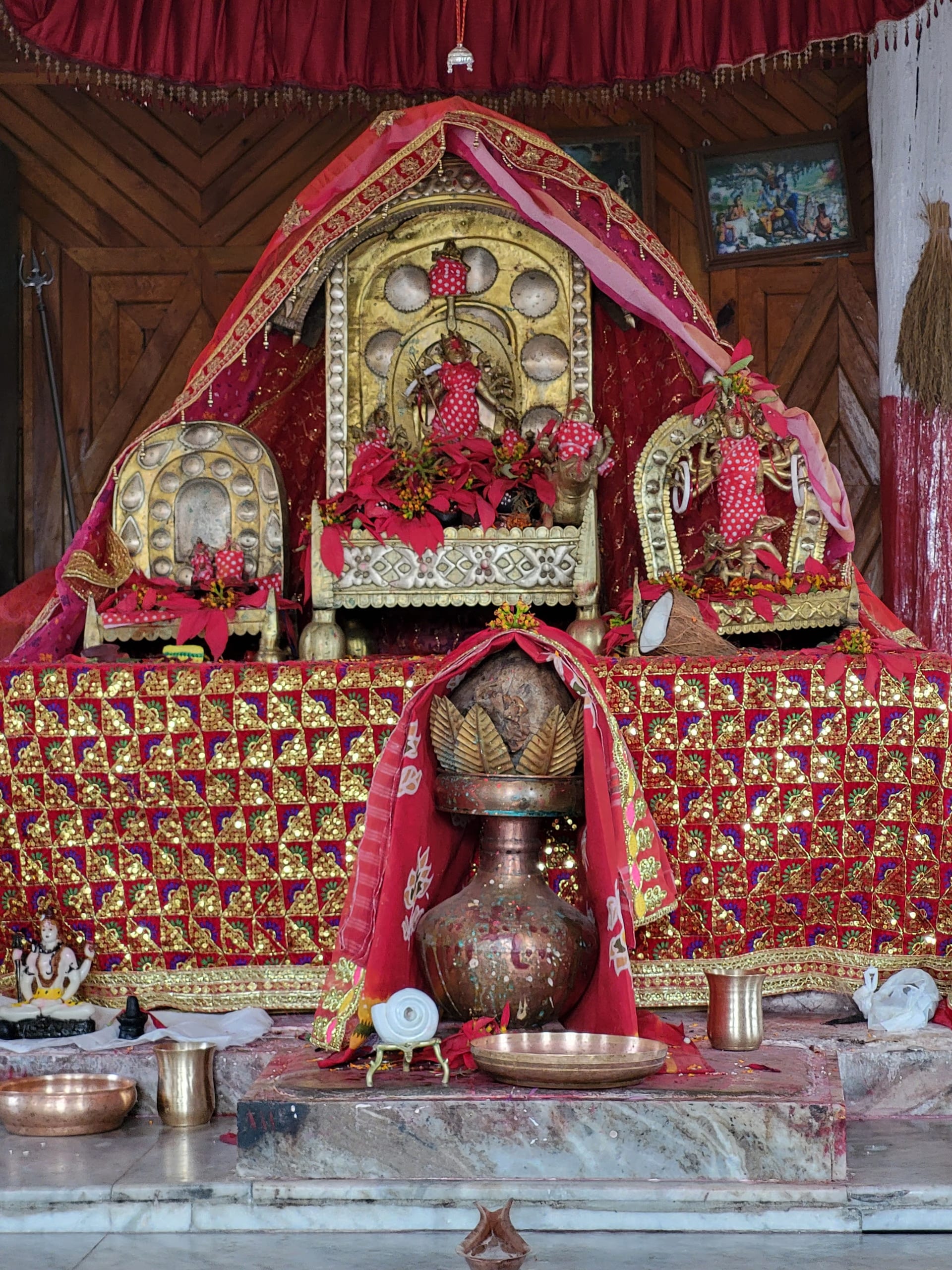
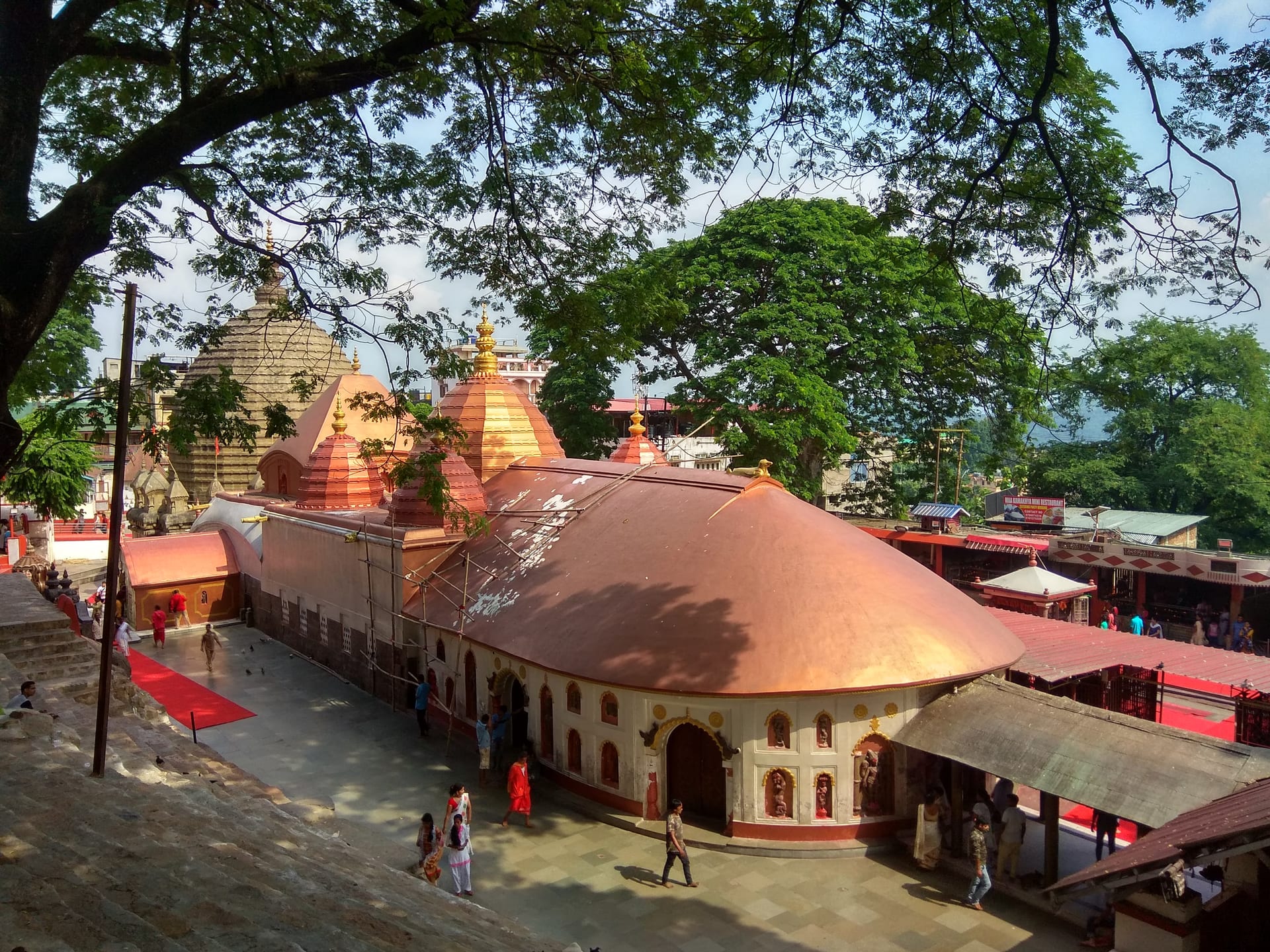
As he wandered, the god Vishnu sent his discus after them and cut her body into pieces. The pieces fell across the country, and every place a part of Sati touched the earth became a tirtha, a seat of the goddess’s power. Her yoni fell on the Nilachal hill above the Brahmaputra. There rose the temple of Kamakhya, the foremost shrine of the Sakta world of the east, the place where the goddess is worshipped as the source of all desire and all creation. That is how the hill became the goddess’s ground. It is not yet the name. The name follows from her death.
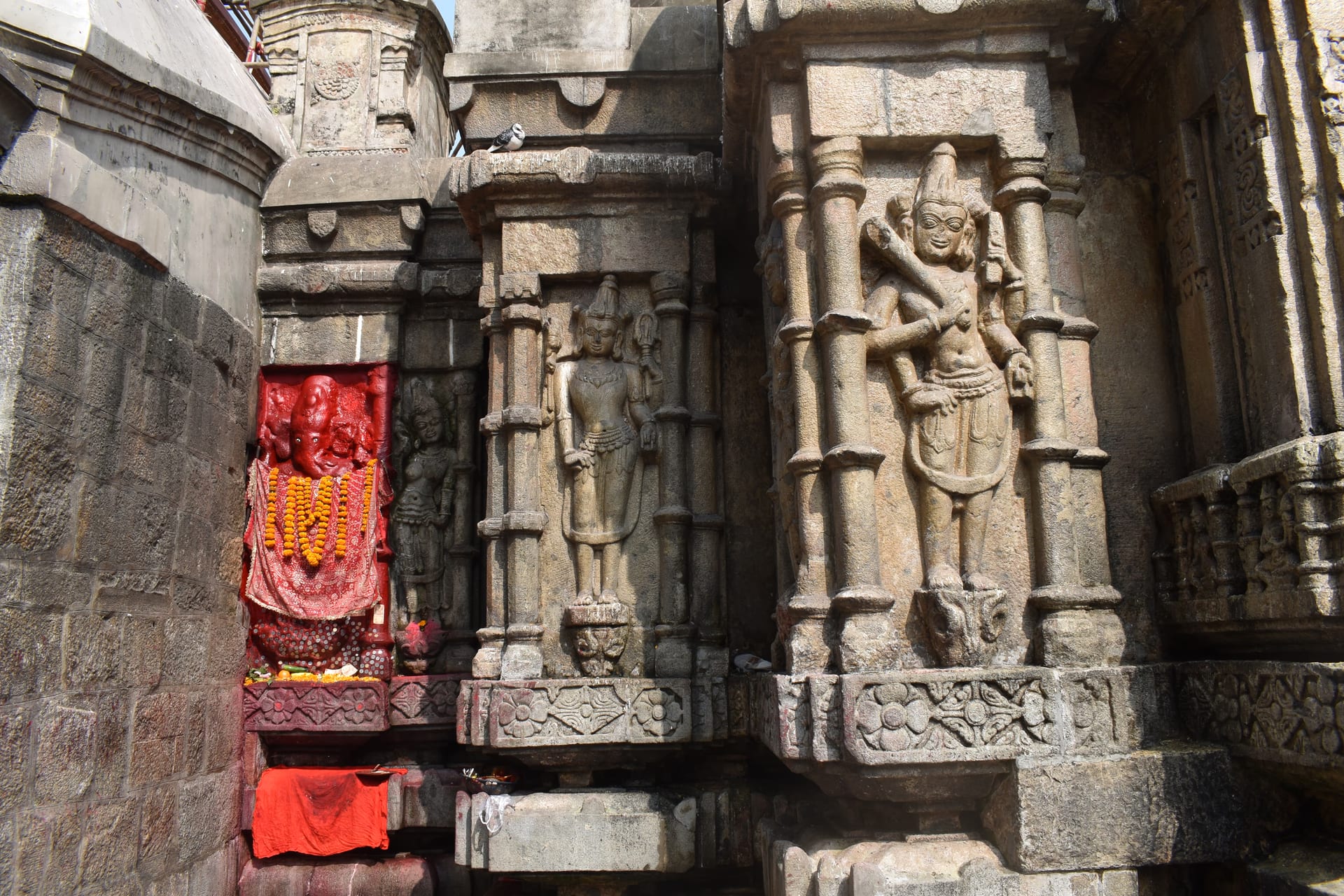
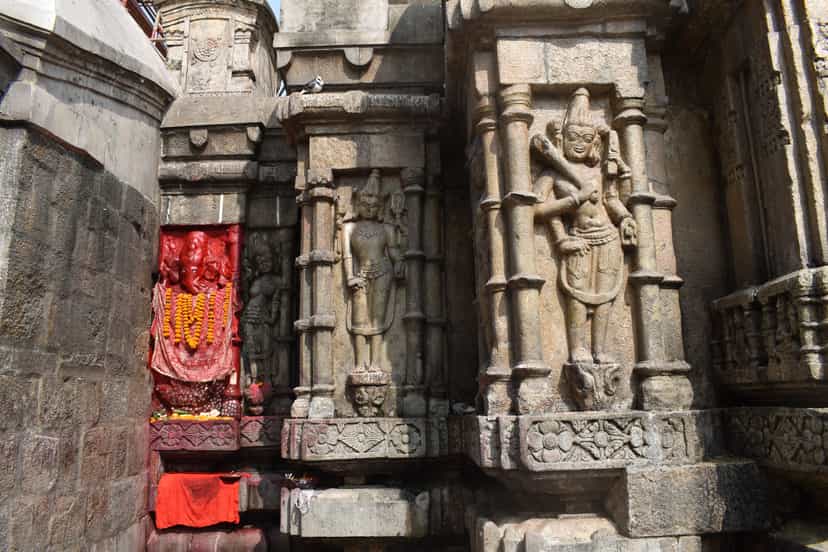
Kamarupa is named for Kama, or Kamadev, the god of desire, and his part follows directly from Sati’s death. After Sati was gone, Shiva sank into an enormous austerity, a penance so deep that its heat began to frighten the gods themselves. To break it, they sent Kamadev, the god of desire, to loose an arrow of longing at the great ascetic and turn his mind back toward the world and toward a new marriage. Kamadev did it. And Shiva’s eyes opened in wrath, and the fire of that anger burned the god of desire to ash where he stood.
Then Kamadev’s wife, Rati, broken with grief in her turn, praised Shiva until he relented. He granted that her husband would live again, and that he would recover his lost body, his rupa, his form, in this very land. It was here, the Kalika Purana says, that Kama got his rupa back. From kama, desire, and rupa, form, the country took its second name. Kamarupa is the place where desire regained its form. So the name is not the goddess’s and not the demon-king’s. It is the god of love’s, and it marks the exact spot on the map where he was made whole again. Myth, god and the name of the country were a single knot, tied on the Nilachal hill above the river.
Asam: the name of the medieval centuries
The third name rose in the medieval centuries, and its story is bound up with a people. In 1228 a Tai prince, Sukaphaa, crossed the Patkai hills with a small following. By tradition he came from Möng Mao, a Tai country in the borderland of what is now Yunnan and upper Burma. On the upper Brahmaputra he founded the Ahom kingdom that would rule the valley for six centuries. The Tai-Ahom were newcomers, a migrant elite among older and far more numerous peoples of the plains. What is beyond dispute is that in the centuries of their rule the name Asam spread over the whole country and displaced the ancient Kamarupa. Whose word it was first, theirs or the valley’s own, is a question the scholars still argue.
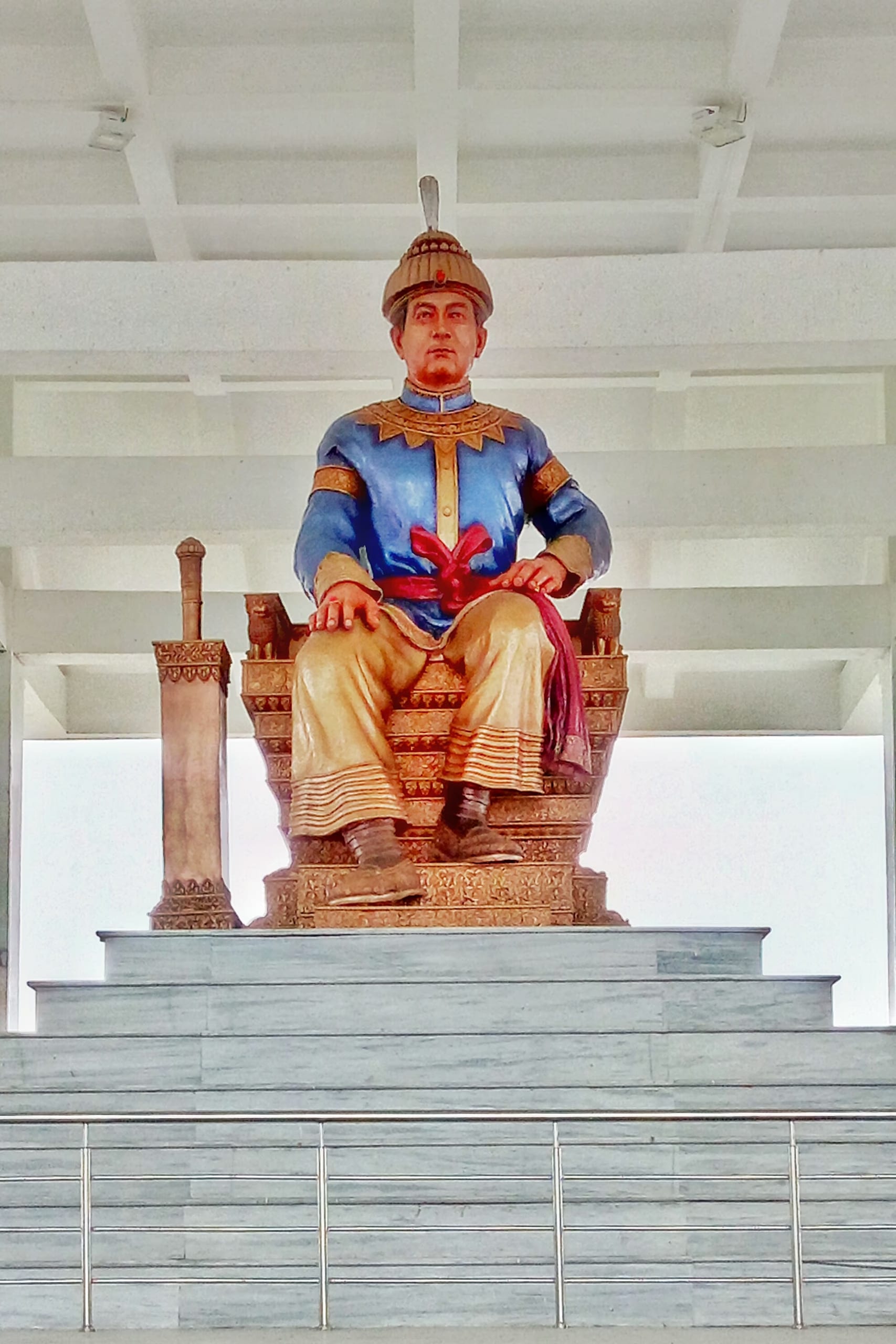
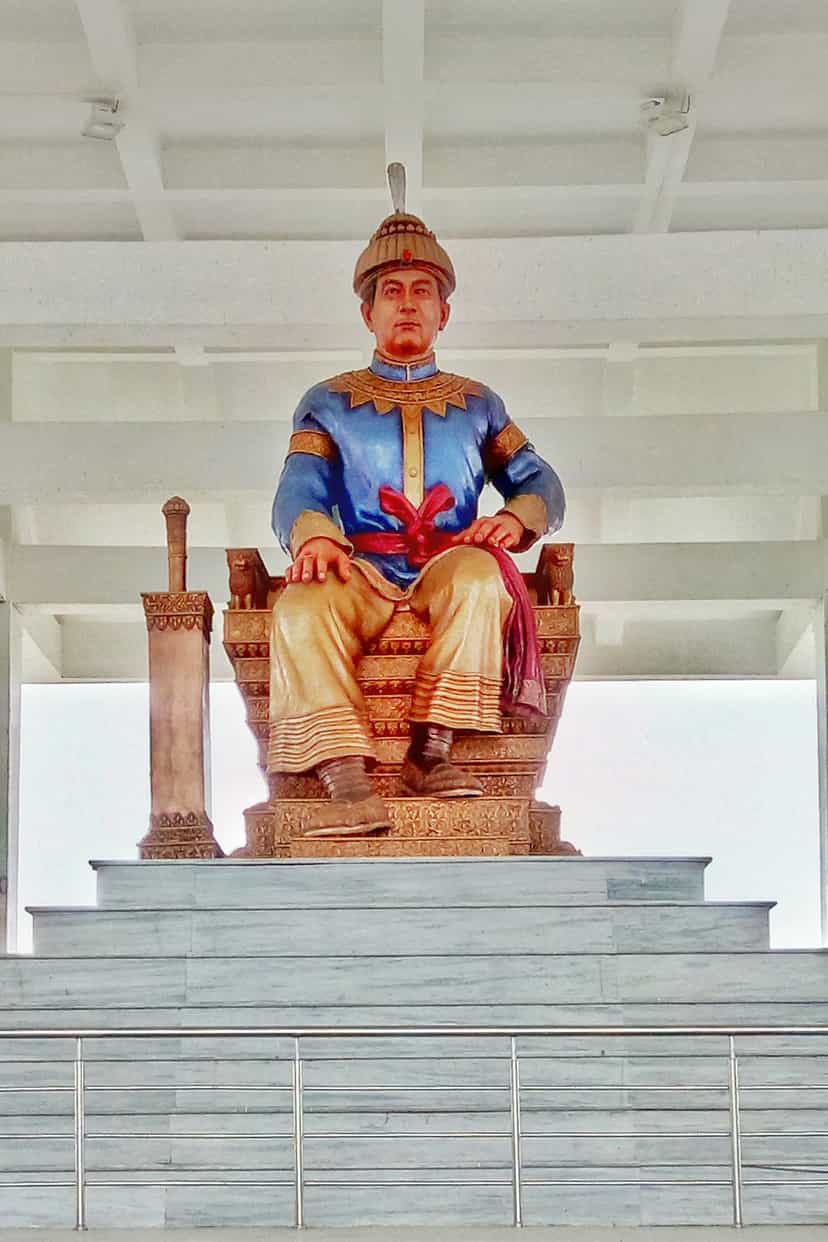
The legend the Assamese reader keeps is a flattering one. The Tais, it says, subdued the people of the valley by their courage, their cunning and their skill in war. The local people were amazed by them, and they called them asama, the unequalled, the peerless, those who have no match. Many tongues softened the word over time to ahom. From ahom the conquerors took the name we still use for them, the Ahoms, and in time the land they ruled took the name Asam after the people who ruled it. It is a clean story, and it carries a real memory inside it. The country-name and the people-name are the same word, and that word moved from the rulers to the realm.
The sober scholarship tells the same shape of story with one honest correction, and it is worth being precise about who said what. The colonial historian Sir Edward Gait recorded the “peerless” theory but doubted it, on the sensible ground that a conquered people do not hand their conquerors a flattering Sanskrit title. The linguist Banikanta Kakati, working through the sources in the twentieth century, argued that the Sanskrit meaning came last, not first. The name, he held, belonged first to a people. It was the indigenous people of the valley who called the Shan newcomers Asam, or Acam, and the modern word Ahom is simply the worn-down form of that older name. The Sanskrit gloss of “peerless, unequalled, uneven” was a learned rationalising laid over a name that was already on the ground, not the source of it. Kakati went further and offered his own root for it, from a Tai word meaning “undefeated,” the a-cham that could not be beaten.
Other scholars proposed other roots entirely. The best known of the rival theories is older than Kakati’s. It was Baden-Powell, writing in the 1890s, who traced the name not to any Tai word at all but to the Bodo tongue, to a phrase like ha-com meaning the low or level country, the flat land of the valley floor. On that reading the name was never about the conquerors at all, but about the land itself, given by the people who had farmed it since long before the Tais crossed the hills. The question is not finally settled, and honest accounts leave it open. What every account agrees on is where the name came to rest. A name that meant “the level land,” or “the unmatched people,” became fixed to the whole valley in the medieval centuries, and it is the name the country carries still.
One valley, three answers
The three names are not really rivals. They are three layers of the same place, and each keeps a different truth about it. Pragjyotisha remembers the valley as the eastern edge of an older world, the place the light came from, seen from very far away. Kamarupa remembers it as sacred ground, the country of the goddess and the hill, where even the god of desire came to be made whole again. And Asam remembers the great medieval fact of the valley’s history, the coming of Sukaphaa’s Tais and the long fusion that followed. Out of that fusion the modern Assamese people were made, a single people from many.