
The Hayagriva Madhava temple stands on the Manikut hill at Hajo, a short drive northwest of Guwahati across the Brahmaputra. It is a living stone temple of Vishnu, worshipped here as Madhava in his horse-headed form, Hayagriva. Among the Vaishnava shrines of the lower valley it holds a place of the first rank. It is also a Buddhist pilgrimage place of long standing. Bhutanese and Tibetan pilgrims revere the same hill and the same image under their own names. That shared sanctity of two faiths belongs to this temple. The wider town of Hajo, with its Siva hill and its Muslim dargah on the neighbouring heights, is the three-faith frame told on the Hajo page.
The shrine rebuilt
The Manikut was holy ground long before the present stone fabric. Vishnu worship on this height belongs to the religious landscape of early Kamarupa, layered over devotion far older than the present temple. What visitors climb to today is not that first shrine. An older building on the hill was destroyed in the mid-sixteenth century, in the years when the armies of the Bengal sultanate struck deep into the western valley. The present temple is the Koch rebuilding of 1583, raised by Raghudeva, founder of the eastern Koch kingdom that later took the town’s name, Koch Hajo. He bound his new state to this sacred ground by rebuilding its principal shrine in stone.
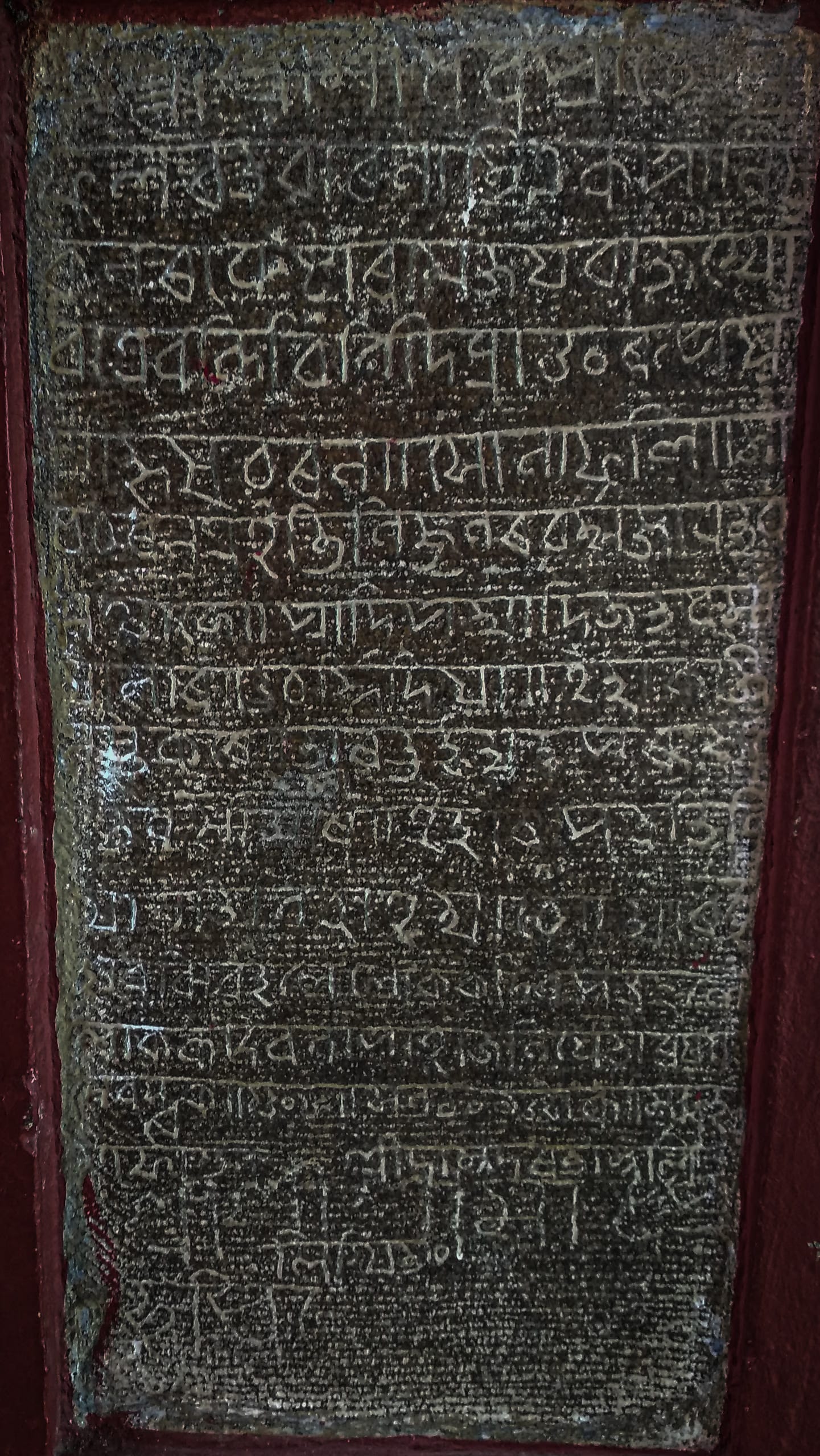
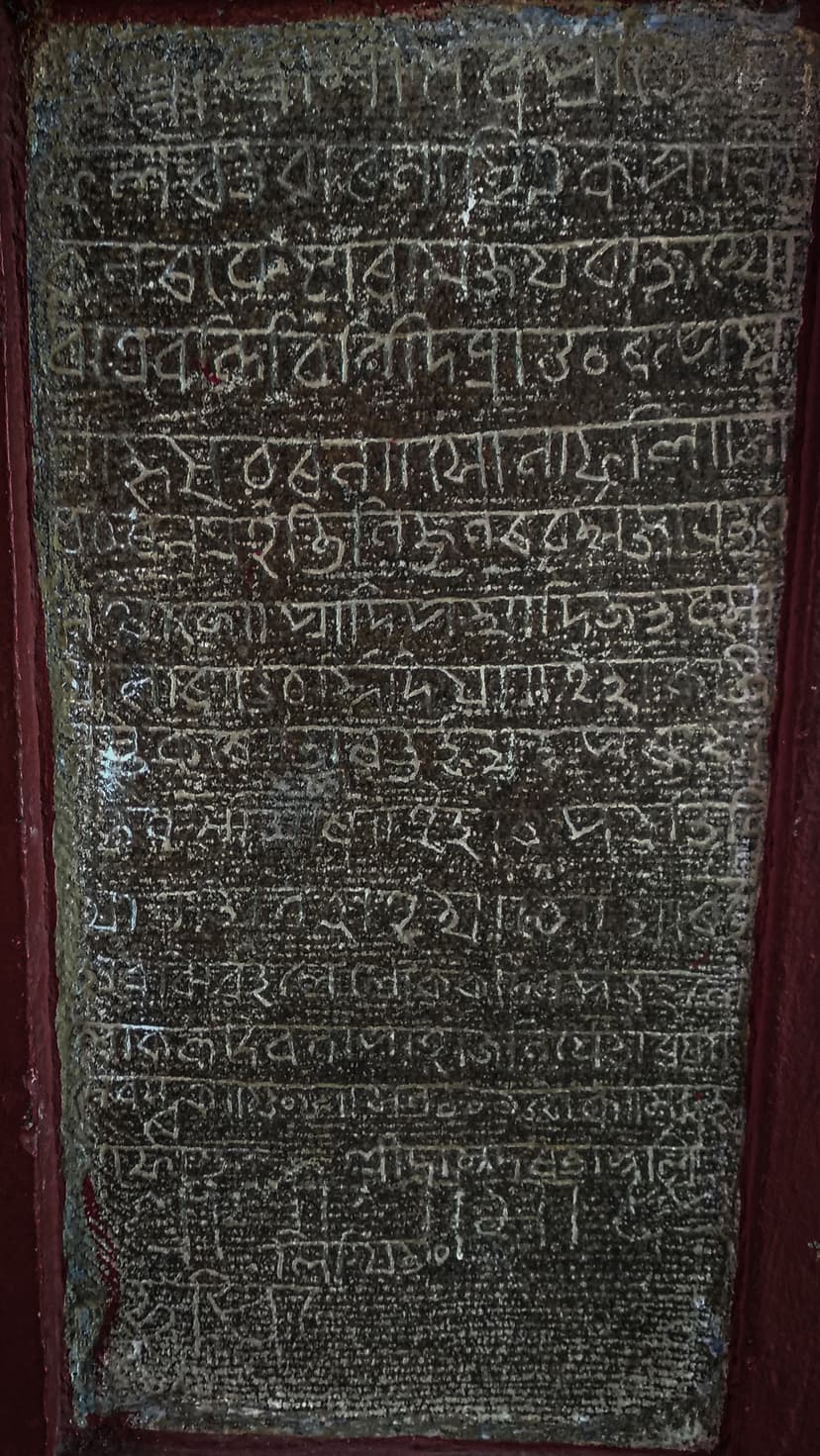
A stone inscription set in the temple fabric records the shrine in the Eastern Nagari script of the medieval valley, the epigraphic mark of that Koch campaign of patronage. When the Mughals made Hajo the seat of their Kamrup province, and when the Ahom court later held the west, the shrine on the Manikut continued under royal and popular care.
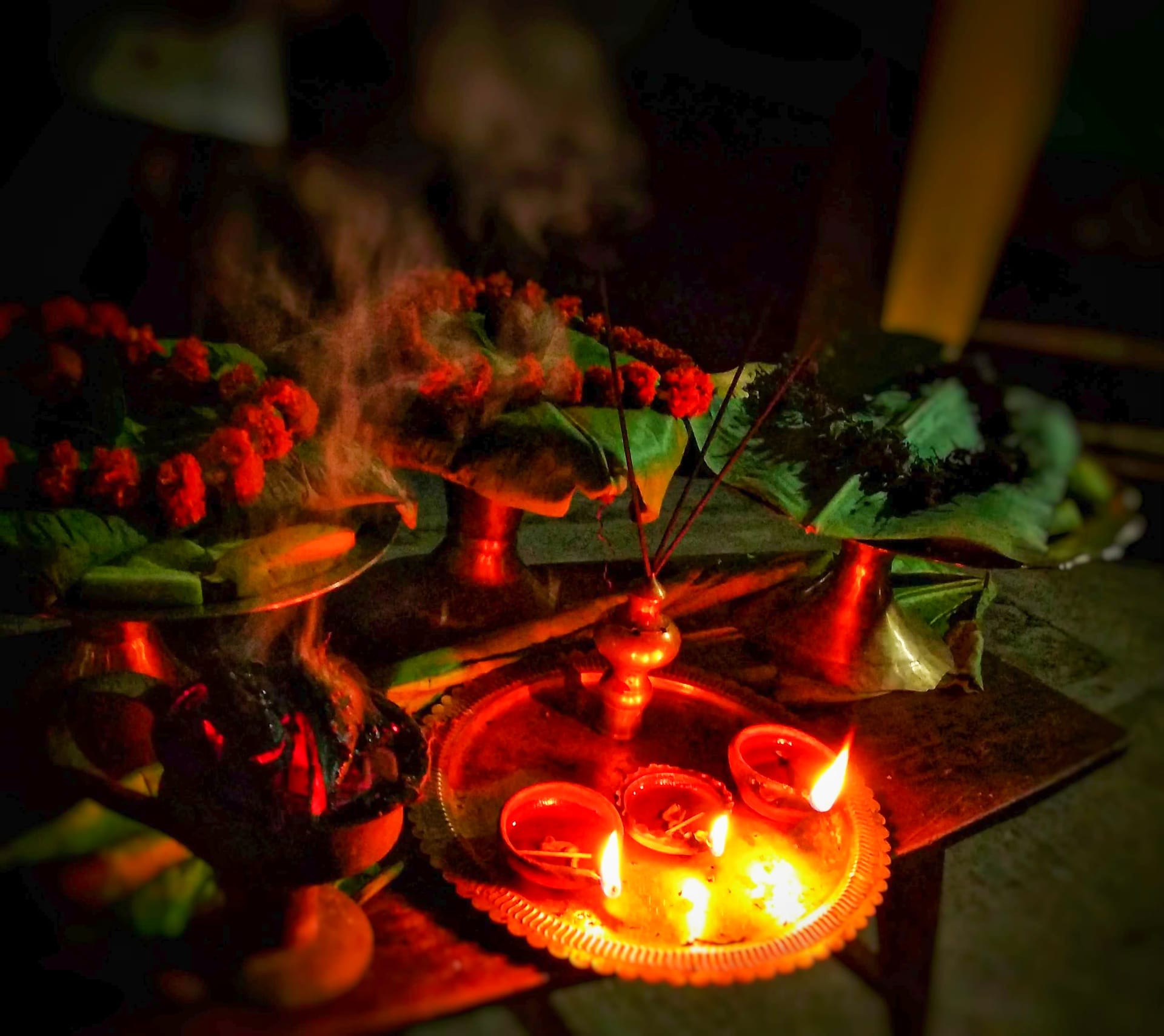
Inside, the dark stone image in the sanctum is still the focus of daily Vaishnava rites. The worship follows the Vaishnava devotion of the region. On the great days of the calendar, Doul in spring, Janmashtami, and the Ashokastami mela, the steps and courtyard fill with music and offerings. What sets the shrine apart from almost every other Vaishnava temple of the plains is the second reading it carries. A strong tradition among the Buddhists of Bhutan and Tibet identifies the Manikut as a place of the Buddha’s final nirvana. In their pantheon the horse-headed god of the hill is Tamdrin, a wrathful protector. For centuries Bhutanese pilgrims have come down from the mountains each winter to worship at this Hindu temple as one of their own holiest places. Hindu and Buddhist devotion meet at the same sanctum.
The stairs and the carved walls
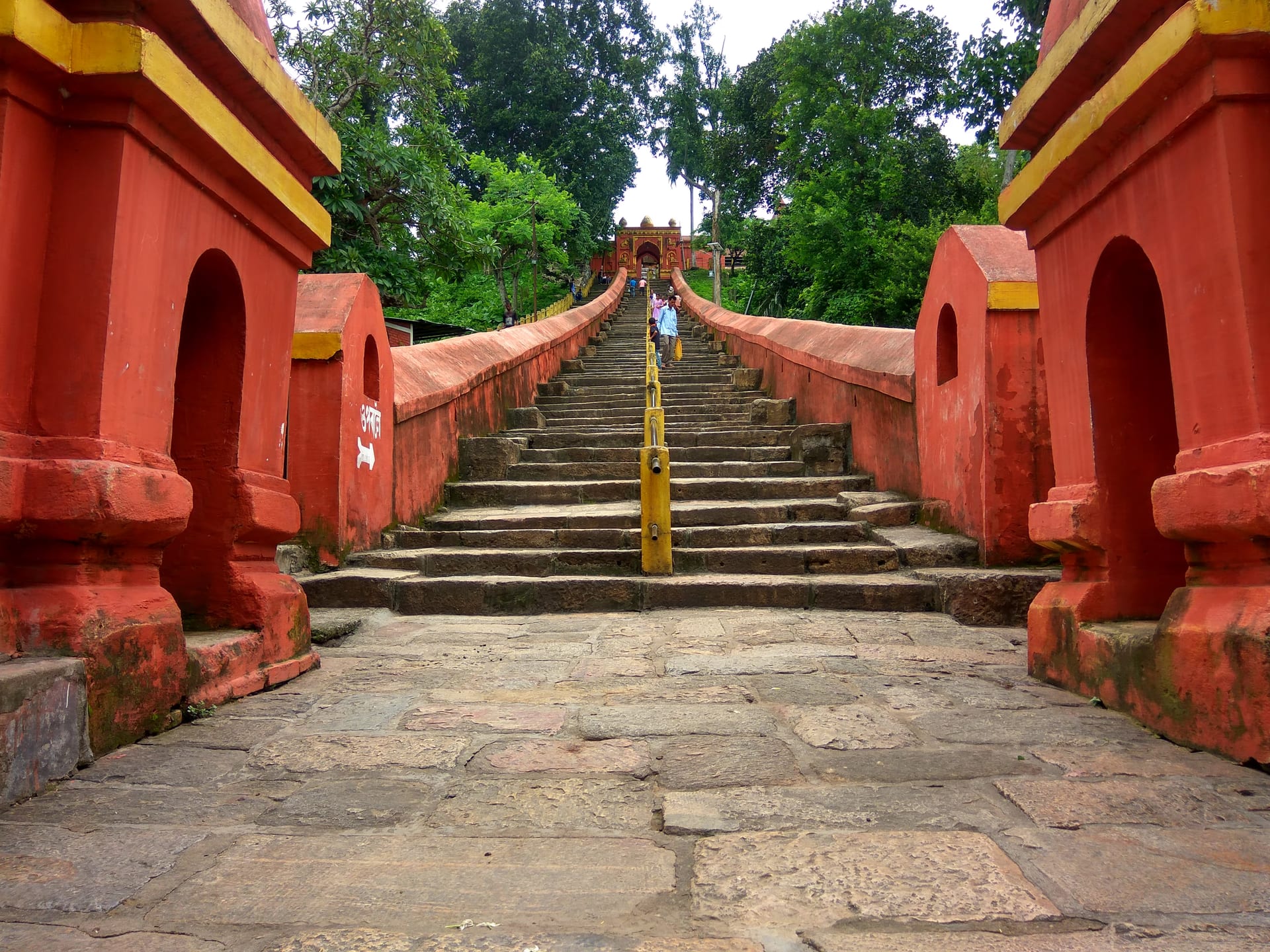
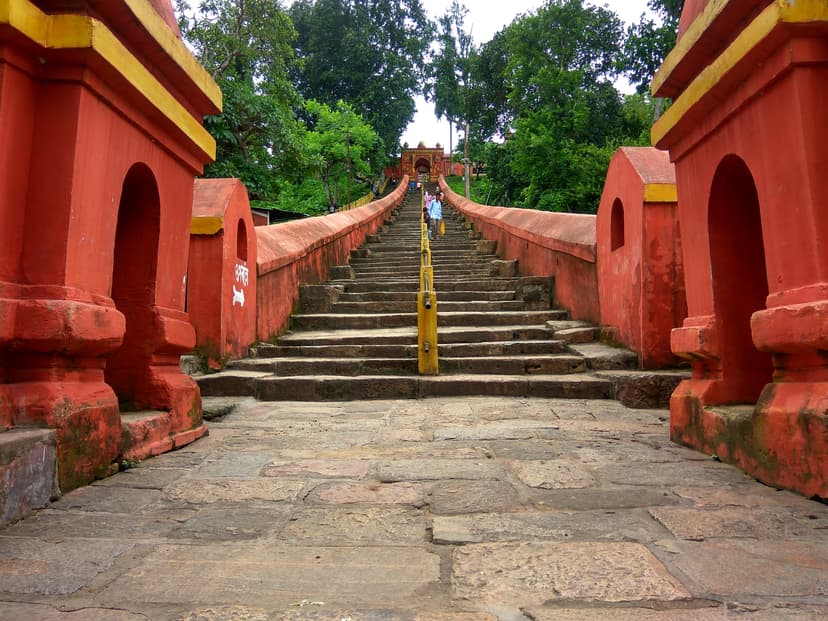
The approach is part of the architecture. A long flight of grey stone stairs climbs the Manikut between painted gate pillars, a yellow railing dividing the ascent, and opens at the crest through a gateway into the temple courtyard. The climb is the first act of the visit. It sets the shrine above the flood plain and gathers the pilgrim before the stone work begins.
The temple that crowns the stair is a Koch-period stone structure, its fabric the warm laterite and dressed courses of the western Assam tradition rather than the thin Ahom brick of the upper valley. The main mass rises as a curvilinear shikhara over the sanctum, a regional dol form, its outer faces divided into vertical bays set with stacked arched niches. Each niche holds a small carved figure. Above the crest a tiered finial closes the tower. Beside the shrine, lower halls and porch chambers gather the working life of a living temple.
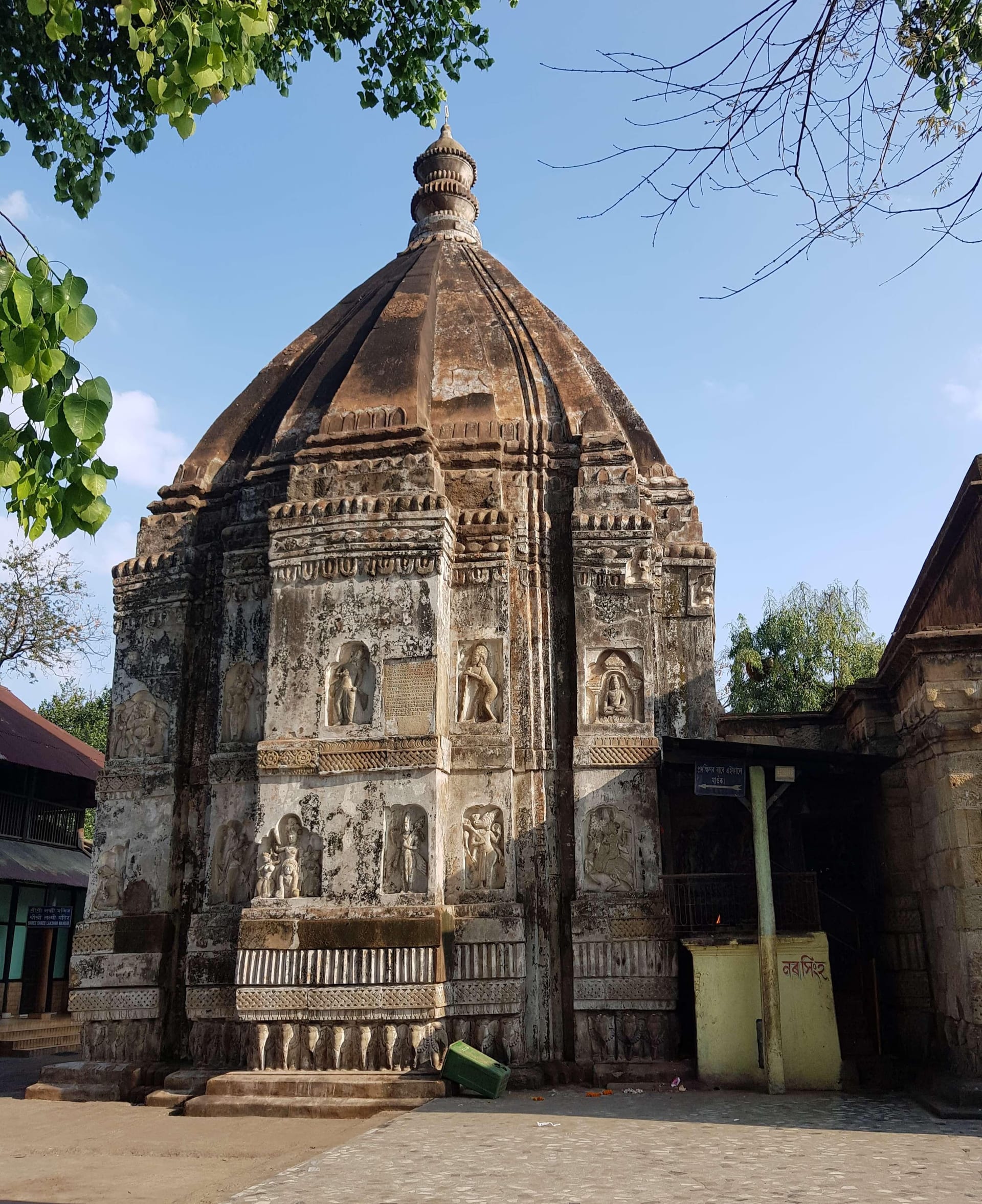
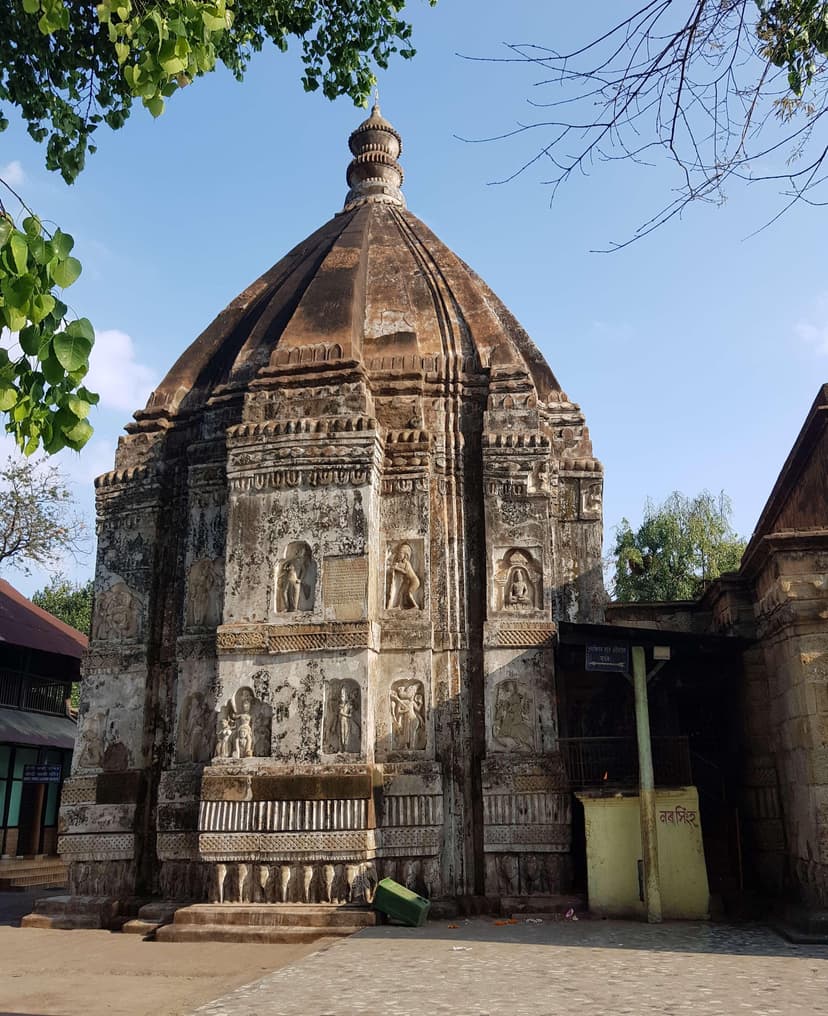
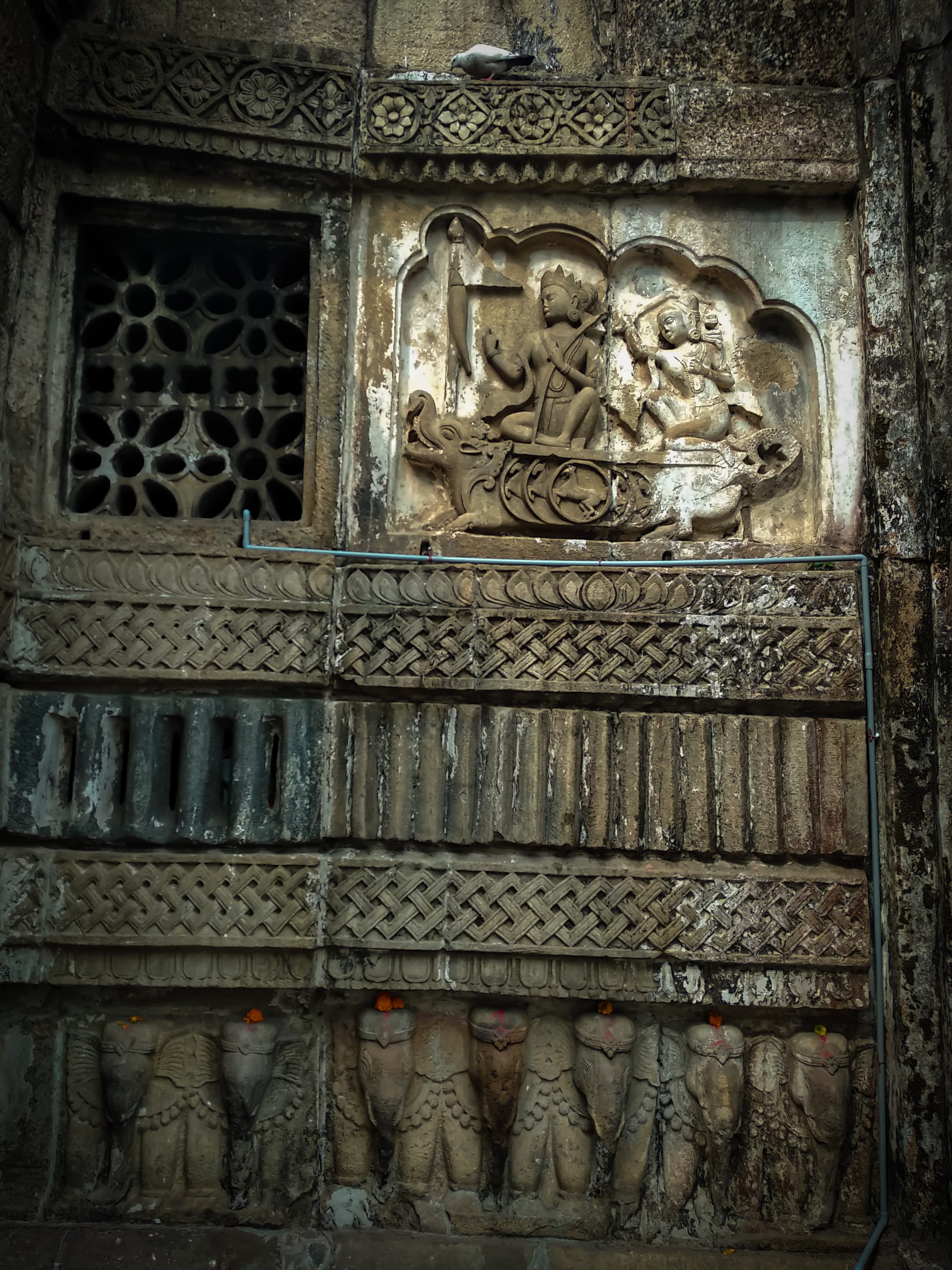
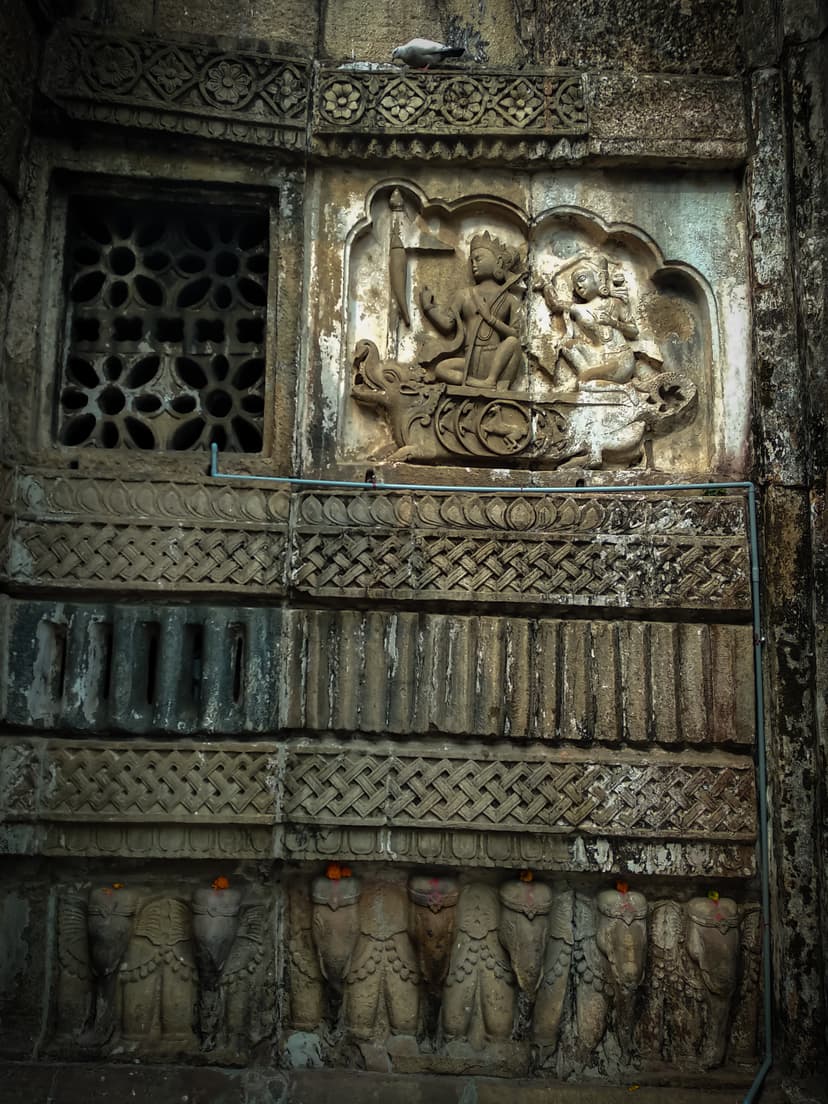
The walls repay a slow look from the base up. The lowest course is carved as a procession of elephant heads, trunks turned down, as if the whole shrine rode on their backs. That elephant frieze is one of the clearest Koch signatures on the building.
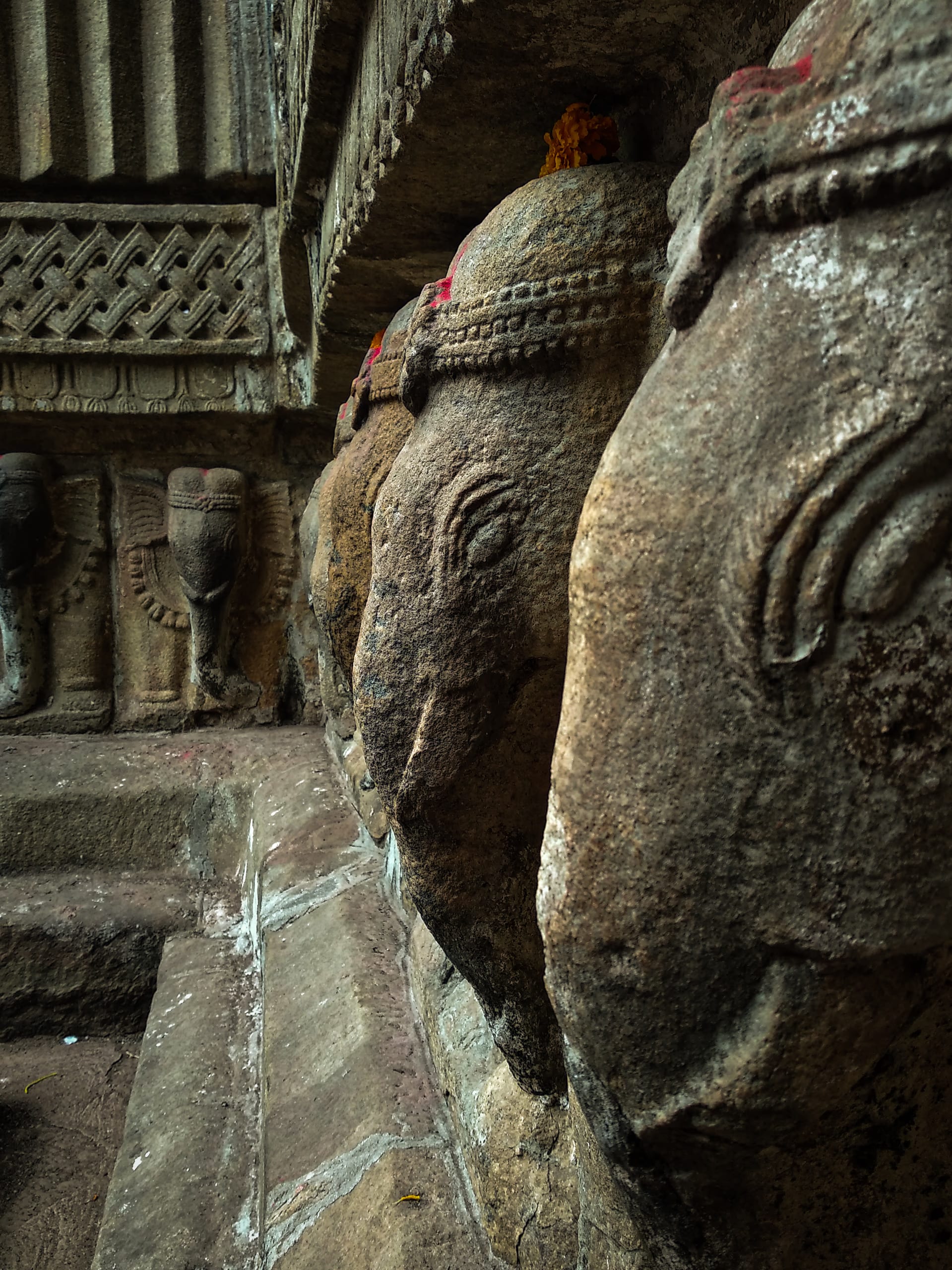
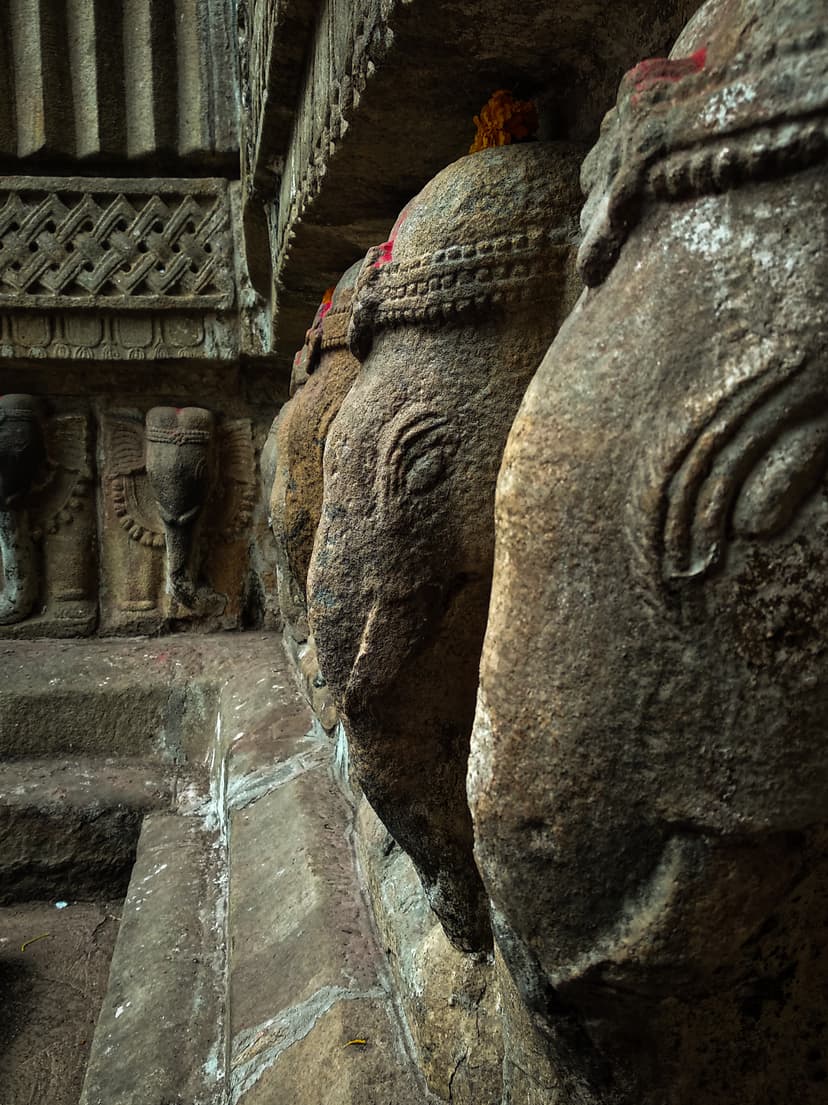
Above the elephants run bands of moulding, geometric friezes, and figural panels. Devotees read among them the ten incarnations of Vishnu, the dasavatara. A lattice window and an arched niche with a standing figure mark the richer wall faces. Close mouldings braid and bead the stone.
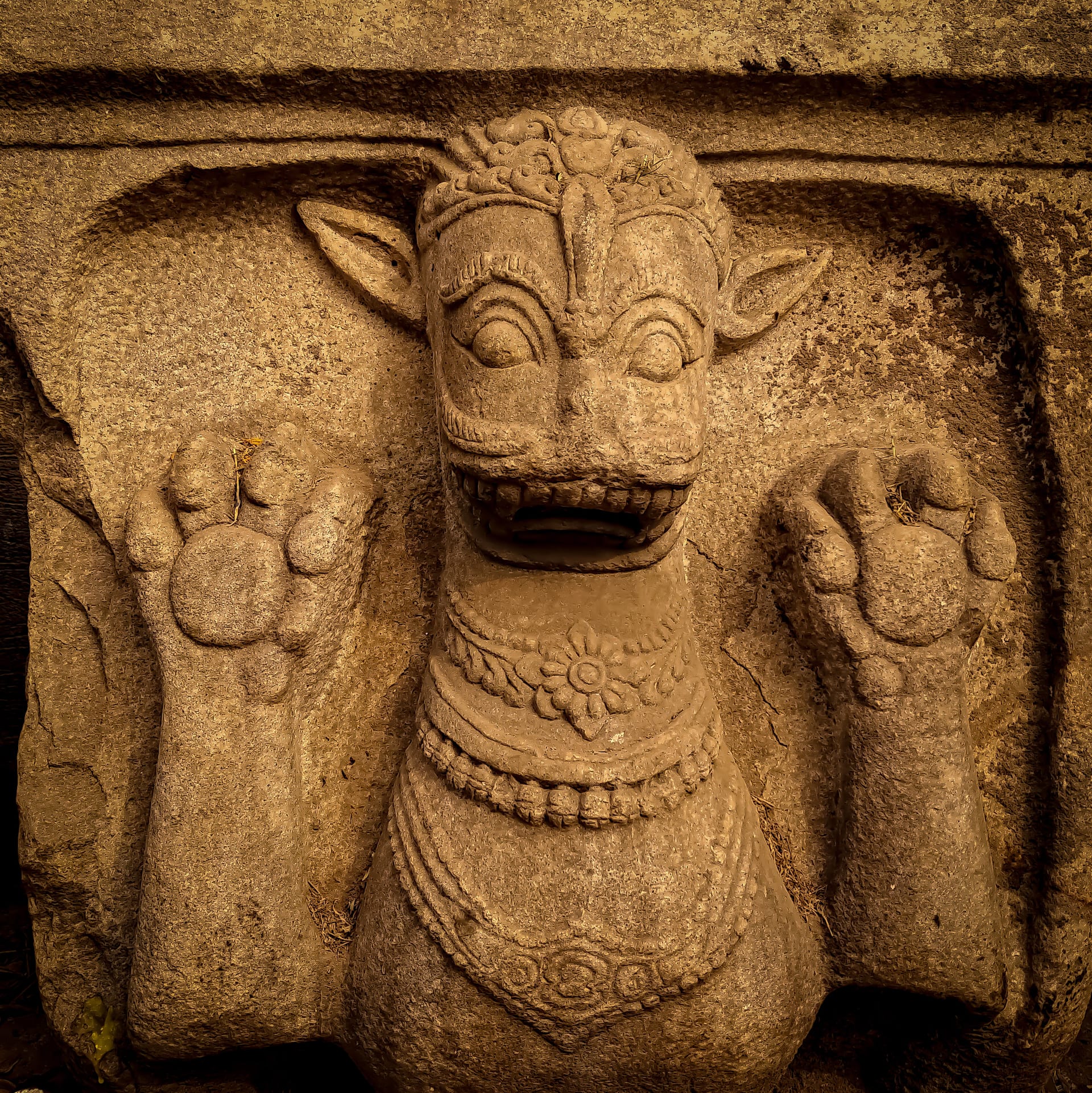
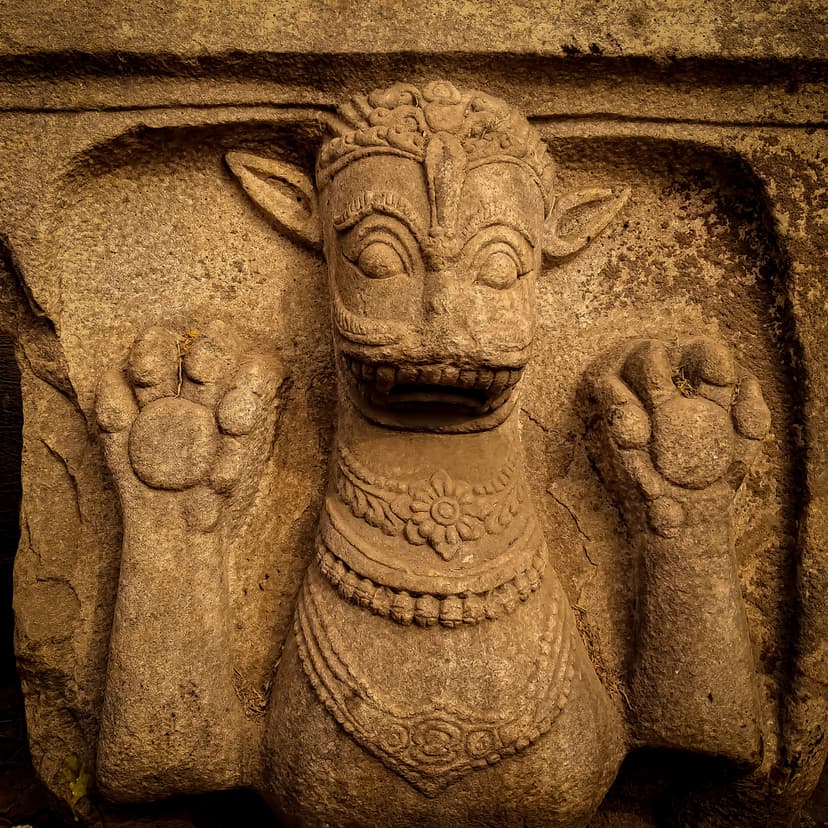
Set into the same outer fabric are fierce animal-faced guardians, leonine beasts of the kind temple art calls a vyala or shardula. They sit in their own niches with raised paws and open mouths, jeweled and watchful. In the grammar of North Indian stone temples such figures ward the shrine. At Hayagriva Madhava they belong to the same Koch carving programme as the elephants and the avatar panels, not a later add-on.
The sanctum holds the dark image worshipped as Madhava. The daily rites of a living temple continue around it. Visitors enter barefoot. The stone work outside is the public face of the shrine. The image within is its heart.
The tank, the turtles and the year
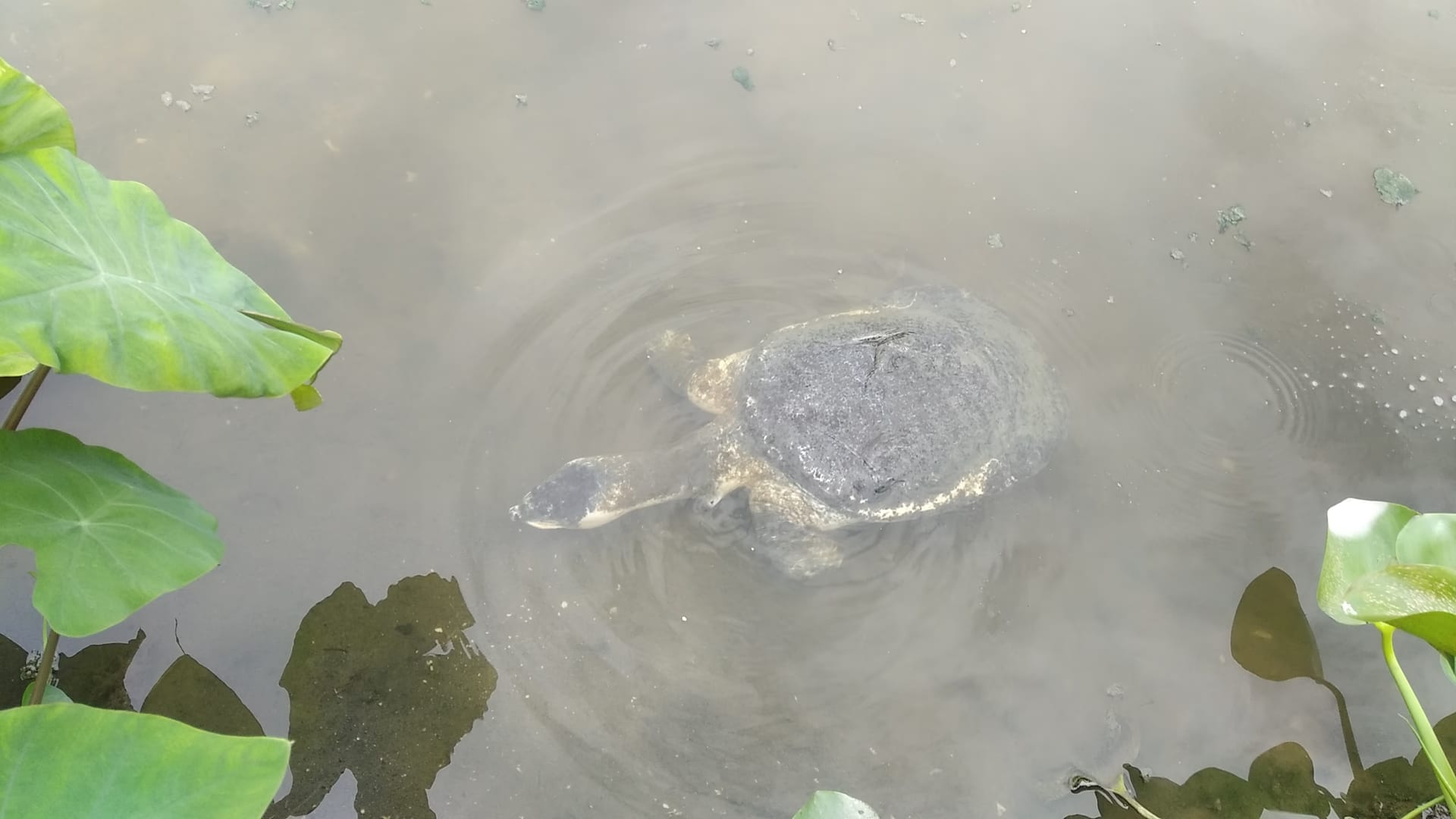
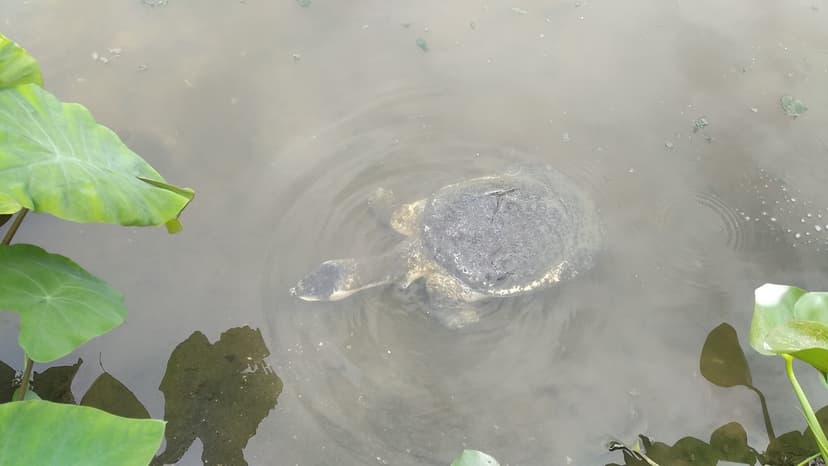
Below the temple lies the Madhab Pukhuri, the large stone tank that belongs to the shrine as closely as the stair. Its soft-shelled turtles are fed by pilgrims and have become part of the place’s character. They are the black softshell turtle, Nilssonia nigricans, a rare freshwater species once declared extinct in the wild and now reckoned critically endangered. Pilgrims revere them as living forms of Kurma, the tortoise incarnation of Vishnu. The temple’s own faith has helped carry the species through. Sacred temple ponds of this kind were among the few refuges that kept it alive. In recent years conservationists have hatched young from the Hajo tank and released them into the wild. The pond is therefore both a ritual landscape and a living conservation site.
The temple year turns through the Vaishnava calendar. Hajo is at its most alive at the spring Doul, at Janmashtami, and at the Ashokastami mela, when Hindu and Buddhist pilgrims gather at the same shrine. On those days the stair, the courtyard and the tank edge fill together.
Visiting
Hajo lies about twenty-five kilometres northwest of Guwahati, an easy half-day outing across the river. The Hayagriva Madhava is the first of the ridge’s shrines most visitors climb, reached by the stone stair up the Manikut. The same afternoon can take in the Powa Mecca on the Garurachal and the Kedar temple on the Madanachala, the three-faith circuit of the town. It is an active temple, entered with the usual observances. The cooler, drier months from October to March are the most comfortable for the climb. Festival days are the most crowded, and the most vivid.