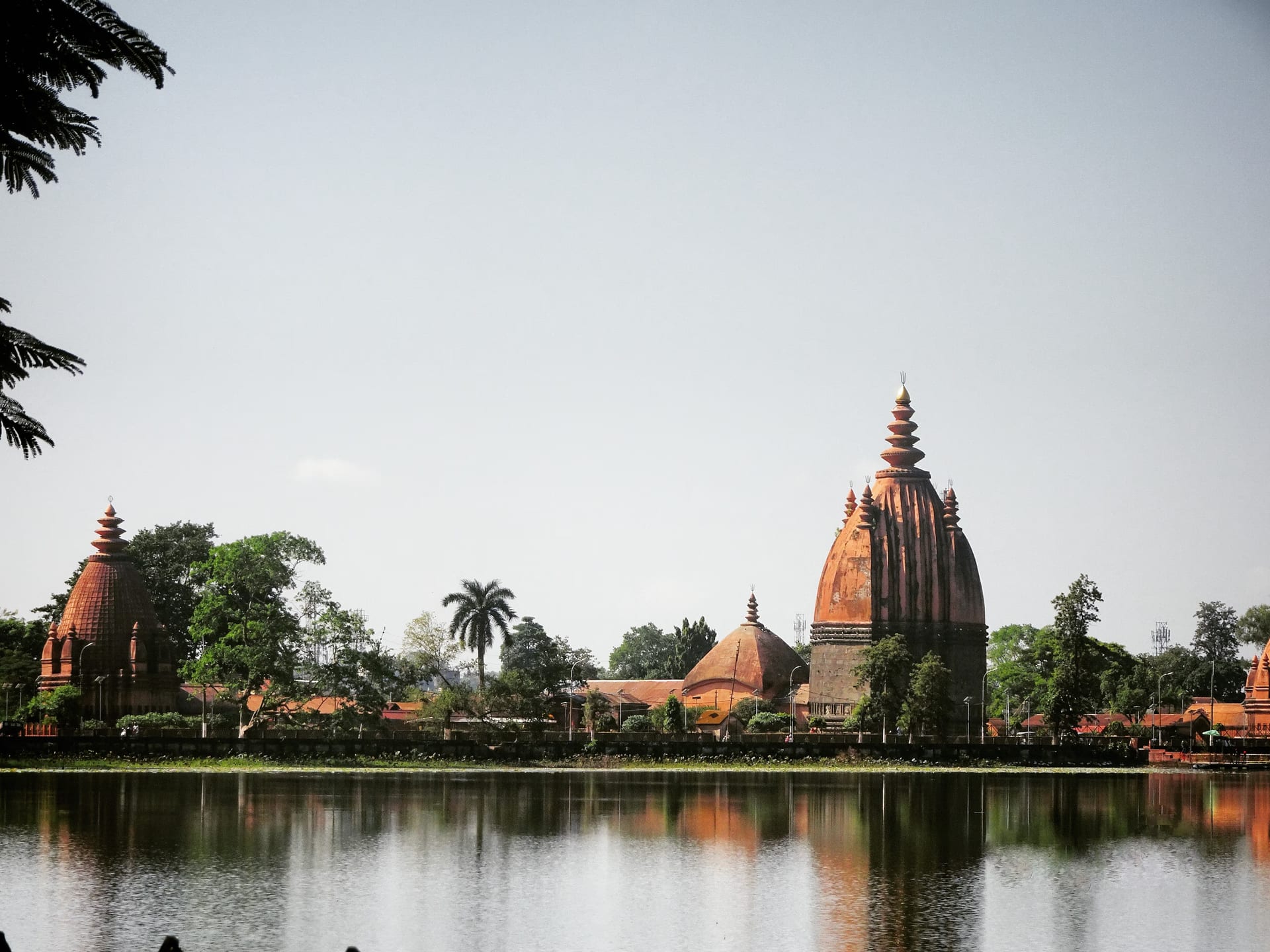
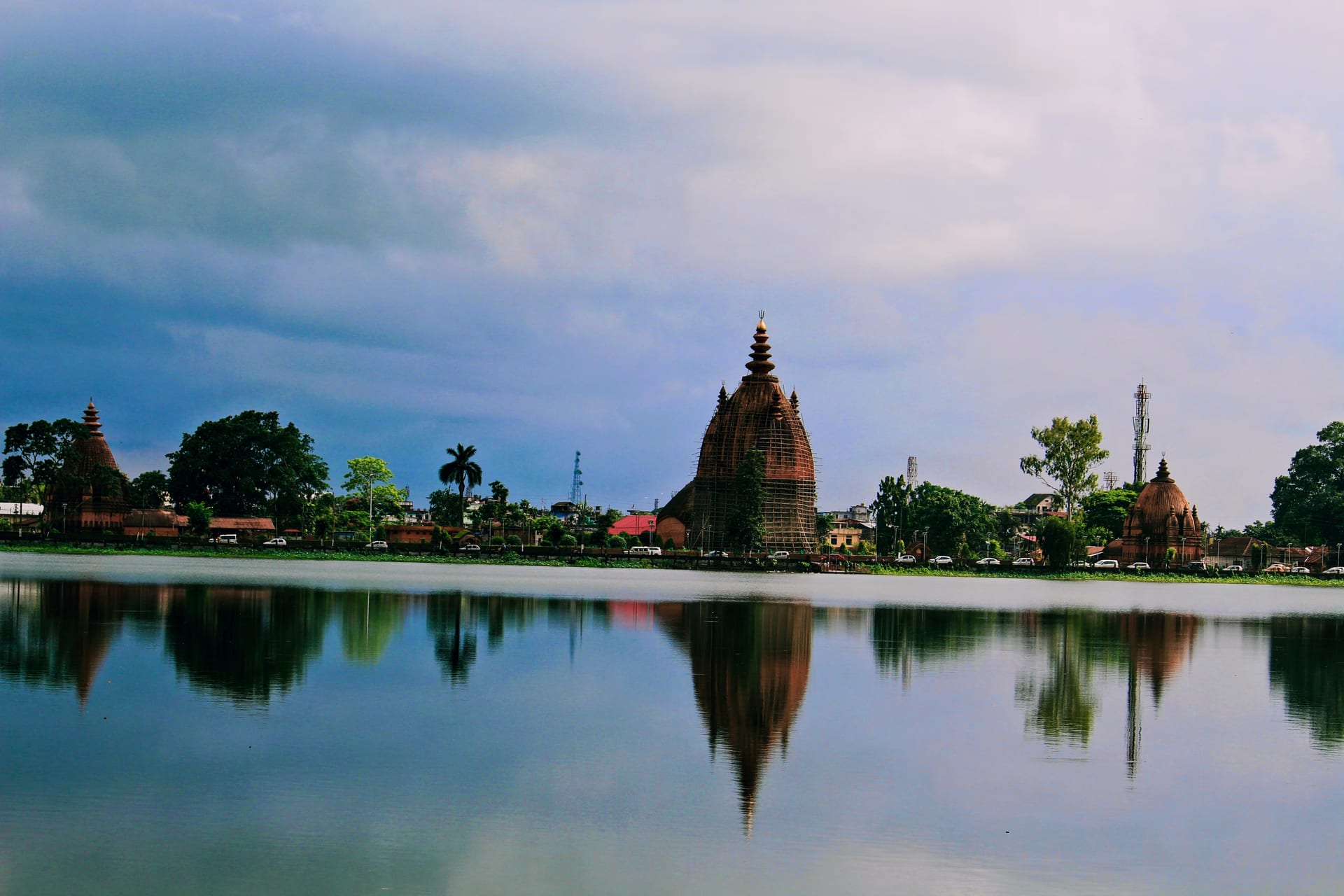
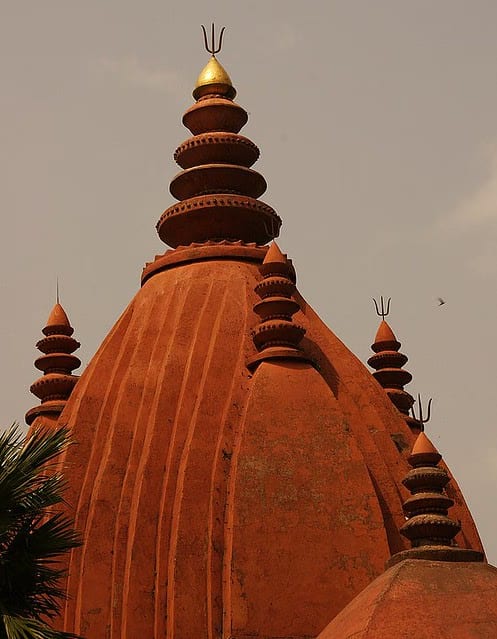
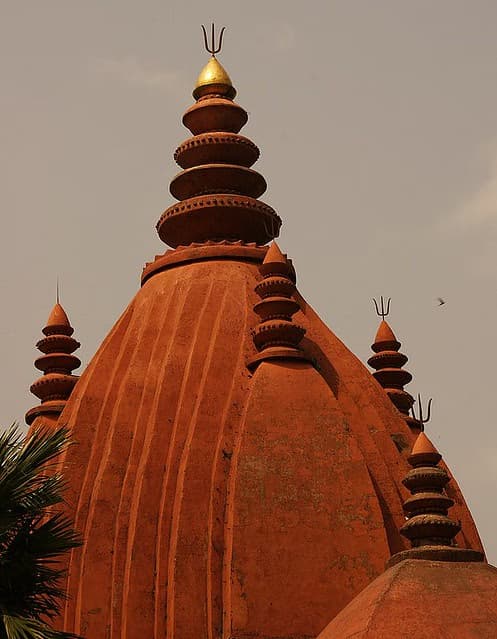
The Sivadol at Sivasagar is the great temple of the Ahom golden age. It is a towering Siva shrine, raised on the bank of the vast Borpukhuri tank in the Ahom capital. Its tower stands about 104 feet high, some thirty-two metres, and is often said to be among the tallest Siva temples in India. The soaring curvilinear form and golden finial dominate the skyline of Sivasagar to this day. The Ahom monarchy built many religious monuments as it embraced the Hinduism of the plains. Of all of them, the Sivadol is the most magnificent. It is the single building in which the wealth, the piety and the architectural confidence of the eighteenth-century court are gathered into one form.
A queen’s temple
The Sivadol was built in 1734, in the reign of Swargadeo Siva Singha. The work is credited to the patronage of his powerful chief queen, the Bar Raja Ambika. She raised it as the crowning shrine on the bank of the Borpukhuri, the great tank the court had excavated a little before. That reservoir was itself the queen’s work. The temple marks a hinge in the kingdom’s history. The Ahoms had come down from the hills in the thirteenth century with their own Tai gods and ancestor rites. By Siva Singha’s reign the dynasty had become a Hindu monarchy in earnest. It took initiation from Brahmin preceptors, endowed temples and Brahmin grants on a lavish scale, and made the Sakta and Saiva worship of the plains the religion of the state. The Sivadol is that turn rendered permanent in brick and stone. Beside the capital’s great sheet of water, the court built a temple meant to outlast the dynasty.
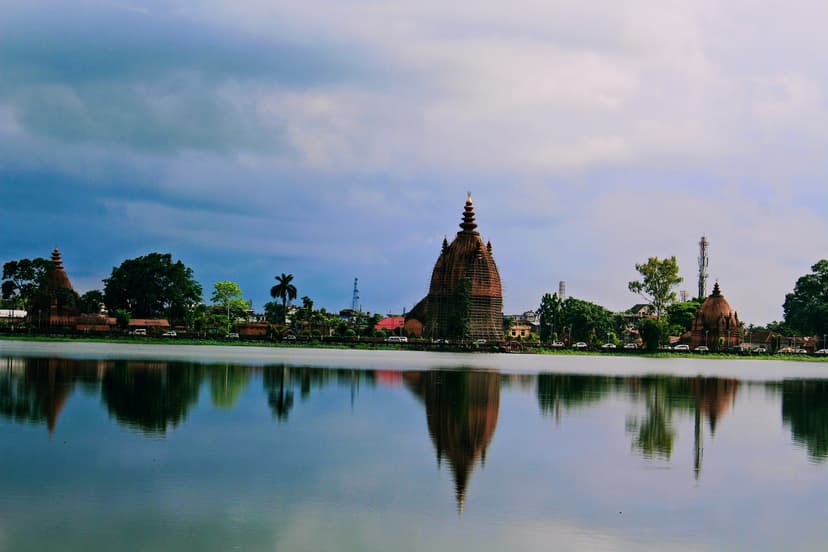
On the same tank bank the Sivadol, to Shiva, is flanked by the Vishnudol, to Vishnu, and the Devidol, to the goddess. The three principal devotions the court had embraced stand side by side above the water. Temples and tank together render the Borpukhuri area one of the defining engineered landscapes of Ahom Assam, a single planned composition of water, masonry and worship. The companion shrines keep their own festival lives beside the Sivadol’s Sivaratri. Dol Jatra and Rath Jatra are kept at the Vishnudol. Durga Puja is kept at the Devidol.
The tower and the masons’ craft
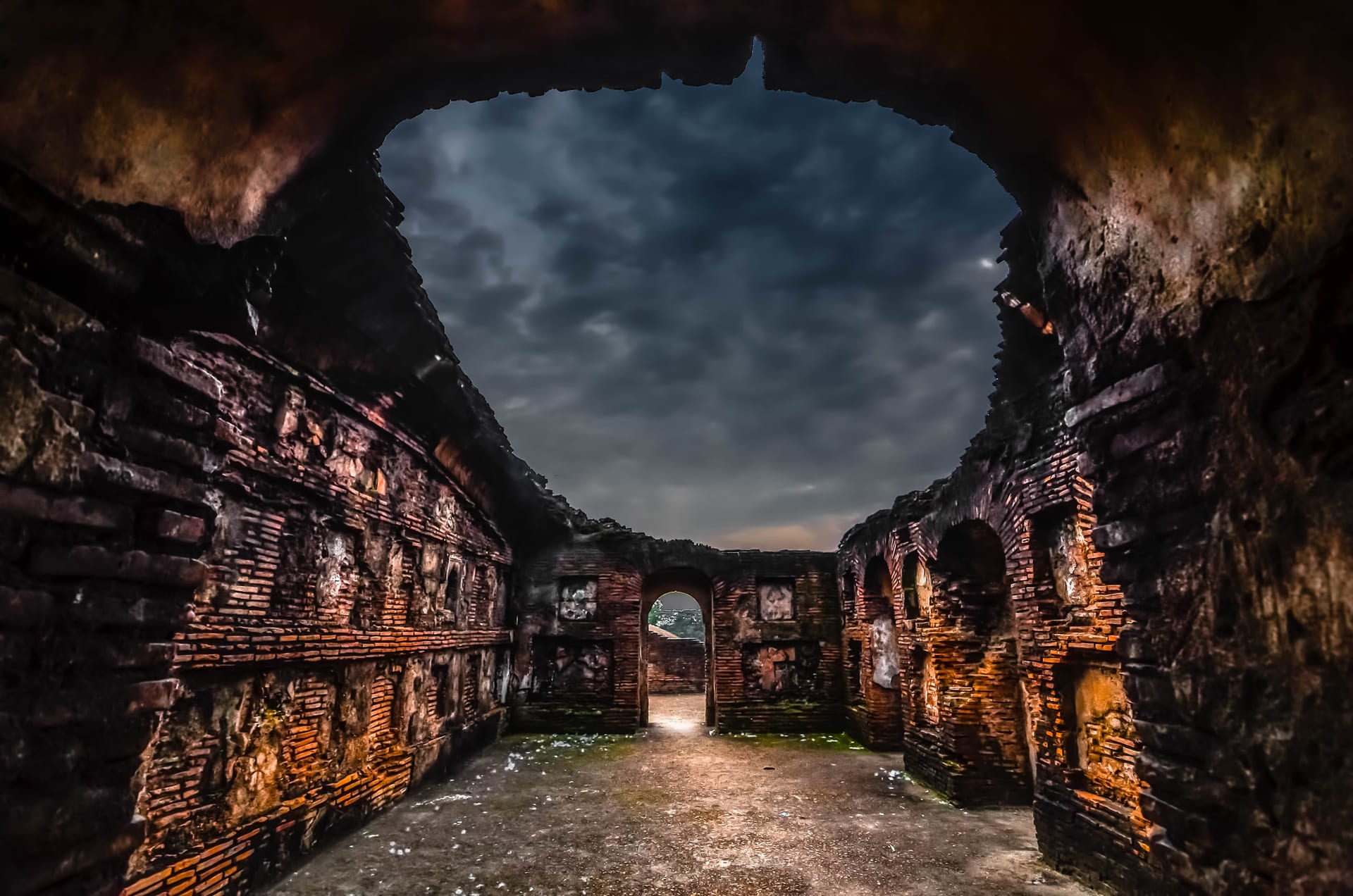
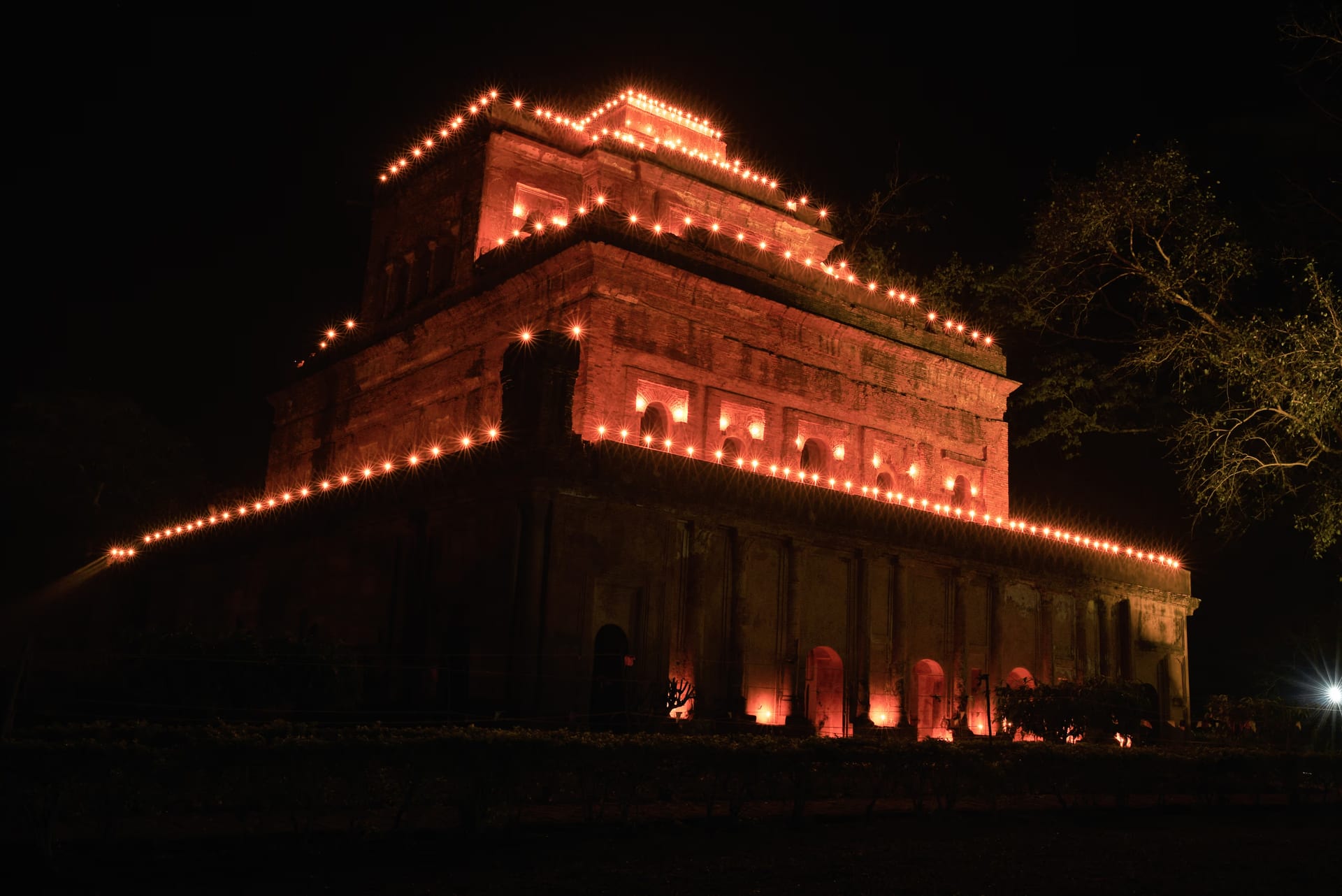
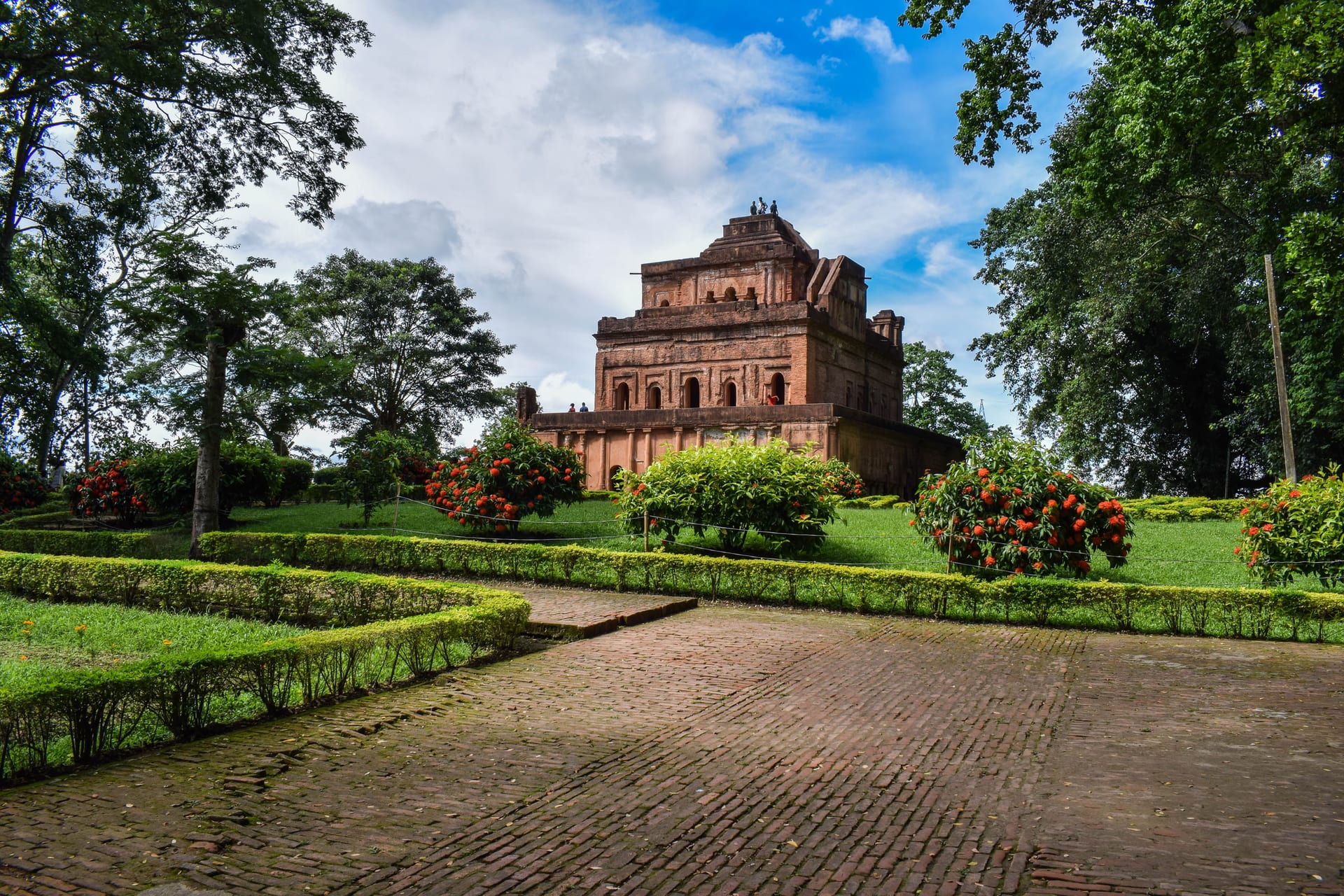
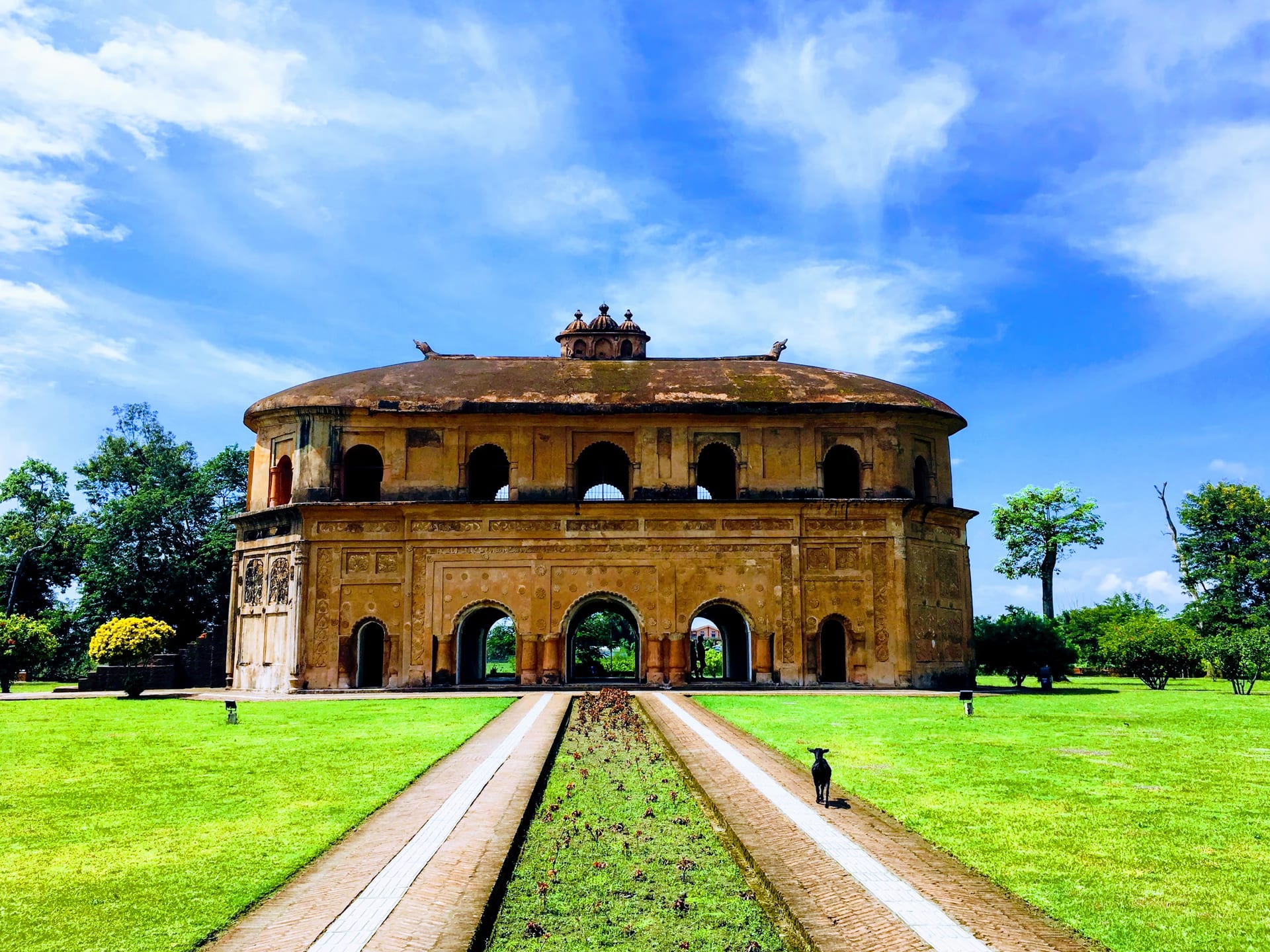
The temple rises as a tall, curvilinear dol, the regional temple form. Its tower sweeps up over a square sanctum to about 104 feet. Above a tiered crest some eight feet high sits a gold-plated kalashi finial. Before the tower, the antechamber roofs are shaped in the Assamese do-chala form, like a thatched hut set against the soaring brick sikhara. It is built of the thin, well-fired Ahom brick used across the capital, dressed in places with stone, and carried up in the mature Ahom temple style. That craft married the pan-Indian temple idiom to local form and to the indigenous organic mortar of the kingdom’s masons, the same craft that raised the Rang Ghar and the palaces nearby. That a brick tower of such height has stood for nearly three centuries on a floodplain in an earthquake country is itself a measure of the builders’ skill.
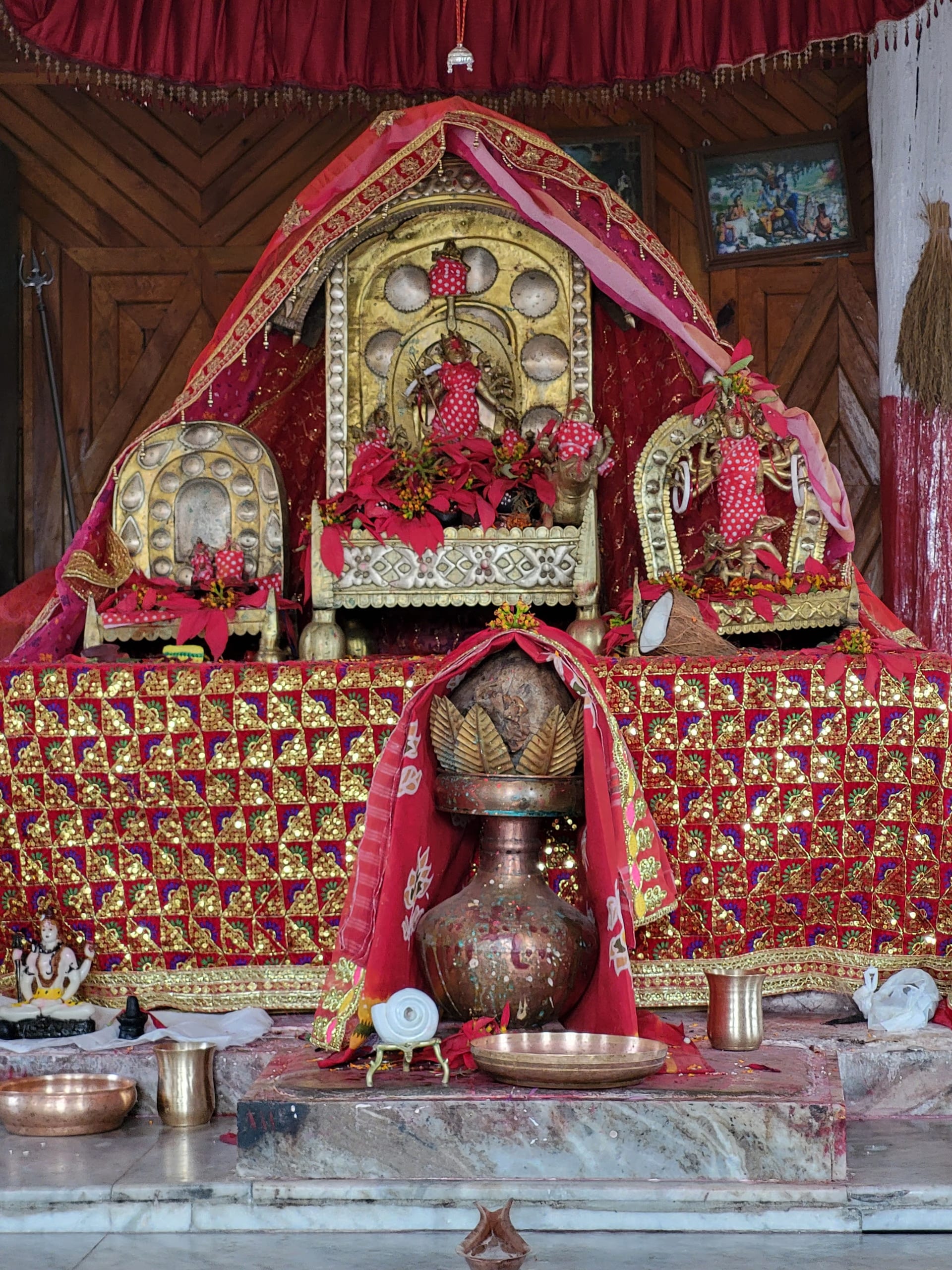
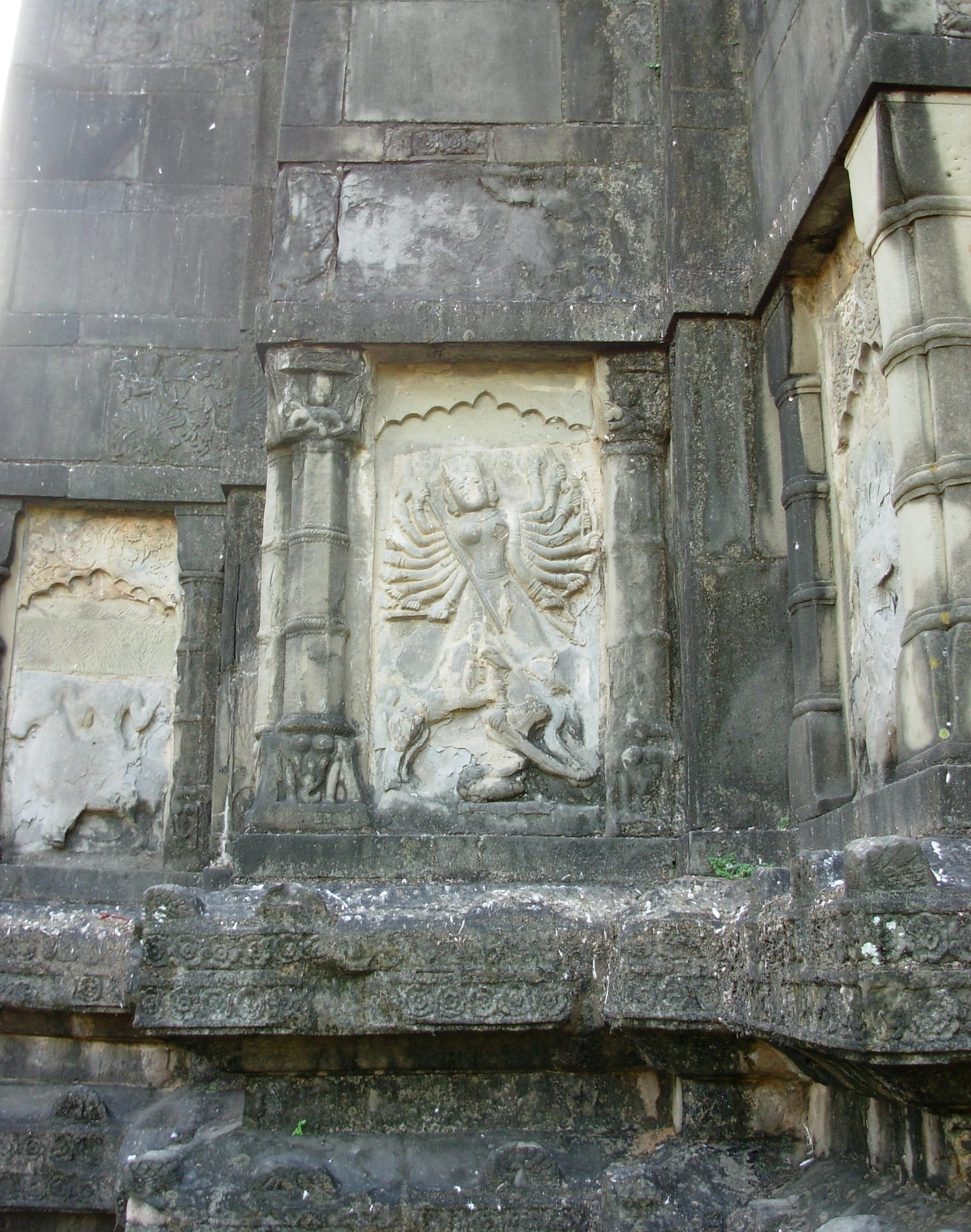
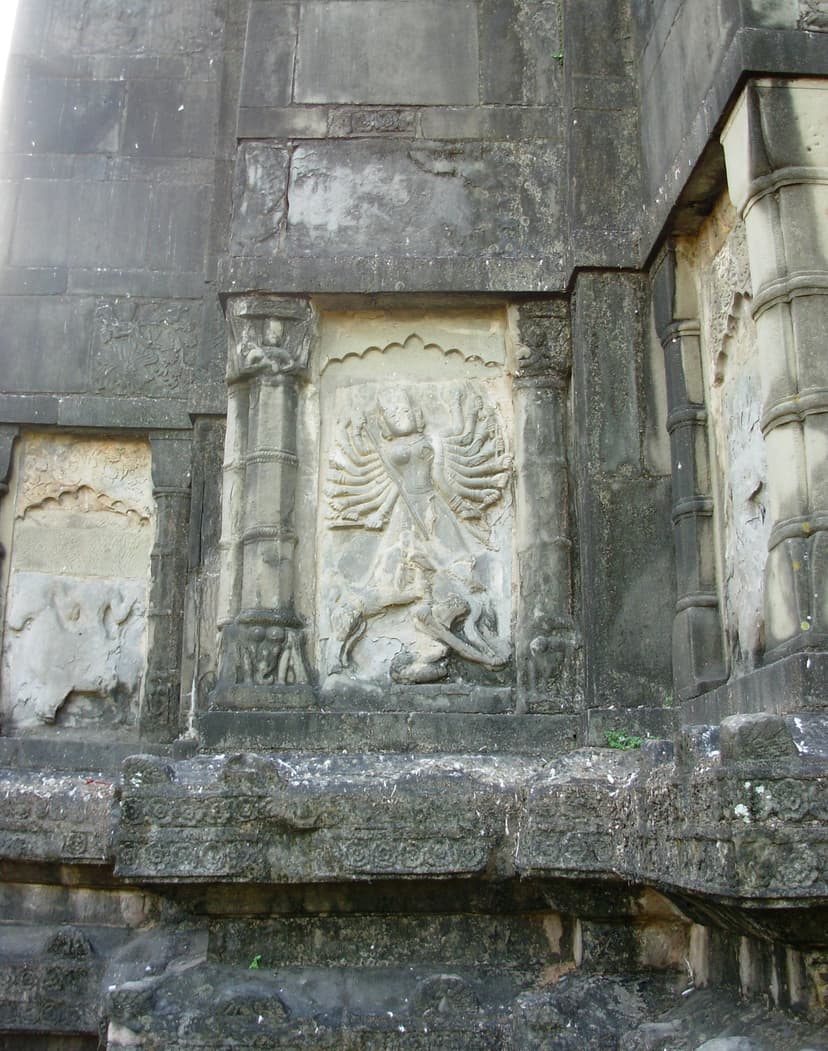
The walls of the dol and of its companion shrines are richly worked. Carved panels and friezes carry deities, floral and geometric ornament, and figures drawn from the epics. The Durga cycle is especially full. Reliefs show the goddess in forms from two-armed to sixteen-armed, including Mahishasura-mardini, the slayer of the buffalo demon. The doorway of the sanctum is framed in dressed stone. Inside, the great linga of Shiva is set below the floor of the chamber rather than above it, in the manner of the regional shrines, so the worshipper descends to the god. The three towers along the embankment, the broad flight of steps down to the water, and the open sky of the tank beyond were conceived as one sacred prospect. It remains among the most complete temple landscapes in Assam.
Visiting
The Sivadol stands in the heart of Sivasagar town in upper Assam, on the bank of the Borpukhuri tank. It is the natural first stop in any circuit of the Ahom capital. It is easily combined with the Rang Ghar, the Talatal Ghar and the Kareng Ghar at Garhgaon a short way off. Unlike the neighbouring palaces and the Rang Ghar, which survive as conserved monuments, the Sivadol has never gone out of use. It is a living temple in continuous daily worship, still the spiritual centre of the town. It is open to visitors with the usual observances of a place of worship. The cooler, drier months from November to March are the most comfortable for the whole Sivasagar circuit. Sivaratri in late winter is the most spectacular, and the most crowded, time to see it, when pilgrims throng the shrine and the tank through the night.