
Assamese, Asamiya, is the easternmost of the Indo-Aryan languages. It is the principal language of the Brahmaputra valley, spoken by most of its people. For centuries it has served as the lingua franca that binds the valley's many communities across lines of language and faith. It is a scheduled language of the Indian constitution and the official language of the state. In October 2024 the Union government granted it classical-language status, in recognition of its antiquity and its literary record. Some fifteen million people speak it as a first language, though counts vary. Its reach runs beyond Assam. An Assamese-based creole, Nagamese, is a common tongue across neighbouring Nagaland. The language carries one of the oldest and richest literary traditions in eastern India. That tradition runs as an unbroken line, from medieval verse, through the chronicles of a kingdom, to a modern literature with three Jnanpith laureates. This article follows that line as a single evolution, from the language's deep roots to the present.
The roots of the language
Assamese descends from the eastern, Magadhan stream of the Indo-Aryan Prakrits. Bengali and Oriya branched from that same broad source, which makes them the language's nearest kin. It was an Indo-Aryan speech carried into the far east of the subcontinent, settling along the Brahmaputra in the first millennium. Its distinct character is the work of one long process, for the land it entered was already thick with older tongues. The Tibeto-Burman languages of the valley's first peoples worked over that Indo-Aryan base, above all Bodo. They left a deep mark on its sounds, its vocabulary and its idiom, and separated it early from its western cousins. Suniti Kumar Chatterji, who studied these northeastern peoples, called their long shaping of the region's speech the Kirata contribution.
The valley was, by then, no blank page. The Kamarupa kings of the first millennium had their grants engraved on copperplates in courtly Sanskrit. The local Indo-Aryan speech that underlay that Sanskrit was already drifting toward what would become Assamese. Some scholars trace the literary ancestry further still, to the Charyapada, the Buddhist mystic songs of the eastern Prakrit. Assamese, Bengali and Oriya all claim these songs as a shared inheritance, though the claim is debated and none can hold them alone. By the centuries around the turn of the second millennium a recognisably Assamese language had formed. Banikanta Kakati's Assamese: Its Formation and Development remains the classic account of how it did. George Grierson's Linguistic Survey of India fixed its standing as a distinct Eastern Indo-Aryan language, and not a dialect of any neighbour.
The shape of the language
Assamese is written in its own script, a close cousin of the one used for Bengali. Both descend from the eastern Brahmi letters already cut on the Kamarupa copperplates. The two alphabets are almost the same. They part company in only a couple of letters, among them the Assamese ro and wo, which the language keeps as its own. So the very shapes on the page carry the memory of the valley's first kingdoms. Yet those letters are only an ancestor. The hand on a copperplate or a temple stone stands a long way from the modern one. The distance between the inscription on the stone and the newspaper on the stand is the visible measure of how far the language has travelled in a thousand years.
The language also carries a distinctive sound. Where its western cousins keep a soft s, Assamese has a rasping consonant made at the back of the throat. Linguists call it a voiceless velar fricative, close to the ch in the German Bach. In Kakati's account, the old sibilants and some hard sounds of the parent speech settled over time into this single back consonant. It is unusual among the Eastern Indo-Aryan languages, and one of the marks that sets Assamese apart the moment it is heard.
Below the sound lies a grammar shaped by long contact. Like its eastern neighbours, Assamese let go of grammatical gender, so a noun is not male or female by rule. A rarer feature is its rich set of numeral classifiers. To count in Assamese you add a small word that sorts the thing counted, one for flat things, another for people, another for round ones. Scholars link this habit to the long centuries of contact with the Tibeto-Burman languages of the valley, the same contact that worked over its vocabulary and its sounds. It is a large part of why Assamese, Indo-Aryan in its bones, does not sound or work quite like any of its western kin.
The spoken language divides broadly into two groups. The Eastern group is centred on the upper-Assam districts around Sivasagar, and the modern literary standard rests on it. The Western, or Kamrupi, group of lower Assam preserves older forms, and Upendranath Goswami's study of it is the standard account. The Goalpariya speech of the far west and the dialects of the Barak valley add further variety. For centuries the language was written many ways, with no settled spelling. That looseness was one of the things its nineteenth-century critics used against it. The modern Sanskrit-based spelling was fixed only at the close of that century, by Hemchandra Barua and his great etymological dictionary, the Hemkosh. The Hemkosh remains the reference for correct Assamese to this day.
The unwritten tradition
Beneath the written canon, and long before it, ran a vast oral literature. It was the common inheritance of the whole valley, never the work of named poets. It belonged to the field, the courtyard and the cradle, and it passed by memory from one generation to the next.
Much of it turned on the farming year. The best loved are the Bihu songs, the short love verses sung at the spring festival of Rongali Bihu. In a handful of lines they carry longing, teasing and the ache of parting, and they are still being made and sung today. Around them stood work songs, wedding songs, boat songs and lullabies, a music for every turn of a life. The valley kept a deep store of practical verse too. The farming and weather lore attributed to the legendary sage Dak was carried in rhymed couplets in the memory of cultivators across the region, plain rules for when to sow and when to look for rain.
Most of this was never set down until modern collectors went looking for it. Late in the nineteenth century Lakshminath Bezbaroa gathered the folk tales into Burhi Aair Sadhu, the grandmother's tales that became a classic of Indian children's literature. That oral base is not a museum piece. It gave the written literature its rhythms and its closeness to ordinary life, and it feeds the songs and the films of the valley still.
The first literature
Assamese began to be written as literature in the fourteenth century. That was generations before most modern Indian languages had a literature at all. The opening figure is Madhava Kandali. At the court of the Kachari and Barahi chiefs, he rendered the whole Ramayana into Assamese verse. His Saptakanda Ramayana stands among the earliest translations of the epic into any modern Indian language, well before Tulsidas made his Hindi version. His verse is plain, warm and human, closer to the life of the valley than to Sanskrit grandeur. It is so assured that it cannot have been the very first Assamese poetry, only the first that survives.
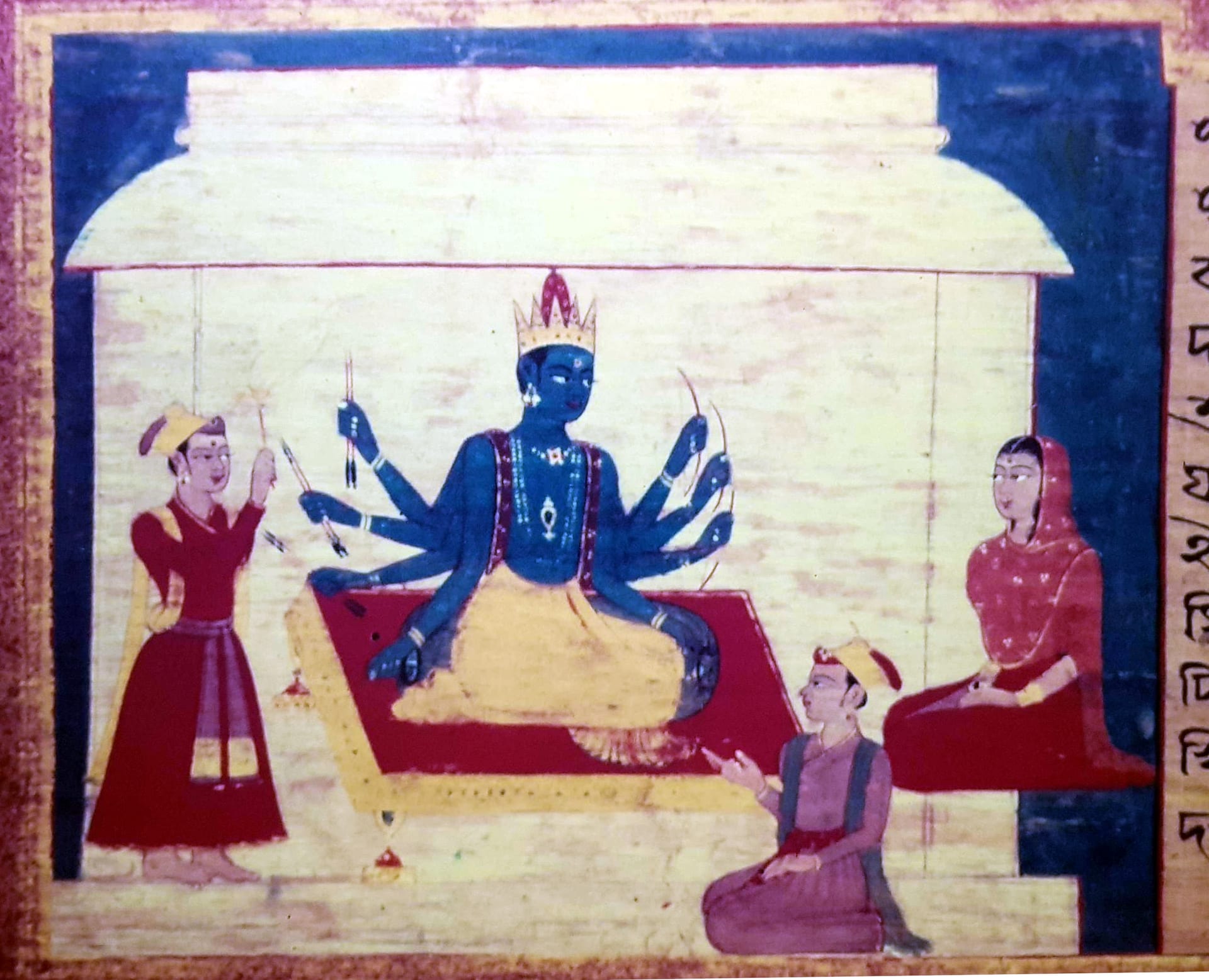
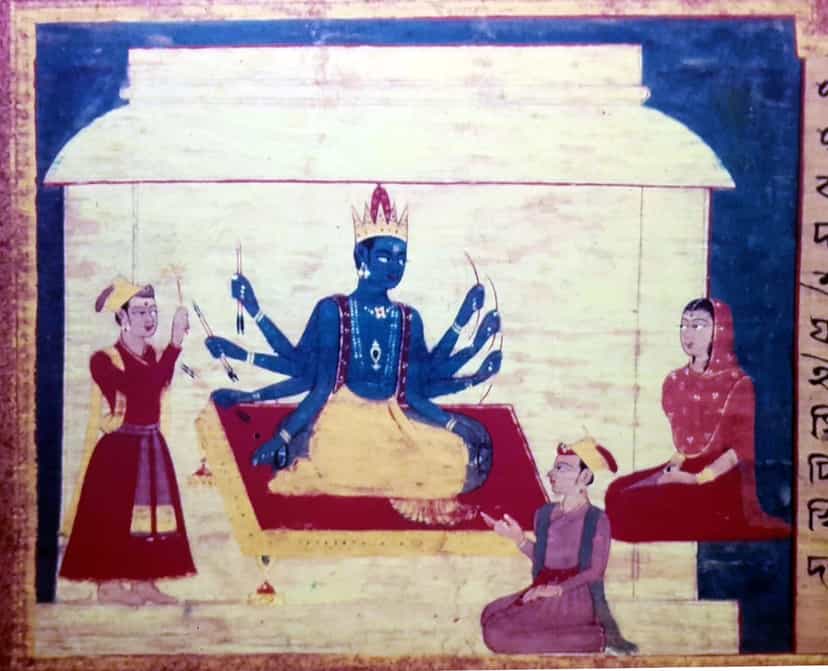
Around and after him came a first generation of court poets. Hema Saraswati, Harihar Vipra and Kaviratna Saraswati turned Sanskrit story into Assamese kavya. Later Rama Saraswati gave the language a vast rendering of the Mahabharata. Between them these poets built a body of narrative verse and a confident literary register. They did it two full centuries before the valley's great devotional awakening, so that when that awakening came, the language was already an instrument ready to be played.
The golden age of the saints
The language's great flowering came with the neo-Vaishnava movement of the fifteenth and sixteenth centuries. It was led by the saint-poet Srimanta Sankardev and his disciple Madhavdev. Between them they built a complete literature in the common tongue and put it into the mouth of every villager. They wrote the household scriptures of the new faith, the Kirtana-ghosha and the Nama-ghosha. They wrote the Borgeet, a body of classical devotional song. They wrote the Ankiya Naat, one-act plays in a stage language called Brajavali, still performed through the night as Bhaona. They turned the Bhagavata Purana and the epics into Assamese that ordinary people could hear and sing.
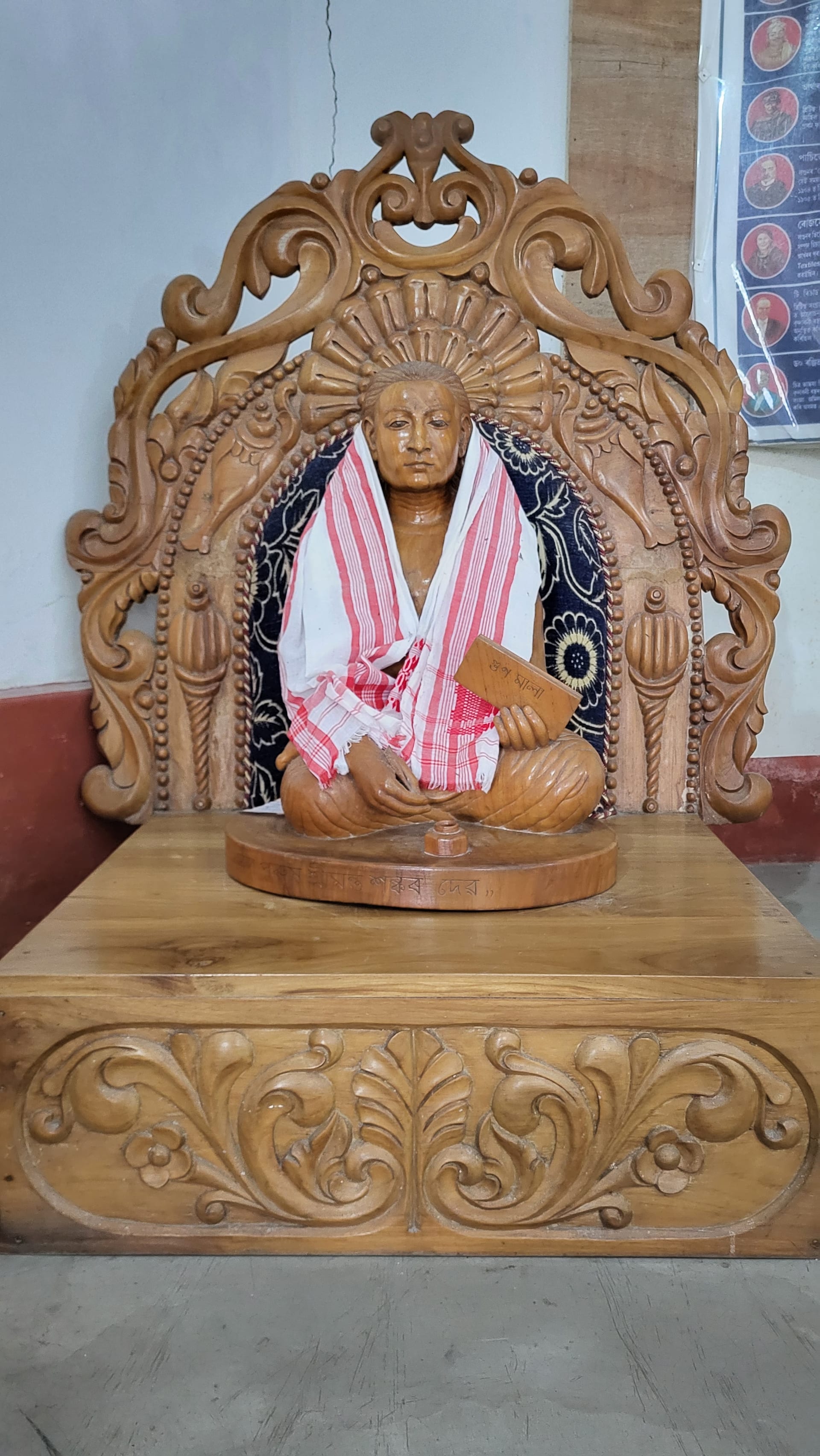
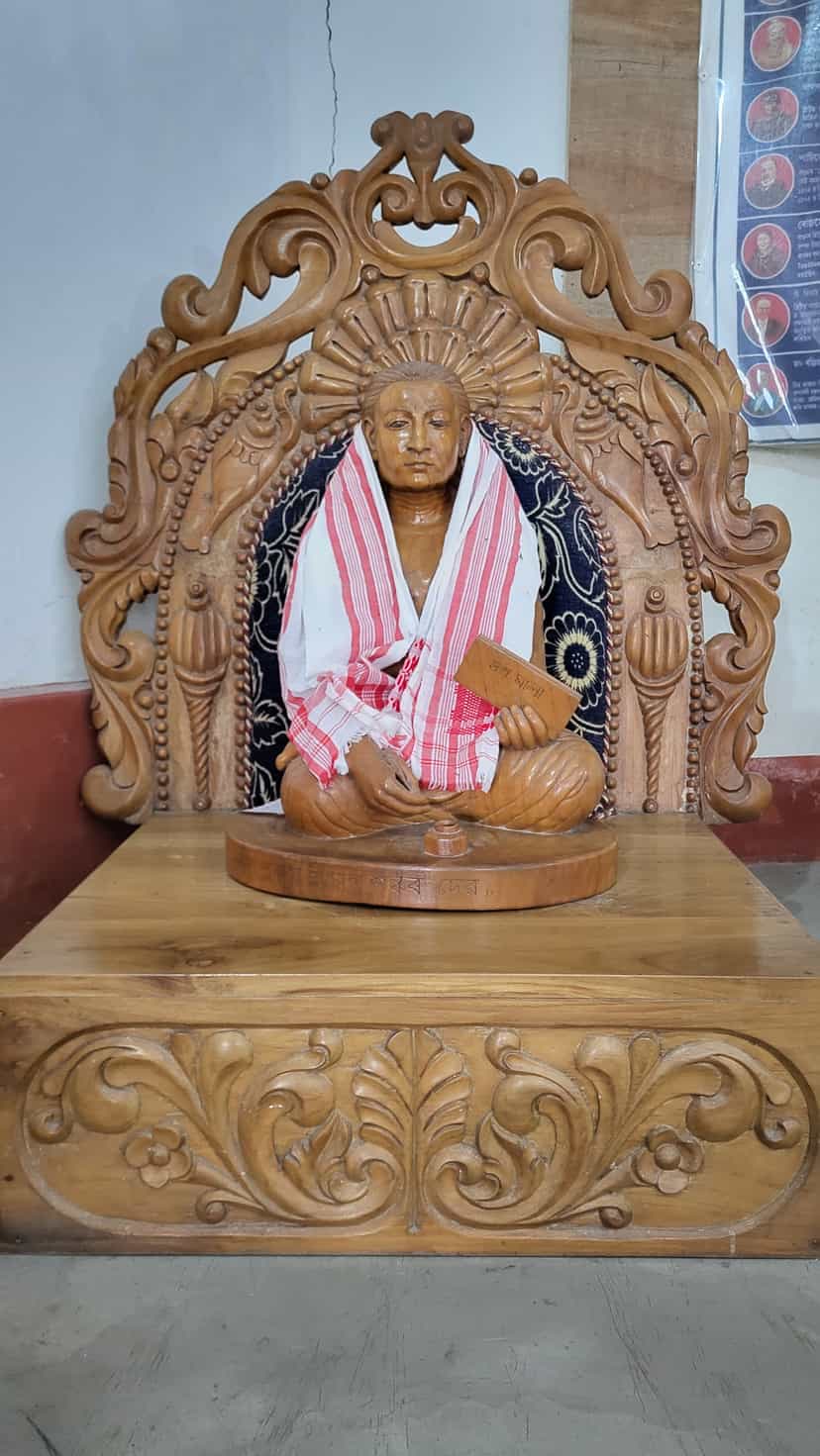
The movement also gave the language its first great prose. Bhattadeva, a scholar of the tradition, rendered the Bhagavata Purana and the Gita into Assamese prose around the turn of the seventeenth century. He is remembered as the father of Assamese prose. A distinctive kind of sacred biography, the charit-puthi, recorded the lives of the saints in early Assamese prose too, and preserved the memory of the movement in its own words. No comparable literature in a spoken tongue existed anywhere in eastern India at the time. The sattras the movement founded have copied, guarded and performed it without a break for five hundred years. The full life of the saint who began it is told on his own page.
The prose of the chronicles
Running beside that sacred poetry was something rarer still in pre-modern India, a sober, dated, documentary prose. The Ahom kingdom ruled the valley from 1228 to 1826. Its court kept buranjis, chronicles of reigns, embassies, wars and administration. These were written first in the Tai-Ahom language of the ruling house. Then, as the dynasty took on the speech of the valley, they were written in Assamese itself.
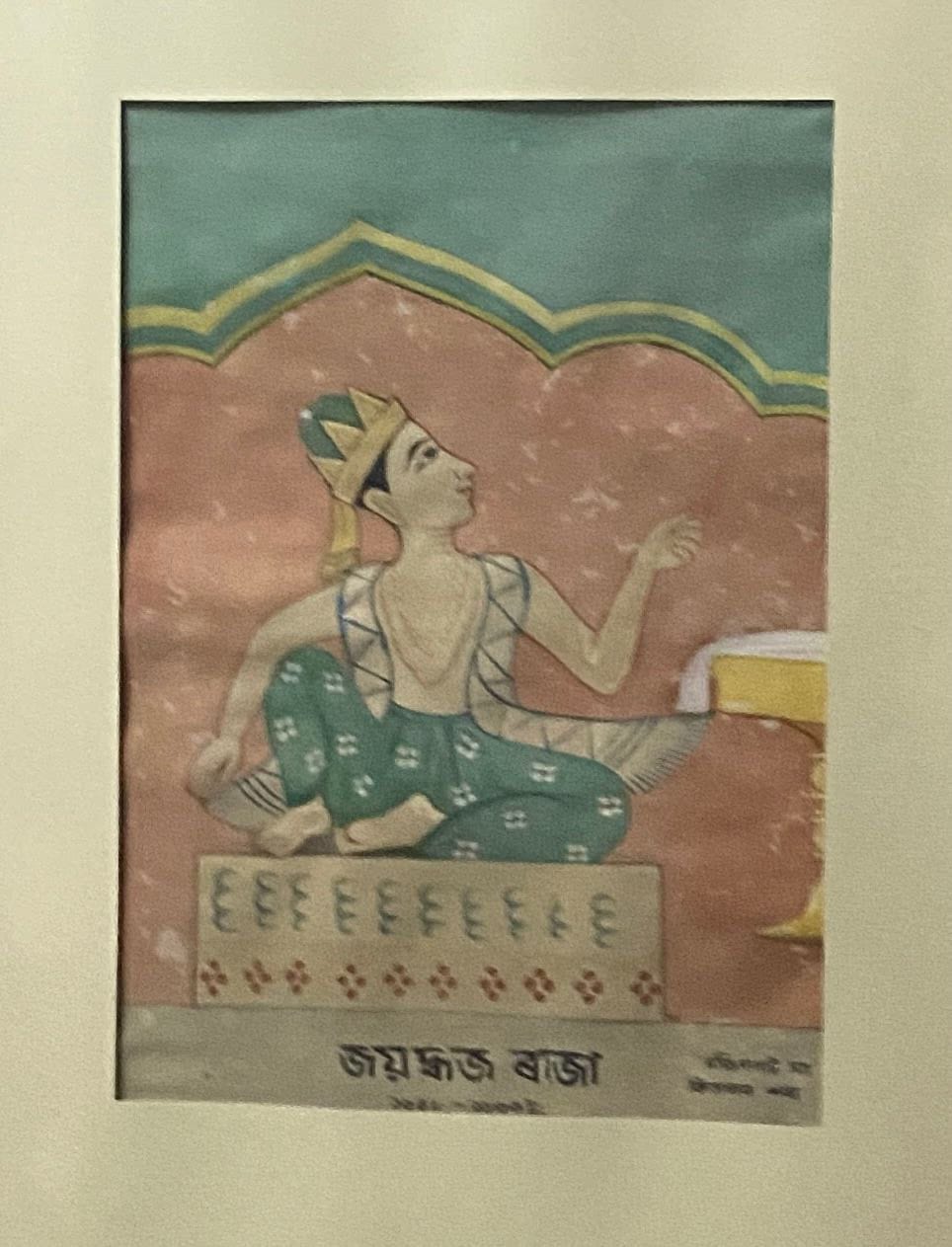
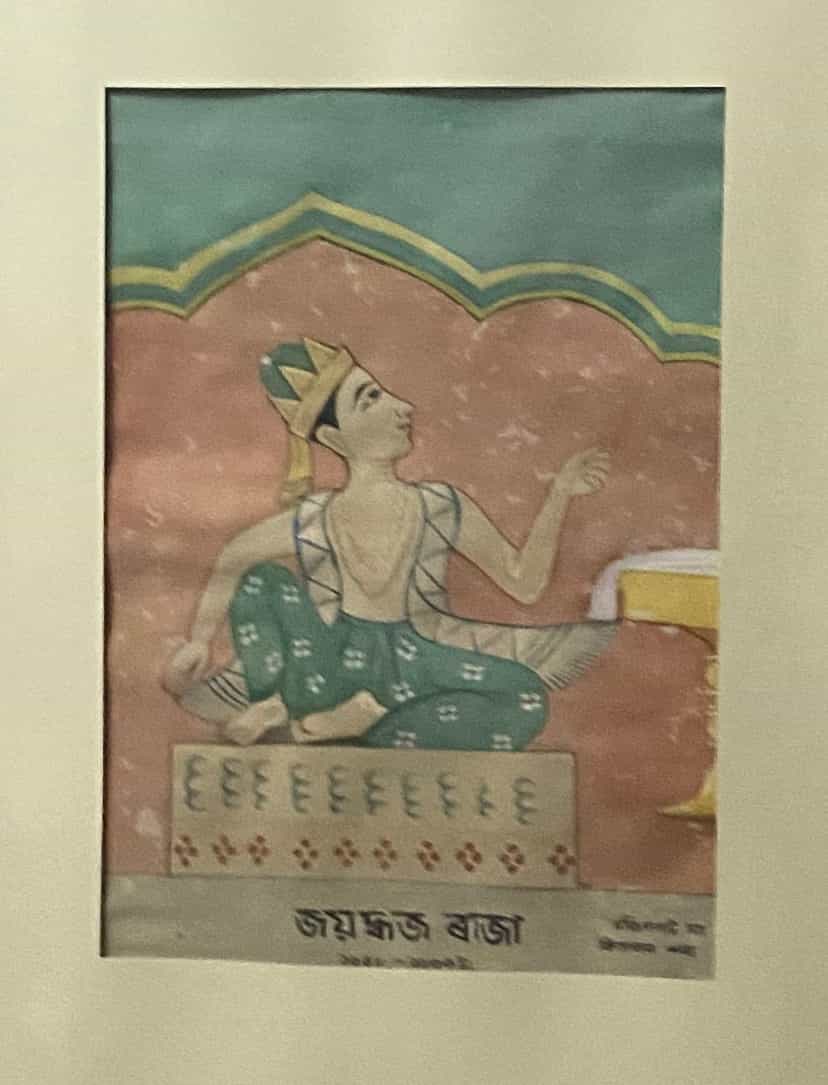
The style of the buranjis is plain, precise and secular. It records what was done and when, without the flourish of a court poet. This gave Assamese a mature prose of record centuries before most Indian languages possessed one. It also made a sense of history a permanent part of the culture, a habit of dating events and keeping accounts that outlasted the kingdom.
The buranjis were many, and they reached well beyond the deeds of kings. The court kept dynastic chronicles like the Tungkhungia Buranji, diplomatic records like the Padshah Buranji of dealings with the Mughals, and histories of the older kingdoms of the valley. They were written on strips of sanchi bark, folded into long manuscripts, and copied by hand down the generations. When modern scholars came to write the history of Assam, it was these chronicles they turned to. Edward Gait built his standard History of Assam on them, and Suryya Kumar Bhuyan gave a lifetime to editing and printing them. Much of what is known of medieval Assam survives because a court scribe once set it down in plain Assamese prose.
The language thus entered the modern age already carrying two great inheritances at once. It had a literature of devotion and a literature of history, the song of the namghar and the ledger of the court.
The colonial crisis and the renaissance
The modern life of the language was decided by a near-death in the colonial nineteenth century. After the British annexation, the East India Company in 1836 replaced Assamese with Bengali as the language of the schools and courts of the Brahmaputra valley. It treated Assamese as a mere dialect of its neighbour. This stroke threatened to cut a whole people off from learning and public life in their own tongue. A language driven out of the schoolroom and the courtroom can wither in a generation.
The rescue came from two directions at once. The American Baptist missionaries at Sivasagar needed the local language for their work. They printed in it, compiled a grammar and a dictionary, and launched Orunodoi in 1846, the first Assamese magazine, which helped shape a working modern prose. Nathan Brown's grammar of the language dates from these same years. The valley's own new intelligentsia took up the argument beside them. The young reformer Anandaram Dhekial Phukan set out the case, from the 1850s, that Assamese was a language in its own right, with its own history and literature. He did not live to see it won, dying in 1859 at only twenty-nine. Hemchandra Barua armed it with a grammar and the Hemkosh. The campaign won the restoration of Assamese in the schools and courts in 1873. That hard-won reprieve is the ground on which everything modern was built. The whole drama is told in full as a story.
With the language secure, a true renaissance followed, and it had a date. In 1889 a circle of Assamese students in Calcutta launched the magazine Jonaki, the "moonlight." It gave a whole generation its name and opened the modern age of Assamese letters. Its leading writers were giants. Lakshminath Bezbaroa was the great essayist and satirist of the age, and the hymn he wrote became the state song. He gave the language a confident modern prose, and he would in time preside over the Asam Sahitya Sabha itself.
Around Bezbaroa stood a full generation of founders. The Romantic poet Chandrakumar Agarwala brought a new lyric feeling into Assamese verse. The scholar Hemchandra Goswami recovered and edited the old manuscripts, and the dramatist Padmanath Gohain Barua built a modern stage. Rajanikanta Bordoloi, later called the "Walter Scott of Assam," gave the language its founding novel with Miri Jiyori in 1894. In a single generation the language acquired the essay, the modern poem and the novel, the three great forms of a modern literature.
The modern age: poetry and the novel
The twentieth century, the age of modern Assam, produced a full and self-renewing literature. In verse the cultural giant Jyoti Prasad Agarwala remade song and drama together. After him a powerful modernist generation pushed Assamese poetry away from late Romantic sentiment toward the disciplined image. It included Nabakanta Barua and Hem Barua, and, above all, Nilmani Phookan, whose dense symbolist Surya Henu Nami Ahe Ei Nadiyedi won the Jnanpith. Beside that difficulty stood the clear, beloved lyric of Hiren Bhattacharyya, whose Saichar Pathar Manuh a whole people knows by heart. From the tea-garden world, Sameer Tanti brought a long-silent community into the centre of Assamese verse.
If verse renewed itself in a single generation, prose grew into the language's largest modern achievement. From Bordoloi's beginning, the novel became the great modern form, and it reached the front rank of Indian fiction. Birendra Kumar Bhattacharya won Assam its first Jnanpith with Mrityunjay, the novel of the Quit India movement. Several writers commanded the mid-century. One was the astonishingly prolific Syed Abdul Malik, author of Aghari Atmar Kahini. Another was the critic-novelist Homen Borgohain, whose Pita Putra won the Akademi's award. A third was the novelist and film-maker Bhabendra Nath Saikia. Indira Goswami carried the form to a second Jnanpith with Datal Hatir Une Khowa Howdah. The tradition runs on in the historical novels of Rita Chowdhury, whose Makam recovered a lost chapter of the Assamese in China, and of Chandana Goswami, and in the urban fiction of Anuradha Sarma Pujari. The short story has its own modern masters. Saurabh Kumar Chaliha broke the form open with the cosmopolitan modernism of Ghulam. Mahim Bora made of it a fine instrument for rural life, from Kathanibari Ghat to Edhani Mahir Hahi. Three Assamese writers have now won the Jnanpith, Bhattacharya, Goswami and Phookan. That is the measure of how far the literature travelled, from the village namghar to the national stage.
Drama, song and the screen
Assamese letters have never been confined to the page. The neo-Vaishnava Ankiya Naat and Borgeet gave the language a stage and a classical song five centuries old, carried into the present by the sattras. The modern song was remade in turn by three figures. Jyoti Prasad Agarwala made his Jyoti Sangeet. Bishnu Prasad Rabha made his Rabha Sangeet, drawn from folk and tribal sources. And Bhupen Hazarika made songs that became, for millions, the very sound of being Assamese. The language also took to the screen early. The first Assamese feature film, Jyoti Prasad's Joymoti, was made in 1935.
The serious cinema it began reached an art-house height in the national-award-winning films of Bhabendra Nath Saikia, several of them drawn from his own novels. That living tradition has not closed. Assam sustains one of India's most vigorous popular theatres in the Bhramyaman, the great travelling tent companies that tour the countryside through the dry season. It sustains a contemporary cinema that keeps winning national notice. And it sustains a popular music carried in recent years by Zubeen Garg, whose hold on the state has recalled that of Bhupen Hazarika before him. Language, literature, song, stage and screen here are one continuous tradition, still being made. The birth of that first film is told as a story of its own.
The language question
For all its literary triumphs, the language never stopped having to fight for its standing in public life. Winning back the schools in 1873 had settled one battle, not the war, and the question stayed live deep into the twentieth century. It shapes the politics of the state to this day.
The language first found a permanent institutional guardian in 1917. In that year the Asam Sahitya Sabha was founded to protect and advance the language and its literature. From its headquarters at Jorhat it holds great annual sessions, confers its honours, and speaks for the tongue in the public life of the state. Its presidents have included the leading writers of each generation, and its branches now reach the Assamese diaspora abroad. It is a large part of why Jorhat is called the literary capital of Assam.
After independence the question turned to law. The Assam Official Language Act of 1960 made Assamese the sole official language of the state. In the Bengali-majority Barak valley of the south, this was met by a movement in defence of Bengali. On 19 May 1961, police fired on demonstrators at the Silchar railway station, and eleven people were killed. They are remembered in the Barak valley as language martyrs, and the day is still marked there. In the years that followed, Bengali was allowed as an additional official language in the Barak valley districts. The episode is a reminder that Assam has never been a land of a single tongue.
The same decades saw the valley's older peoples give their own aspirations a linguistic form. The Bodo, whose speech had helped shape Assamese itself, pressed for their own language, script and schools. Led by figures such as Upendra Nath Brahma, that movement won Bodo a standing of its own, and it is now taught and written in its own right. Through all of this, language stayed close to the heart of Assamese identity. The long anxiety over who belonged in the valley, which drove the great movement of 1979 to 1985 under Prafulla Kumar Mahanta and the Accord that ended it, was in part an anxiety about the survival of the language and the people who spoke it. To be Assamese, for many, has meant above all to carry this tongue.