
Pitha and the Sweets of Bihu
The rice-flour pithas and the jolpan of the Bihu table, til pitha, ghila pitha, the sweets of the harvest.
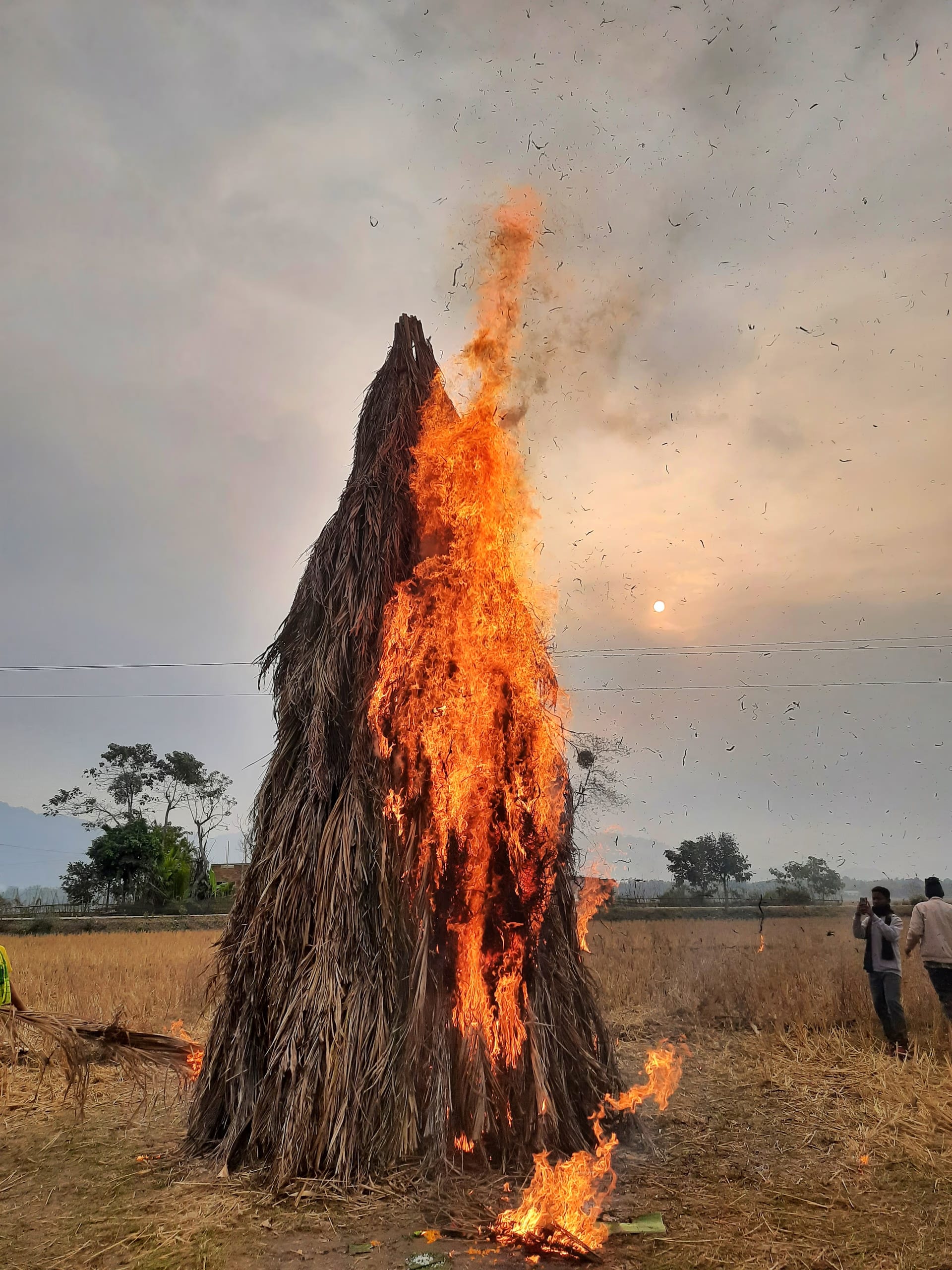
Khar and tenga are the everyday poles of Assamese cooking. Pitha is its festival face, a whole family of rice-flour cakes and rolls. Some are sweet and some are savoury, fried, roasted, steamed or rolled hot off a griddle. Pitha is inseparable from Magh Bihu, the winter harvest feast also called Bhogali, from bhog, meaning eating and enjoyment. This is the festival when the granaries stand full and feasting is the whole point. On Uruka, the eve of Magh Bihu, households cook through the night. Pitha is among the first things made, so a full table is ready before dawn. Pithas are eaten in quantity through that night. By custom, some are cast into the meji, the great bonfire lit at daybreak, an offering as much as a feast. Pitha also graces the spring Rongali Bihu, the other great feast of the Assamese year, though Bhogali remains its true home. A house is judged by its pitha at both feasts. To serve pitha to a guest is an act of welcome older than any written recipe.
The rice, the flour and the dheki
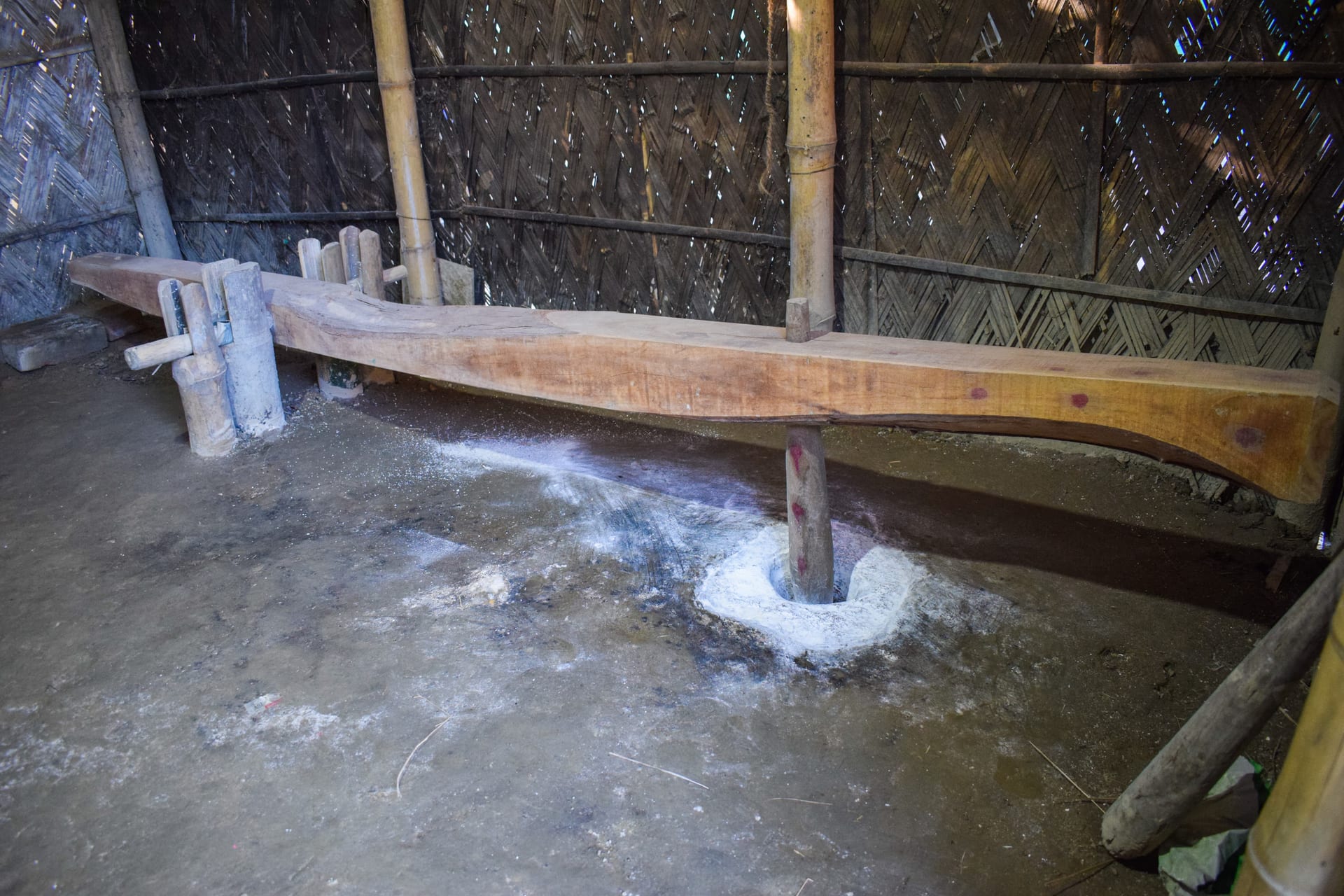
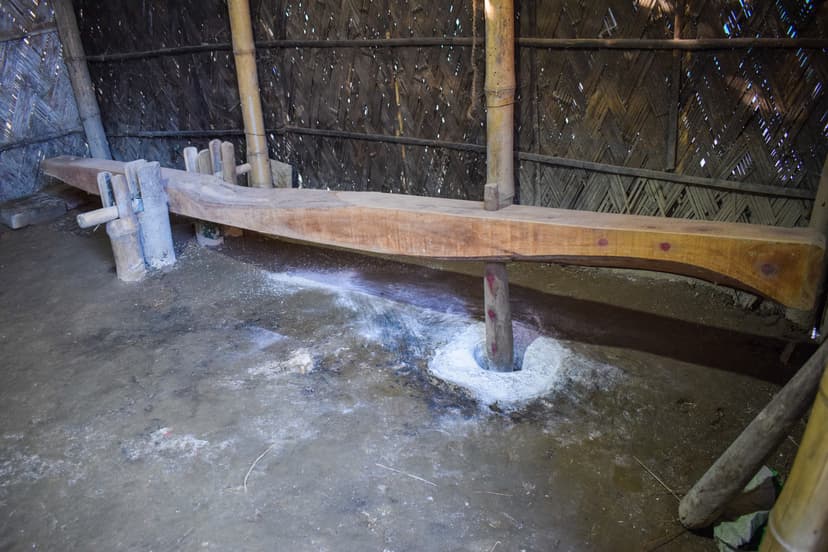
Every pitha starts as rice, worked by hand into flour. The finest pithas use a sticky glutinous rice the Assamese call bora saul. It gives a cooked pitha a chewy, slightly translucent bite. Some cooks use the sun-dried xaali saul instead, a plainer rice that gives a lighter, less sticky flour. A few pithas mix the two. The soaked rice is pounded to flour in the dheki, the foot-driven pestle of the old kitchen. The cook presses a foot down on one end, which lifts a wooden beam on the other end. That beam strikes the grain in a floor mortar. The flour is then worked into a dough or a thin batter, ready to be filled, rolled, fried, roasted or steamed. A filled pitha holds its stuffing in a pocket called the khol. The filling itself is the pur, most often sesame, grated coconut and jaggery, though a few pithas turn savoury with salt in place of sugar. B.K. Barua (source: A Cultural History of Assam) recorded this everyday pitha cookery among the customs of the Assamese. It is a labour that turns the valley's daily grain into the food of celebration.
Rolled and fried on the griddle
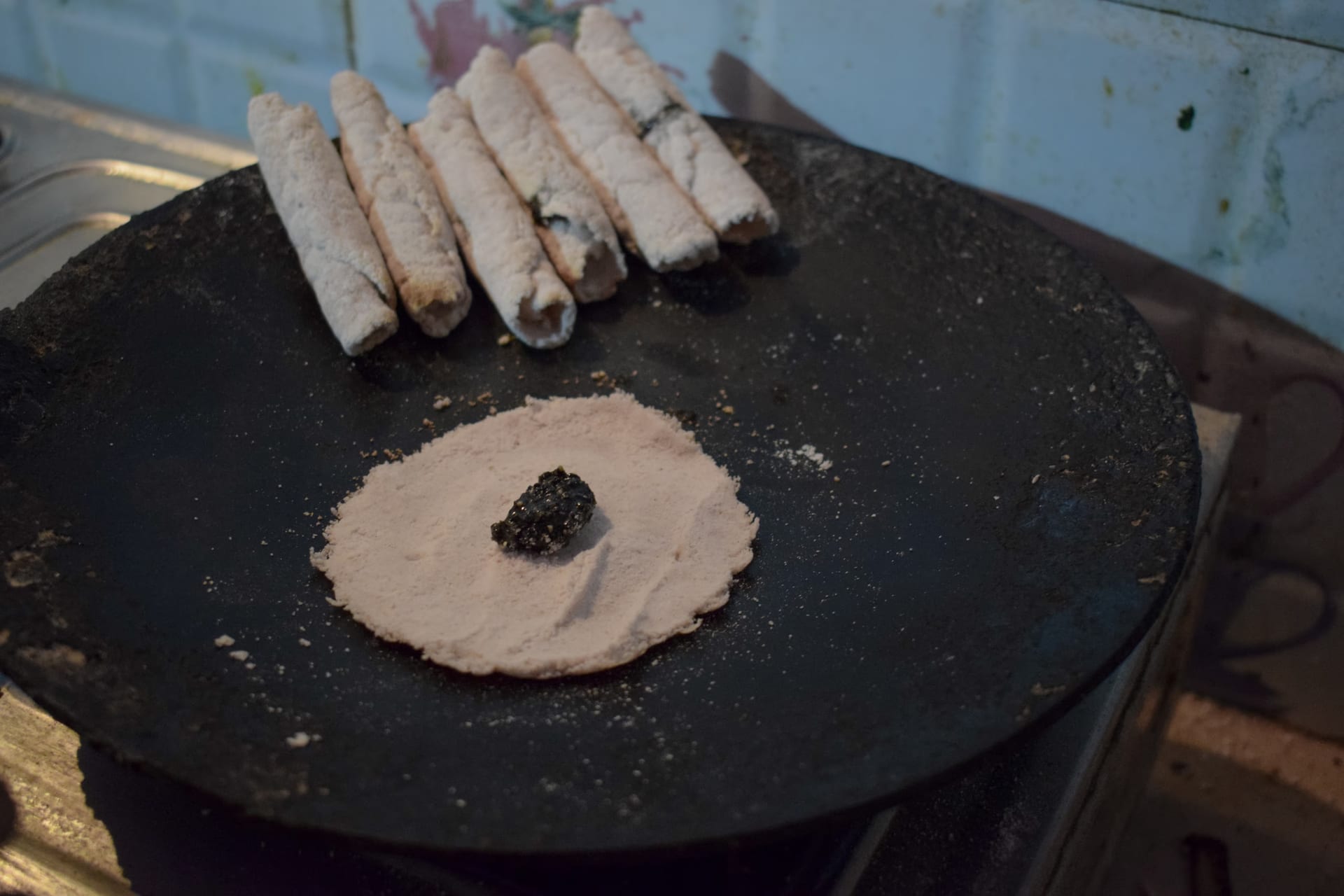
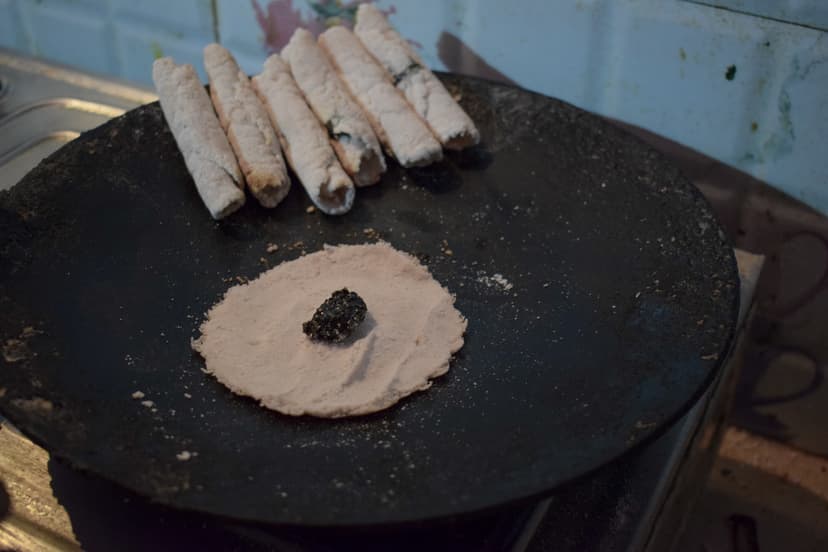
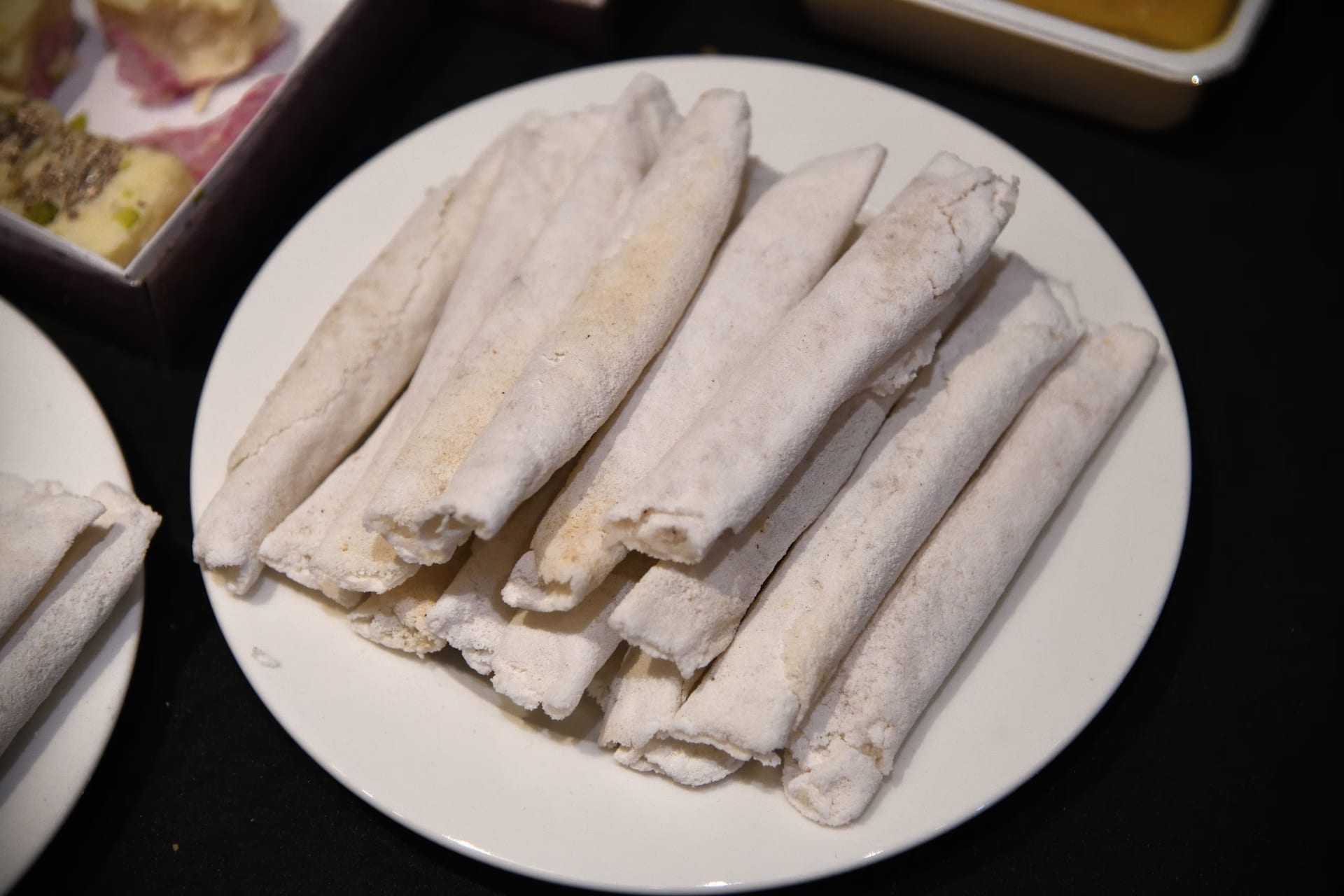
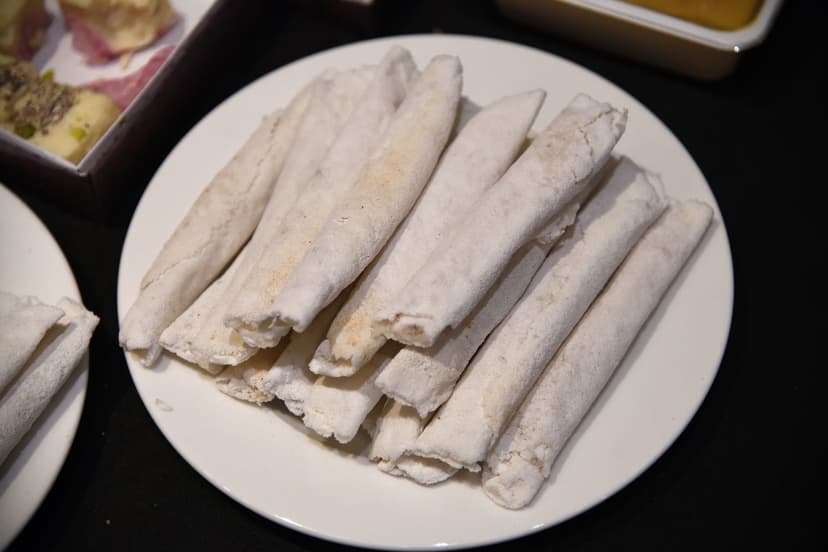
The til pitha is the best known of the family. It is a slim cigar-shaped roll, made on a hot cast-iron tawa with no oil at all. The cook spreads a thin circle of rice-flour batter on the dry griddle and lets it set. Roasted sesame seeds mixed with jaggery go across the centre. Rolled shut while still warm and pliable, the circle seals itself without any binding. Narikol pitha is made the same dry-griddle way, just with a different filling, grated coconut and jaggery in place of sesame.
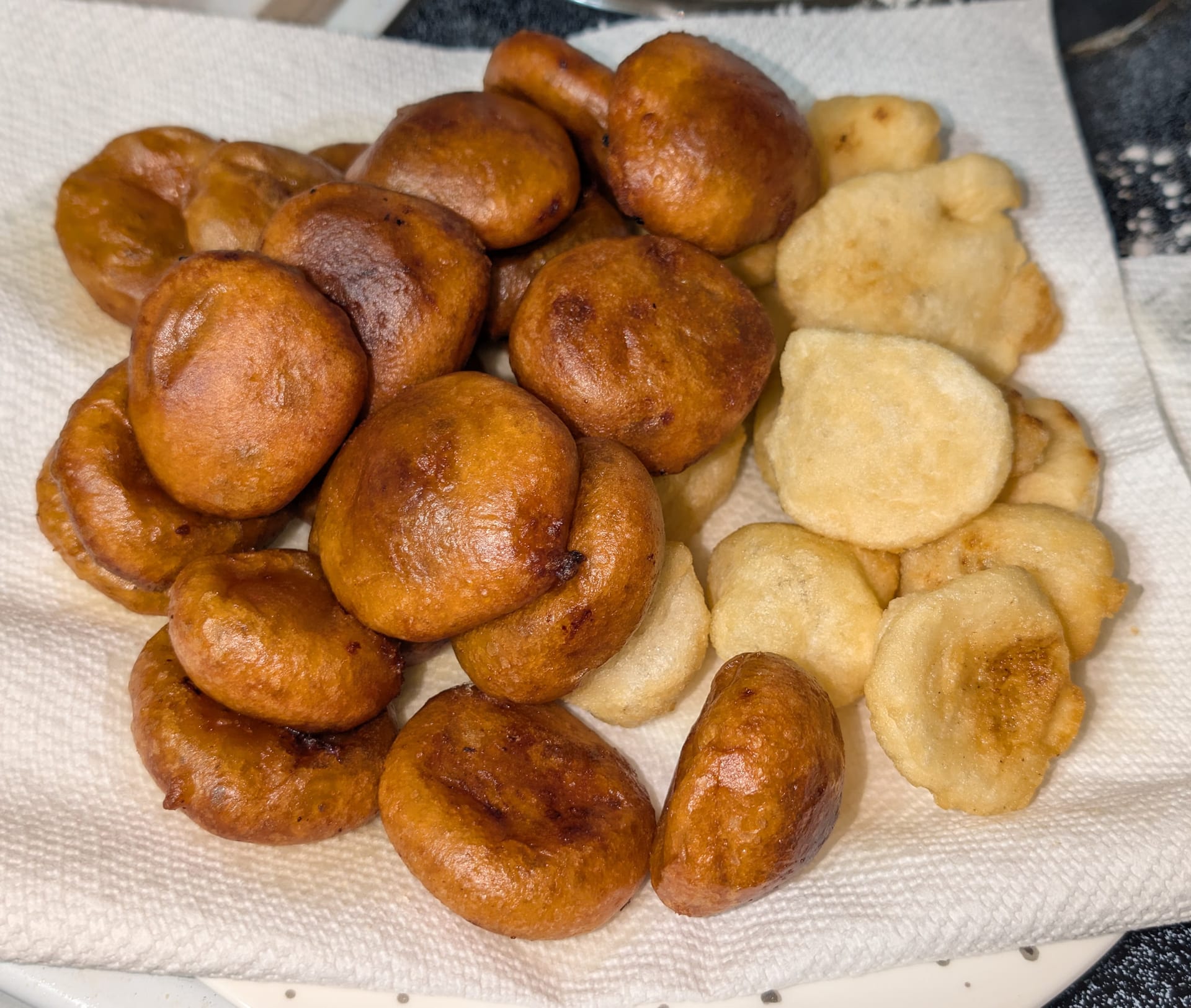
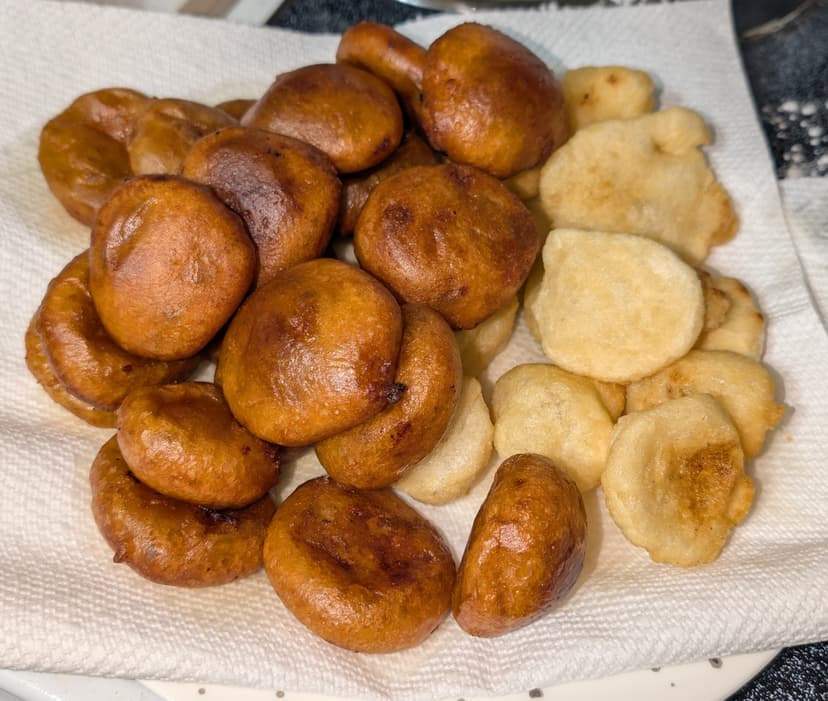
The rest of this family go into hot oil instead of a dry griddle. The ghila pitha, named for its round, knee-like shape, is a dough of bora rice and jaggery, deep-fried until golden brown outside and dense and chewy within. Salt in place of jaggery turns the same dough savoury. A version shaped like the xutuli, a half-moon Assamese wind instrument, is called xutuli pitha for the shape it borrows. It is made of xaali-rice dough, stuffed with sesame and jaggery, and fried the same way. Simpler still is the tel pitha, a plain batter fried in oil with no filling at all. Kholasapori pitha is a thin savoury pancake of rice flour, onion and grated carrot, shallow-fried on the khola, the flat clay pan that gives it its name, closer to a crepe than a cake.
Roasted and steamed
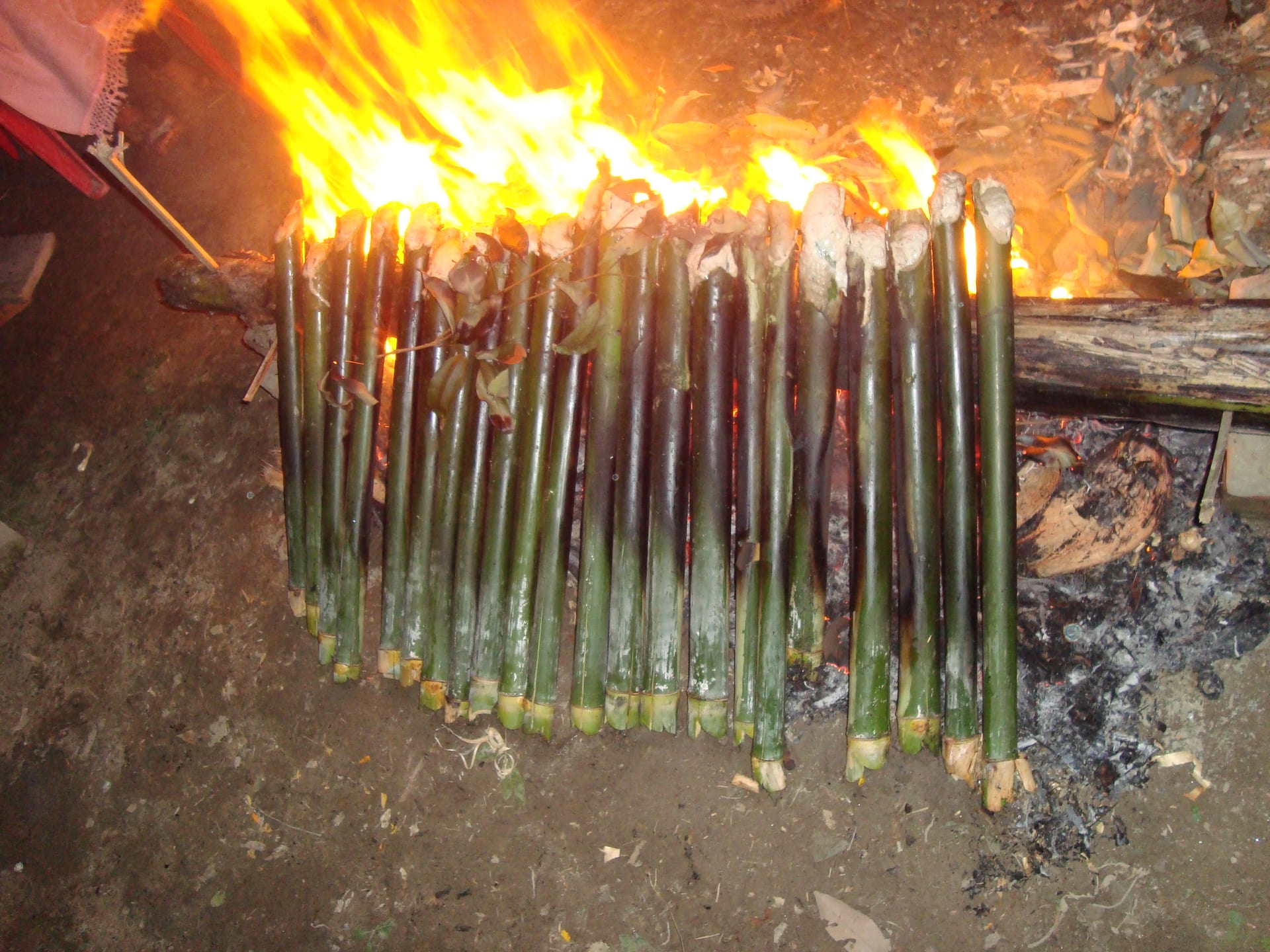
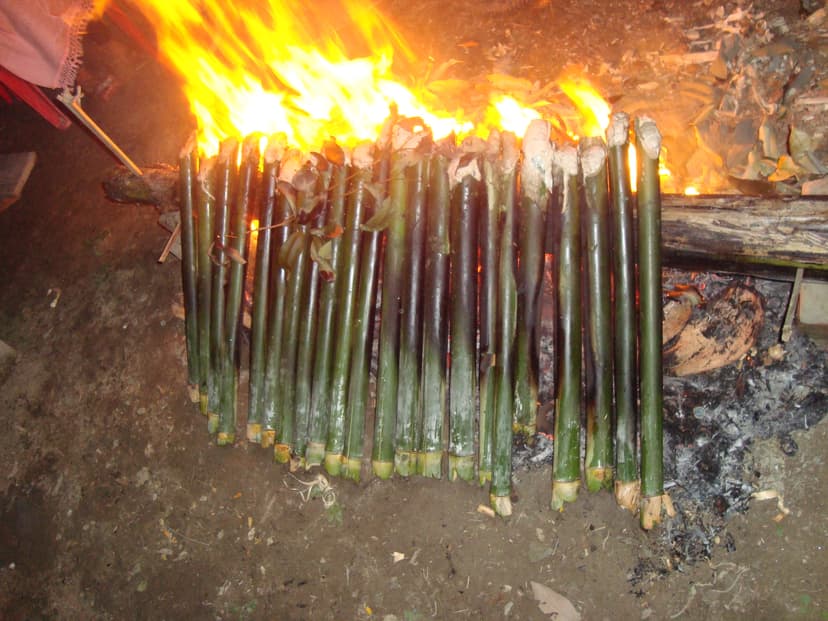
Chunga pitha is roasted, not fried or griddled. It takes its name from the chunga itself, the bamboo tube it is cooked in. Xaali and bora rice are mixed with water and jaggery into a loose batter. This is packed into a length of young green bamboo and corked shut with a plug of banana leaf. The tubes roast in a line along an open wood fire until the rice inside cooks through. The charred tube is split open and the rice cake slides out. It is eaten warm, often with milk.
Tekeli pitha, by contrast, is steamed. It takes its name from the tekeli, an earthen or brass pot. The rice-flour batter is stretched across its mouth like a drumhead and steamed until it sets into a cake. A close cousin repeats this faster in a metal kettle, giving the near-identical ketli pitha. Bhapot diya pitha, literally "given steam," and dhup pitha are two more names for a steamed pitha, sometimes made with fragrant joha rice, coconut, jaggery and a touch of cardamom.
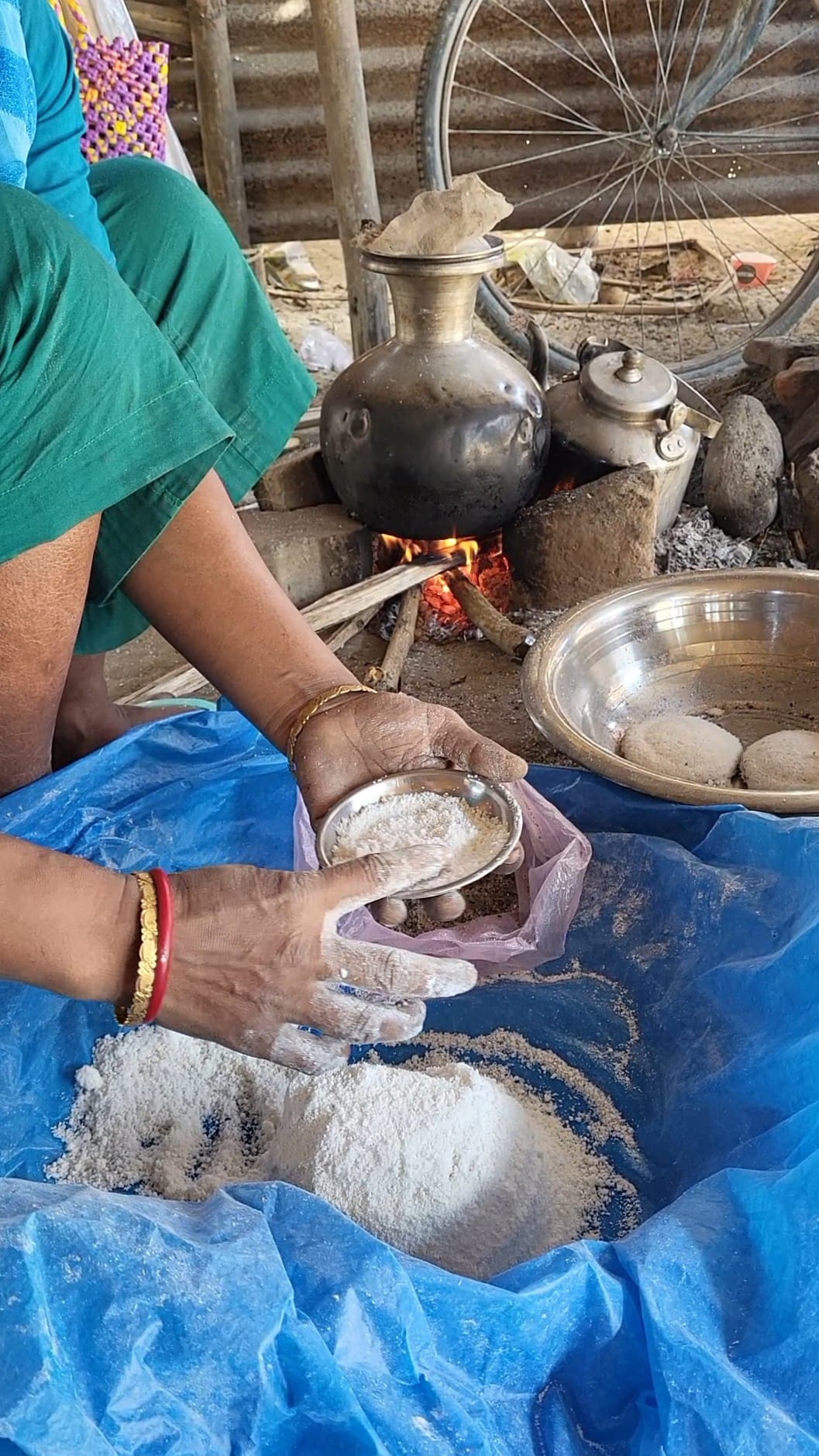
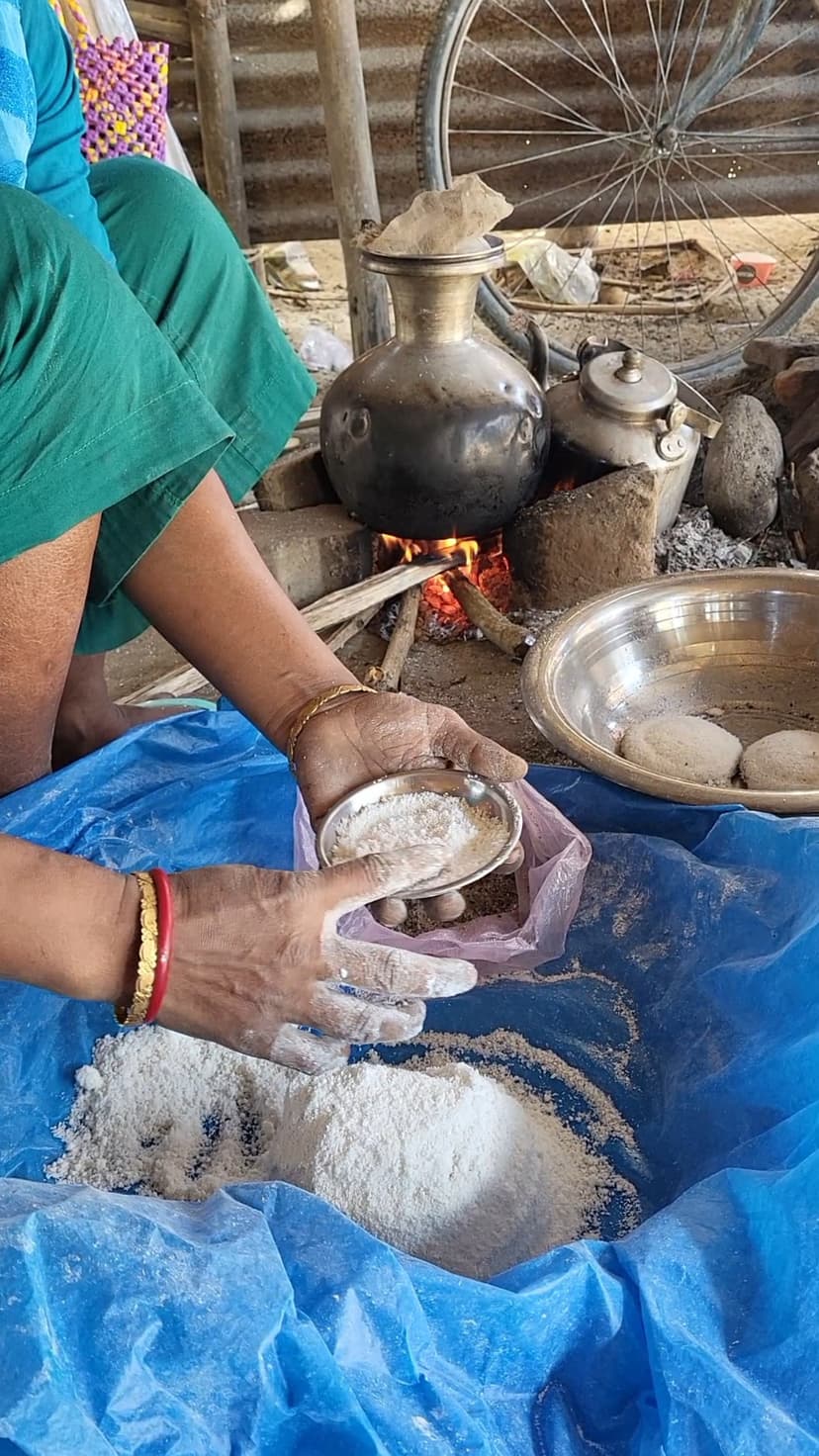
Beyond these named forms run a long roll of others. Each is a local variation on the same idea, rice remade by patience. Among them are the muthiya, dough shaped by the fist into a fixed form before cooking, and the lakhimi and the tora. Most were never written down, carried instead from one kitchen to the next by memory. Pitha’s only real special ingredient is effort. The same daily rice turns festive purely through hours of soaking, pounding and patient shaping, work an ordinary meal never demands. This labour has always fallen mainly to women, passed from mother to daughter.
The jolpan table
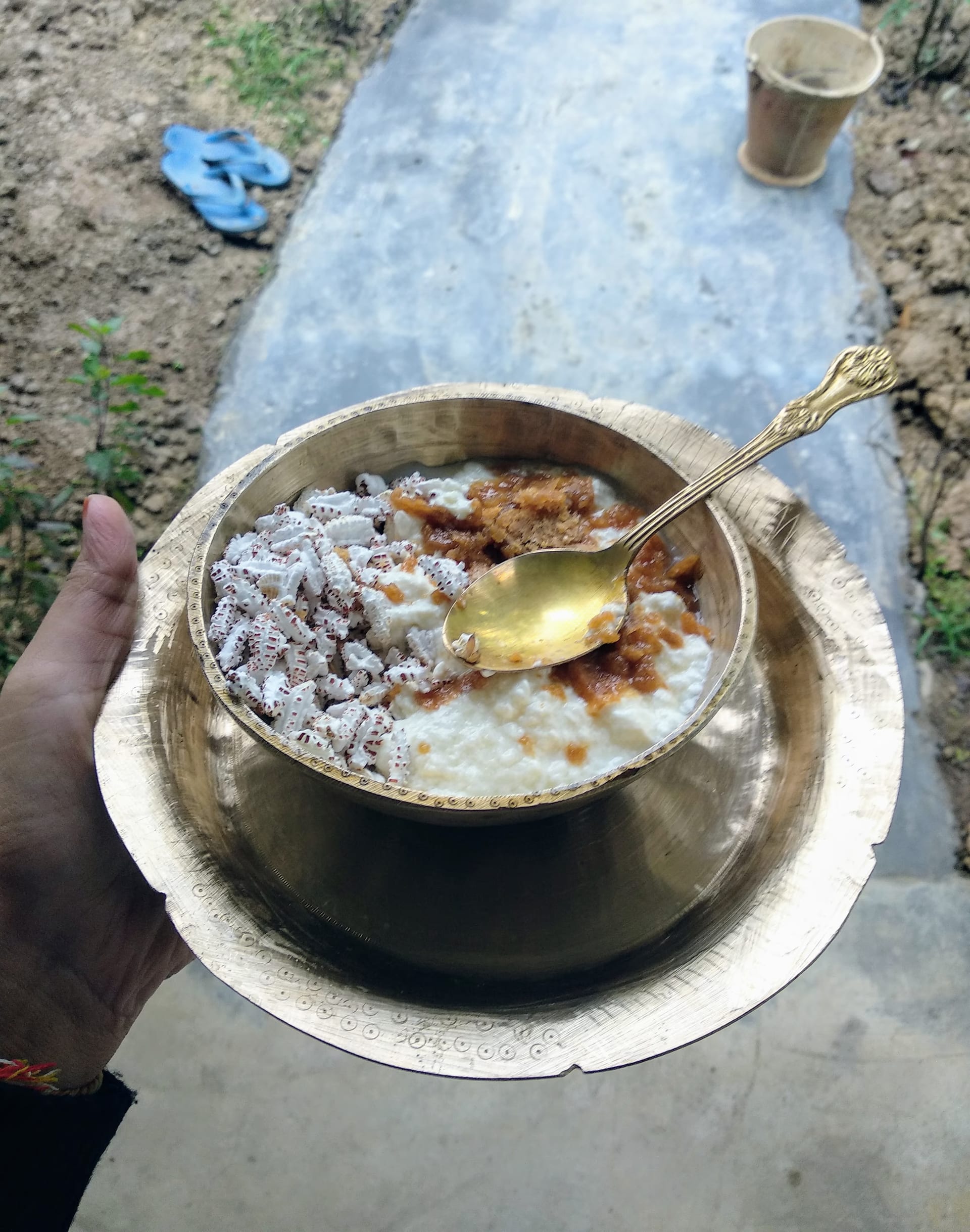
At the festival table pitha does not stand alone. It sits beside the laru, rolled balls of sesame, coconut or puffed rice bound with jaggery. The colour changes with the ingredient, dark for til laru, pale for narikol laru, coarse and golden for muri laru made from puffed rice. Pitha and laru together sit inside the jolpan, the Assamese tiffin spread that opens a festival morning. The jolpan is a small art of its own. It gathers the light rices, the flattened chira and the puffed muri and akhoi, with the soft komal saul that turns tender in warm water without any cooking at all. These are served with curd, milk and jaggery stirred through. Curd carries most of a jolpan bowl. Its sourness balances the sweetness of the jaggery folded in, and the puffed grains add their crunch against the softness of the rest.
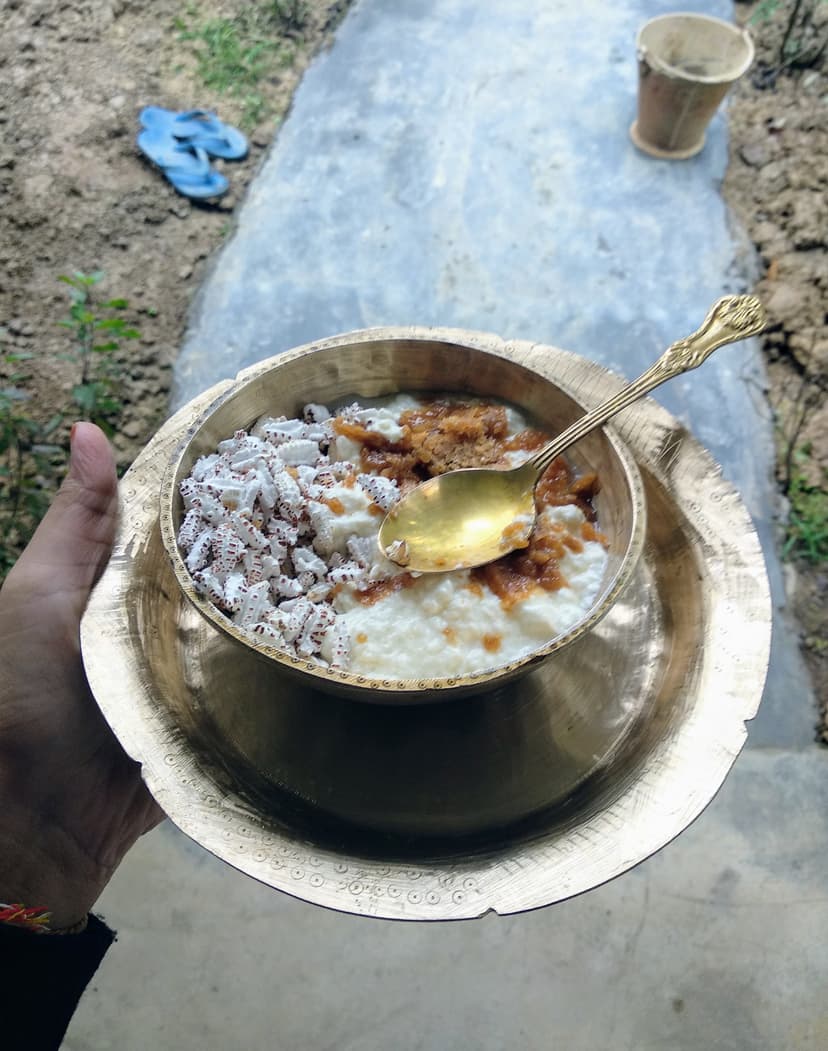
In the modern period pitha, laru and jolpan have all moved beyond the home. They are sold in shops and restaurants, packed as gifts, and remade in the diaspora kitchen wherever Assamese have settled. Shop-bought sweets rarely match the labour of ones shaped at home, but they carry the festival with them all the same.