Magh Bihu (Bhogali Bihu)
The harvest festival. Bonfires, feasts, traditional games. The Bihu of the granary.
Magh Bihu, also called Bhogali Bihu, the Bihu of feasting, is the harvest festival of Assam. It is kept in mid-January, at the winter turn the rest of India marks as Makar Sankranti or Pongal, when the granaries are full and the labour of the rice year is done. Its eve, Uruka, falls on the last night of the month of Puh, and the fires that are its heart burn at dawn on the first day of Magh. Of the three Bihus that mark the Assamese year, this is the one most purely given over to plenty. It is a festival of food, fire and community, kept in the open on the fields the harvest has just cleared.
The harvest frame
Magh Bihu falls after the main sali rice harvest has been gathered and threshed, and its whole character follows from that place in the farming year. The name Bhogali is from bhog, feasting and enjoyment, and in the countryside the festival is also called Maghar Domahi, the junction of the two months. The three Bihus, taken together, track the whole rhythm of the rice year. The spring Rongali Bihu is the festival of sowing, danced in the open to the dhol of the Bihu dance. The autumn Kati Bihu is kept at home and in the paddy, a single frugal lamp lit at the tulsi and over the standing crop in the lean weeks before the grain comes ripe. Magh Bihu is their answer and their close. The same field, now cut and cleared, becomes the festival ground, and the plenty that Kati could only pray for is eaten in the open around great fires.
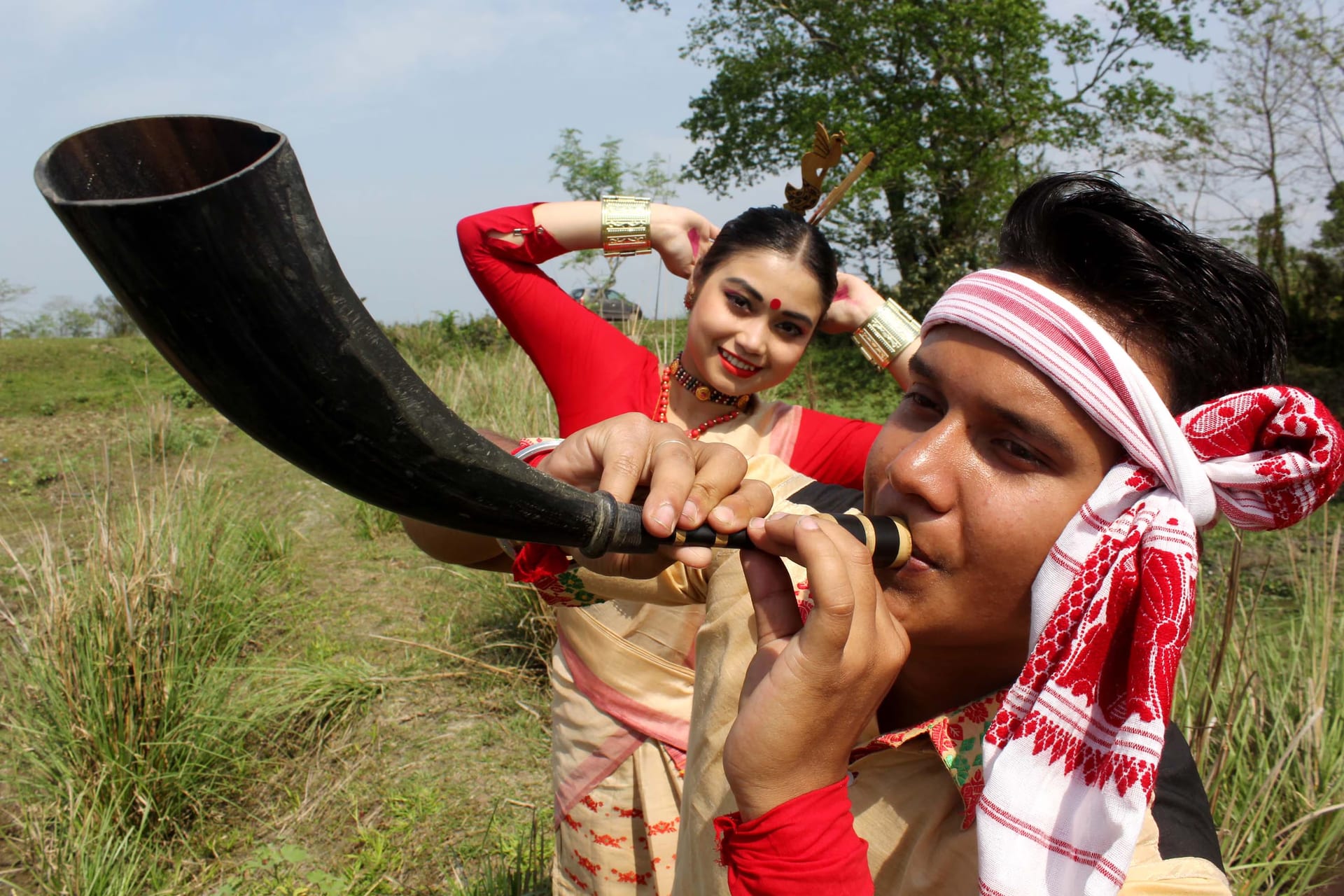
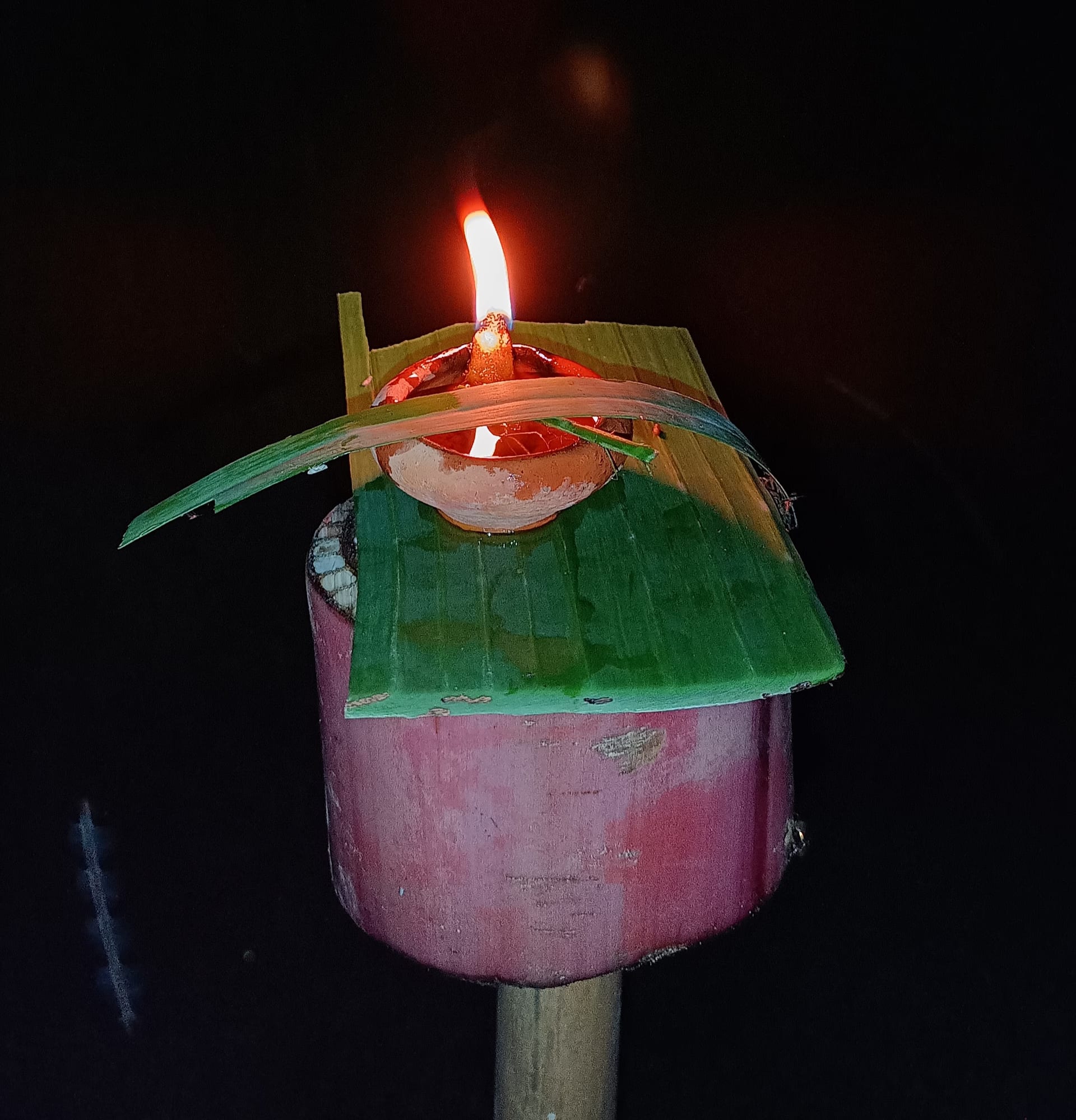
Like the other two, it is a festival of the land before it is a festival of any creed. It has no founding myth, no presiding deity and no charter legend behind it, and it is kept across the valley by Assamese speakers of every religion as a marker of the shared agricultural year. What binds a village on Uruka night is the common harvest, not a common god. Praphulladatta Goswami (source: Bihu Songs of Assam) read the whole Bihu complex as the outgrowth of exactly this agrarian calendar, its rites and its music rooted in the cycle of the fields rather than in scripture.
Uruka, the night of the feast
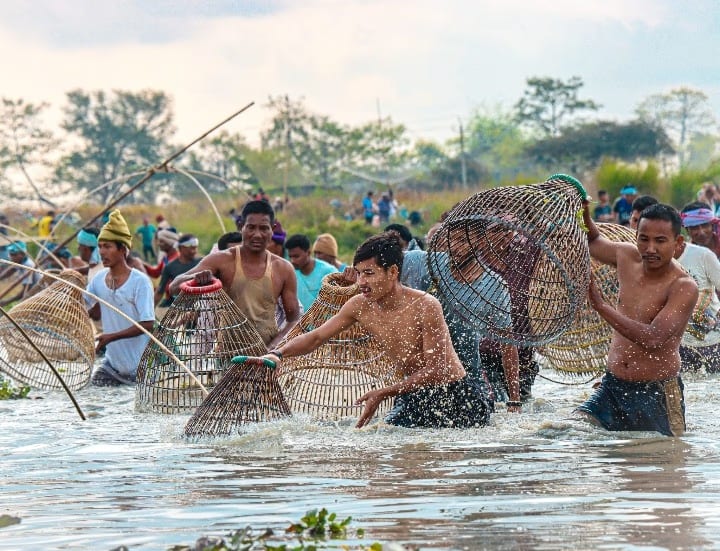
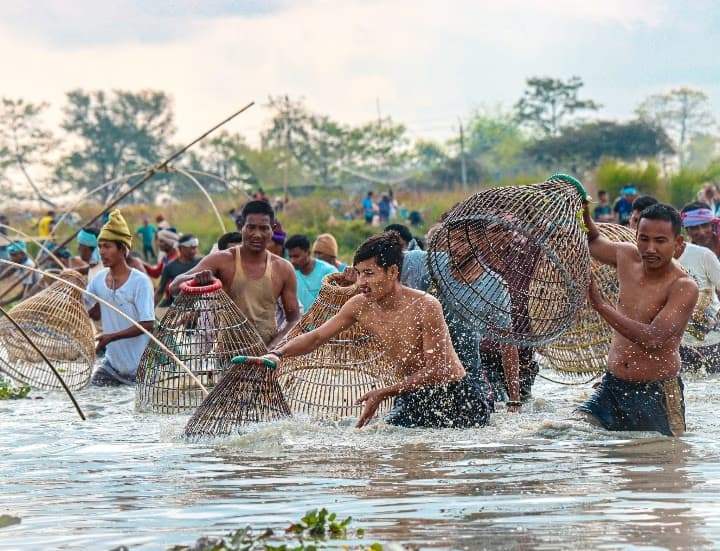
The festival opens on its eve, Uruka, the great night of eating. The name is generally traced to a Deori-Chutia word for the ending, the closing of the old cycle before the new. Through the day the women of the house prepare the rice-cakes, the laru sweets and the curd for the morning. The men go out to the harvested fields to raise two temporary structures of straw and bamboo. The first is the bhelaghar, a makeshift hut in which the young keep watch and feast through the night. The second is the meji, a tall conical pyre of firewood, green bamboo and thatch, built to be burned at dawn. At night the whole neighbourhood sits down to a communal feast, with fish netted from the winter ponds and meat. In many communities there is also a rice beer brewed for the night, the apong of the Mising, the zou of the Bodo, the nam-lao of the Tai-Ahom. The night has its licensed mischief too. The young are allowed to pilfer vegetables and firewood from the neighbours' gardens, a theft custom treats as part of the fun of Uruka. The feasting in the bhelaghar runs until morning.
The day of the meji
At first light on the day of Magh Bihu the community gathers at the meji, and the pyre is set alight. As it burns, people cast rice-cakes, sesame and betel-nut into the flames and warm themselves at the fire. The rising smoke is understood as an offering carried upward, and by older tradition a prayer to the ancestral gods. At many mejis an elder recites a Sanskrit invocation of Agni as the flames take hold, the one fixed piece of liturgy in an otherwise folk rite:
Agnim prajvalitam vande jatavedam hutashanam, suvarnavarnam amalam jyotirupaya te namo namah.(Sanskrit)
“I bow to the blazing fire, Jataveda who consumes the offerings, golden-hued and spotless. To you, the form of light, obeisance again and again.”
The Sanskrit is a late layer over an older fire. The word meji itself is generally traced to the Tibeto-Burman substratum of the valley's culture, in keeping with the festival's roots in the region's pre-Aryan agrarian rites. The bhelaghar, its night of feasting over, is burned in the same morning fire. Nothing of the pyre is wasted. When the meji has fallen, the ash and the half-burnt bamboo are carried out and scattered among the fields and fruit trees as a charm for the fertility of the coming year. The fire that ends one harvest blesses the next. It is a rite of the field-pyre and the hearth, enacted in no temple.
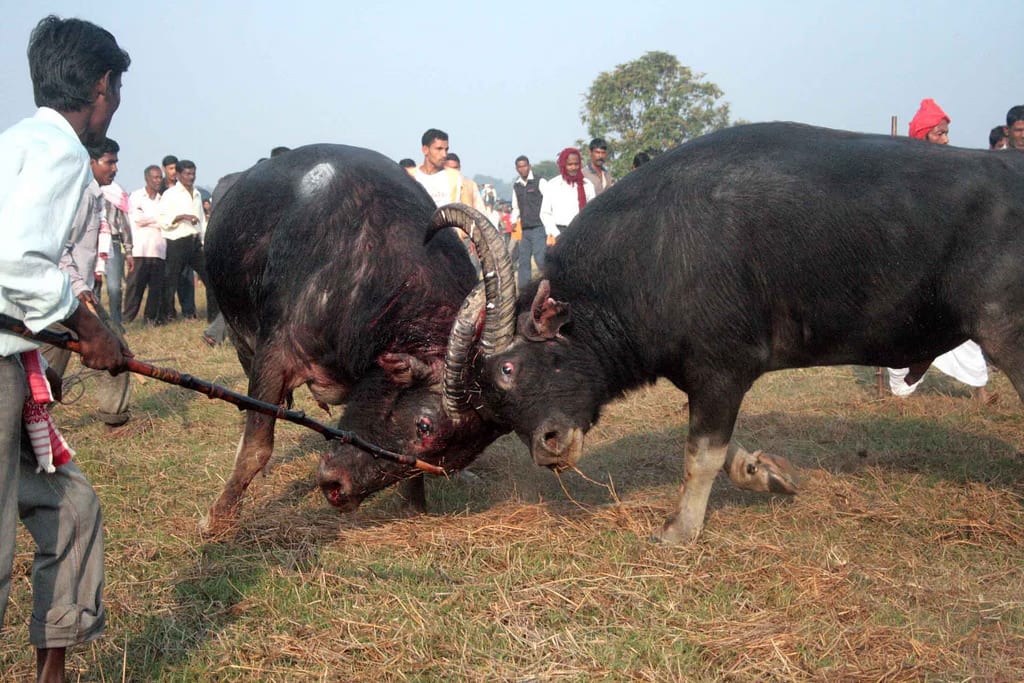
The rest of the day, once the fires have fallen, is given to sport and eating. The rural contests of the season, patronised in the valley since Ahom times, were brought out onto the same cleared ground. There was the buffalo-fight, the moh-juj, along with cock-fights, egg-fights and games such as the tekeli-bhonga, the breaking of a hung pot. The contests were village against village and household against household, and they turned the leisure of the slack season into public spectacle. The buffalo-fight and the bird-fights drew the largest crowds and the longest rivalries. Animal-welfare concern has ended them in most places. But the buffalo-fight still goes on at a few grounds, Ahatguri in Morigaon foremost among them, held each Magh Bihu despite a standing Supreme Court ban. Its legal status remains unsettled.
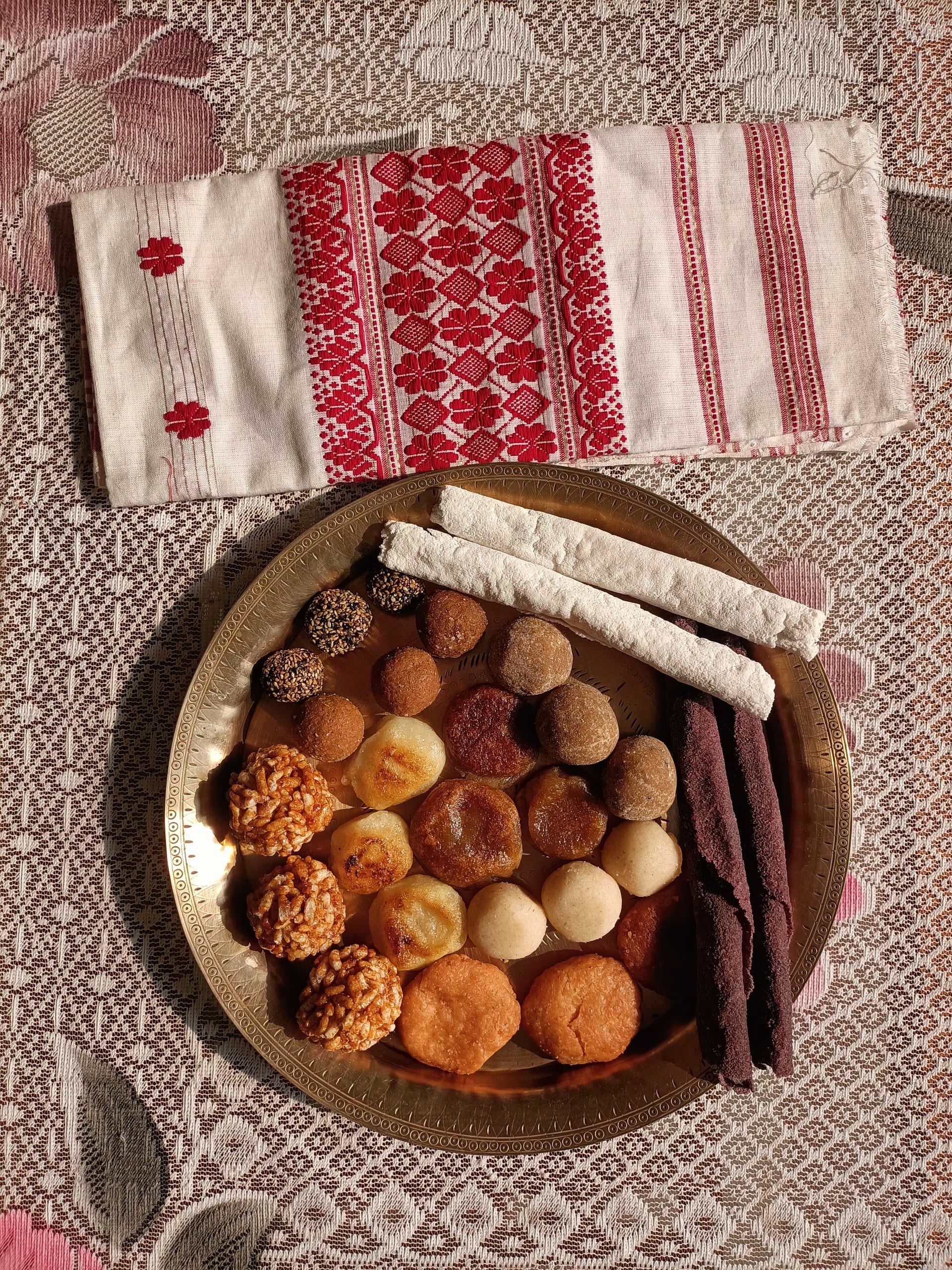
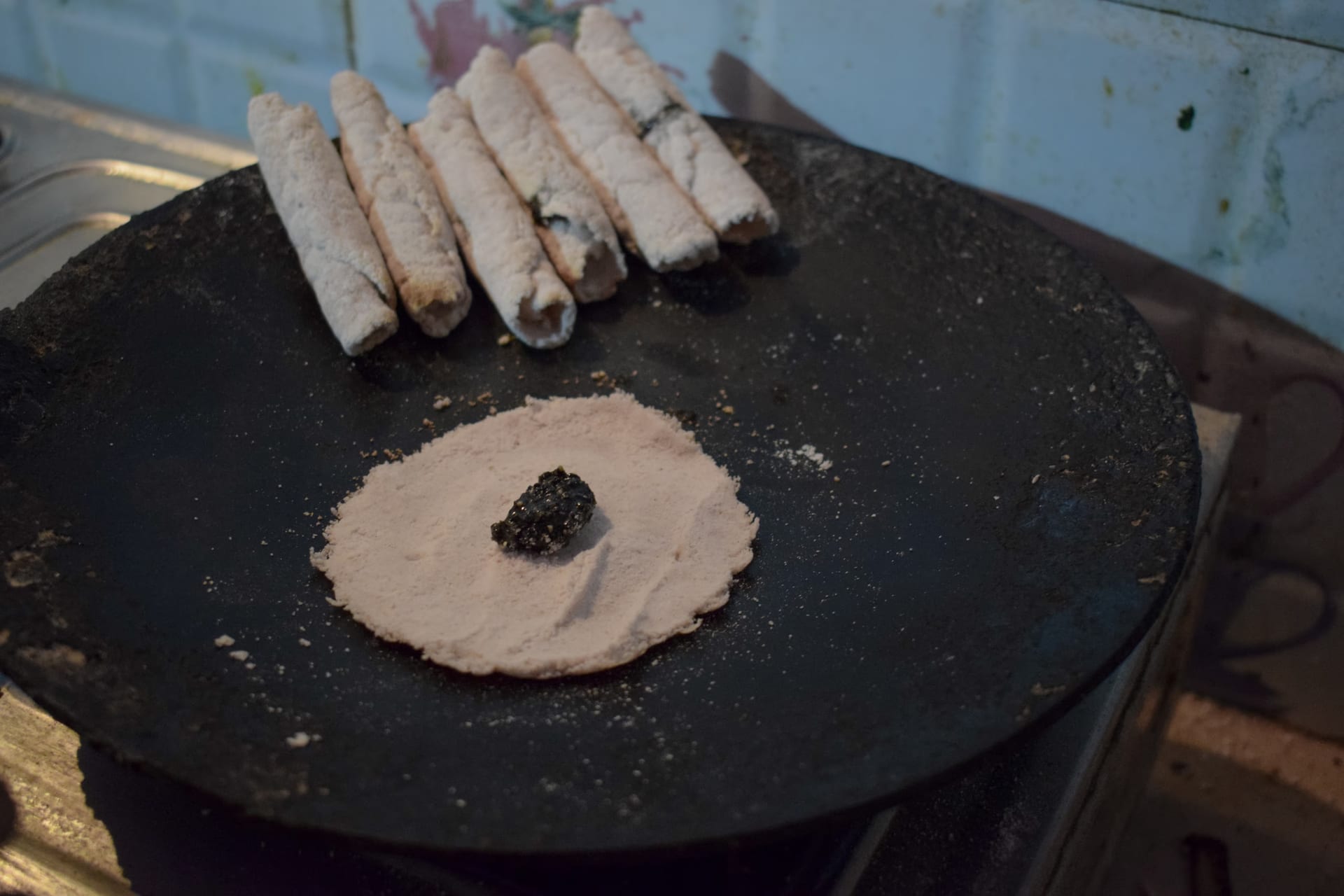
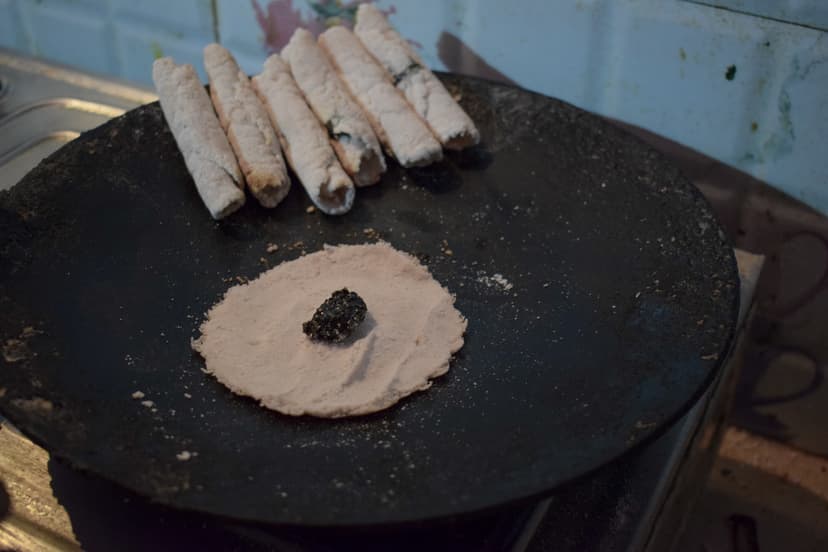
But games are only half the day. Food is the other half, and it is the day's real centre. The rice-cakes are the pithas of the season: til pitha, named for its sesame filling, ghila pitha, named for its shape, and sunga pitha, named for the green bamboo tube it is roasted in. There are laru sweets of sesame, coconut and molasses, and curd eaten with chira, the flattened rice of the fresh crop, and jaggery. There is mah-karai, a roast of rice, black gram, sesame and other pulses tossed with mustard oil and slivers of ginger and coconut, best loved in lower Assam. Nearly all of it is built from the new harvest itself, the winter rice and the sesame and cane pressed after it, so that the eating is quite literally a tasting of what the fields have just given. With the fires and the feast of Magh the rice year closes, and the valley turns toward the sowing songs of the next Bohag.