
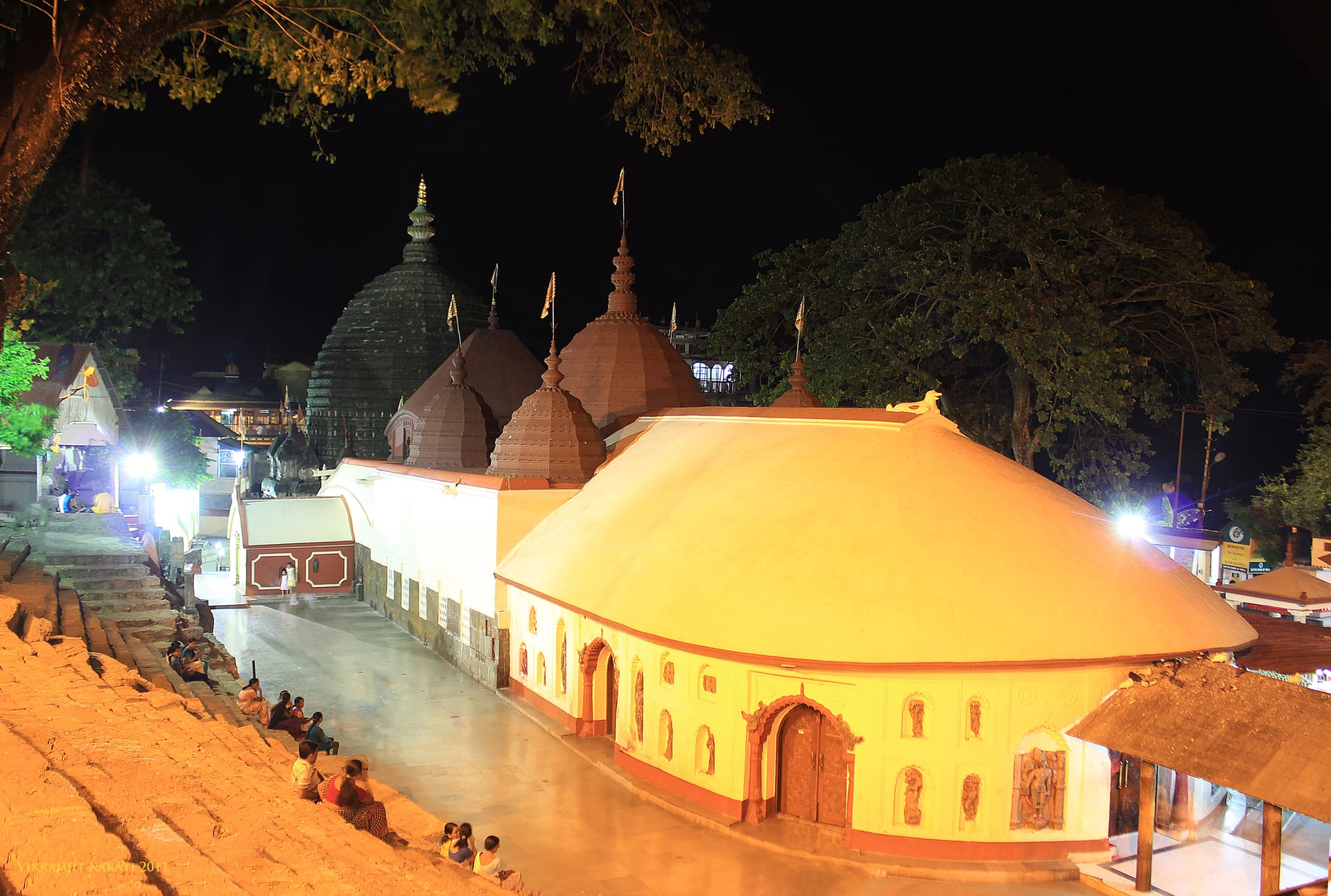
Ambubachi is unlike any other festival of the valley. It is neither a harvest nor a new-year celebration, but a tantric observance at the temple of Kamakhya, kept over a few days in June. It marks the annual menstruation of the Goddess. The name says what it is. Ambu is water and vachi is speaking, and together they mean the speaking of the waters. The festival falls when the first monsoon rains soak and quicken the earth. At root it celebrates the fertility of the Goddess and of the ground alike. Each year it draws hundreds of thousands of ordinary pilgrims up to the Nilachal hill above Guwahati, and the matted tantric ascetics with them.
The Goddess's courses and the red cloth
At the heart of Ambubachi is a belief that follows directly from the nature of Kamakhya. The temple is counted among the oldest and foremost of the Sakta pithas, the shrines where a part of the Goddess is held to have fallen. Its object of worship is not an image but the Goddess’s yoni, a cleft in the living rock kept moist by an underground spring. The festival marks the days when the Goddess is held to undergo her yearly menstruation. This falls in the Assamese month of Ahar, around the sun’s entry into the sign of Mithun in mid-June. By then the monsoon has broken and the Brahmaputra is in spate.
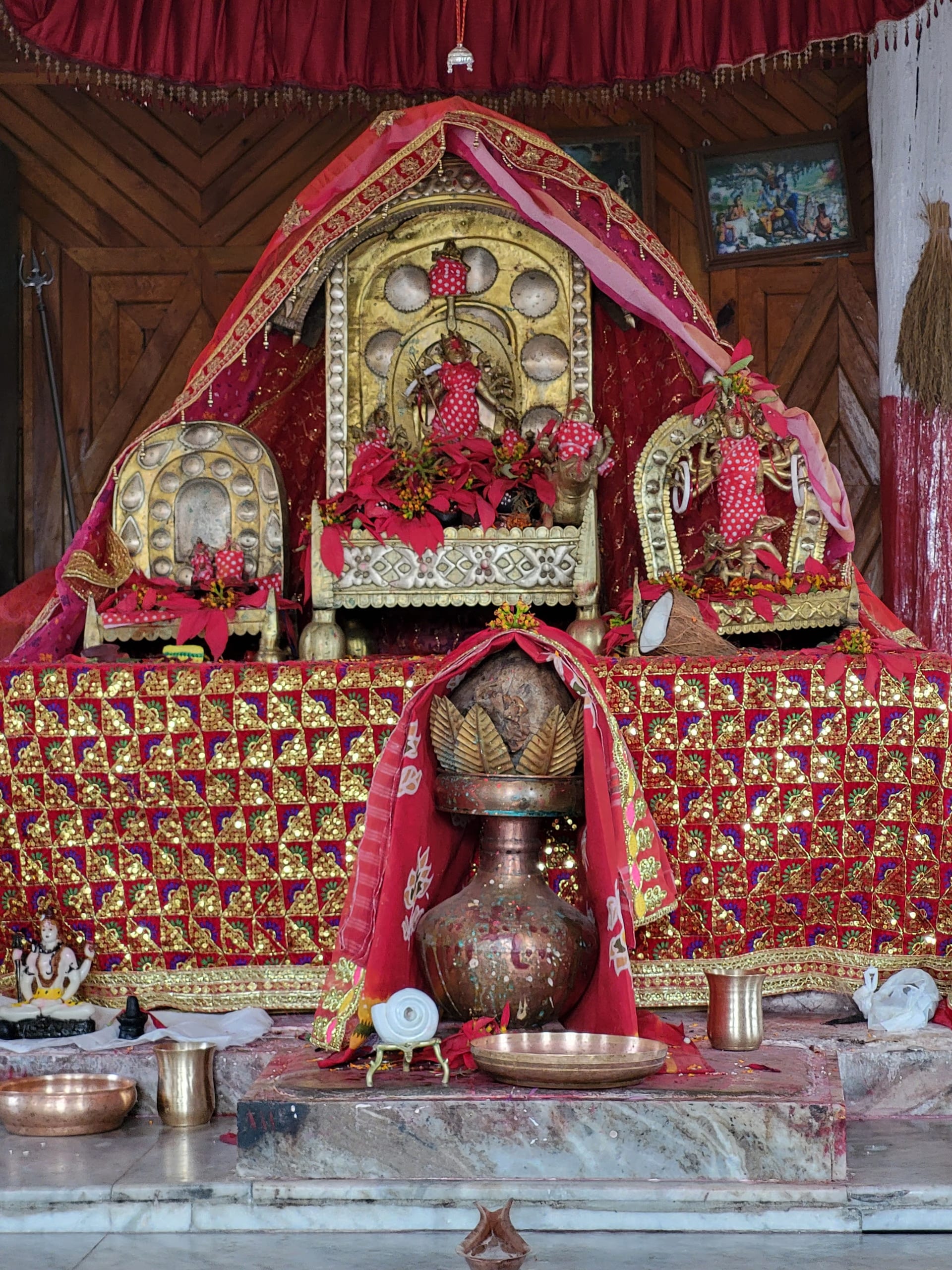
For these days the doors of the temple are shut and all worship within it suspended, the earth itself being regarded as in its fertile, secluded period. By old custom farming, cooking, the reading of scripture and every auspicious act are set aside. The closure runs three full days, likened to the seclusion once kept by menstruating women in the household. On the fourth day the Goddess is ceremonially bathed and purified, the doors reopen, and the waiting pilgrims are admitted at last. That reopening, the nibritti, is the climax of the whole festival.
The taboo of these days is not confined to the hill. Across eastern India the same belief holds that in Ambubachi the earth, the goddess Prithvi, undergoes her courses. In the villages of Assam and Bengal alike the plough is kept out of the ground and no seed is sown. Pious widows set aside cooking and eat only uncooked food until the days have passed. None of this marks the period as unclean. It is rather a holding of the breath while the earth renews its fertility, before the reopening releases the world back into its ordinary round. Elsewhere menstruation is hedged about with shame and seclusion. Here it is honoured as the very sign of the Goddess’s and the earth’s creative force, the source from which life and harvest flow. The observance at Kamakhya is the grandest and most literal expression of that belief. The same belief runs in quieter form through the whole agrarian society around the hill. The closed temple and the resting field say the same thing at once.
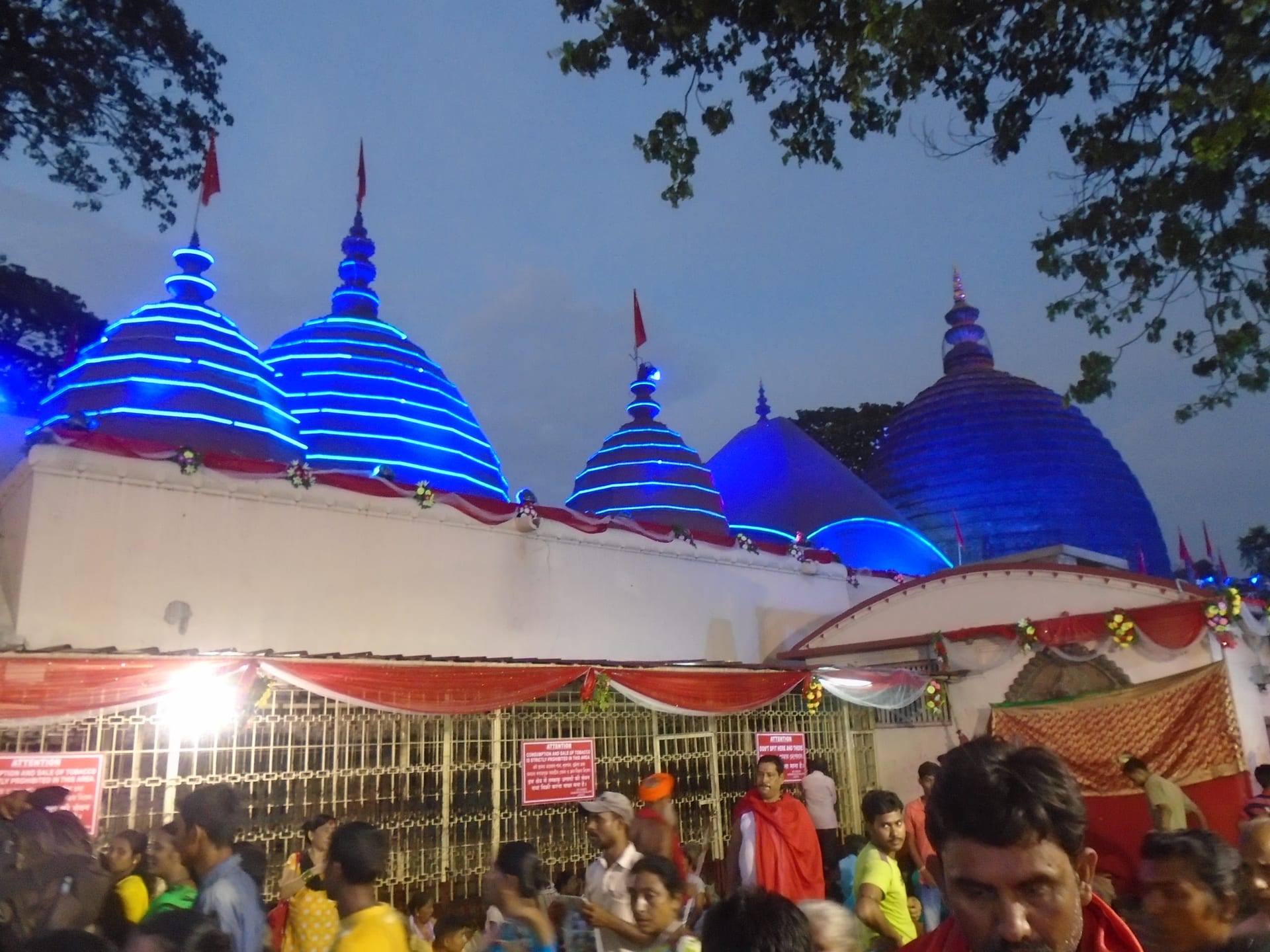
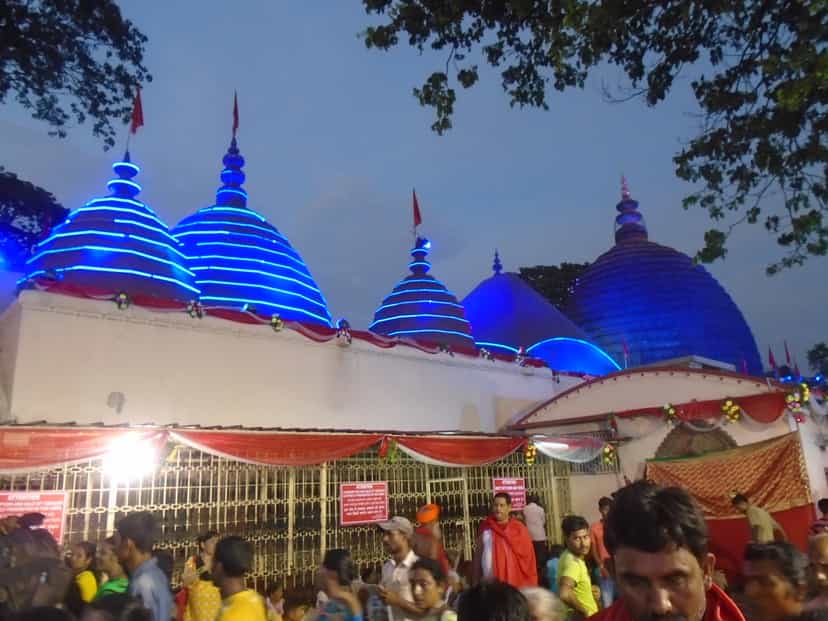
From the closure comes the festival’s most sought-after blessing. A piece of white cloth spread over the rock within the sanctum is said to be dampened red during the days the Goddess bleeds. After the reopening this cloth, the angabastra, is cut into small pieces. It is distributed to the devotees as the most prized prasad of all. Alongside it the temple gives the angodak, water drawn from the spring that keeps the yoni moist, taken as the fluid of the Goddess’s own body. Pilgrims carry both home across the subcontinent as fragments of her creative power, relics of her fertility kept and revered far from the hill. That a menstrual cloth should be the holiest thing the temple gives is the measure of how completely Ambubachi inverts the ordinary reckoning of purity. For many pilgrims it is the single object that draws them to the hill at all.
The great mela
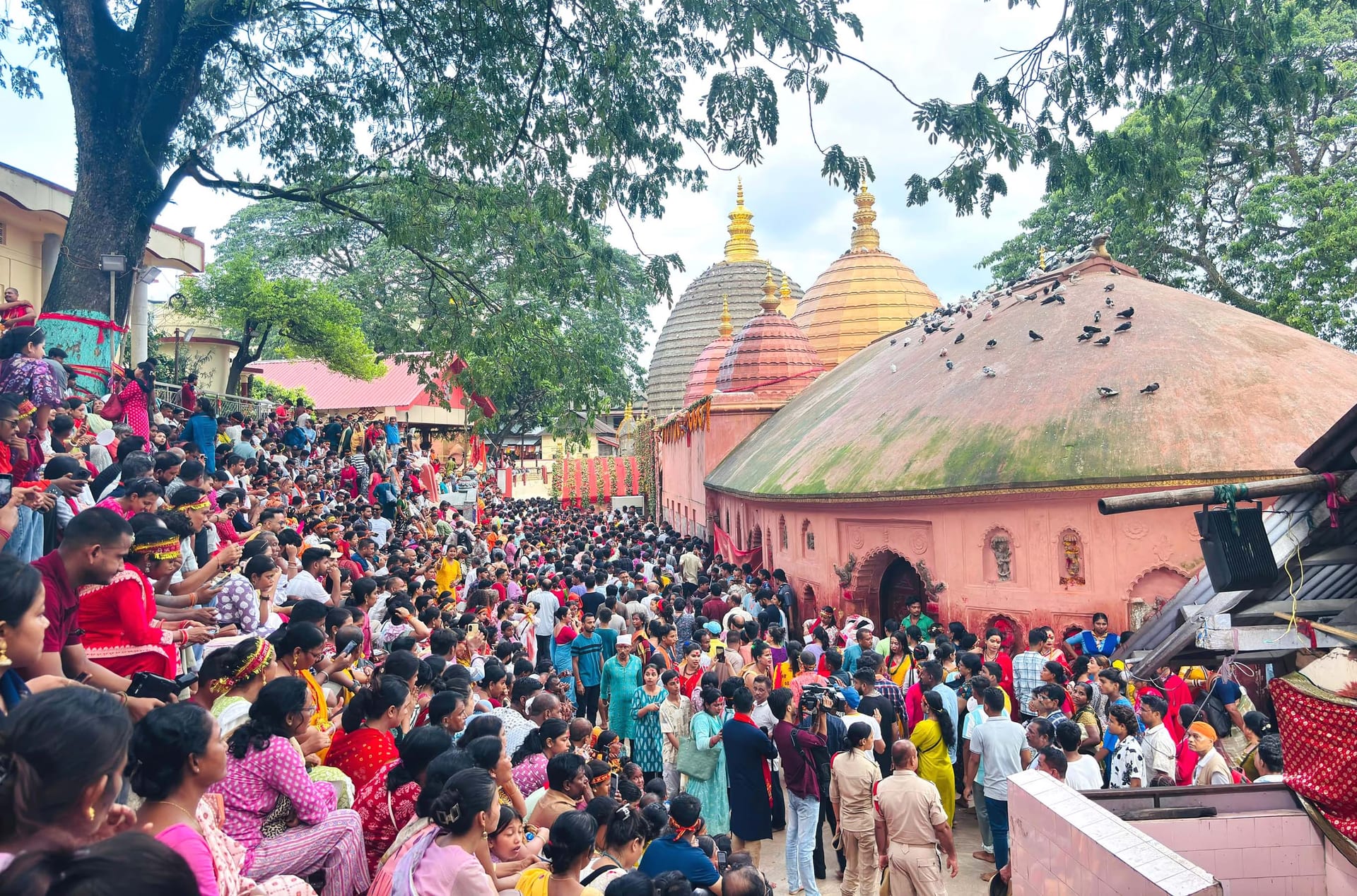

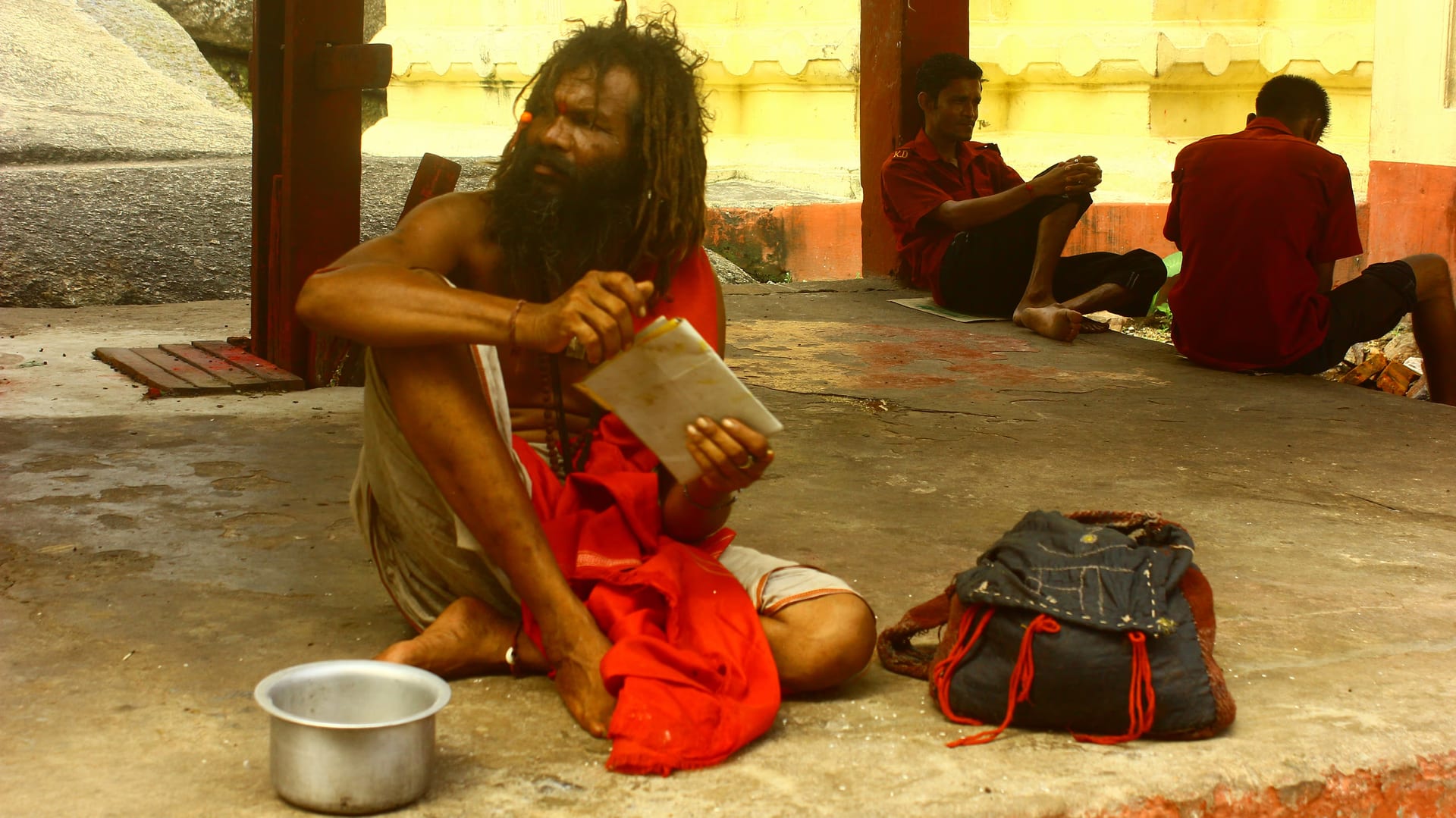
Around this tantric core has grown one of eastern India’s largest religious gatherings. For the days of the festival the Ambubachi Mela draws lakhs of ordinary pilgrims to Kamakhya, from across India and beyond. With them come the sadhus and tantric adepts. There are the black-clad Aghoris from their cremation grounds and the naga ascetics. There are the Khade-babas who hold austere vows, the Bauls who wander in from Bengal, and sadhvis and sadhus with long matted hair. Some of these adepts appear in public only during these days, and a few draw notice with feats of endurance. It is at once a profound observance and a vast public event. This gathering of tantric practitioners gives Ambubachi a character found at almost no other site. It confirms Kamakhya’s standing as a living centre of the tradition that Hugh Urban (source: The Power of Tantra) placed at the heart of his study. No festival expresses the distinctive Sakta-tantric religion of Assam more fully. It belongs to the Sakta worship of the Goddess and to her temple at Kamakhya. There the body of the divine feminine is worshipped in the most literal sense the tradition allows.