
The Vrindavani Vastra
A saint set weavers to weave the whole life of Krishna into one vast silk. It vanished over the Himalayas, kept by monks who could not read it, and ended in the British Museum.
The Vrindavani Vastra is a woven silk hanging about nine and a half metres long. It was made in the Brahmaputra valley and covered end to end with the life of Krishna. It was carried over the Himalayas into Tibet, where monks who could not read a word of it sewed it into the hanging that survives today. The people who kept it safe never knew what it said. The vastra has been in the British Museum since 1905. This lens follows how it travelled so far, and how it is due back in Assam in 2027.
Woven in exile
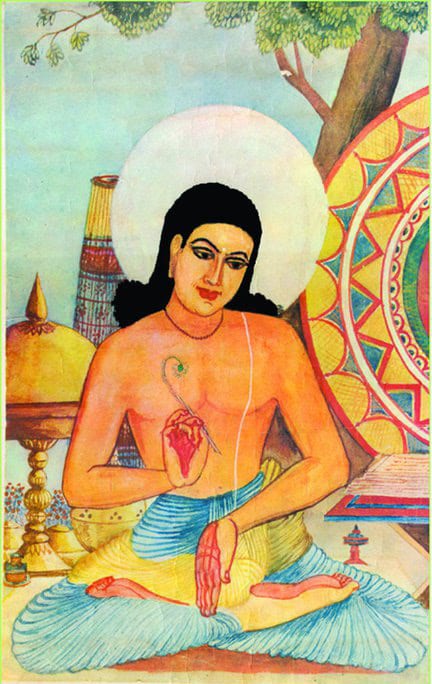
The cloth was made for Srimanta Sankardev, the saint who founded the neo-Vaishnava faith of the valley. He had already given the new faith its books, its songs and its plays. He now set out to give it one thing more, a hanging that would carry the whole life of Krishna in a single woven sweep. The master weaver Mathuradas Burha Ata led the weavers who put a monumental length of figured pat silk on the loom at Sankardev's direction.
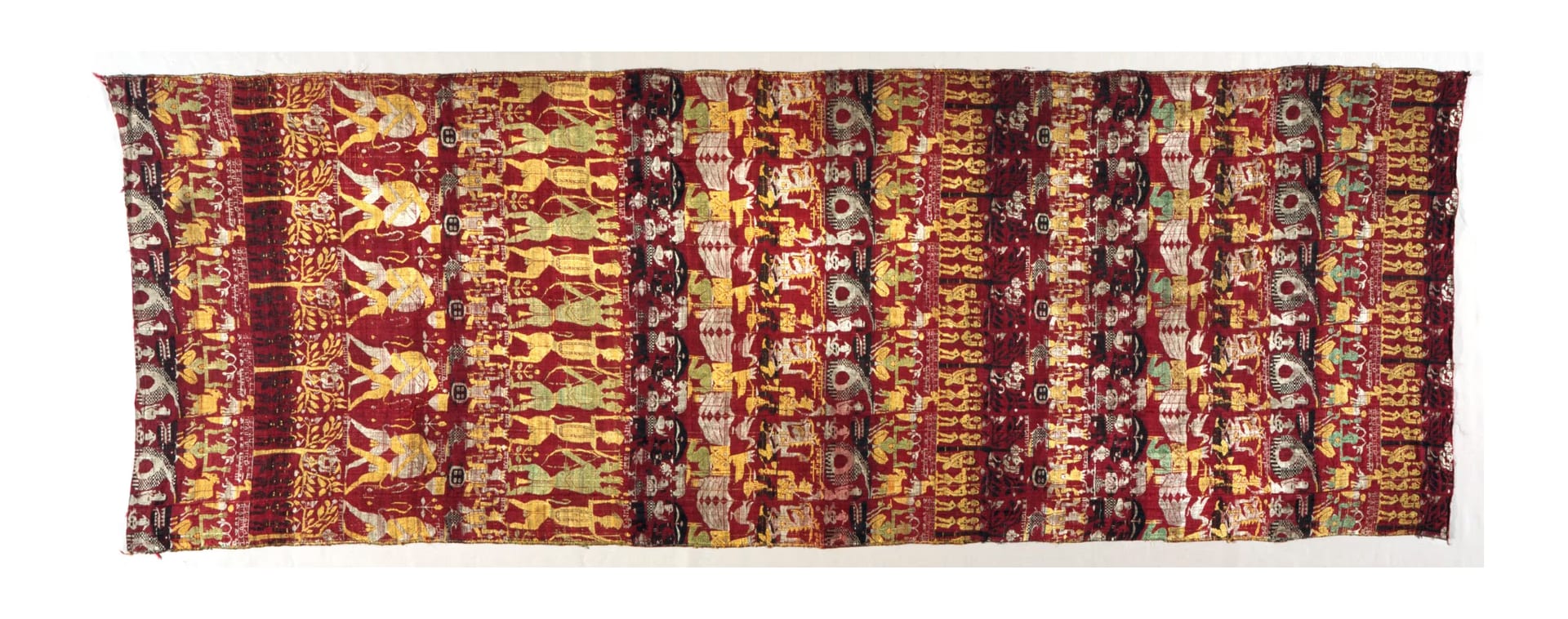
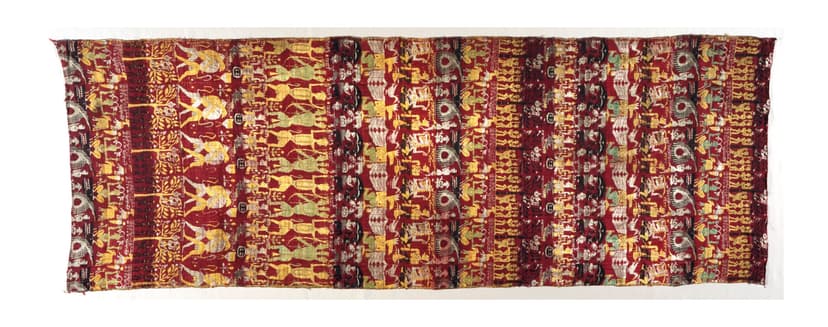
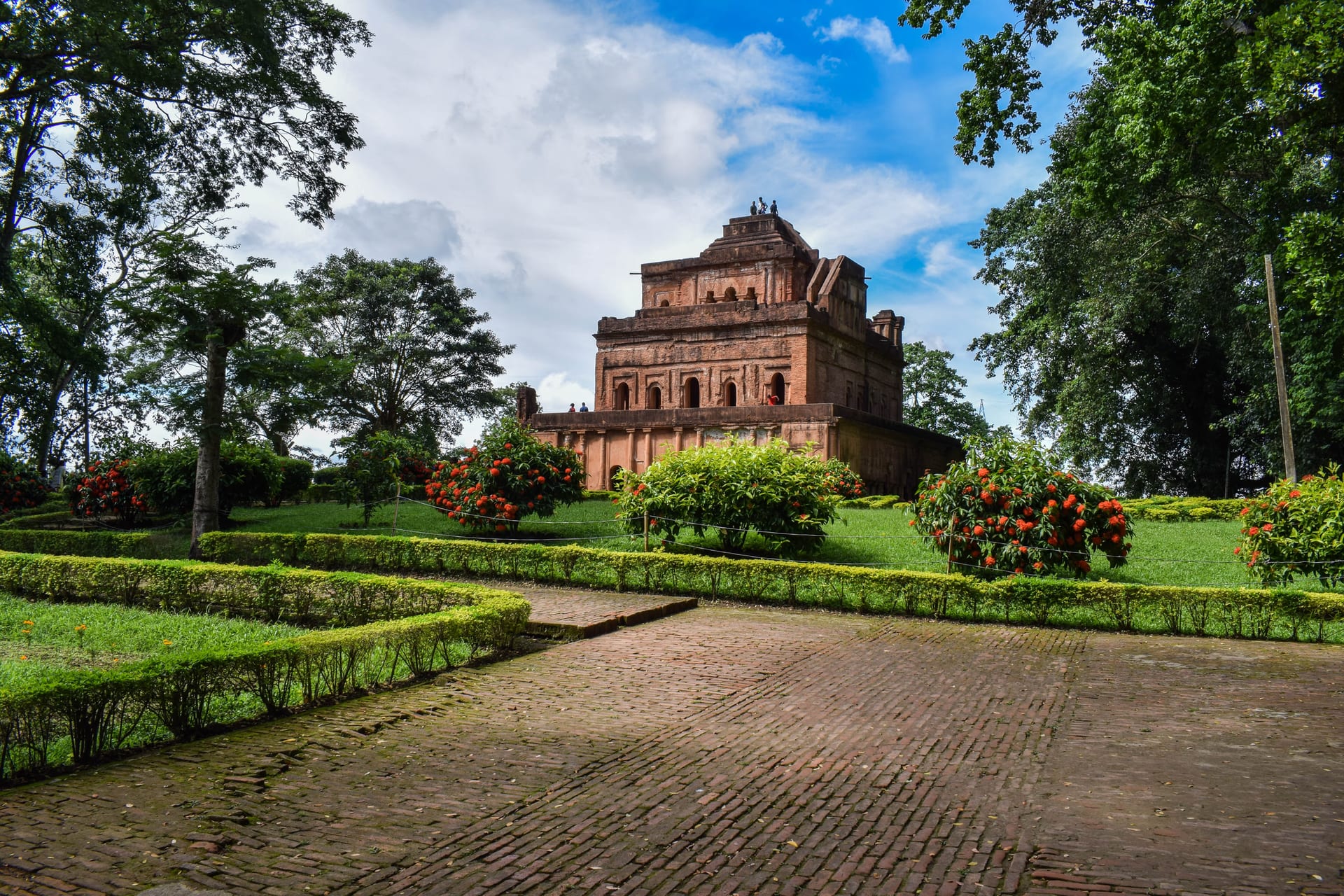
The work was done while he was in exile. Sankardev preached a faith that set aside caste, ritual and the priest, and that made him a problem for the orthodoxy and for the state alike. The Ahom king had his son-in-law put to death, and in about 1546 Sankardev crossed west out of Ahom reach and into the Koch country. There the king Naranarayan and his brother-general Chilarai sheltered him, and it was Chilarai who commissioned the cloth. Making it was a feat of the loom as much as of faith. The technique is lampas, a figured double-weave that takes two sets of warp and weft, one carrying the plain ground and one carrying the pattern, so the images are built into the structure of the cloth instead of embroidered onto it. It takes two weavers working a single loom together. The cloth came off the loom as twelve narrow strips, and it stayed twelve separate strips for as long as it was in Assam. Mathuradas Burha Ata would in time organise the sattra at Barpeta into the lowland capital of the faith. The cloth sits at the very root of the institution that carried neo-Vaishnavism down the centuries.
What is woven into it
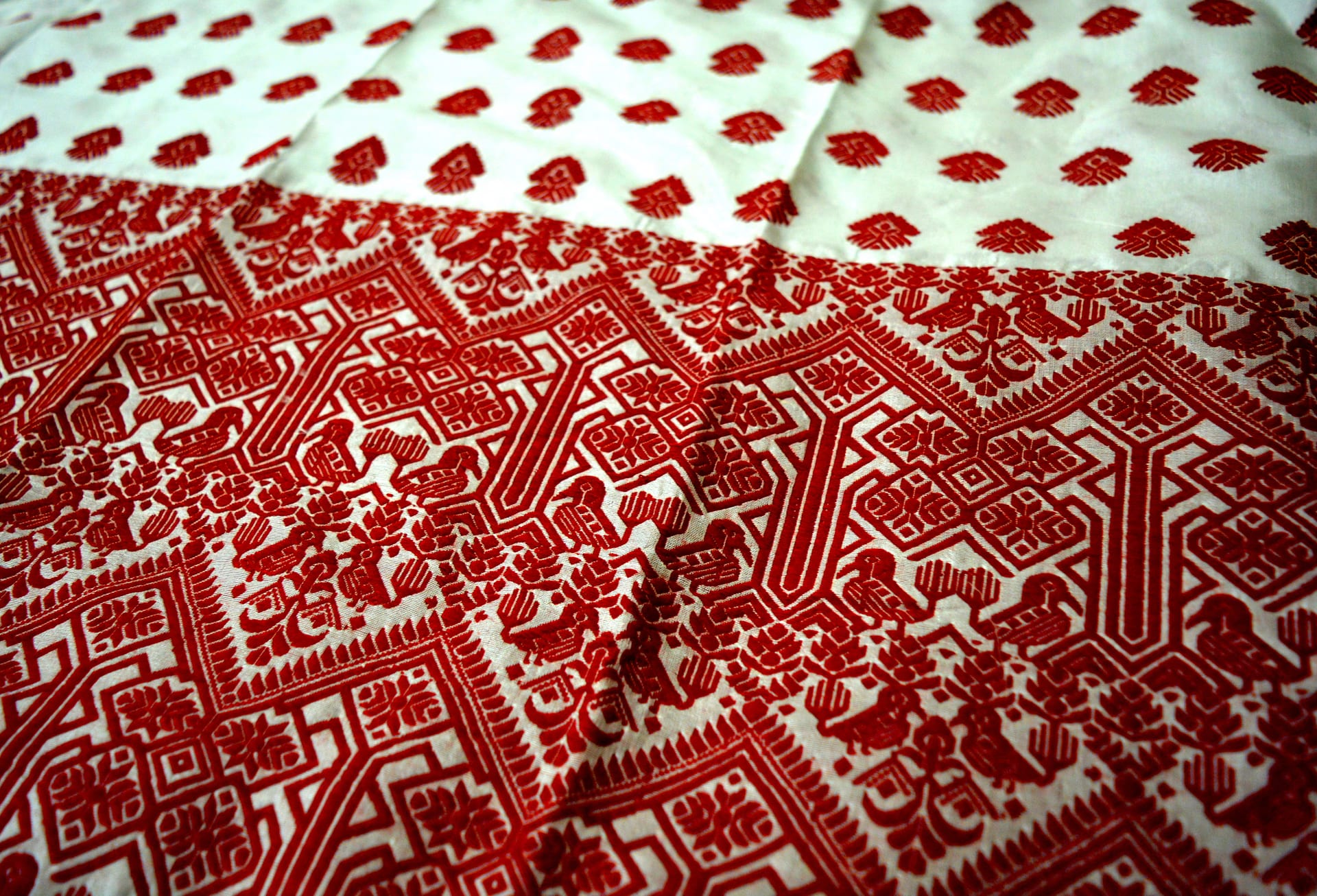
The cloth is composed in long horizontal bands running the length of the silk. Its subject is the boyhood and youth of Krishna among the cowherds of Vrindavan, from the tenth book of the Bhagavata Purana. That was the book Sankardev loved above all others and had himself turned into Assamese. One episode dominates the great length now in London, the subduing of the serpent Kaliya. Krishna dances in triumph on the many hoods of the snake he has driven from the poisoned river, and the image returns again and again down the cloth. Around it runs the wider cycle. Demons were sent into the pastures to kill the young Krishna, among them the crane-demon Bakasura, and he defeats each of them in turn. The cloth carries the Ras as well, the round dance Krishna dances with the cowherd women. Between the bands of story move rows of dancers, files of birds and animals, and tall flowering trees. The incarnations of Vishnu are set out along the silk and the sun-bird Garuda opens his wings across it, with patterned borders holding each scene in its own frame.
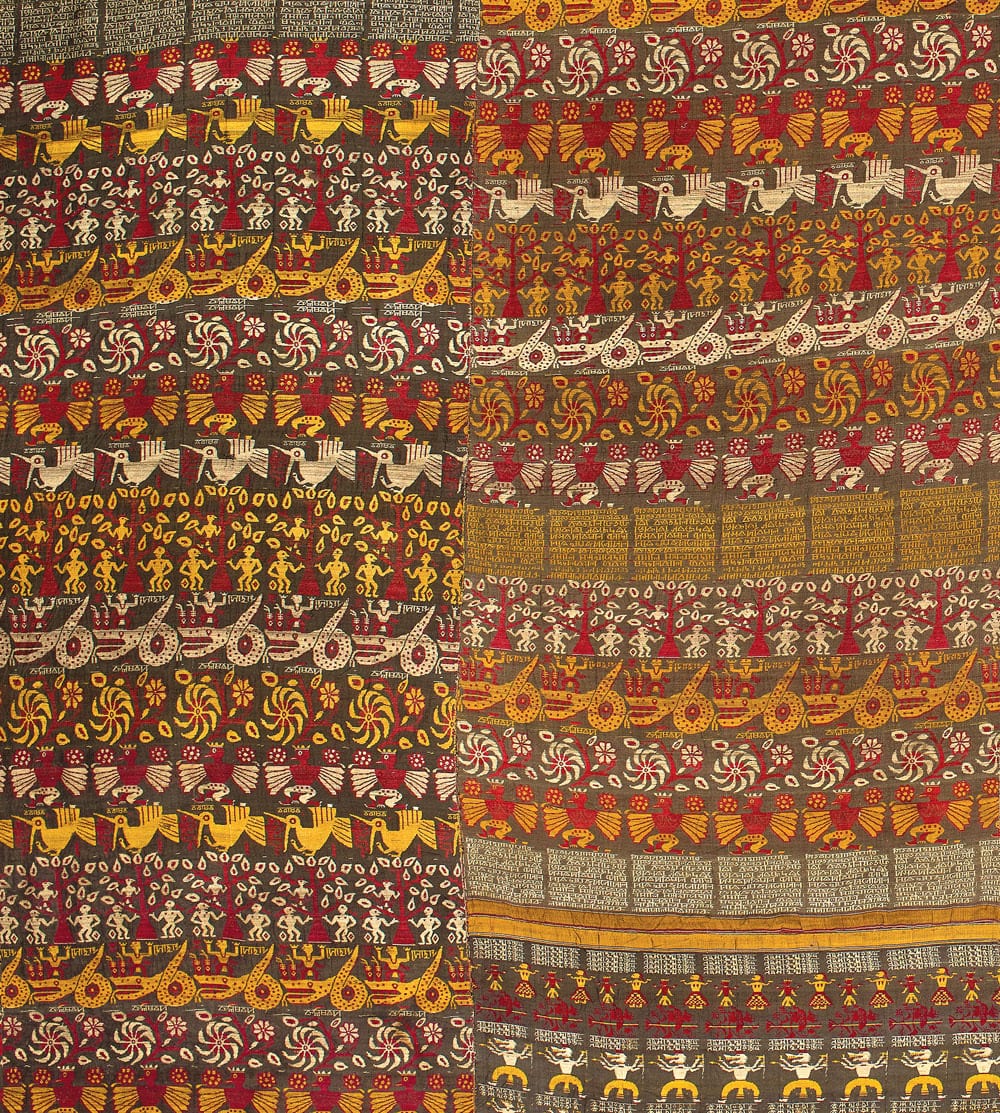
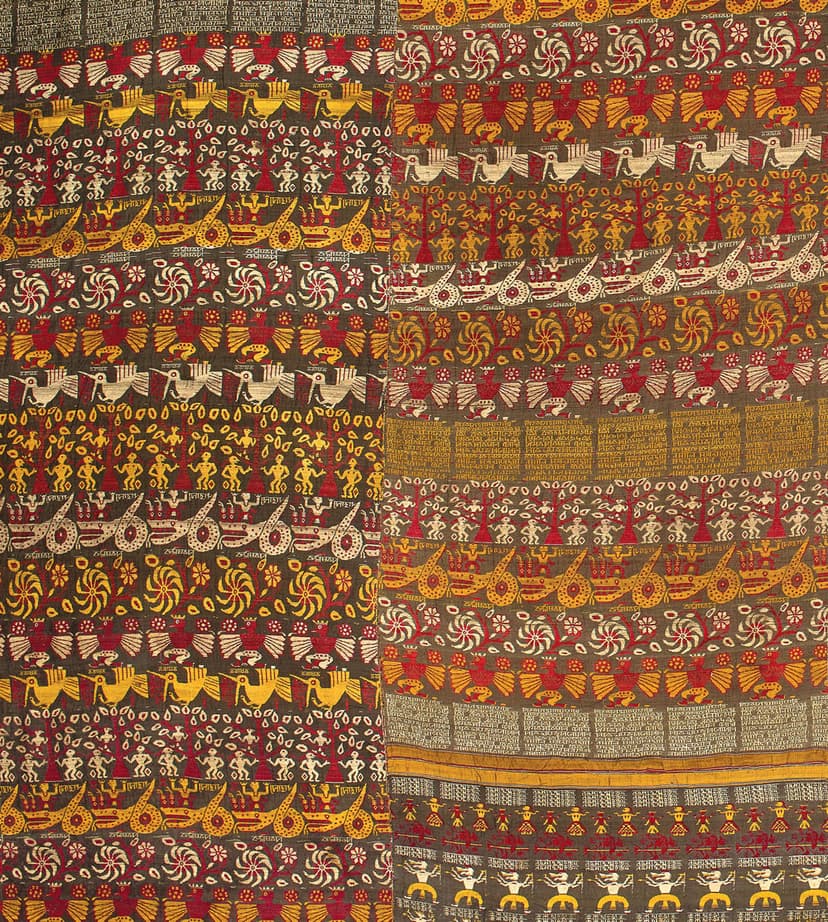
What sets the cloth apart from any painting of the same stories is that the words are in it too. Lines of Assamese script run through the fabric, woven in the thread itself and not added afterward. Short labels name the scenes for a reader who already knows them. Through the design run verses from Sankardev's own play on the Kaliya episode, so the silk carries the god in the saint's exact words. This is why those who know it call it a woven scripture rather than a woven picture. The script matters as much as the pictures do. Sacred writing in India was in Sanskrit, which almost nobody in the valley could read, and Sankardev wrote in Assamese instead. He turned much of the Bhagavata Purana into it himself. So a villager who could not read a line of Sanskrit could stand in front of this cloth and follow what it said.
Where the cloth is now
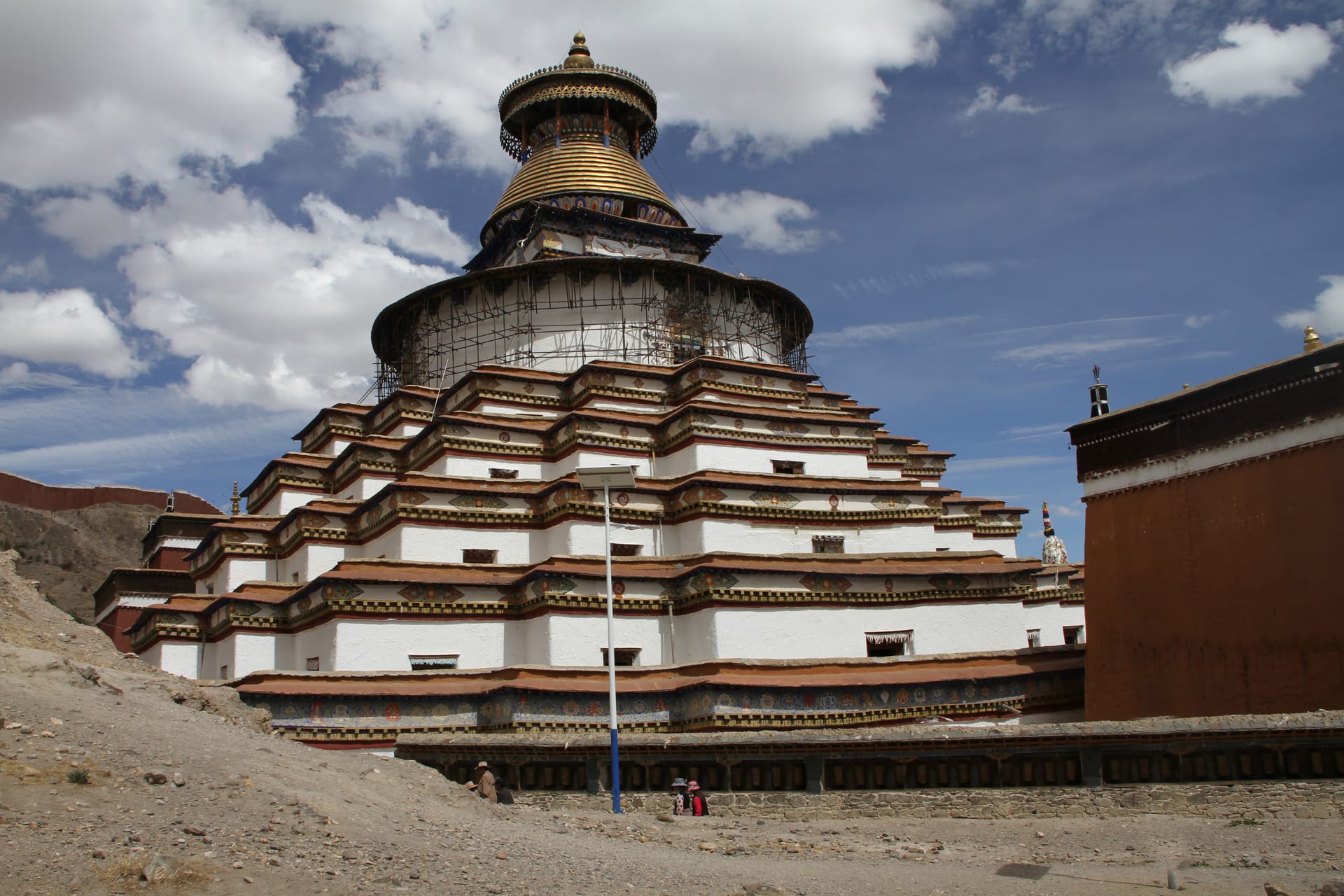
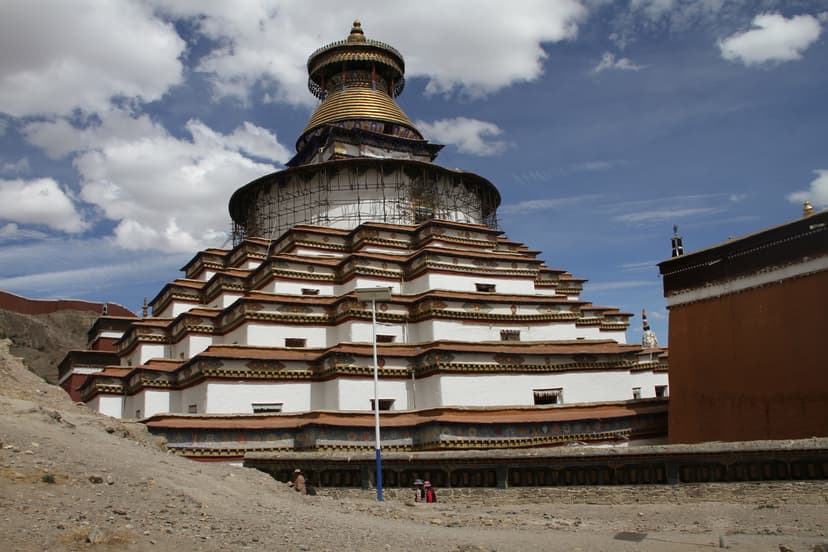
Then it left. Buddhist pilgrims carried it north out of Assam and over the passes into Tibet, and it travelled as twelve separate strips rather than as one hanging. The strips came to rest at the monastery of Gobshi, a little west of Gyantse on the trade road to Lhasa. The monks there valued the foreign silk without ever being able to read the Vaishnava poetry running through it. It was these monks who sewed the twelve strips together into the cloth that exists today, and then hung it in their own shrine. Tibet is the reason it survives at all. The silk kept dry and dark in the monastery lasted for centuries.
The cloth re-entered the wider world in 1904, in the baggage of empire. A British column under the Younghusband expedition marched on Lhasa. Perceval Landon, a correspondent of The Times of London travelling with it, gathered up the old Assamese silk among other Tibetan curiosities and carried it back to England. He handed it to the British Museum, which registered it in 1905. It was filed at first as Tibetan silk, because nobody there could place the dense weave or read the script worked into it. Only later was it recognised for what it was, a Vaishnava textile from the Brahmaputra valley, its origin betrayed by the Assamese script woven through the design. The museum does not date it to Sankardev's lifetime. It puts this cloth in the late seventeenth century and takes it to have been made in or for a sattra, which would make it a later cloth of the same tradition rather than the one the saint supervised. That London length is about nine and a half metres by two and a third, twelve narrow strips stitched into one cloth. Three bands of Chinese damask, yellow, orange and blue, were added along its top edge in Tibet, and above them a strip of Chinese brocade worked in gold with dragons chasing clouds. It is the largest surviving devotional textile of its kind anywhere, though not the oldest.
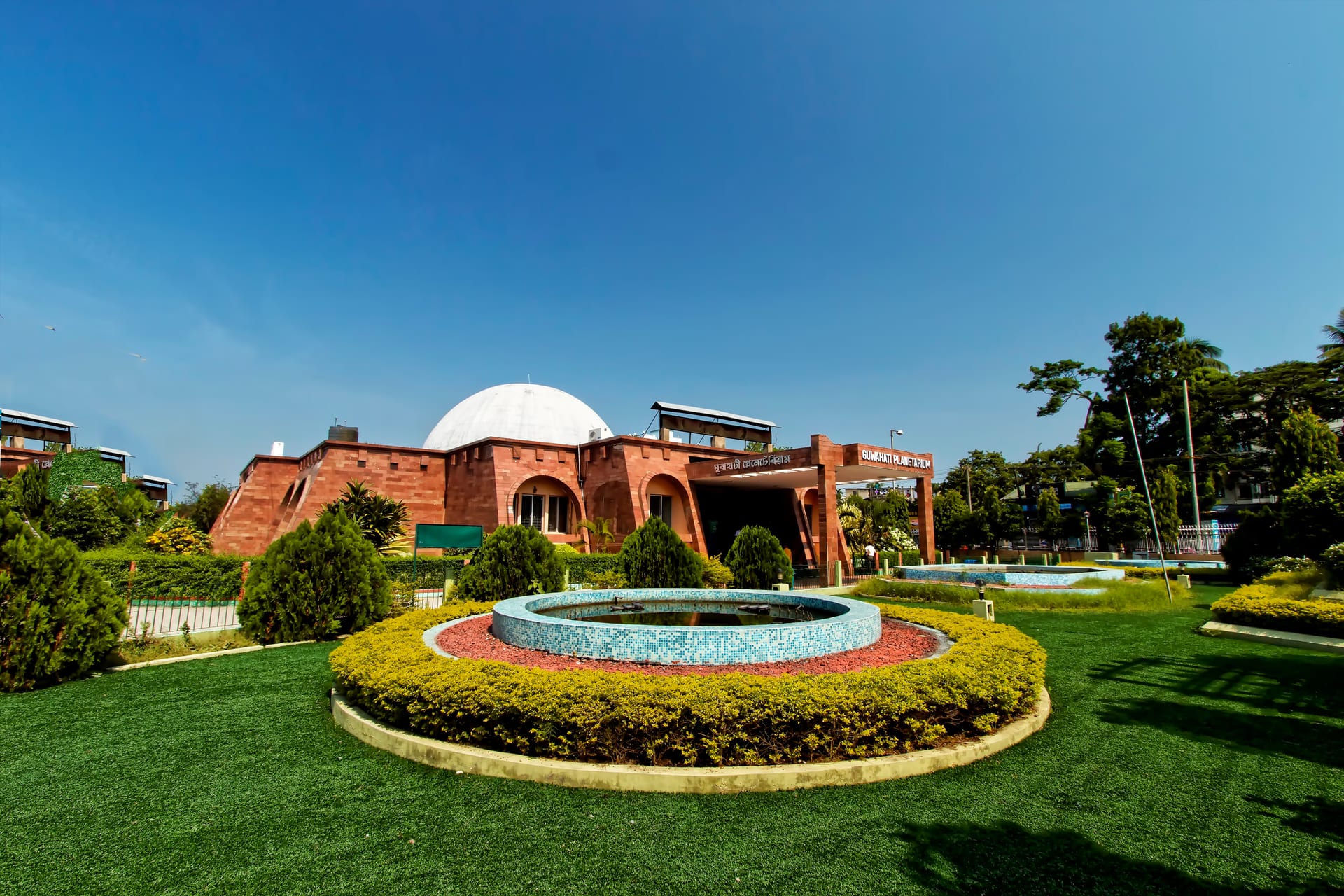
For most of a century the story rested there, the hanging lying in a case in Bloomsbury. Visitors mostly took it for an exotic curiosity from Tibet rather than the work of an Assamese saint and his weavers. That is now changing. On 17 November 2025 the chief minister of Assam signed a letter of intent with the British Museum in London. The loan is to run for eighteen months from 2027, on condition that Assam builds a climate-controlled museum in Guwahati to house it. The silk is fragile enough that the museum has said it can be on display for only six months of that, so this is a narrow window rather than a homecoming. Even so, more than a century after it reached London, the cloth will be unrolled within reach of the looms that made it.