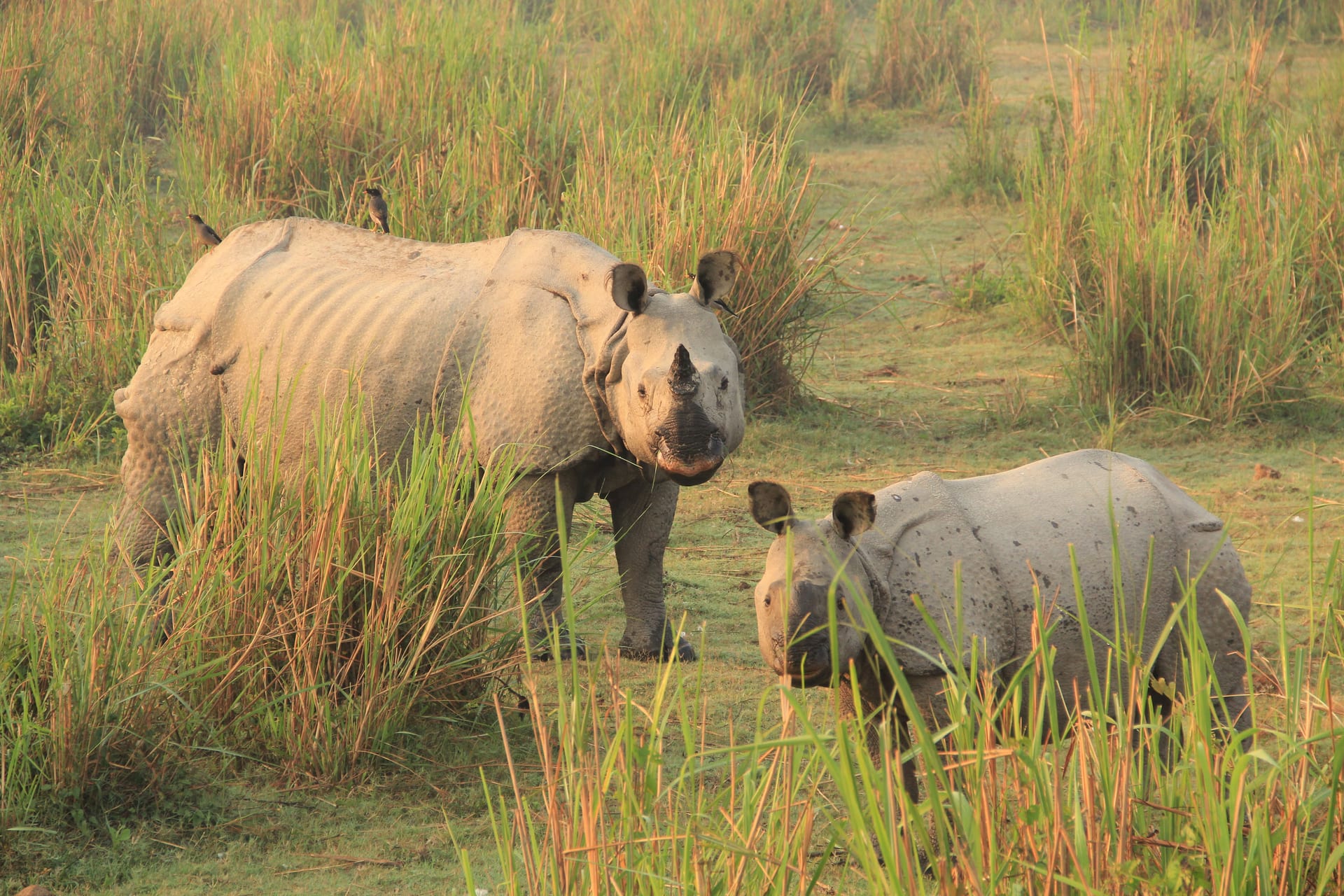
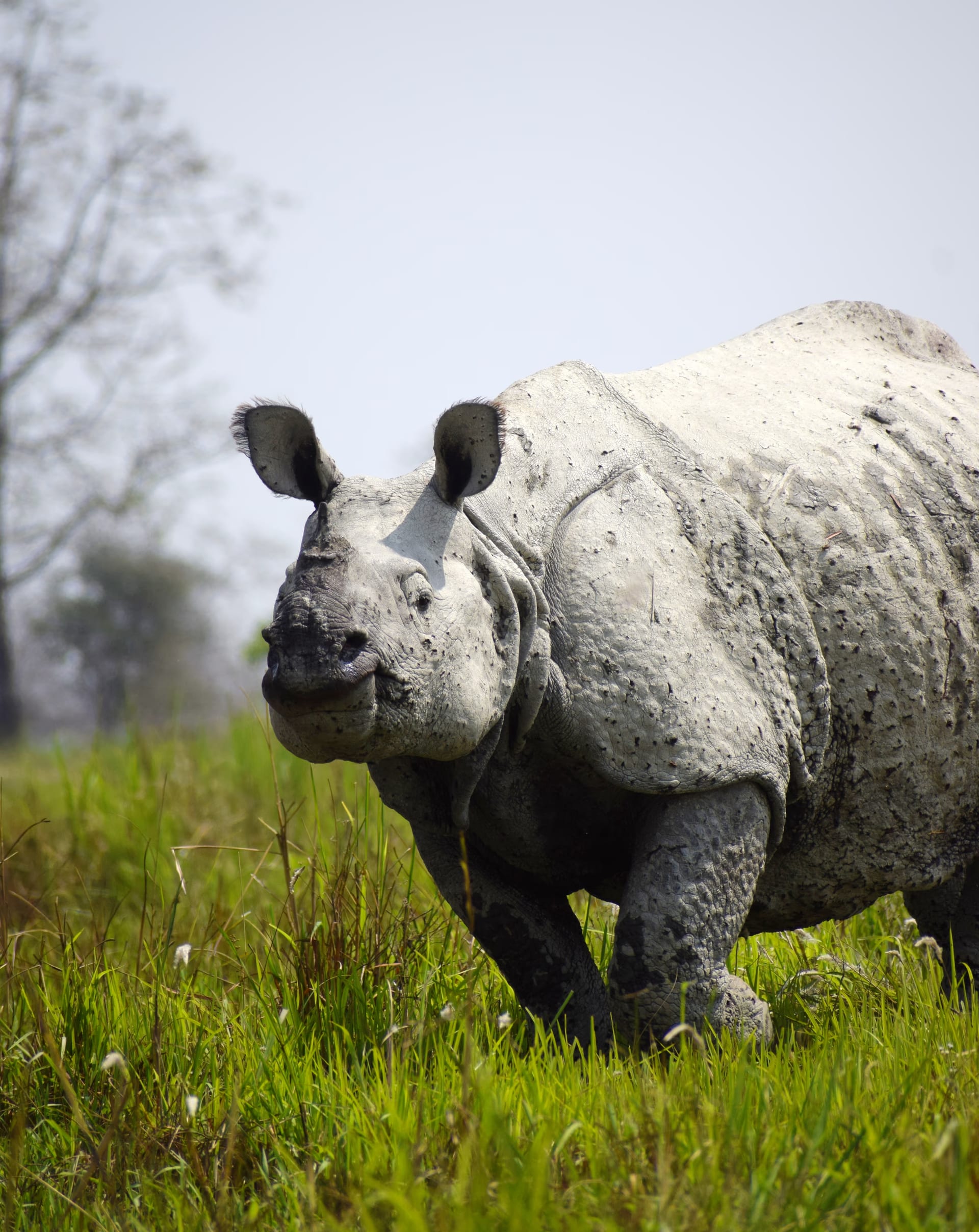
The greater one-horned rhinoceros weighs more than two tonnes. Its grey hide hangs in thick plated folds over the shoulders and haunches, and it carries a single blunt horn above small short-sighted eyes. The animal once grazed the whole northern plain of the subcontinent, along the Indus, the Ganga and the Brahmaputra. By 1900 it had been shot out of nearly all of that country. Perhaps a hundred or two were left alive in the world, in Assam and in the Nepal terai. Today there are about four thousand, and two-thirds of them stand in one flooded grassland on the Brahmaputra, Kaziranga. Most of what the species has regained was rebuilt from that one stretch of river.
How the rhino vanished
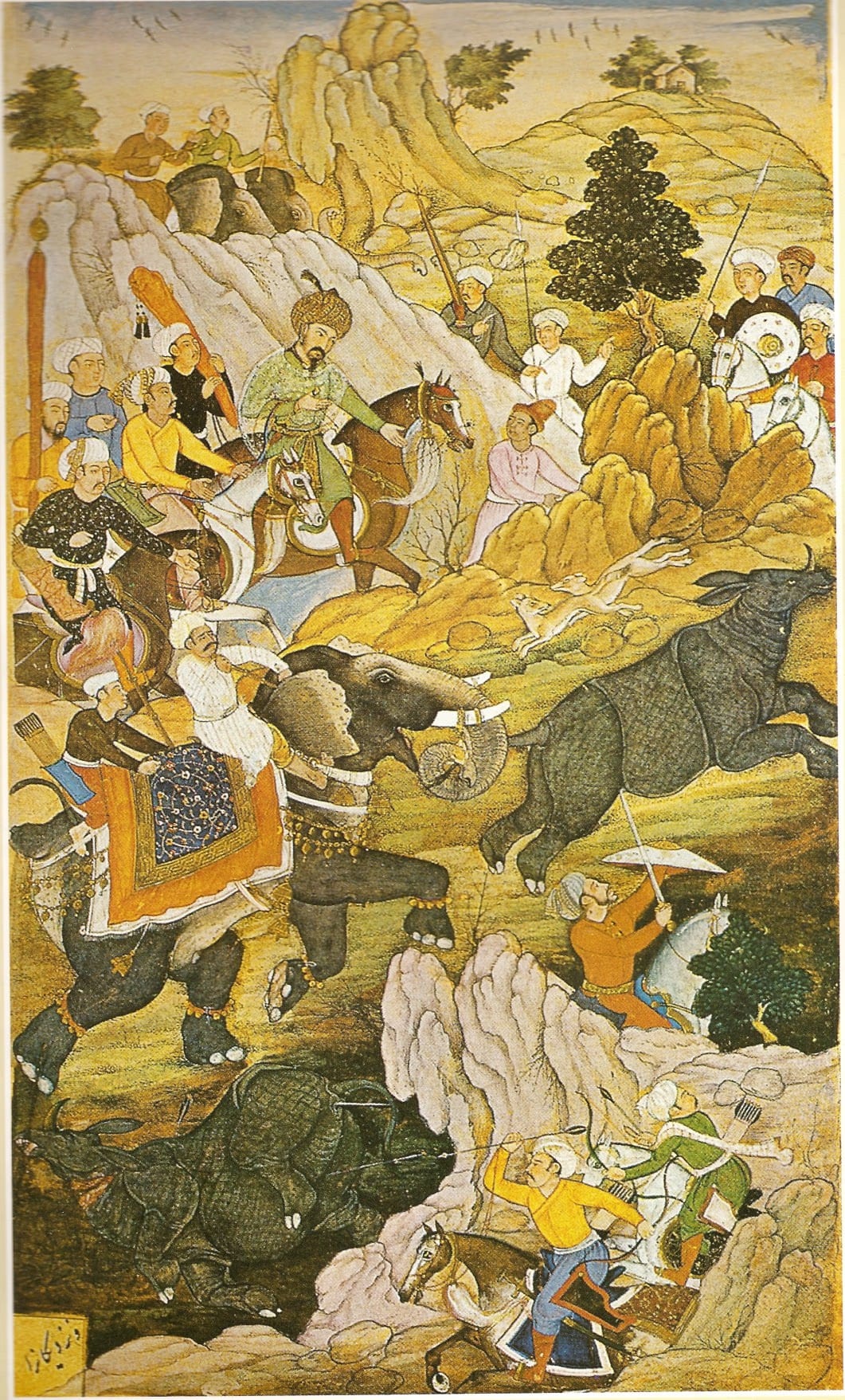
The rhino was never a rare animal. The Mughal emperor Babur hunted it in the jungles near Peshawar and wrote the hunts down in his memoirs. It lived across Bengal, the Nepal terai and the length of the Brahmaputra valley. Then, through the nineteenth century, two things went against it at once. The wet grassland it grazes was drained and broken up for farmland, and in upper Assam it was cleared for the new colonial tea estates. At the same time the animal itself was shot without limit, as sport, as a crop-raiding pest, and above all for its horn.

The collapse was fast and it was close to total. By about 1900 the rhino was gone from almost its entire range. Kaziranga, the country the animal was most famous for, was down to roughly a dozen animals by 1908. An animal that had grazed two thousand kilometres of river plain could be counted on two hands in the best ground it had left. The rescue began at that low point, and it began by accident. Mary Curzon, wife of Lord Curzon, the British Viceroy of India, came to Kaziranga in 1904 to see the rhinoceros of Assam and could not find a single one.


She told her husband what she had failed to see. Out of that came the first protection the animal had ever had. On the first of June 1905 the government notified a reserve forest of 232 square kilometres of grass and swamp. The notification banned hunting and did very little else, with no guards worth the name and no protection regime behind it. Even so, the rhino had at last been given ground to stand on.
“I have come back without seeing one. It seems they are not to be found here either. Something must be done.”
What the rhino is up against
The hunting ban of 1905 did not stop the shooting. It only made the shooting a crime. The horn is keratin, the same material as a fingernail, and no medicinal property of it has ever been demonstrated. Distant markets price it above gold anyway, mostly for use in traditional medicine, and a single poached horn can fetch a sum that would remake a poor family for a generation. So the animal the state spends a fortune protecting is still worth more dead than alive to anyone desperate or organised enough to take it.

The killing comes in waves rather than at a steady rate. Poachers took 692 rhinos across India between 1980 and 1993, and 567 in Kaziranga alone between 1980 and 2005. Very little of that was the work of a lone hunter with a rifle. The trade runs on networks that reach far past the valley, out to the markets that set the price. The man in the grass with the gun is the cheapest and most replaceable part of it.
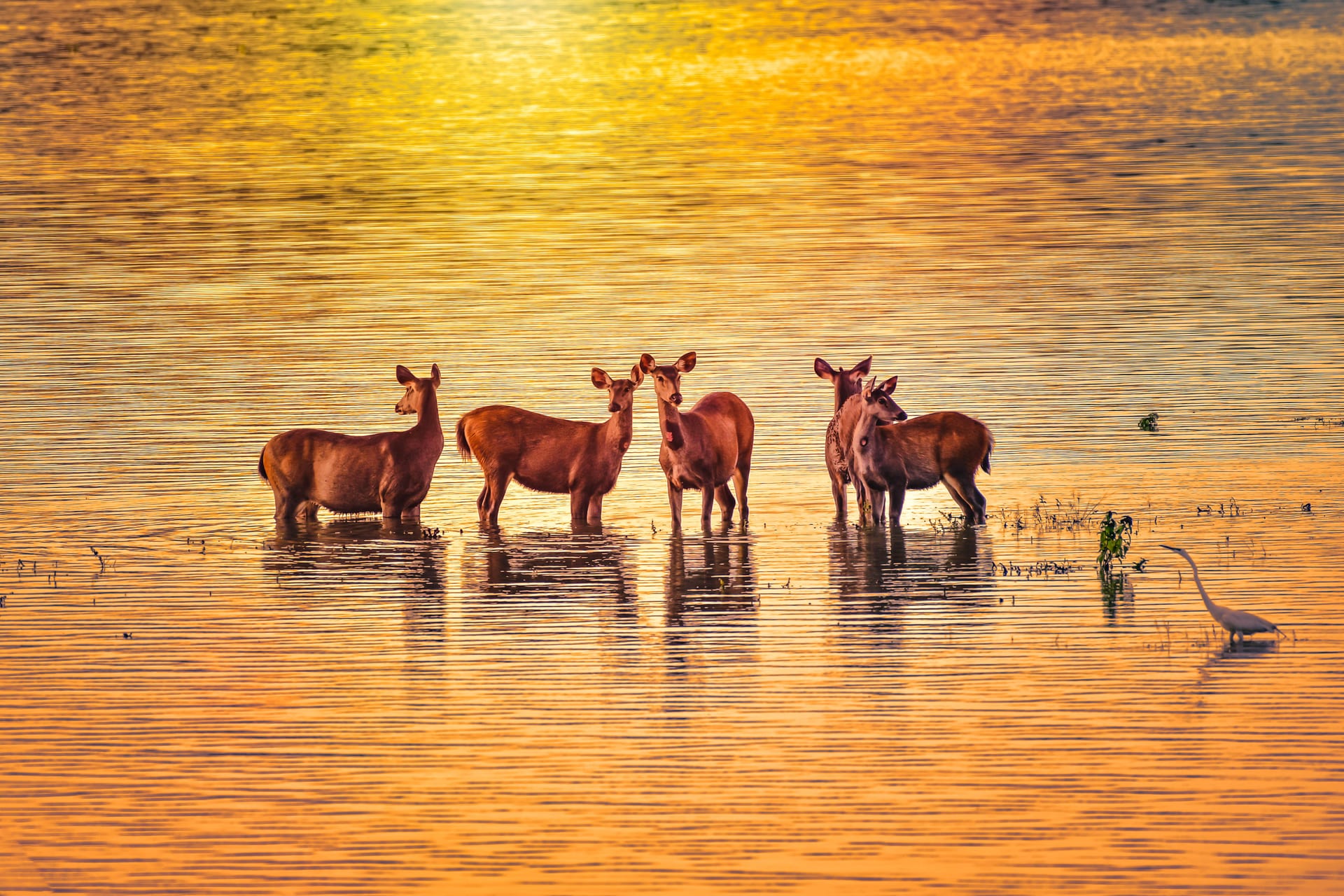
The horn is not the only thing that kills rhinos here. The river that made the grassland kills them too. Each monsoon the Brahmaputra spills over most of Kaziranga, and the animals must swim for the high ground of the Karbi hills to the south. To reach those hills they have to cross the national highway that skirts the park, and exhausted animals are struck by traffic in the dark. In the flood of 2012 some 540 animals died in the park, hog deer for the most part, along with thirteen rhinos. That same flood is also the reason Kaziranga exists. It lays down the silt, keeps the grass open and rich, and holds back the forest that would otherwise close over the grazing.

How the rhino was brought back
Against the horn and the flood together, the animal came back. It came back by three means, and none of them was luck. They were a law that hardened over a century, a guard force that held the ground season after season, and a deliberate scattering of the animal across more than one grassland.
The first effort was the law, and it took a century to grow teeth. The reserve of 1905 was little more than a piece of paper. Kaziranga was made a game sanctuary in 1916, which finally put paid staff behind the ban. It became a wildlife sanctuary in 1950, a national park on the eleventh of February 1974, a UNESCO World Heritage Site in 1985 and a tiger reserve in 2007. Each step brought more money, more staff and more legal force onto the same stretch of grass.
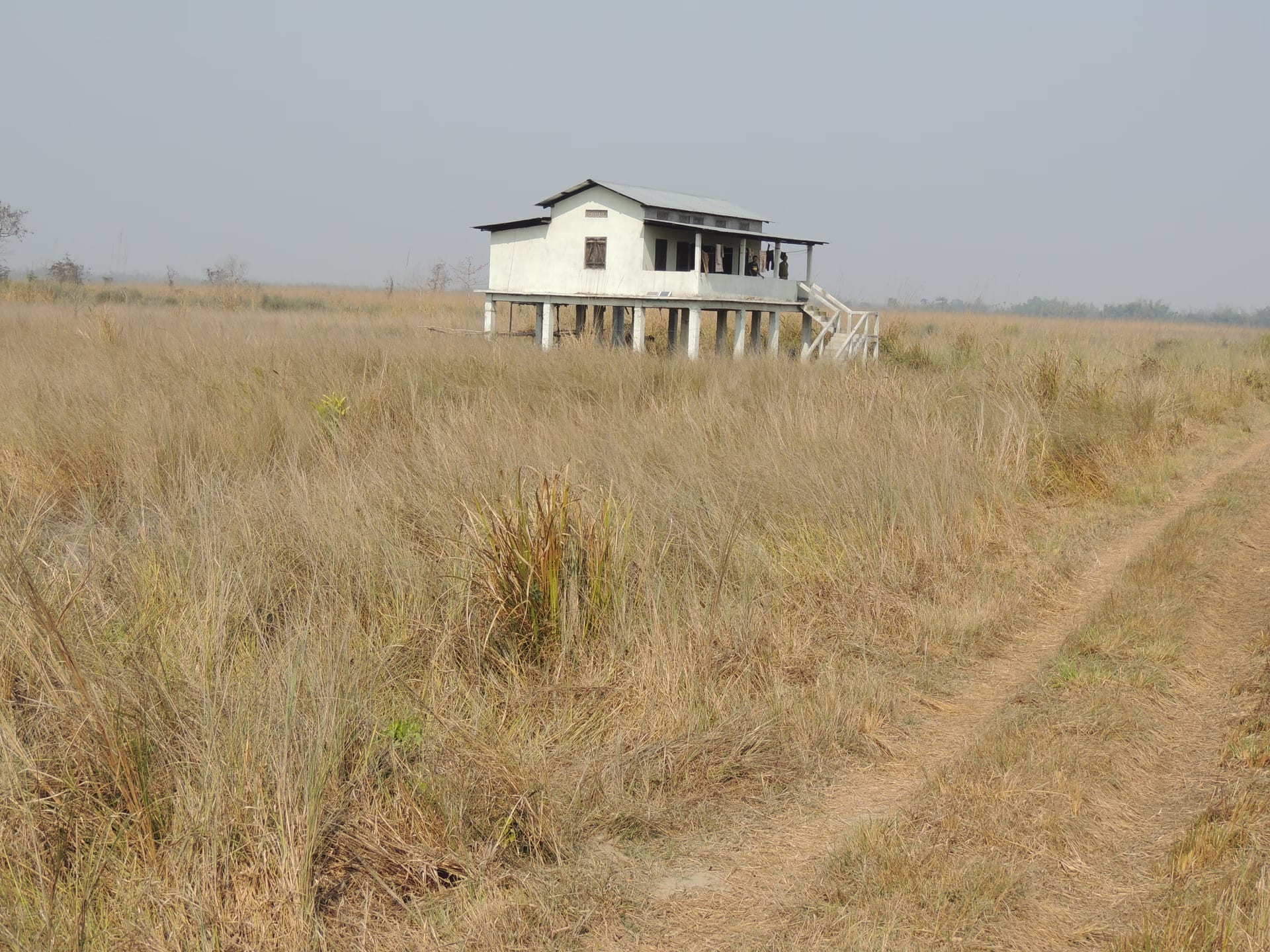
The second effort was the guards on the ground. What stands between the rhino and the poaching networks is the forest guard. The guards work on poor pay out of a web of small anti-poaching camps scattered through the park. The grass they patrol is high enough that a person cannot see ten feet through it, and the animal they are protecting cannot tell a guard from a killer. They walk it, and they ride the department's own elephants through grass no vehicle can enter. In the flood months they patrol by boat and live on raised platforms, because the ground they defend is under water.

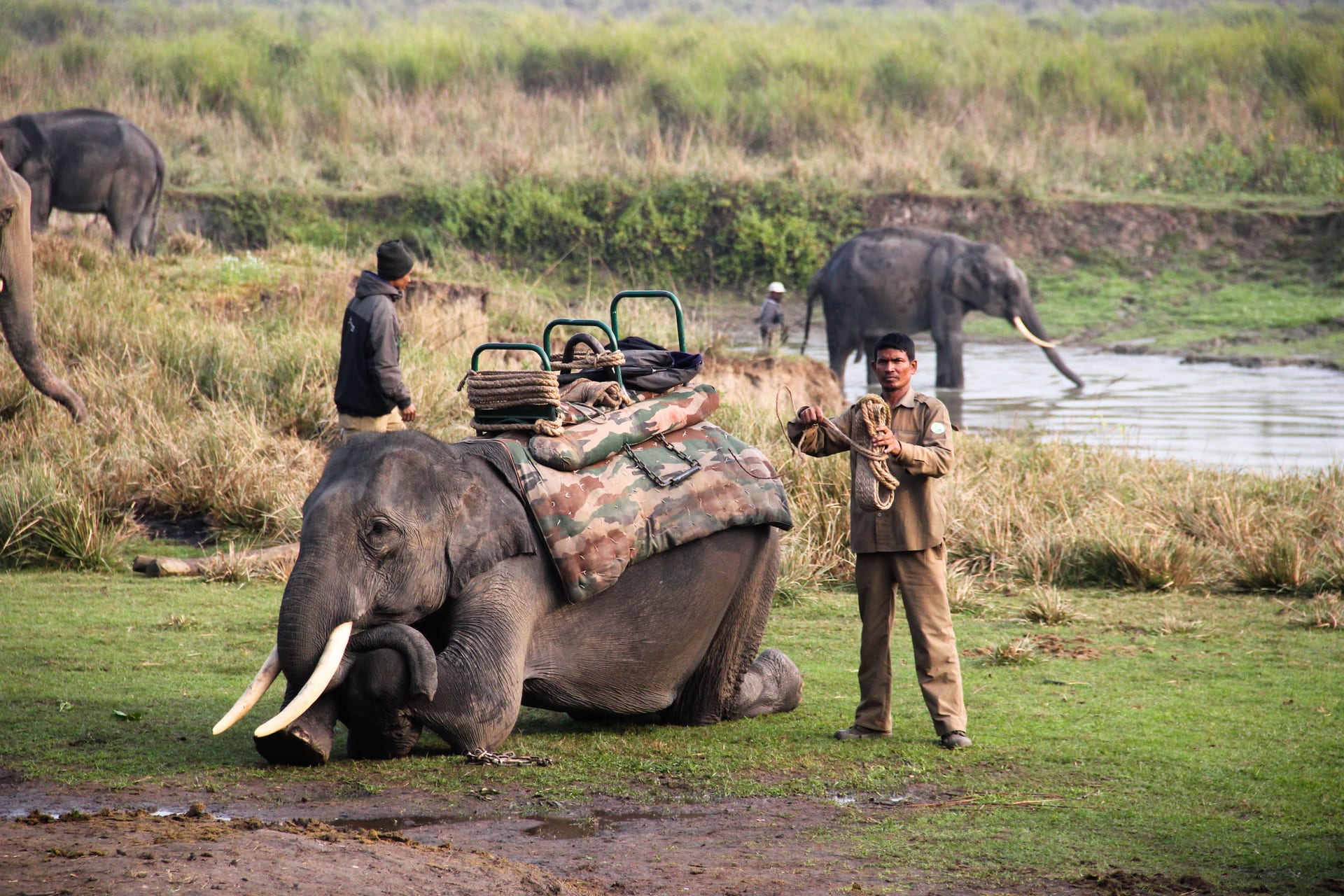

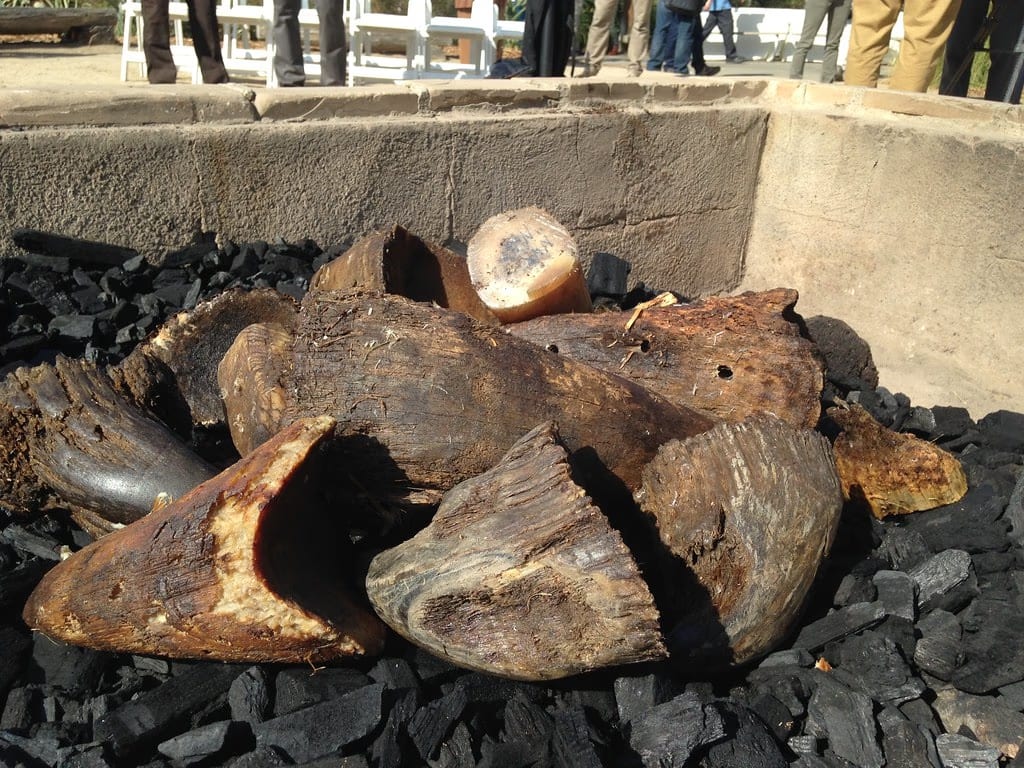
The guard force has hardened as the poaching gangs have. Drones have flown over the grass since 2013, and the department pays informants in the villages around the park for word of poachers on the move. The state has also gone after the belief that drives the trade. In September 2021 it burned 2,479 seized horns in public furnaces at Bokakhat, beside Kaziranga, to show that the thing men kill for is worth nothing. Kaziranga now runs one of the toughest protection regimes of any park on earth, including a readiness to shoot suspected poachers on sight.
The third effort, after the law and the guards, was to spread the animal out so that no single grassland held it all. One stronghold is one place to lose everything. A single catastrophic flood, one epidemic or one collapse of protection could take a species kept in one grassland. So in 2005 the Assam Forest Department, the International Rhino Foundation, WWF and their partners launched Indian Rhino Vision 2020. The aim was 3,000 rhinos in the state, held across seven protected areas instead of one. That target was not met. When the programme closed in 2021, rhinos lived in only four of the seven, Kaziranga, Pobitora, Orang and Manas, and the plan to stock Dibru-Saikhowa never happened at all. The heart of it was translocation. The animals came from the two parks that held more than they comfortably could, Kaziranga and Pobitora. Pobitora is a small sanctuary an hour from Guwahati, and it packs more rhinos into a square kilometre than any other ground on earth, Kaziranga included. That crowding is why both parks give animals away rather than take them in.
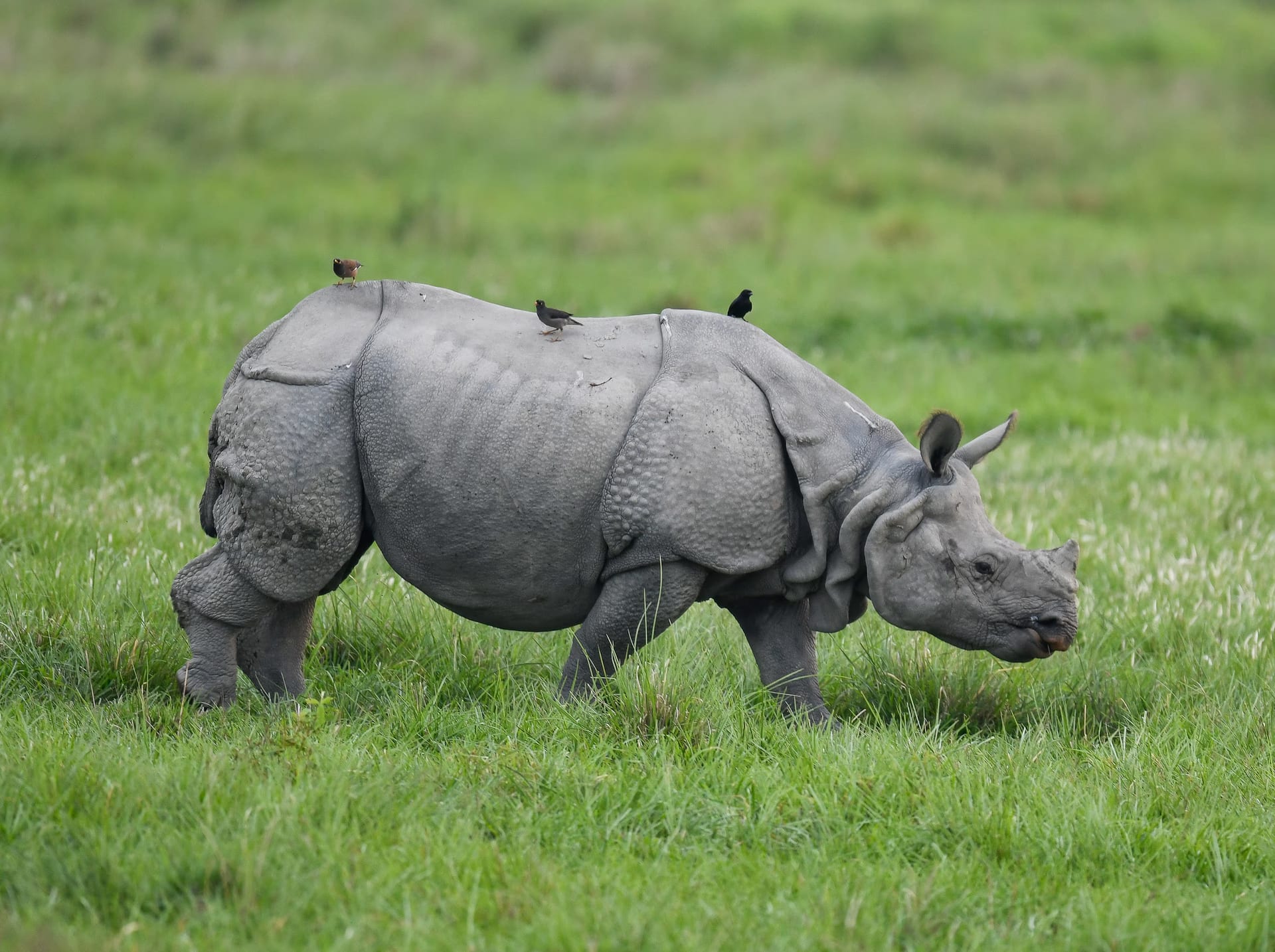

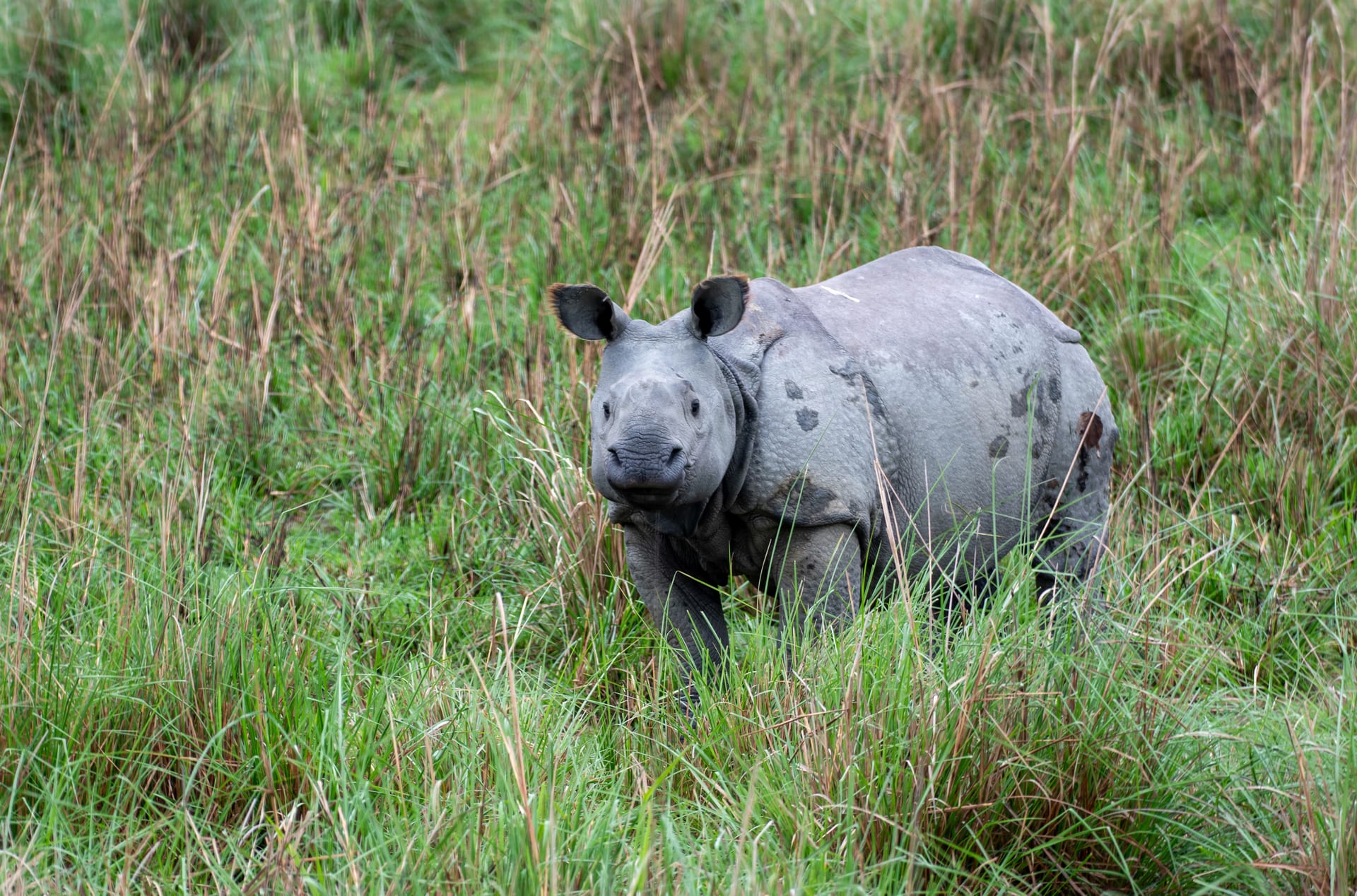

The state's other three rhino grounds are Orang on the north bank, Manas on the Bhutan border and Laokhowa on the south bank. Orang and Manas were two of the four that held rhinos when the programme closed in 2021. Laokhowa was still empty then, and it got its animals back two years later in a way nobody had planned. The census of 2022 counted 2,895 rhinos in Assam, of which Orang held 125, Pobitora 107 and Manas 50. Orang is the only rhino refuge on the north bank of the Brahmaputra. That matters, because a flood or a disease outbreak on the south bank cannot easily reach a herd across the water.
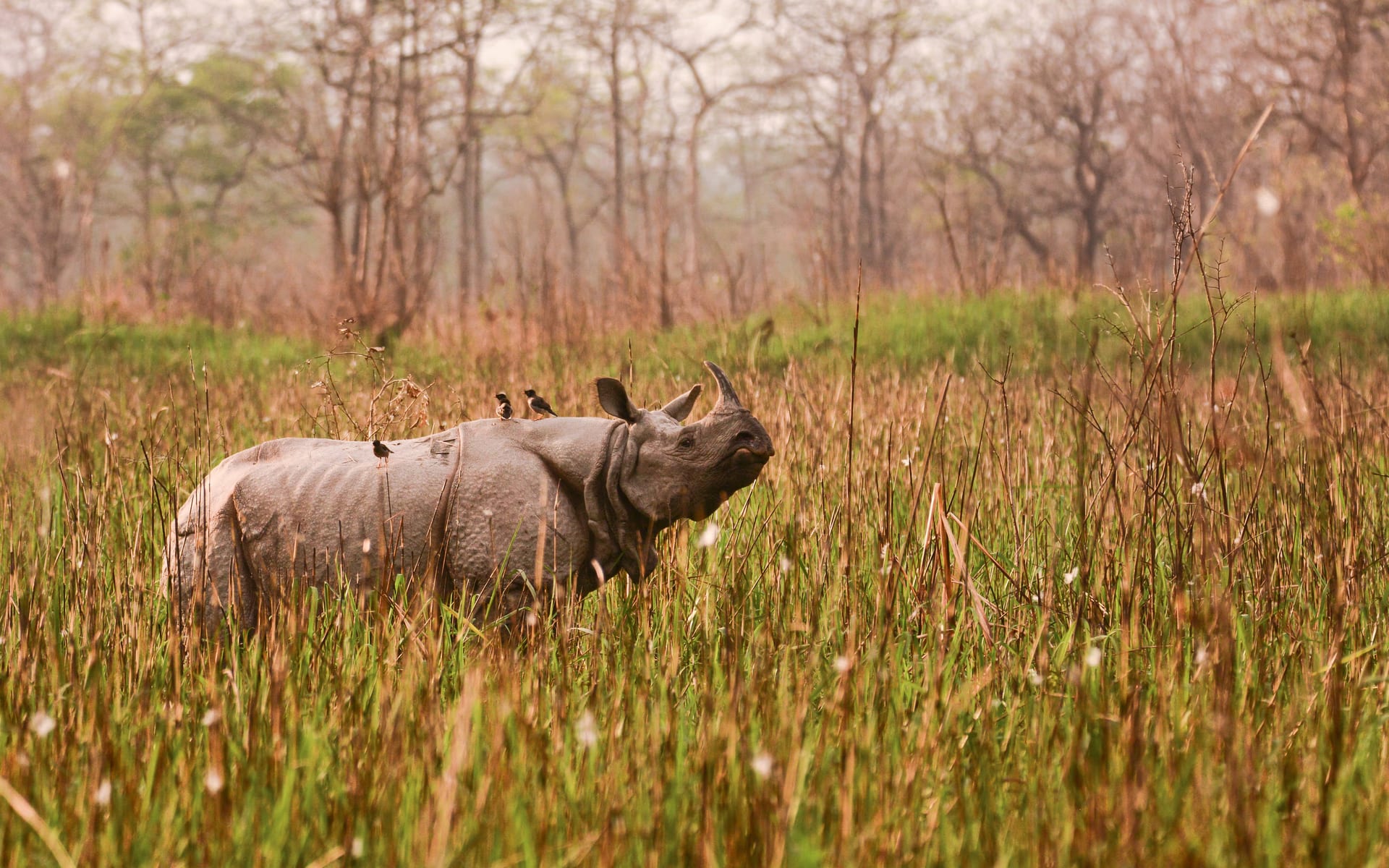

Manas, on the Bhutan border, lost all of its hundred or so rhinos to poaching through the unrest of the 1980s and 1990s. The last of them were gone by about 2000. The rebuilding began in 2006, with orphaned calves hand-raised at the rescue centre near Kaziranga and released into a fenced enclosure inside the park. Wild adults followed from April 2008. Twenty-two of them were carried in before the programme closed in April 2021, twelve from Pobitora and ten from Kaziranga.
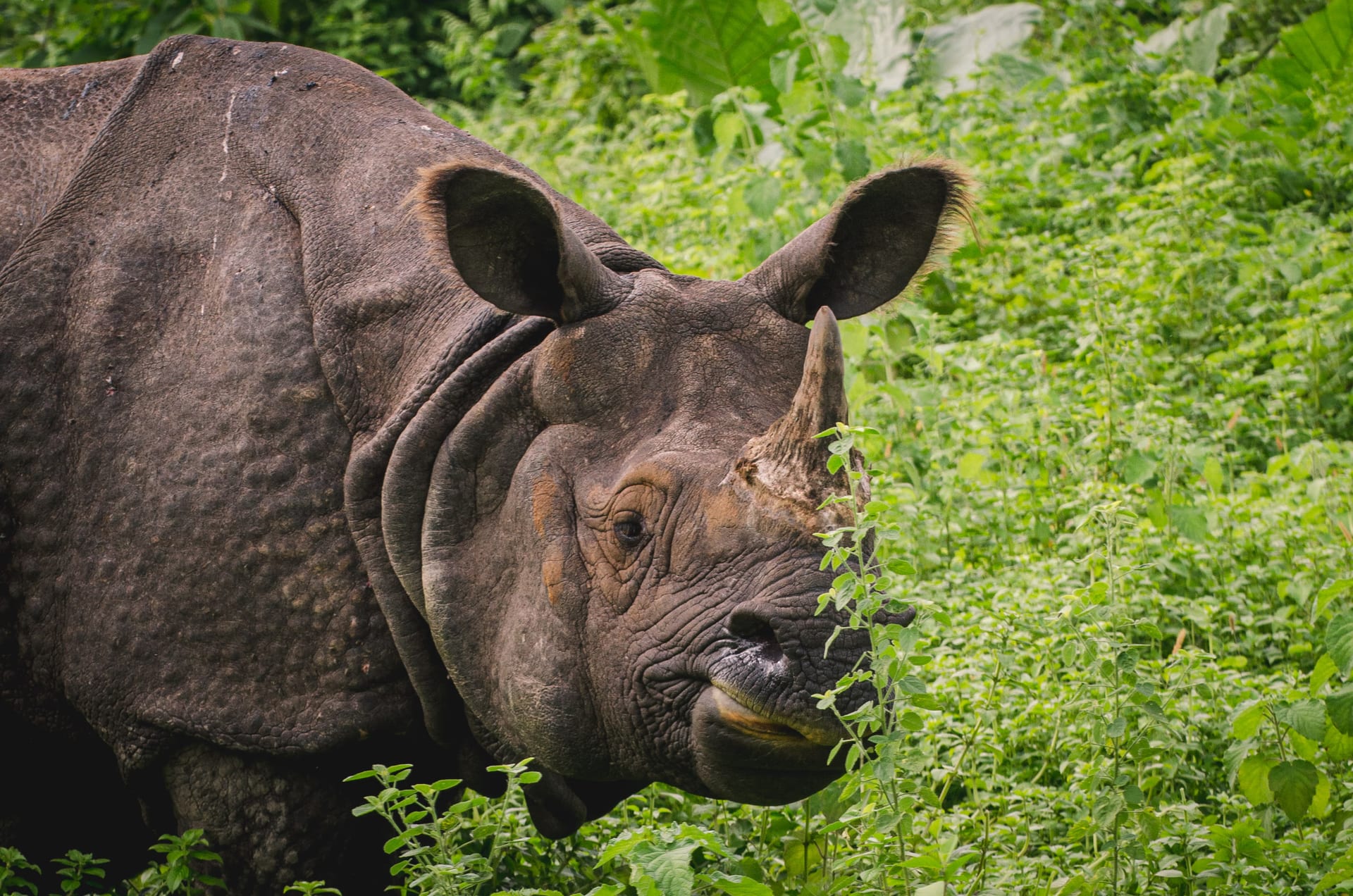

Manas is the proof that a population can be rebuilt from nothing at all. The rebuilding held because the men who had emptied the forest changed sides and became its guards, which is a story of its own.
The hardest lesson was written on the south bank at Laokhowa. In the disorder of 1983 poachers fell on the sanctuary and shot out a herd of some seventy animals. The last rhino there was recorded in 1991, and the grassland stood empty of them for four decades. Then, in 2023 and 2024, wild rhinos crossed back into Laokhowa on their own feet, along the river corridors that connect it to Orang and Kaziranga. Laokhowa and neighbouring Bura Chapori are now being readied to hold a breeding herd again. That makes Laokhowa the fifth of the seven to carry rhinos.
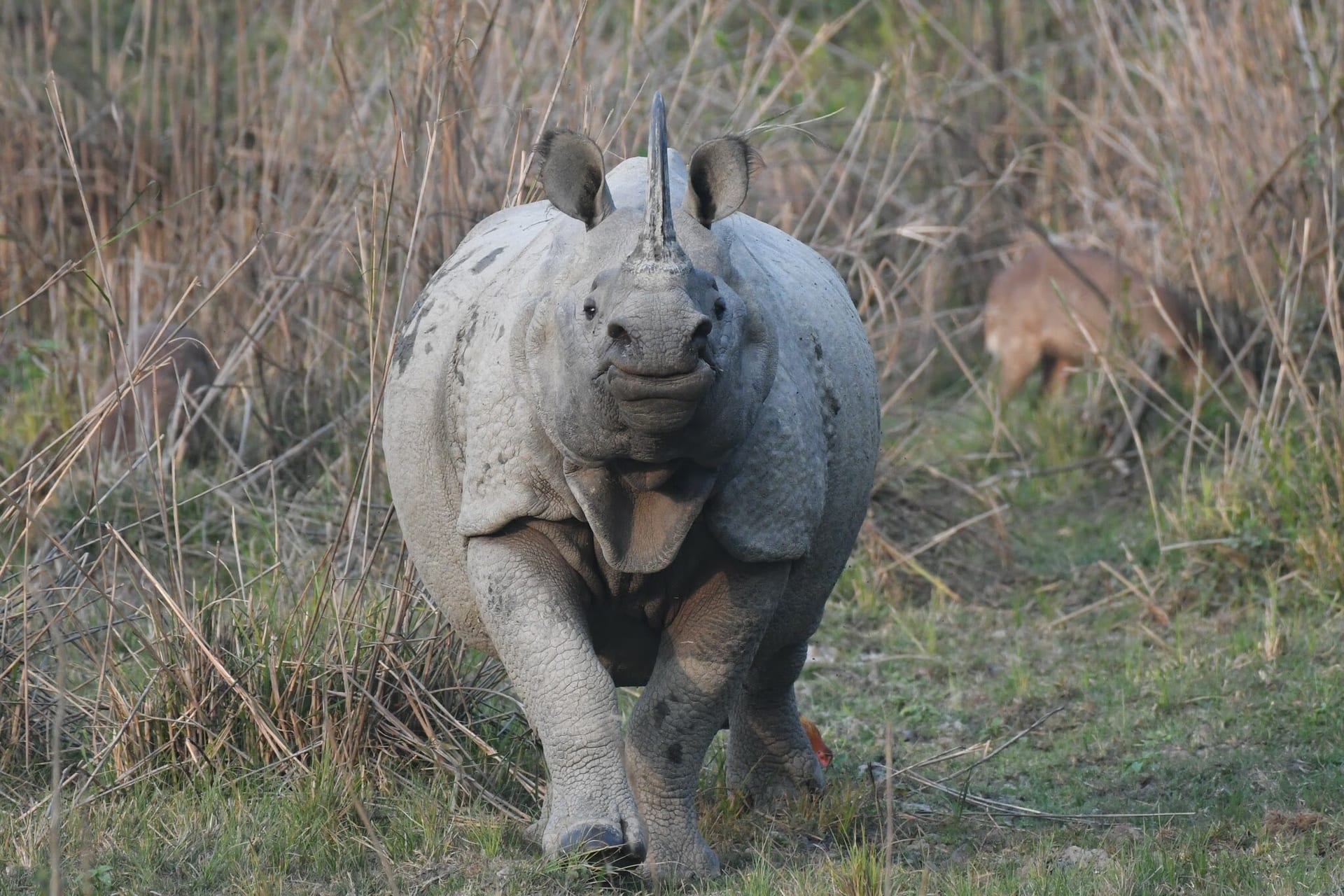

Laokhowa is the argument for the whole strategy. A grassland can be emptied of every rhino in it in a single season of disorder. Filling it again takes forty years and animals walking in from somewhere else. There has to be a somewhere else.
The law, the guards and the scattering have worked together. Assam lost no rhinos at all to poaching in 2022, its first clean year in over four decades. The Kaziranga population climbed decade by decade from that dozen of 1908, past a thousand, past two thousand, to 2,613 at the census of 2022. That was two hundred more than the count four years before. It is the largest population of the species anywhere on earth. In 2008 the IUCN moved the greater one-horned rhino down from Endangered to Vulnerable, the only large mammal in Asia ever downlisted that way. None of that has made the animal safe. The horn still carries its price in the same distant markets, the floods are getting worse rather than better, and a clean year is a year of work rather than a settlement. The rhino is not out of danger. It is only no longer disappearing. That much took a century of law, of guards, and of animals carried from one grassland to another.