The Brahmaputra valley narrows as it runs west toward Bengal. There a line of rivers comes down out of Bhutan and the Himalaya to join it, the Sankosh, the Raidak, the Torsa. The country they cross is the western doorway of the valley. An army coming out of Bengal has to pass through it to reach anything upstream. For most of the fifteenth century that doorway was held by the strongest kingdom the western valley had raised since ancient Kamarupa broke apart. This was Kamata, ruled by the Khen kings from a fortress-capital so large that its earthworks still run for miles across open country. In 1498 Kamata met the army of the sultan of Bengal.
The fortress at the gate
Kamata was older than the Khen. After Kamarupa broke apart, the western country spent generations passing among short-lived houses. The turn came in the middle of the thirteenth century. A king called Sandhya beat off a Bengal army and moved his seat west to a new fortress at Kamatapur, on the Cooch Behar plains. He took the title Kamateswar, lord of Kamata. That is the throne the Khen took over two centuries later.
They were three kings, Niladhwaj, his son Chakradhwaj, and last of all Nilambar, and where they came from is argued to this day. The likeliest reading makes them an indigenous house of the hill country rather than kin of the Koch who came after. What is clear is where they did not look for their right to rule. Earlier kings of the valley had traced theirs back to Naraka, the demon-king of the oldest legend of all, and the Khen claimed no descent from him.
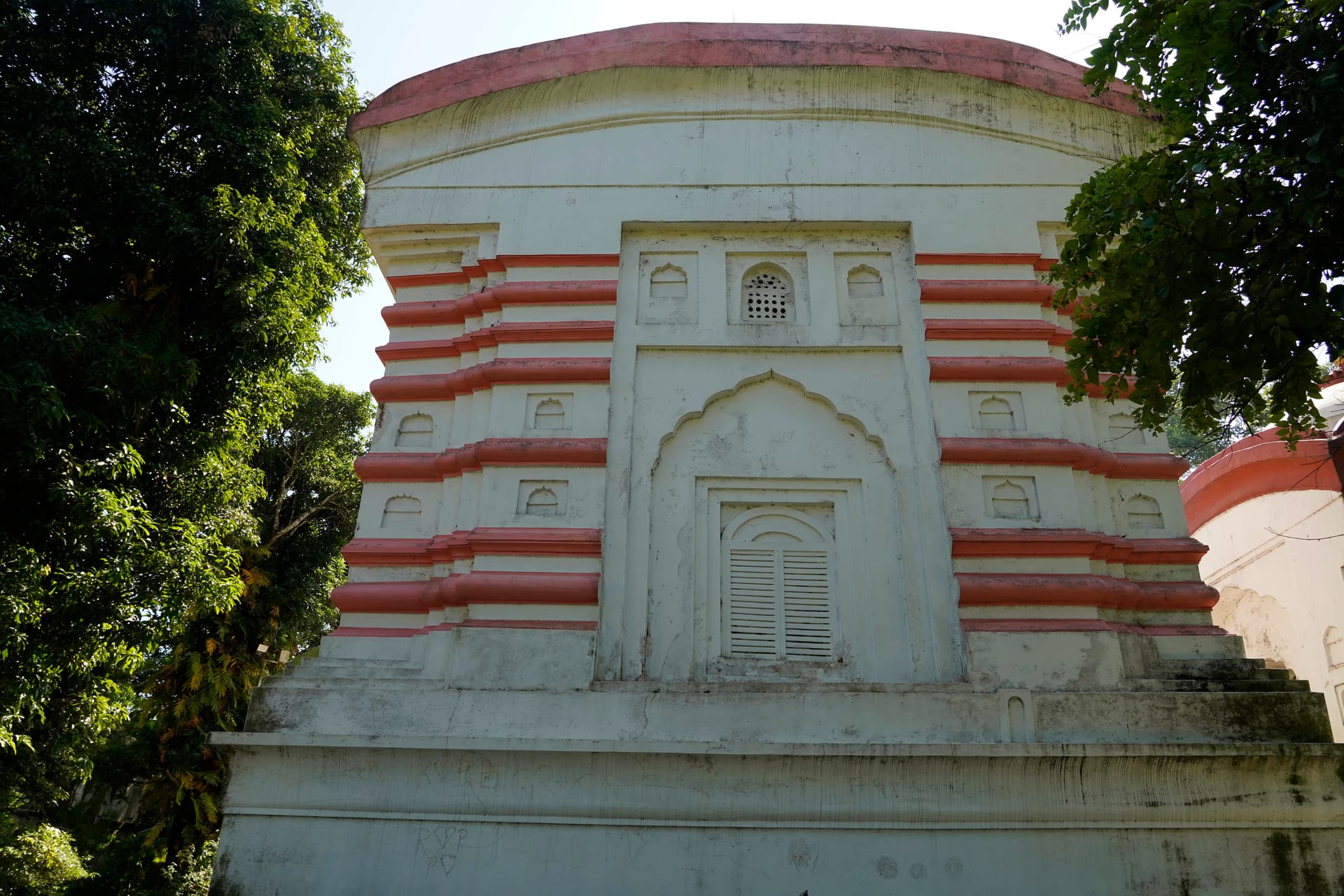
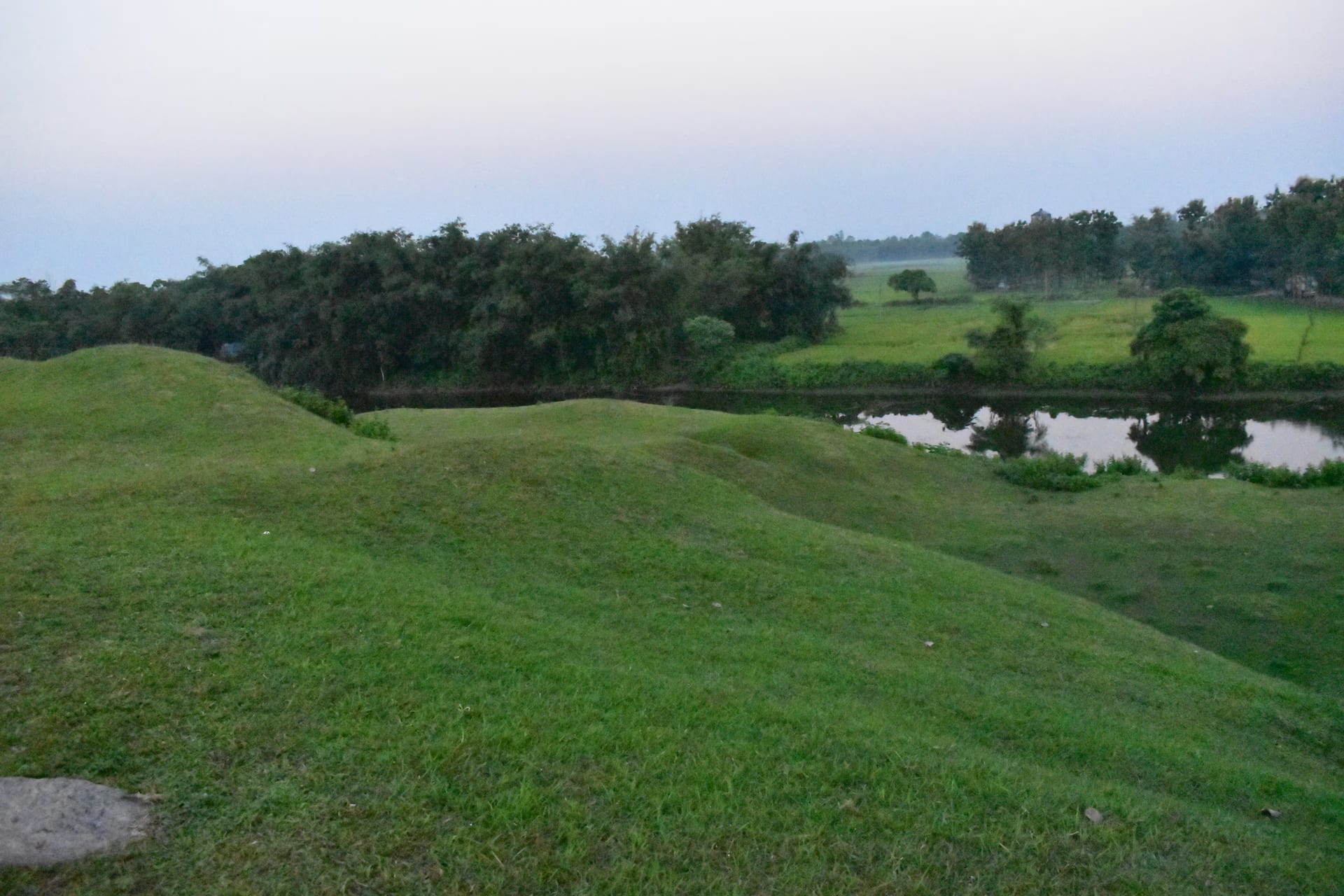
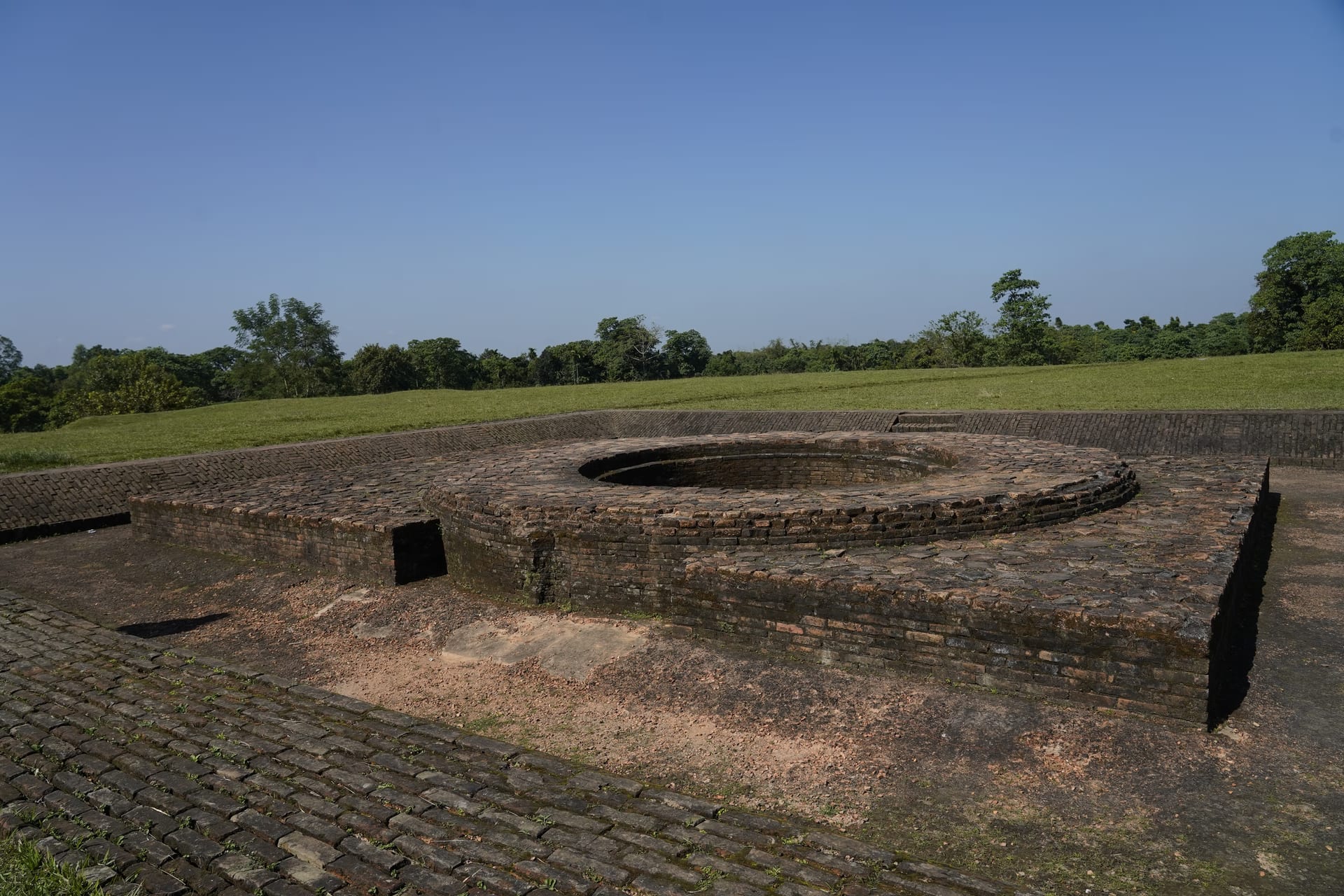
The Khen looked instead to the ground under their feet. They took the goddess Kamateshwari for their own and set her shrine beside the capital. The seat of the kingdom and the seat of its deity stood together. It was a way of saying they were a country in their own right, named for its goddess, and the heirs of nobody. Under the Khen the kingdom reached its widest span, and Kamatapur was rebuilt to match it. They did not raise the city from nothing. What Sandhya had founded they enlarged and thickened, to command the corridor and to overawe. A great bank and a wide moat enclosed the town, and ramparts of earth and brick ran in a circuit around it. The defences were laid in depth.

The sultan who looked east
Alauddin Husain Shah took the throne of Bengal in 1494, rising through the court of the sultan he replaced. The line he founded would hold the country for most of a century. He is remembered as the greatest of Bengal’s independent sultans, and such a ruler looks for room to grow. He looked east, at the rich Kamata country and the road beyond it into the valley. He was not the first to try it. Bakhtiyar Khalji had taken a Turkic column through this corridor in 1206 and lost it in the hills. The Lakhnauti governor Iuzbak came in 1257 and died in the fields Sandhya had flooded under him. Ilyas Shah of Bengal held the lower Kamrup country for a season around 1357, and his son lost it again in the fighting of 1362. That corridor is a door which has drawn ambitious men in every age, and few who forced it ever kept what lay behind.
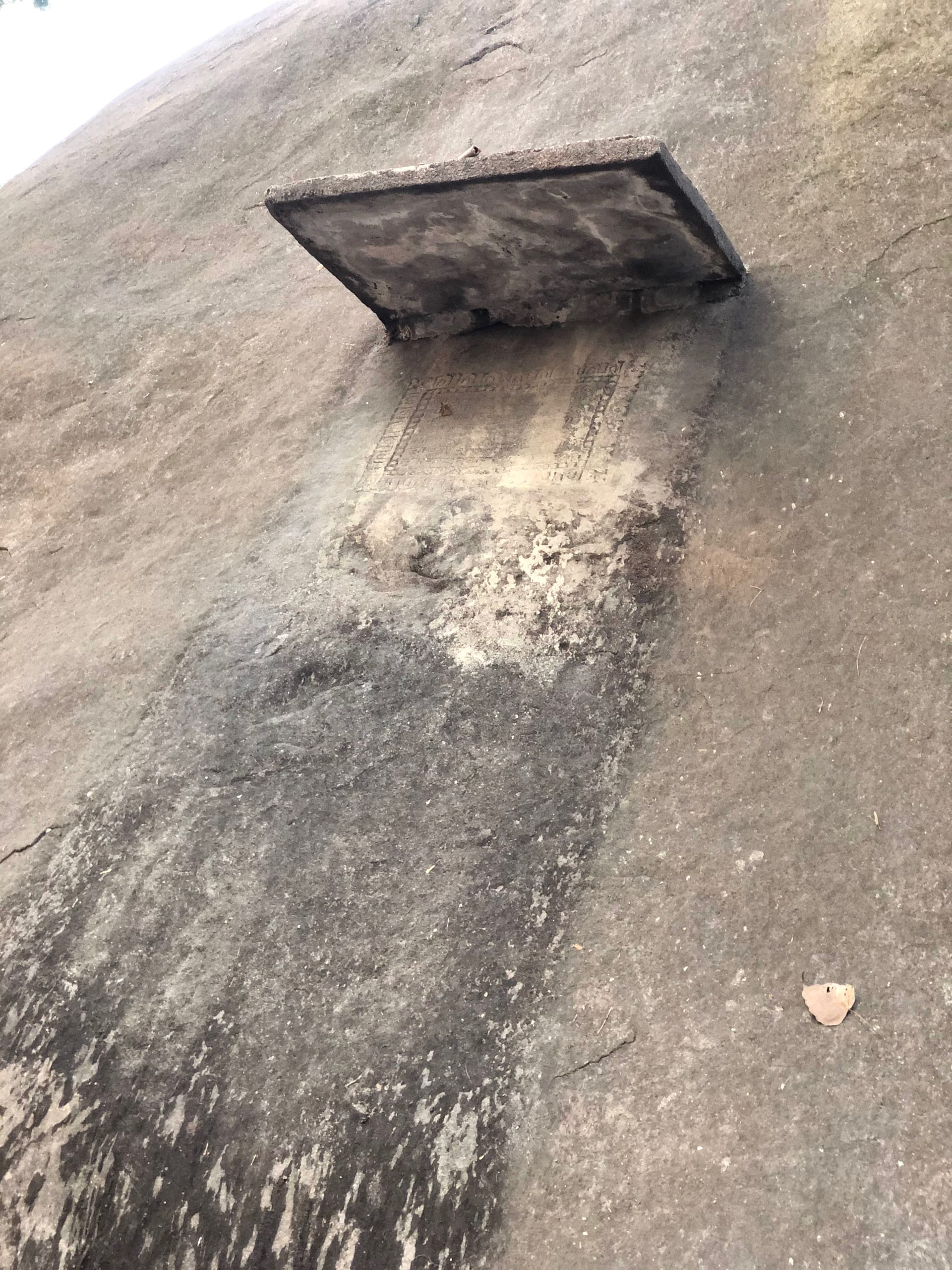
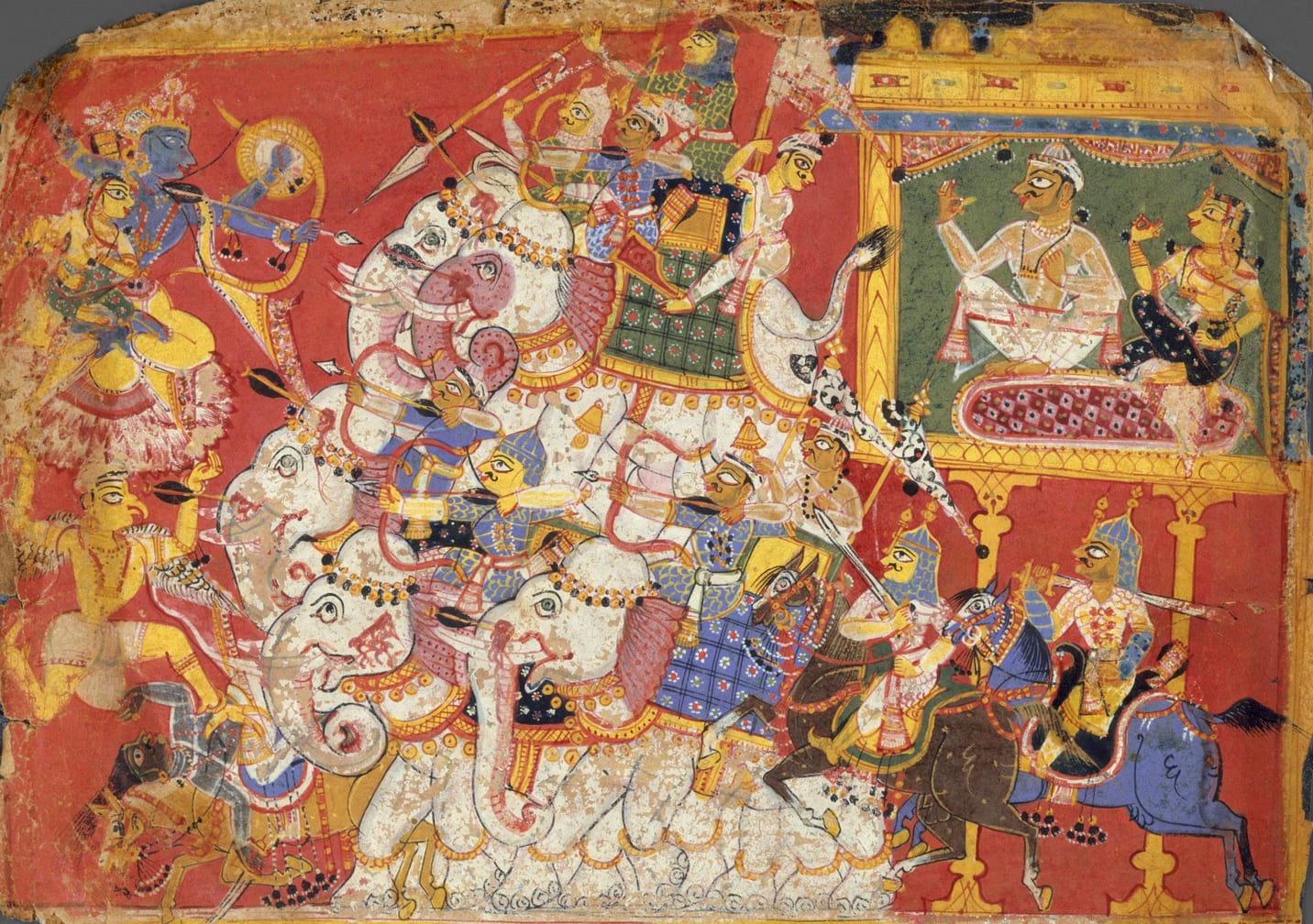
Husain Shah did not come himself. The army he sent in 1498 marched under his general Shah Ismail Ghazi. By one account it was twenty-four thousand horse and foot, with a war-flotilla moving up the rivers beside it. In this country the rivers are the roads. Kamatapur did not fall to the assault. It stood a long siege and held. For how it was opened at last, the chronicles blame a Brahmin minister named Sachipatra. The king had put his son to death over a scandal in the palace. He went over the wall into Bengal and showed the sultan the way in. That account appears only in chronicles written long afterwards, and it is the kind of tale that grows around a fortress too strong to have fallen honestly.
In 1498 Kamatapur was stormed and sacked, and the kingdom of the Khen ended. The goddess-shrine beside the capital went down with the city. Nilambar, who had ruled since 1480, was taken. There the accounts scatter, as they do around every defeated king whose own record-keepers have been killed or driven off. The king was imprisoned for life, or killed in the fall of the city, or slipped away into the hills and was never heard of again. The three endings the tradition offers are an admission that nobody knows.

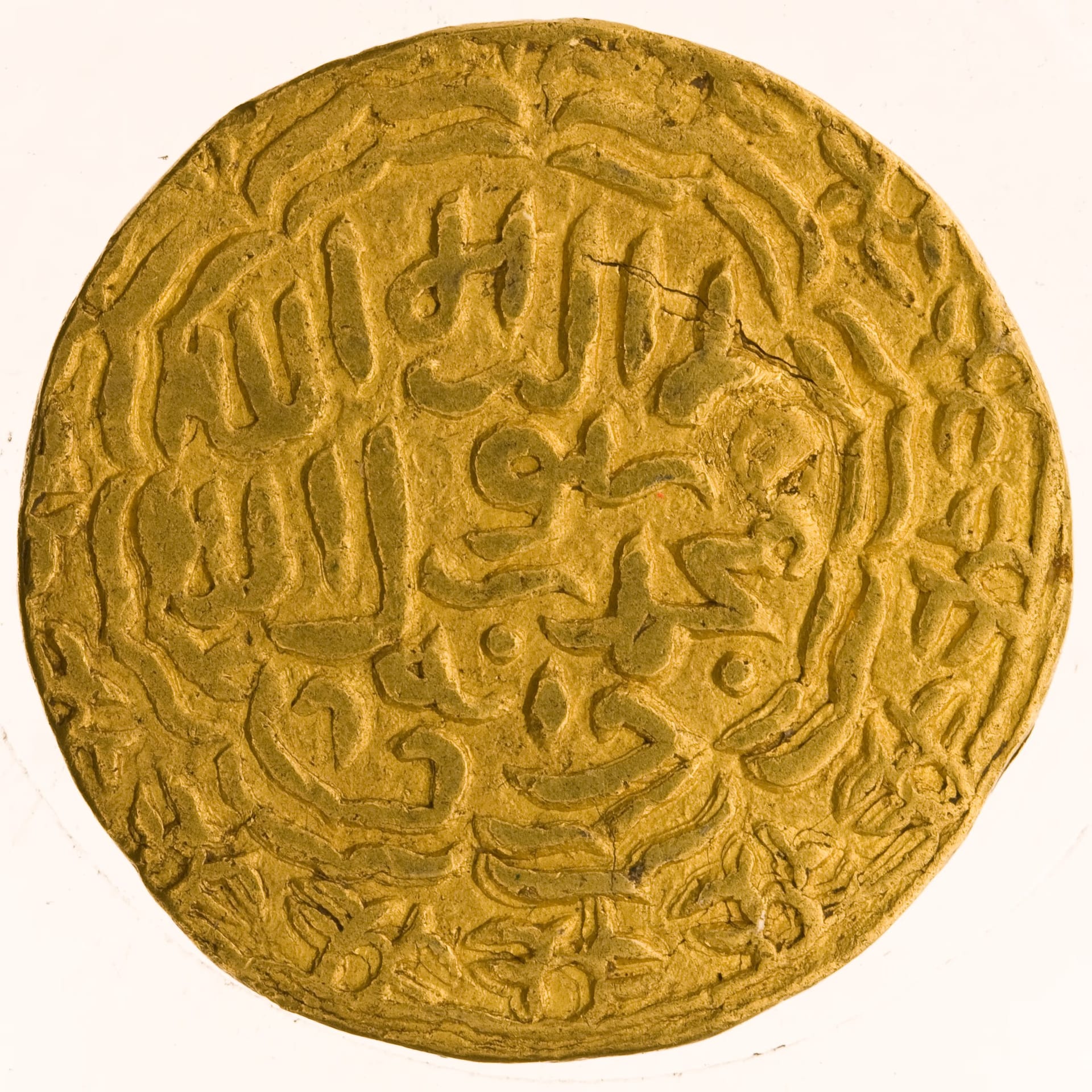
Husain Shah struck coin proclaiming himself the conqueror of Kamru and Kamata, Jajnagar and Orissa, and had the victory cut into stone at Malda. That conquest was the high-water mark of Bengal’s reach into the northeast.

The country Shah could not hold
Husain Shah had won a country he could not keep. His eldest son Danyal governed the conquest as viceroy. About 1502 the occupation was pushed east toward Hajo, where by tradition a colony of Afghan soldiers was settled to hold the country down. The three-domed brick mosque at Panbari near Dhubri, the oldest surviving mosque in Assam, is by one tradition a relic of this push up the valley.
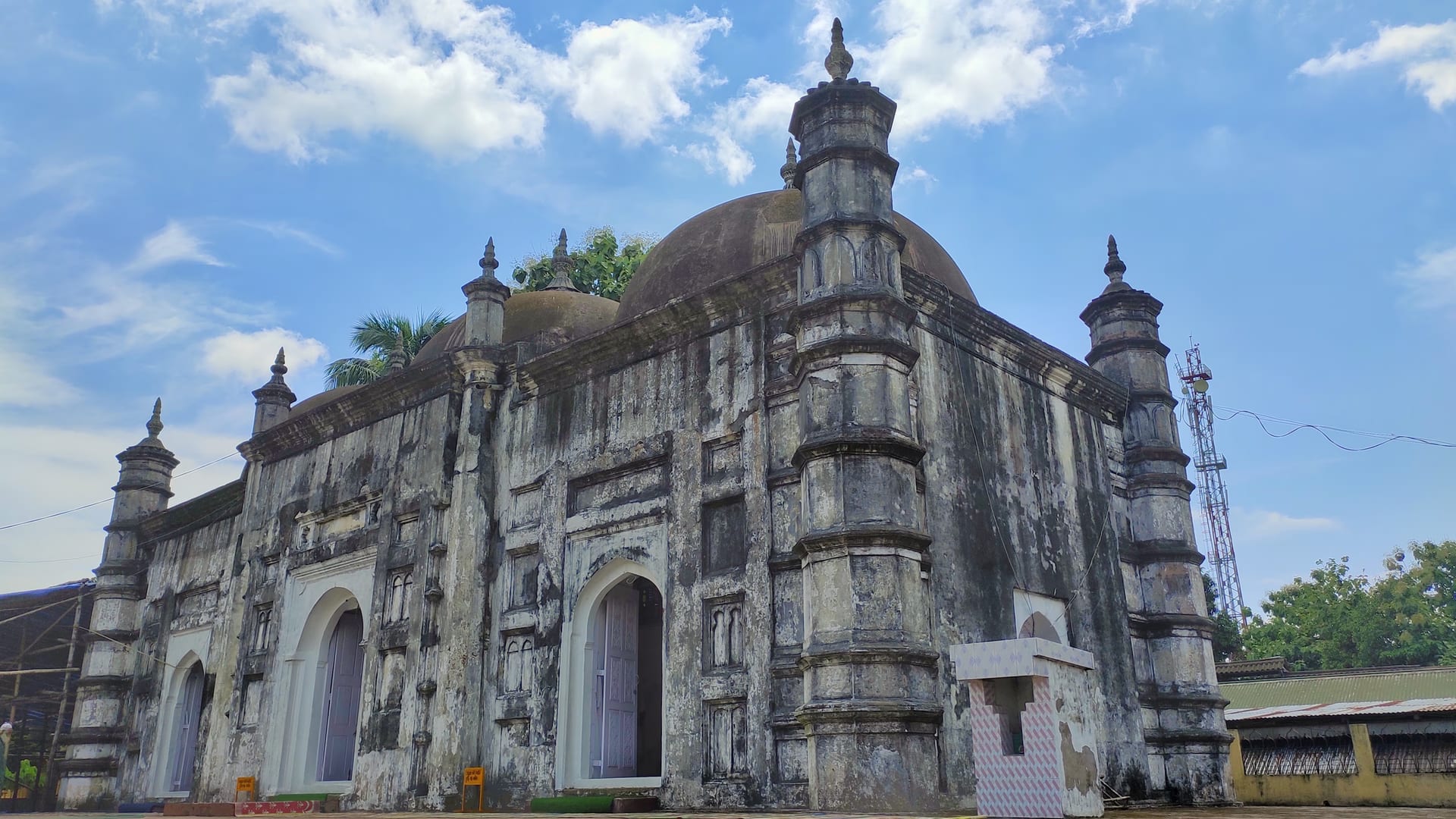

Then the valley did to Bengal what it had done to invaders before, and would do again to Mir Jumla a century and a half later.
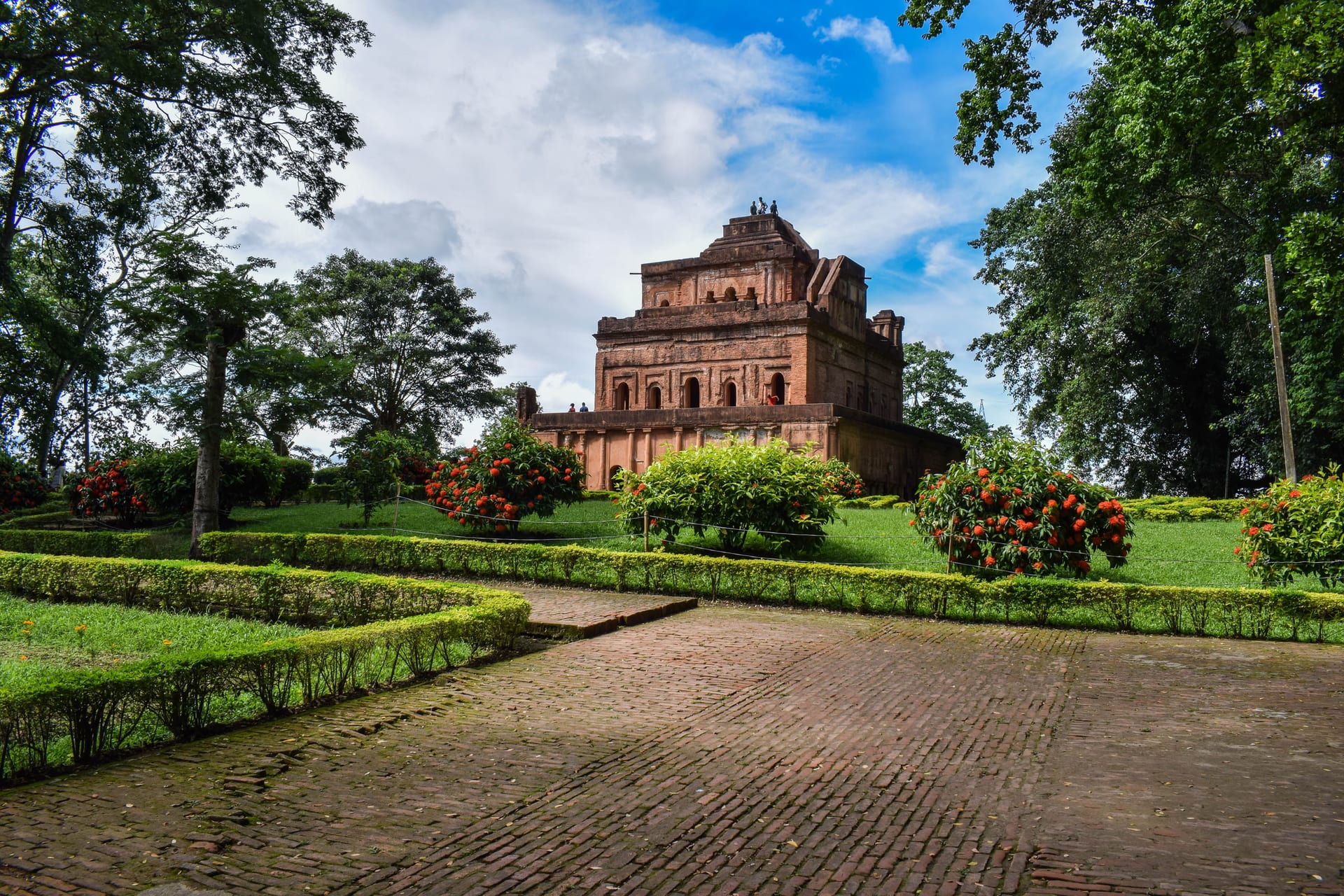
The rivers that had carried the flotilla in now flooded and shifted under the supply boats. The rains closed the tracks behind the army, and the grain that had to come up from Bengal stopped arriving. And the landed chiefs of the central plain, the Bara-Bhuyans, who had bent low while the storm passed, did not stay bent. They rose, harried the Bengal soldiers out and destroyed the garrison. Under a chief remembered as Harup Narayan they seized Danyal and his officers and killed them, some time before 1509. By tradition that rising came about 1505, and what was left of the occupation did not outlast the decade after it. Bengal had held the country for something under fifteen years.
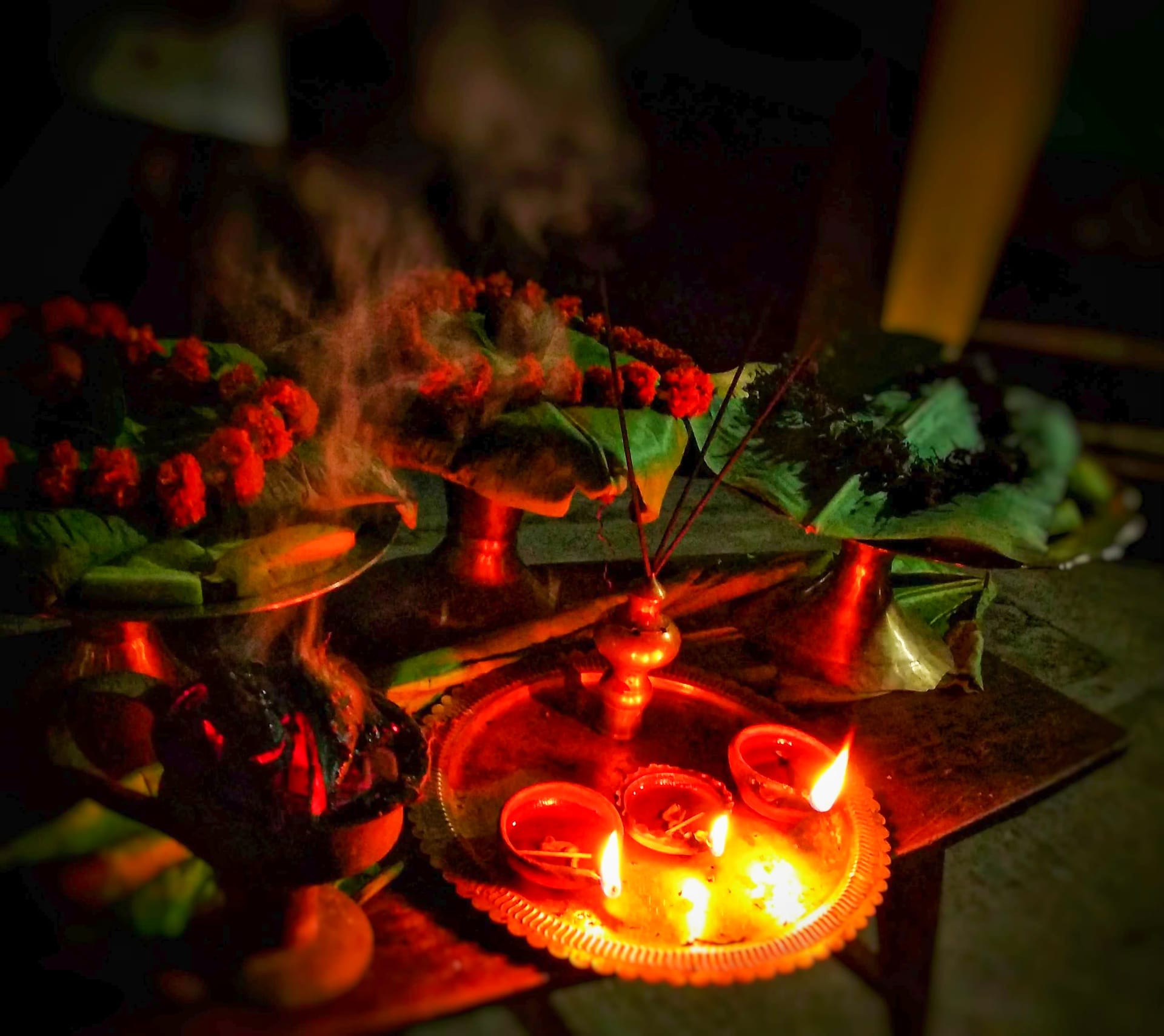
Out of the wreck of the Khen kingdom a chief named Bisu welded the Koch and Mech peoples and the quarrelling Bhuyan country into one state. He took the throne-name Biswa Singha and founded a dynasty that would hold the western valley for four centuries, reaching its height under his son Naranarayan. In 1665 they raised the goddess of the Khen again at Gosanimari, on the ground where the old shrine had been destroyed. The Khen were finished and their fortress was never rebuilt, but the kingdom and its goddess had only changed hands.