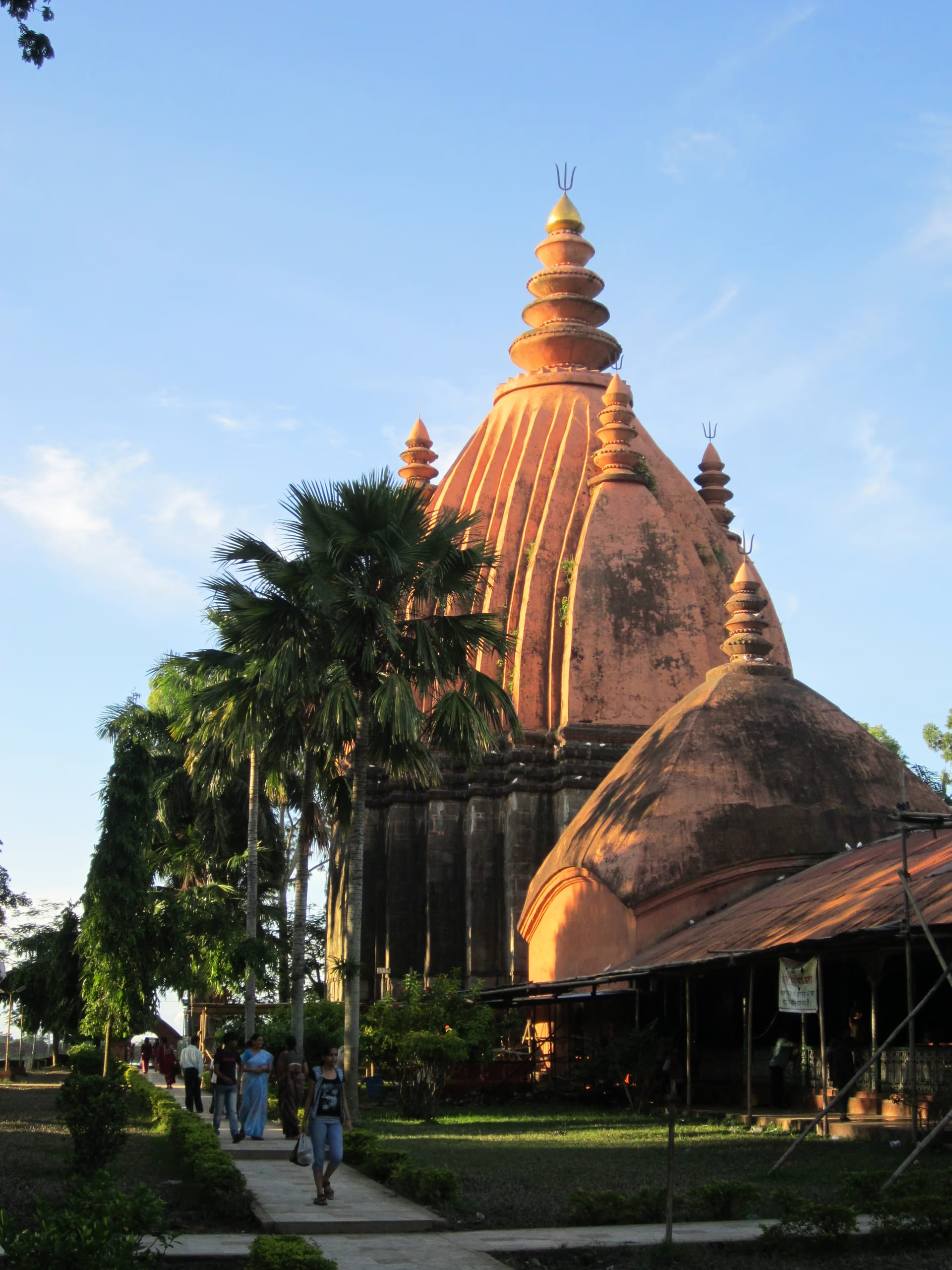
Garhgaon lies a short way east of modern Sivasagar. It was the chief capital of the Ahom kingdom for the better part of two centuries. From here the Swargadeos ruled an already enlarged dominion on the Brahmaputra valley. Its very name, the fort-village, records what it was. This was not a town in the ordinary sense but a great ramparted royal enclosure, a capital of earthen walls, gates and tanks set down on the upper-Assam plain. What the visitor sees today is chiefly the tall, receding Kareng Ghar palace of the later masonry rebuilding. But the ground it stands on is the long political heart of the Ahom state. It is where that hill dynasty seated the power it had already won across the upper valley, and from which, in later generations, it would hold Assam against the Mughals.
The founding of the fort-village
Garhgaon was established as the fixed Ahom capital in the middle of the sixteenth century. This was conventionally under Swargadeo Suklenmung, who reigned from about 1539 to 1552. He is remembered to history as the Garhgaya Raja, the king of Garhgaon, a title that records the move itself. Before him the Ahom court had shifted its seat several times across the upper-Assam country since the first kings. With Garhgaon it settled. The choice of a single, fortified, permanent capital was itself part of the kingdom’s coming of age. The capital was laid out as a planned, ramparted town, ringed by earthen walls and a moat and entered through great gateways. Its interior was filled with the palace, the offices of state, the houses of the nobility and the excavated tanks that supplied it. From here the Swargadeos ran the machinery that held the enlarged kingdom together. The labour of the state already ran through the paik system, the service every able man owed the crown, and through the council of great ministers that had guided the dynasty since its first kings. Garhgaon was, in short, the command centre of consolidation.
Ruin, recovery, and the Kareng Ghar
In 1662 that timber-and-earth capital fell to Mir Jumla, the Mughal viceroy of Bengal. He drove up the valley with a great army and fleet, took Garhgaon itself, and forced the Swargadeo into the hills. The invaders plundered the fort-village and wintered there. It was the deepest humiliation the kingdom had yet suffered. The occupation could not hold. Disease, monsoon flood and the harrying of the Ahom forces wore the army down. Mir Jumla withdrew, broken in health, and the kingdom recovered its seat. That drama is carried in the story below.
Garhgaon was rebuilt in timber and remained the living capital for another generation and more. Around 1707 Rudra Singha moved the living court a few miles west to Rangpur, today's Sivasagar, where the Talatal Ghar, the Rang Ghar and the temples by the tank later rose. Garhgaon kept the prestige of the ancestral seat. In 1752 Swargadeo Rajeswar Singha raised the masonry Kareng Ghar here in brick and stone. It is the tall multi-storeyed palace the visitor walks today, the best-preserved fragment of the old capital, and the proof that the fort-village outlived both Mir Jumla’s ruin and the departure of the living court.
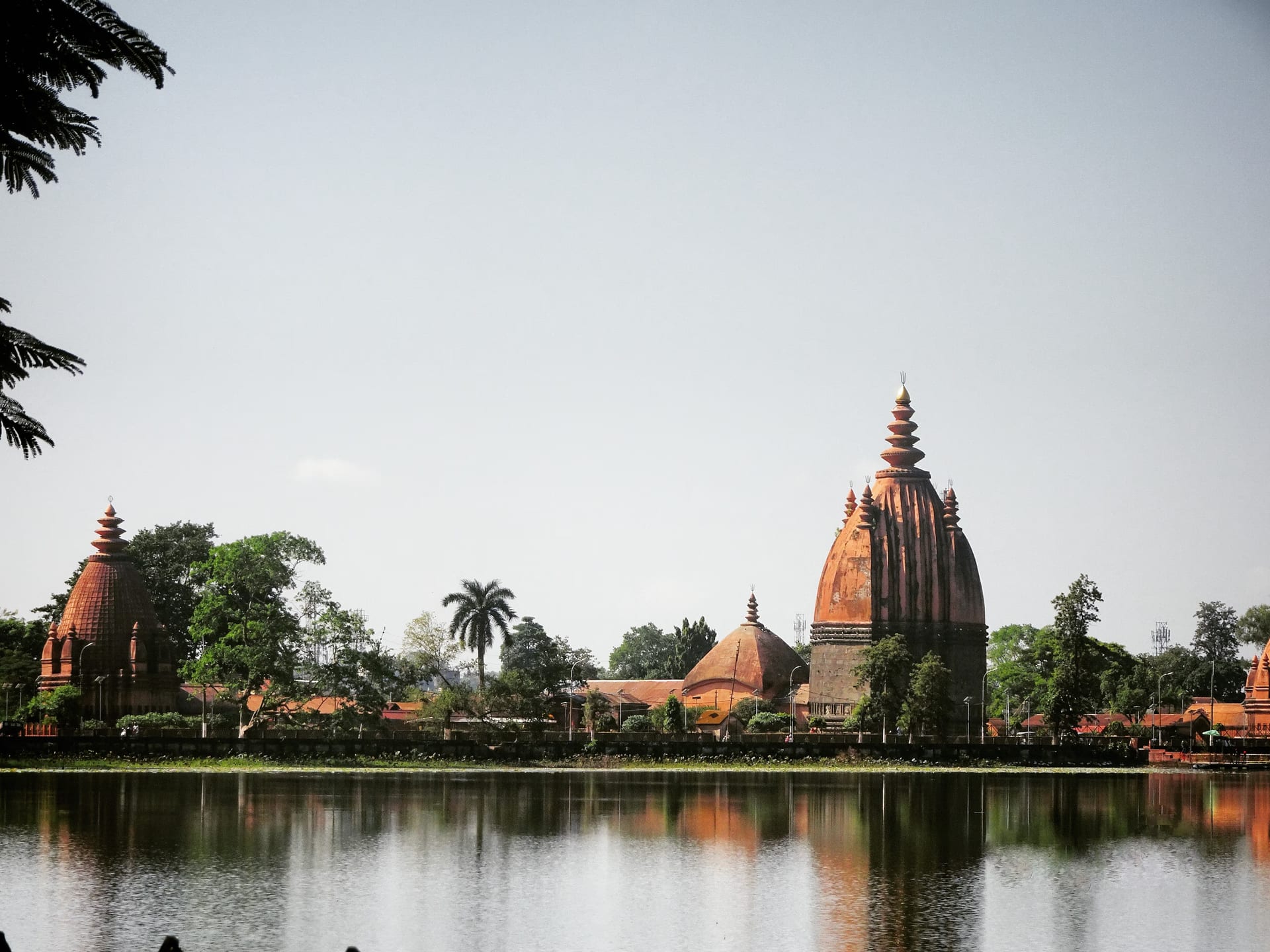
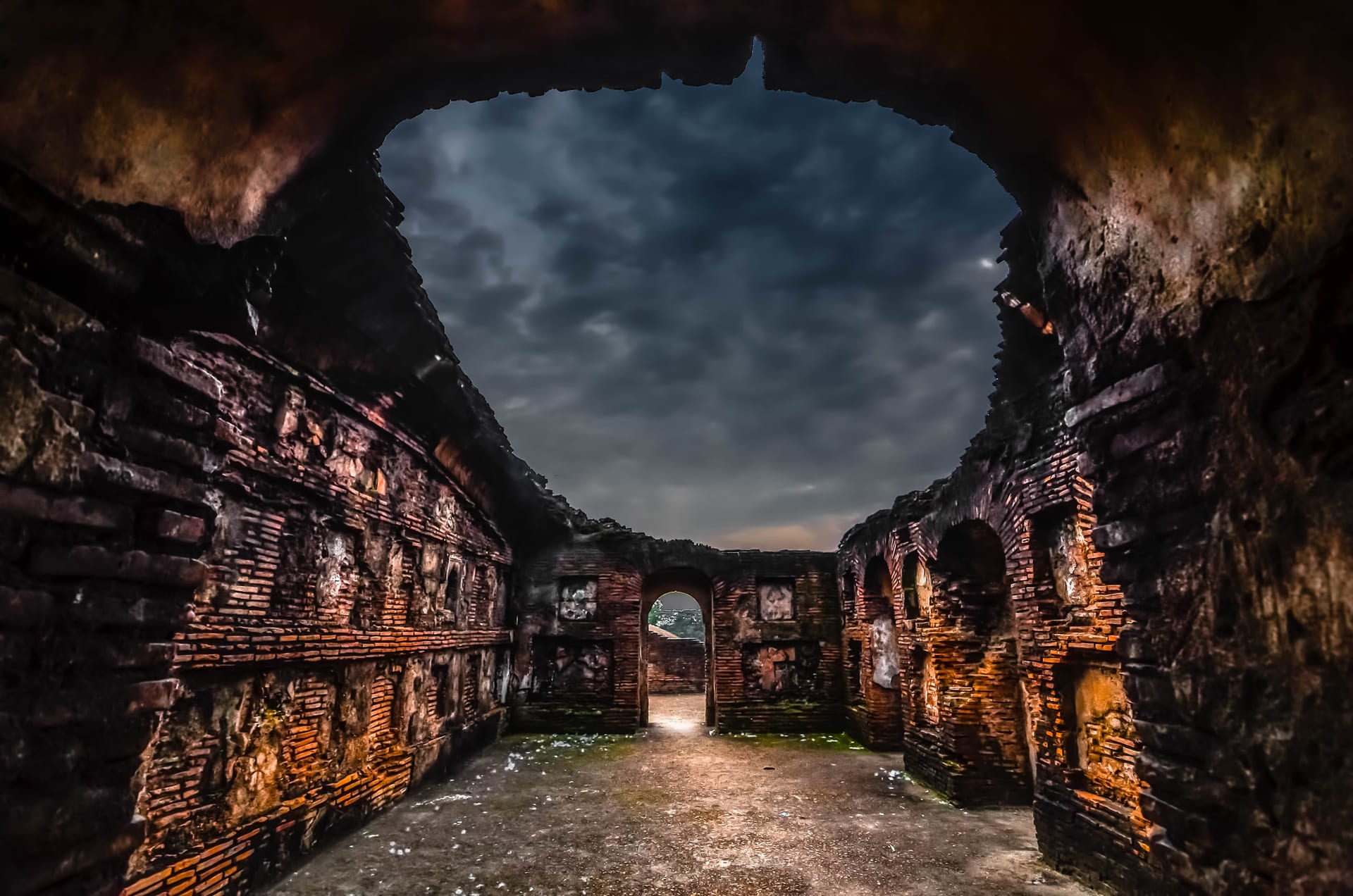
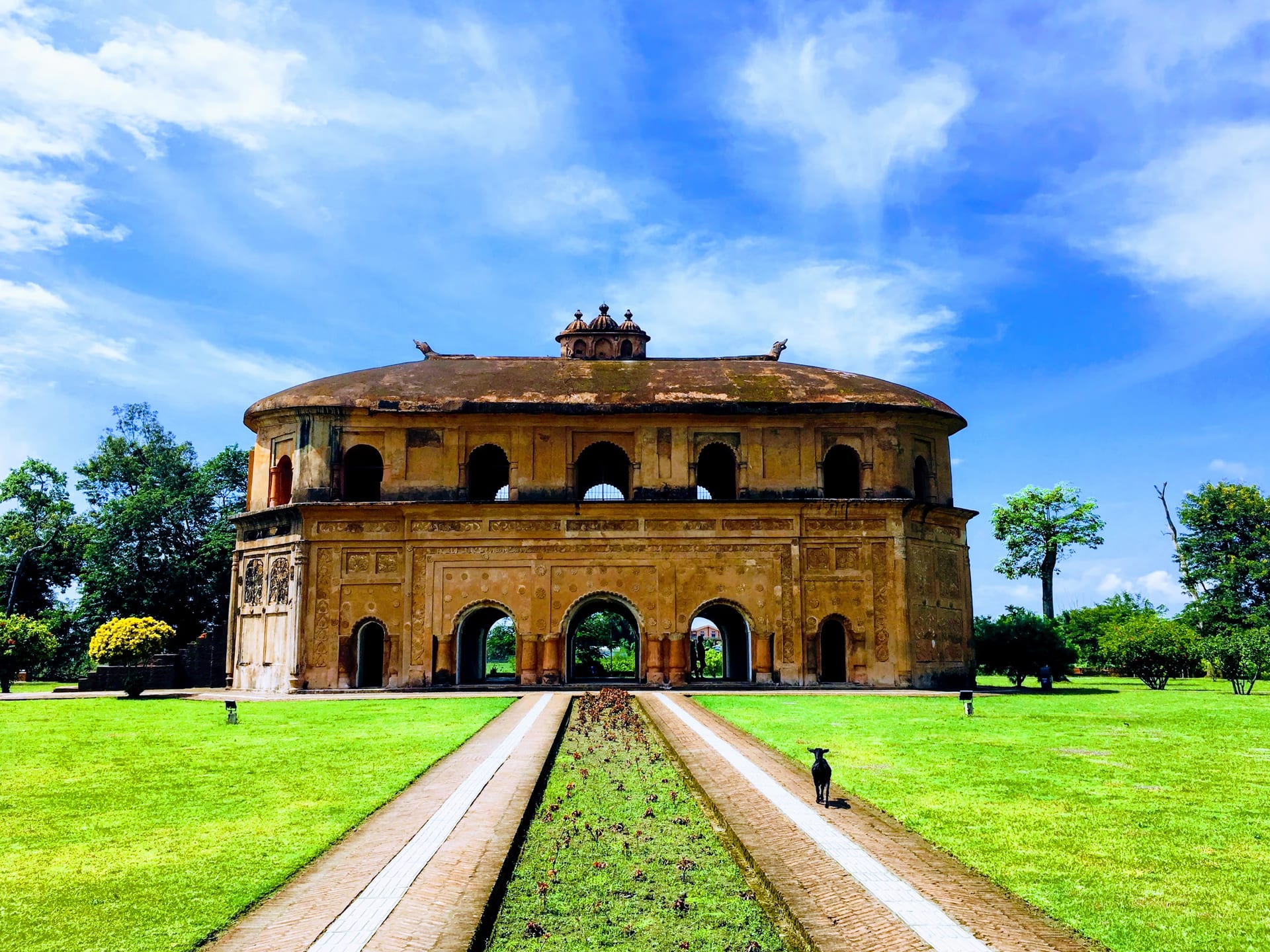
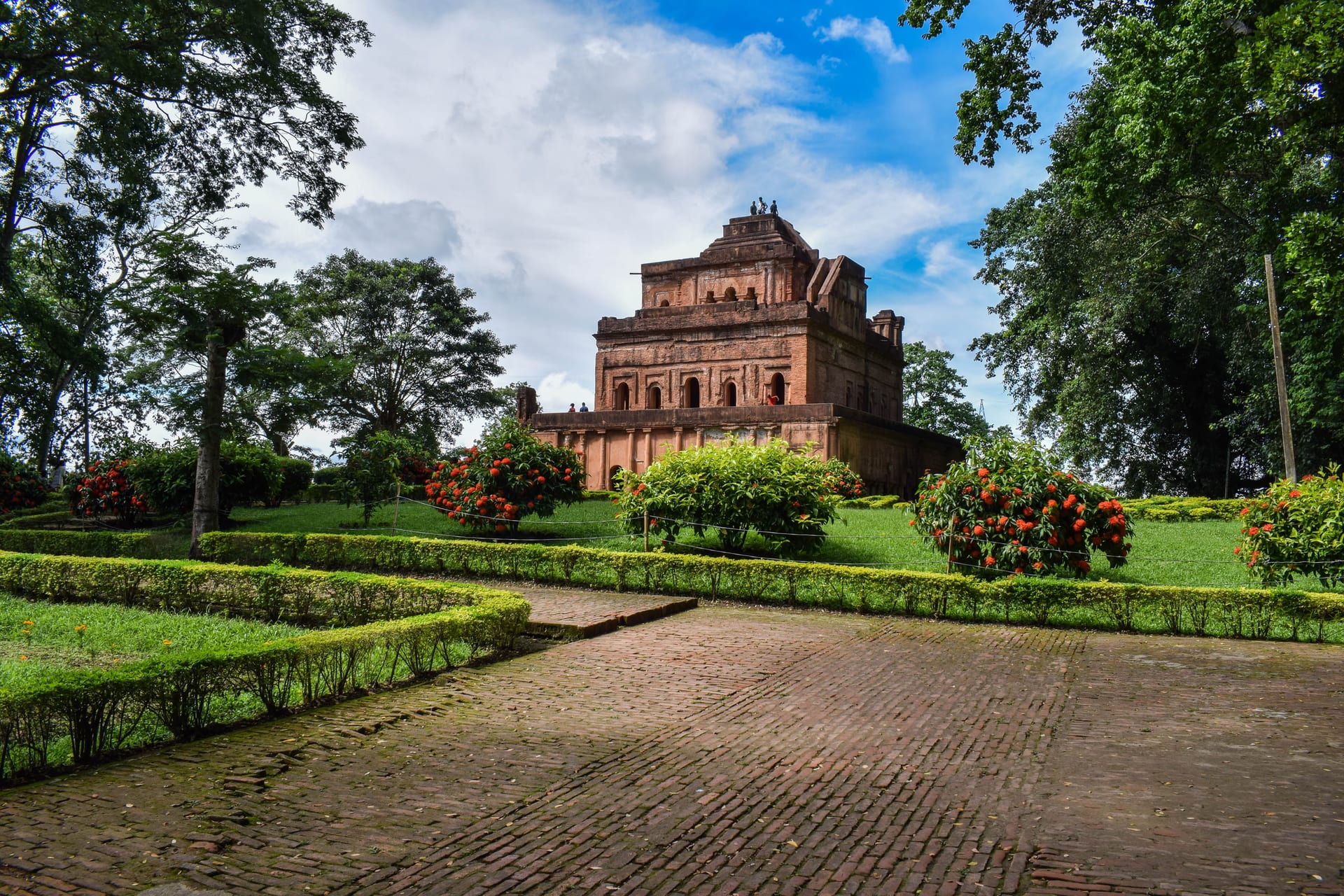
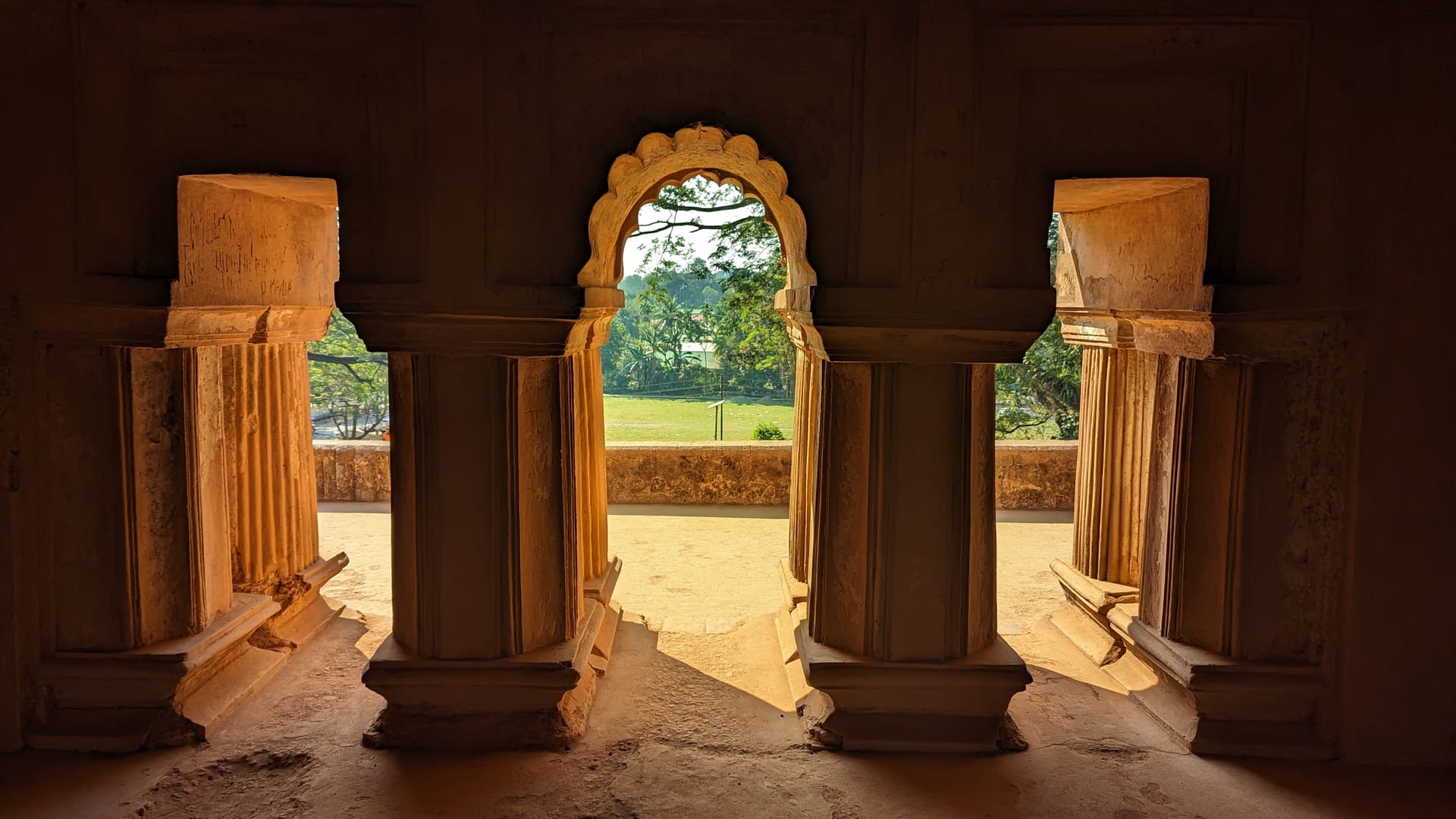
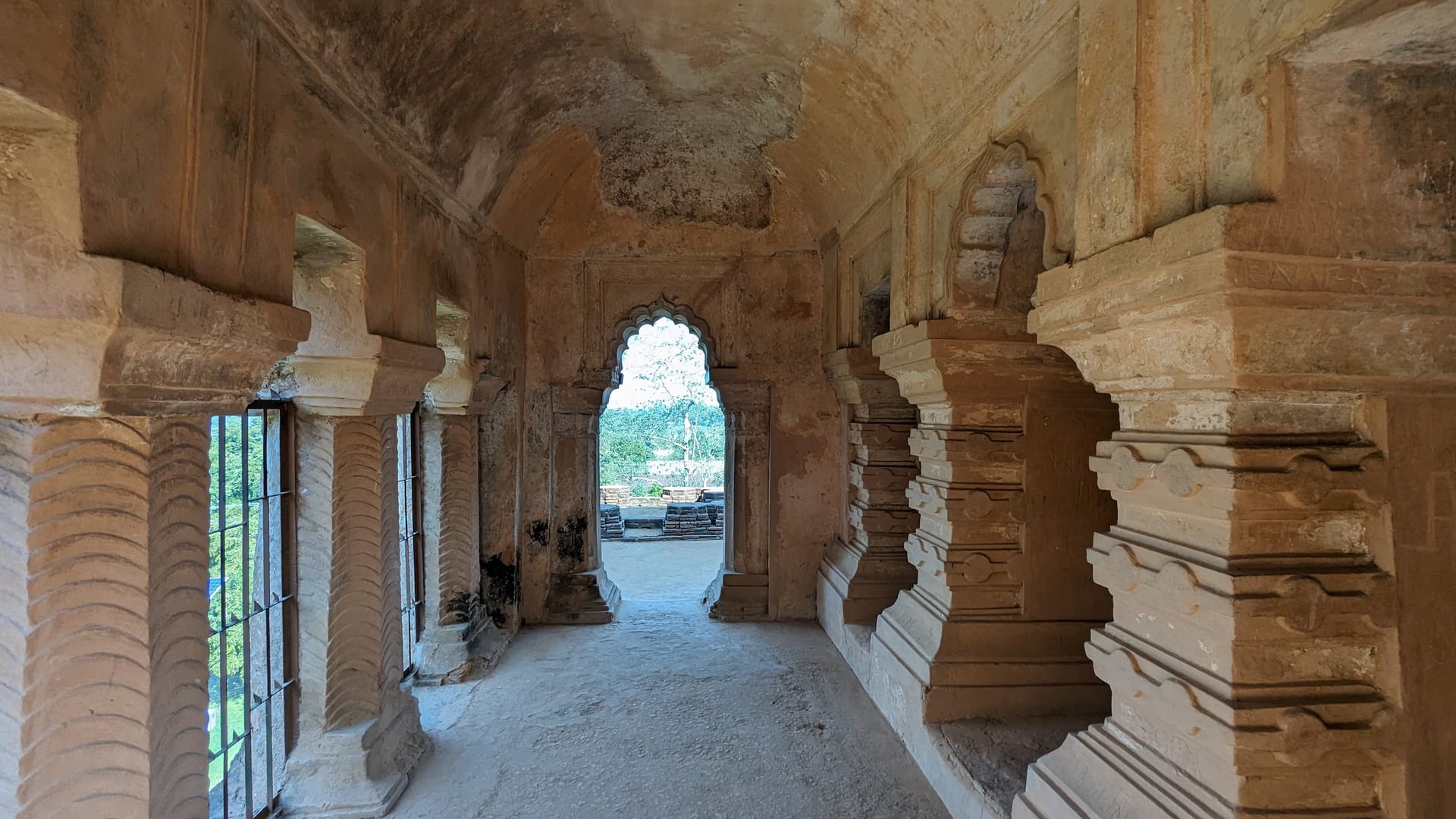
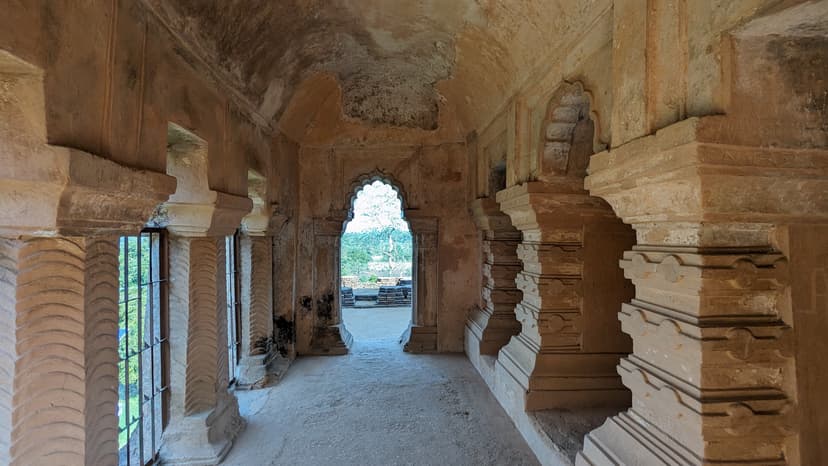
The palace stands amid the grounds and tanks of the old enclosure. Its storeys step back as they rise, giving the building its tall, receding silhouette. Inside, cusped arches open into barrel-vaulted galleries with thick piers and recessed niches. Fluted columns stand on carved lotus-petal bases, and upper galleries run between pilasters and window-grilles. The fabric is the thin Ahom brick of that masonry generation, laid in the indigenous organic mortar credited across the later capitals. By tradition that mortar was a mix of rice paste, eggs and other binders.
Visiting
Garhgaon lies a short drive east of Sivasagar town. It is the natural eastern point of the Ahom-capital circuit, easily combined with the Rangpur monuments, the Rang Ghar and Talatal Ghar, and the temples and tanks at the Sivasagar tank. The surviving Kareng Ghar palace is open to visitors as a protected monument. The cooler, drier months from November to March are the most comfortable for the upper-Assam plains, when the country around the old capital is green after the harvest.