In the age of myth the whole valley answered to one name, Pragjyotisha. The king of that country held his capital far downriver, in the hill country that is now Guwahati. This story belongs to the other end of the same land. About two hundred kilometres upriver, on the north bank of the Brahmaputra, stood a second city under a king of its own, and that city was called Sonitapura. The town on that bank is now Tezpur, a name read as the city of blood. The hill above it is Agnigarh, the fortress of fire. Both names come from a single story, and the town has never let go of it. It begins with a girl who fell in love with a man she had only dreamed. It ends with the two greatest gods of the age fighting each other over the outcome.
A dream, and a wall of fire
The king who held Sonitapura was Banasura. He was an asura, eldest son of the great Bali, and he had a thousand arms. Above all he was a devotee of Shiva so fierce that the god could not refuse him. When Shiva danced the tandava, the tradition holds it was Banasura who kept the beat, drumming with a thousand hands at once.
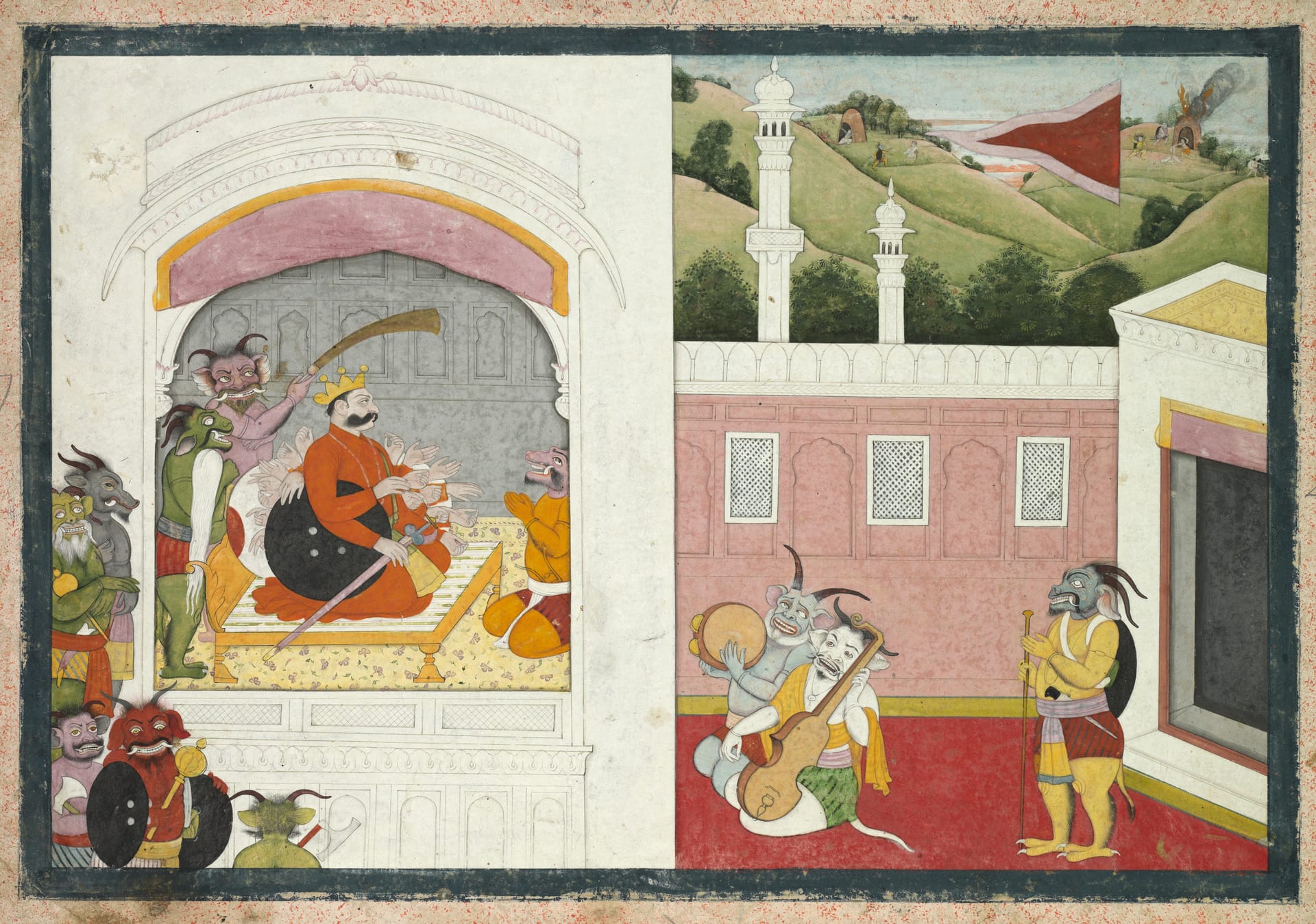

For that devotion the king asked the boon that undoes tyrants in every such tale. He asked Shiva to guard his city himself, and Shiva agreed. The great destroyer took up station at the gate of a mortal fortress, and Banasura believed himself beyond the reach of any power in the three worlds. The tradition sets his Sonitapura here, on the hill above the Tezpur reach. Behind its walls he kept the one thing he valued more than his own invincibility, his daughter Usha.

Usha was of an age to marry and her father had let no man near her. One night she dreamed of a young man, beautiful beyond anything she had seen, and in the dream they loved each other. Then she woke to an empty chamber. She did not know his name or his face in the waking world, or whether he breathed at all. She only knew she had lost him the moment she opened her eyes. Her rescue came from Chitralekha, the daughter of Banasura’s minister and the quiet hero of the whole story. Chitralekha was two things at once, a gifted painter and a woman of yogic power. She began to draw. She drew the gods, the sages, the kings and princes of every realm she knew, and set portrait after portrait before the princess. One by one Usha shook her head. Then Chitralekha drew the young men of the Yadava house, far away on the western sea, and Usha’s hand came down on a single face.
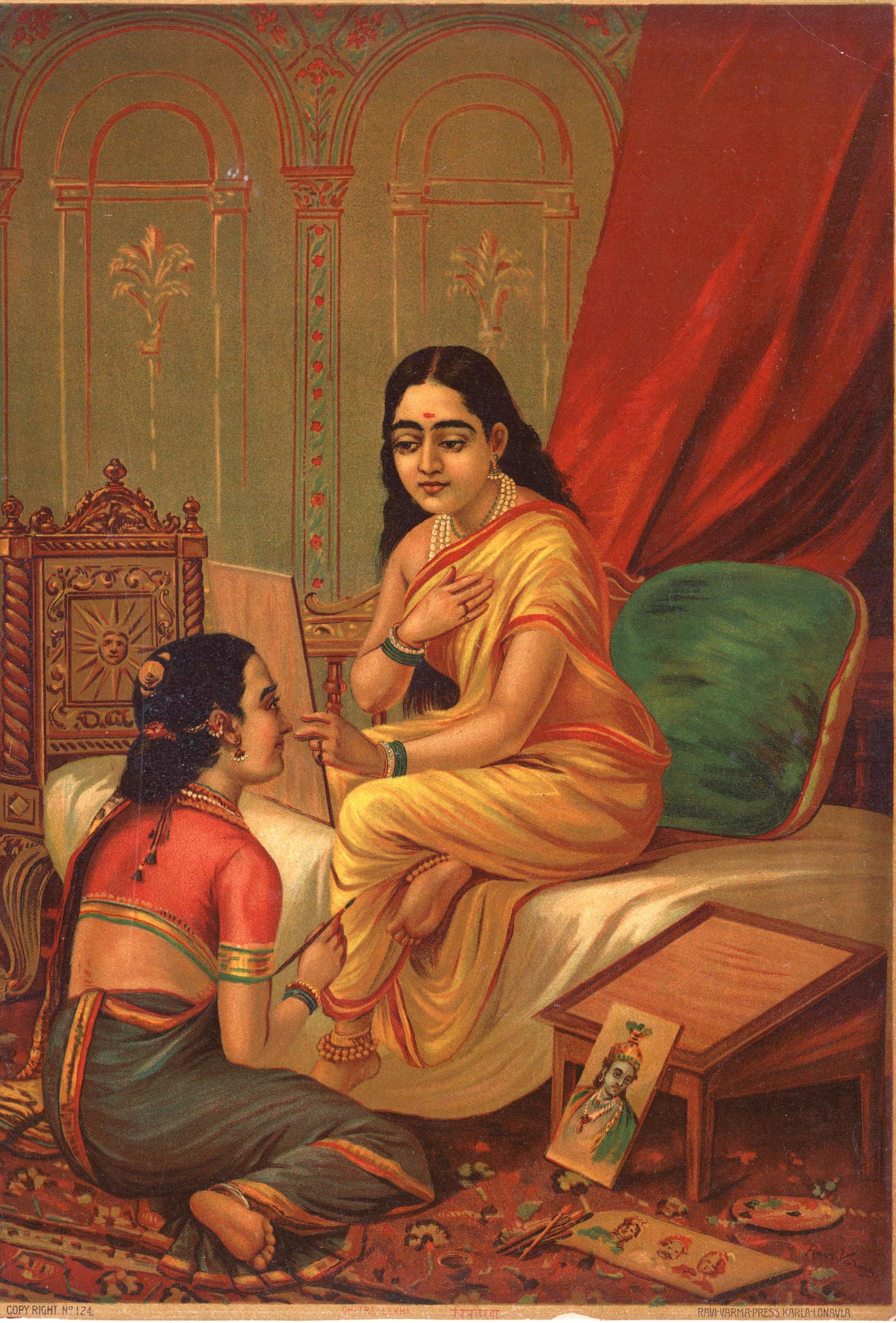

The face was Aniruddha, grandson of Krishna and son of Pradyumna, a prince of the sea-fortress of Dwarka at the far side of the subcontinent. Knowing the name solved nothing by itself. Dwarka lay a world away, and Usha was shut inside her father’s walls.
Chitralekha crossed that distance herself. She rose into the night, went the whole dark width of India, and lifted the sleeping prince out of his own bed without waking him. She carried him back through the sky to the chamber on the hill, and the dream-lovers woke in the same room at last. Secrets in a king’s household do not keep. Word climbed from the women’s quarters to the throne. When Banasura learned that the man hidden in his daughter’s rooms was of the blood of Krishna, his fury had no limit. He turned his own fortress into a prison and ringed the hill with fire, a wall of flame to hold the intruder fast and keep every rescue out. That ring is the thing the place has never forgotten. Agni is fire and garh is a fort, and Agnigarh is the name the hill has carried ever since. Aniruddha fought and held his own for a time. In the end he was taken and bound in the serpent-coils of Varuna’s noose, a bond no ordinary strength could break. It was the sage Narada who carried the news west to Krishna, that the prince was alive but held prisoner in the fortress of the thousand-armed king.
The war of Hari and Hara
Krishna came for his grandson. He came with his brother Balarama, with Pradyumna, the captive’s own father, and behind them the massed armies of Dwarka. Against that host Banasura called in the debt his devotion had earned, and Shiva took the field to defend his worshipper. So the war on the hill was not army against army. Tradition knows it as the Hari-Hara Yuddha, the war of Hari against Hara, of Vishnu against Shiva. The two supreme gods of the age were drawn onto opposite sides of a quarrel that had begun in a girl’s dream. There is no greater collision in the old stories. Divine weapons answered divine weapons over the heads of the fighting men. Shiva rode to the field on his bull and sent a burning fever against the enemy, and Krishna turned it back with a cold one. Then he put Shiva himself to sleep, and the god was carried out of the fighting. Balarama broke the enemy’s captains. Pradyumna held off Kartikeya, the god of war and Shiva’s own son, and fought his way toward the son he had come to free.
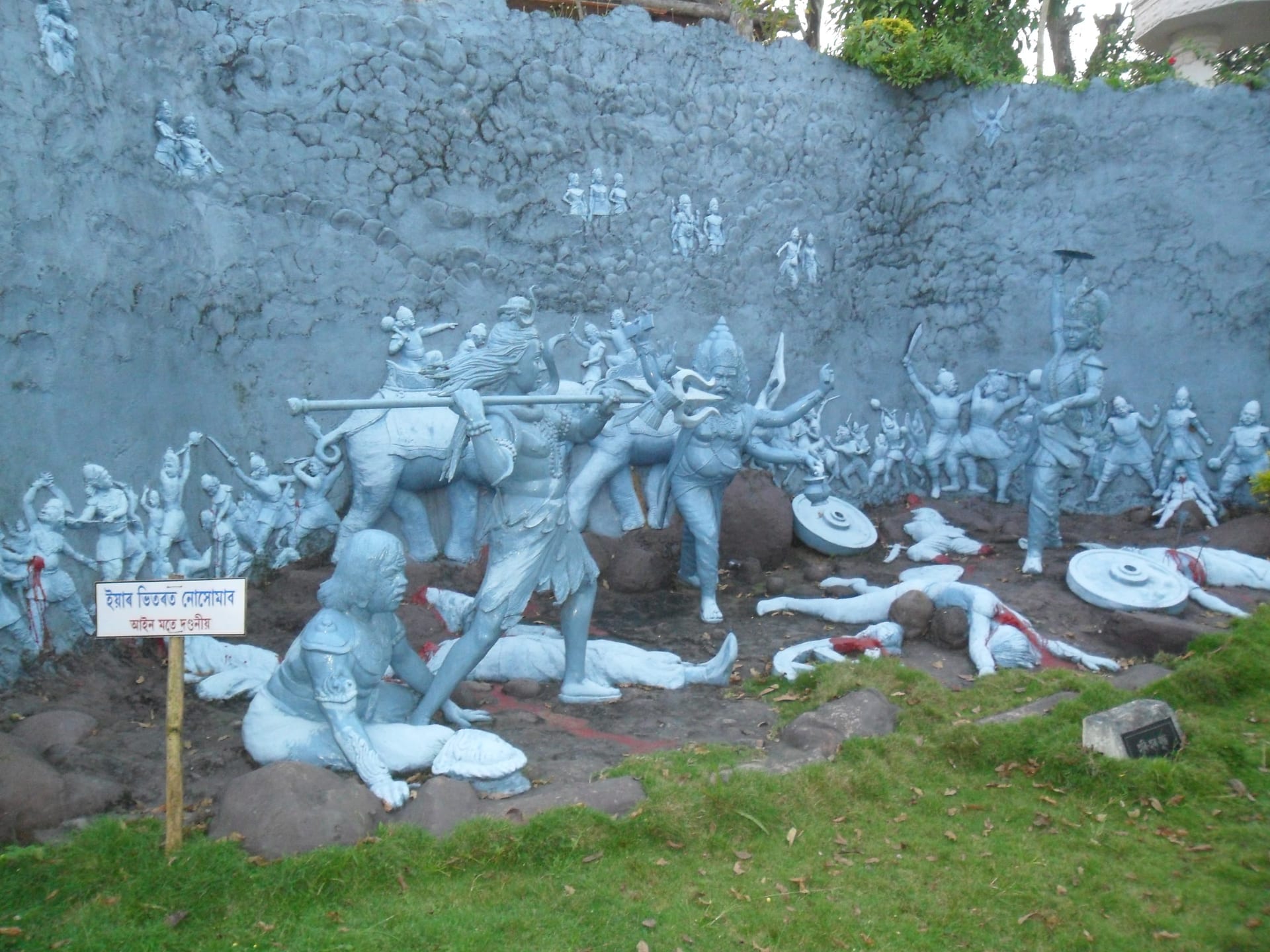

The fighting was so vast that the ground itself ran red, and the river below ran red with it. That, the tradition holds, is why the town is called Tezpur, the city of blood, and why the older name Sonitapura means exactly the same thing. The name is the wound the story left on the map. Krishna fell on Banasura with the Sudarshana and began to shear away the thousand arms one after another. The drummer of Shiva’s dance was being cut down toward a common man. Before the last blow could fall, Shiva stepped between the god and his devotee and asked for the king’s life.
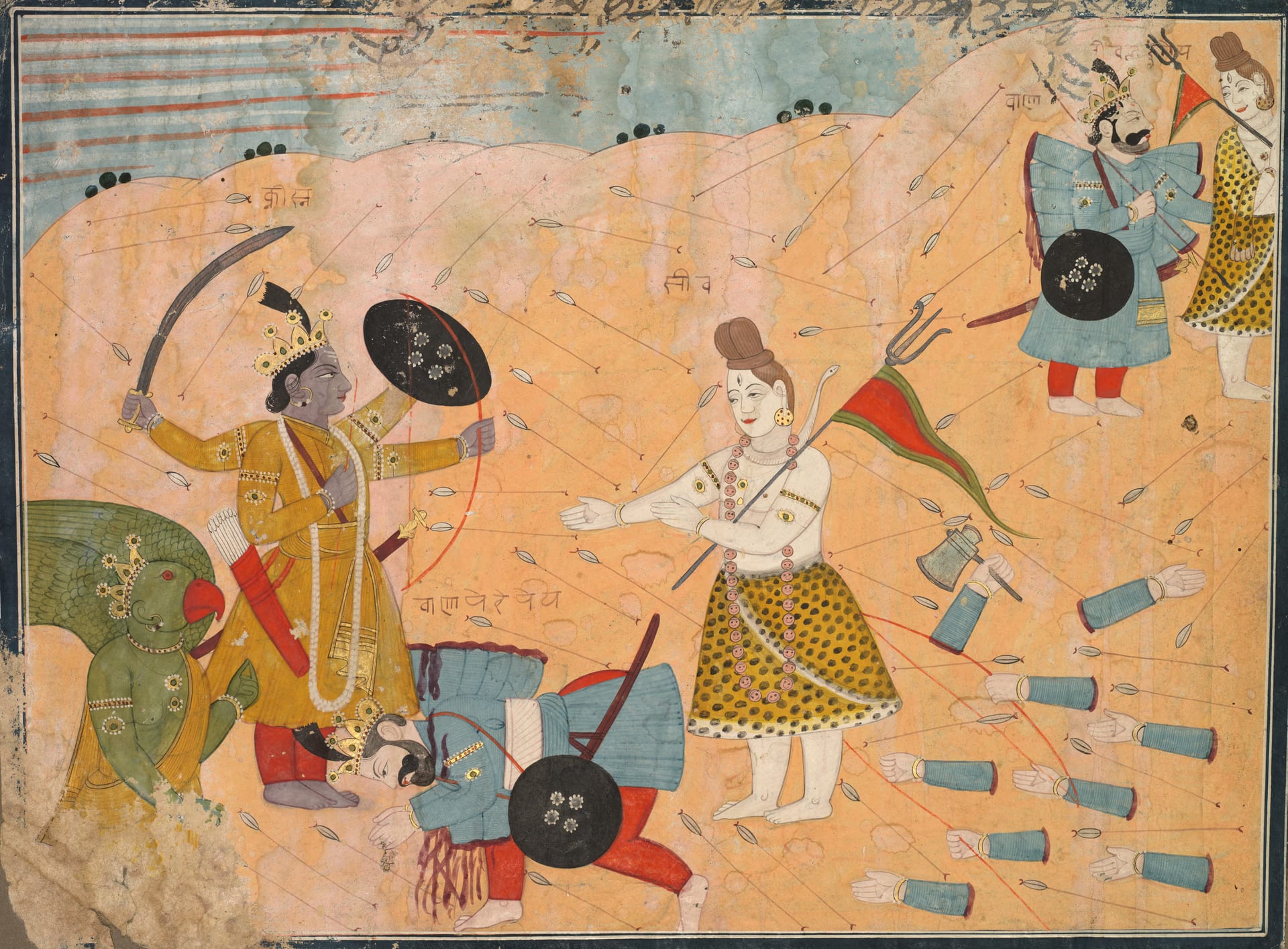

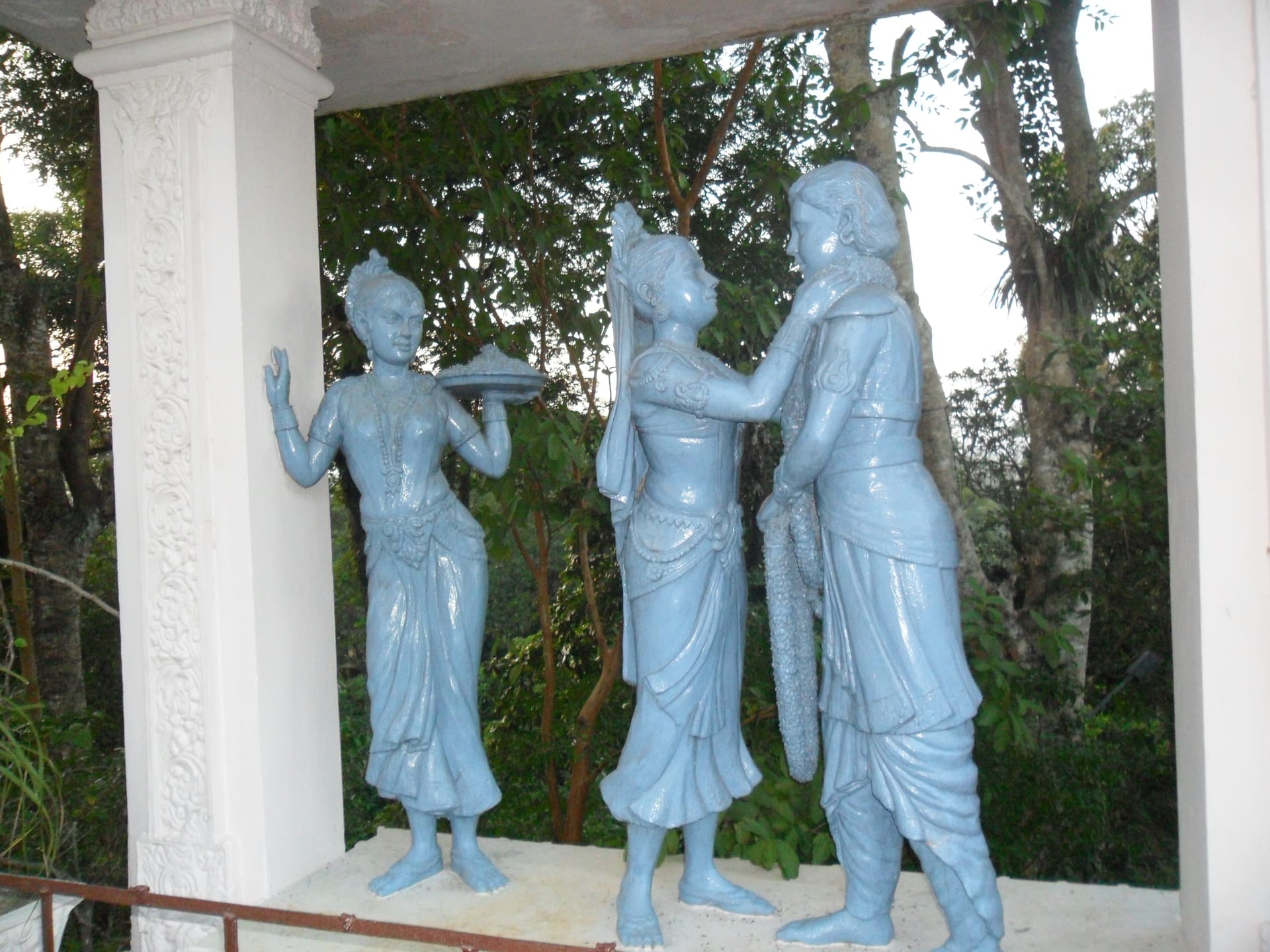
The request was granted, and not only out of respect for a god. Banasura was the son of Bali and the great-grandson of Prahlada, and Vishnu had long ago given that house his word that he would kill none of its line. Krishna held to it. He spared Banasura and left him four arms in place of a thousand, enough to break the pride that had started the war. What followed was a reconciliation, not a surrender. Beaten and pardoned, the king bowed his head to the god he had fought. He loosed Aniruddha from the noose and gave his daughter openly, and it was Banasura himself who set the chariot ready that carried Usha and Aniruddha home to Dwarka.

What the town kept
The reach did not stay mythical. Centuries later the Mlechchha kings of Kamarupa fixed their capital at Haruppeswara on this same bank, and the legend went on living beside the real court. The temple of Mahabhairab, on a low rise in the town, enshrines a great stone lingam that tradition ties to Banasura’s own worship. The god the demon-king made his gatekeeper is worshipped on that hill still. The lingam is old. The white tower above it is not, because the shrine was rebuilt in later centuries.
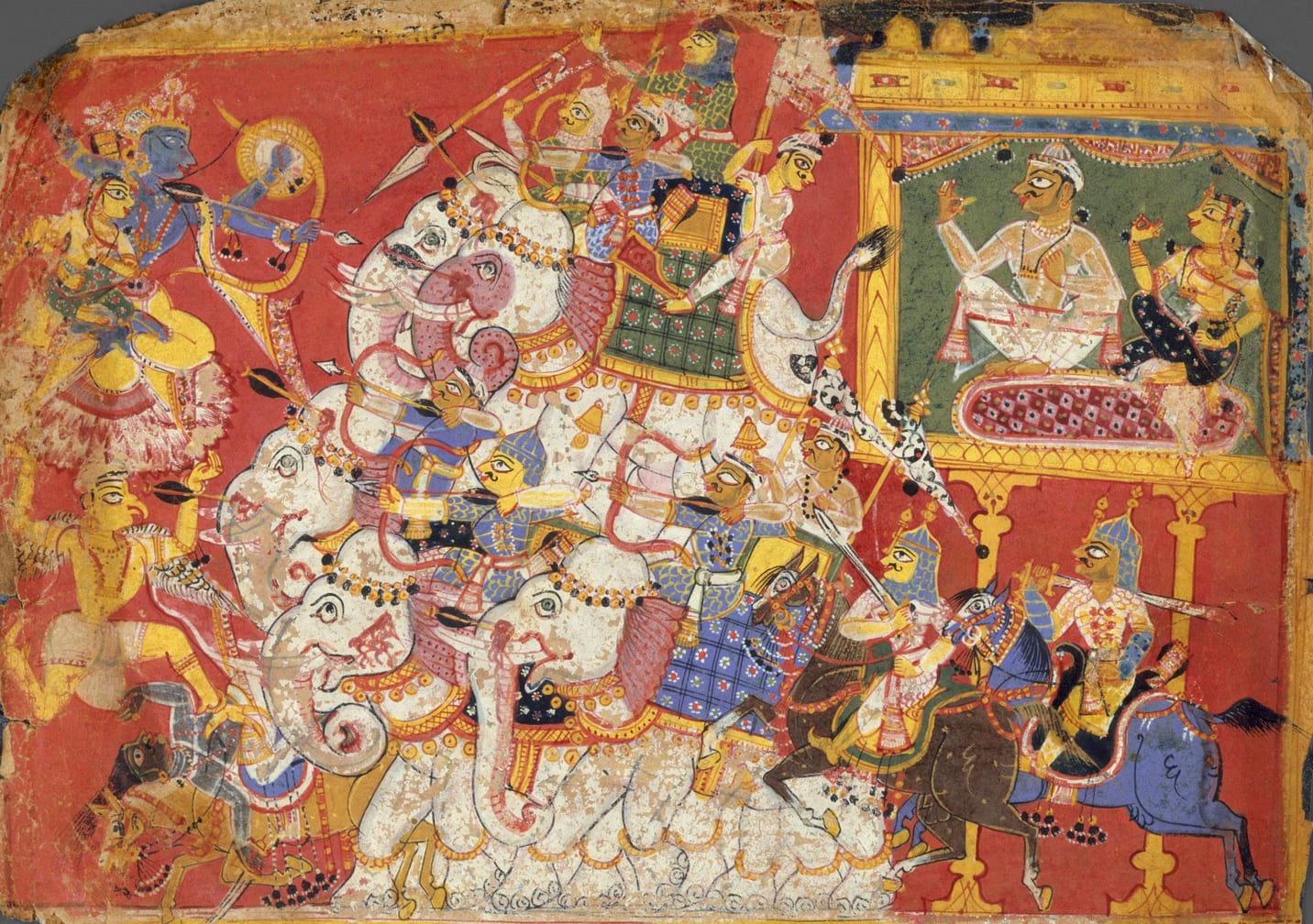
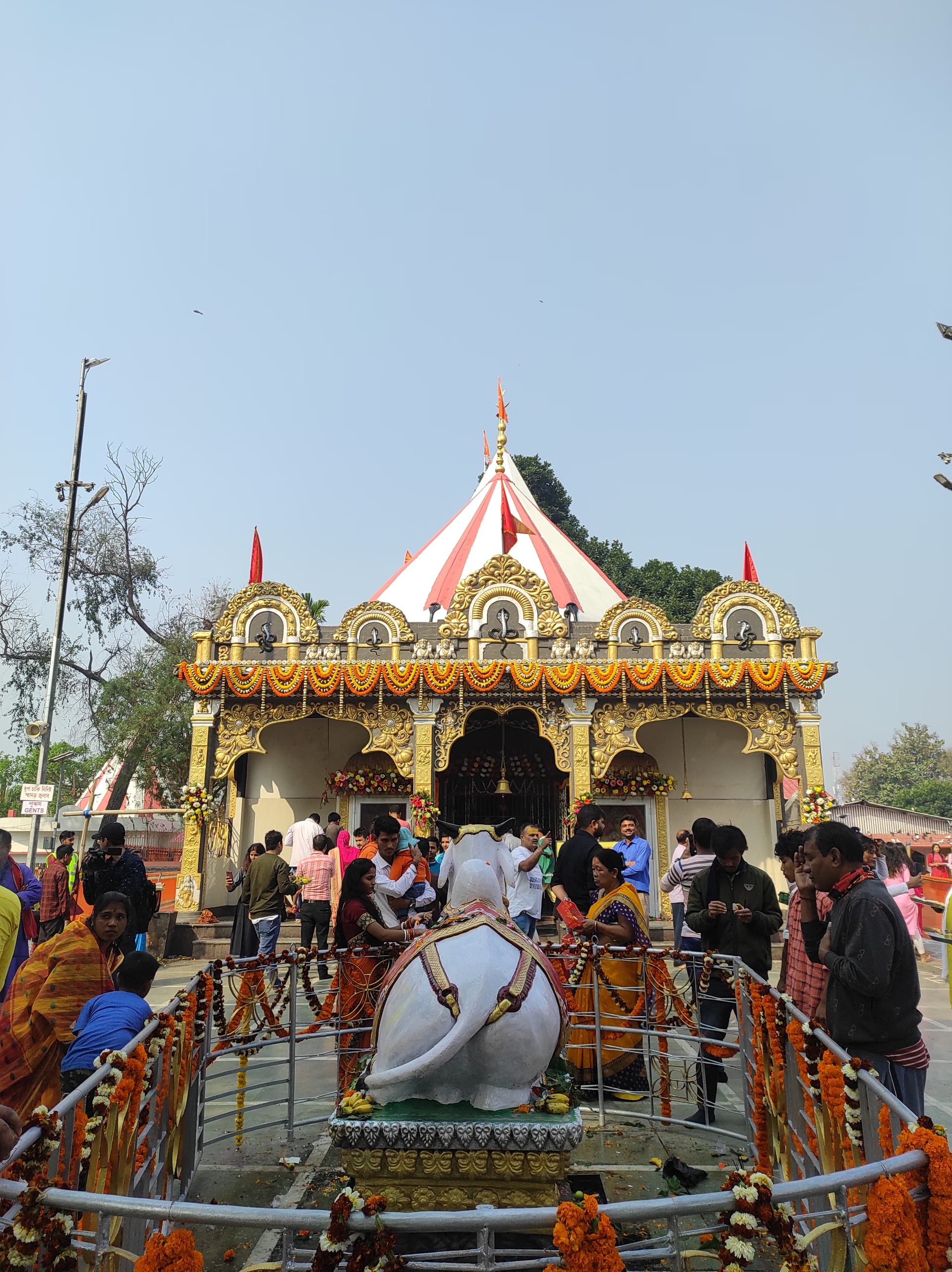

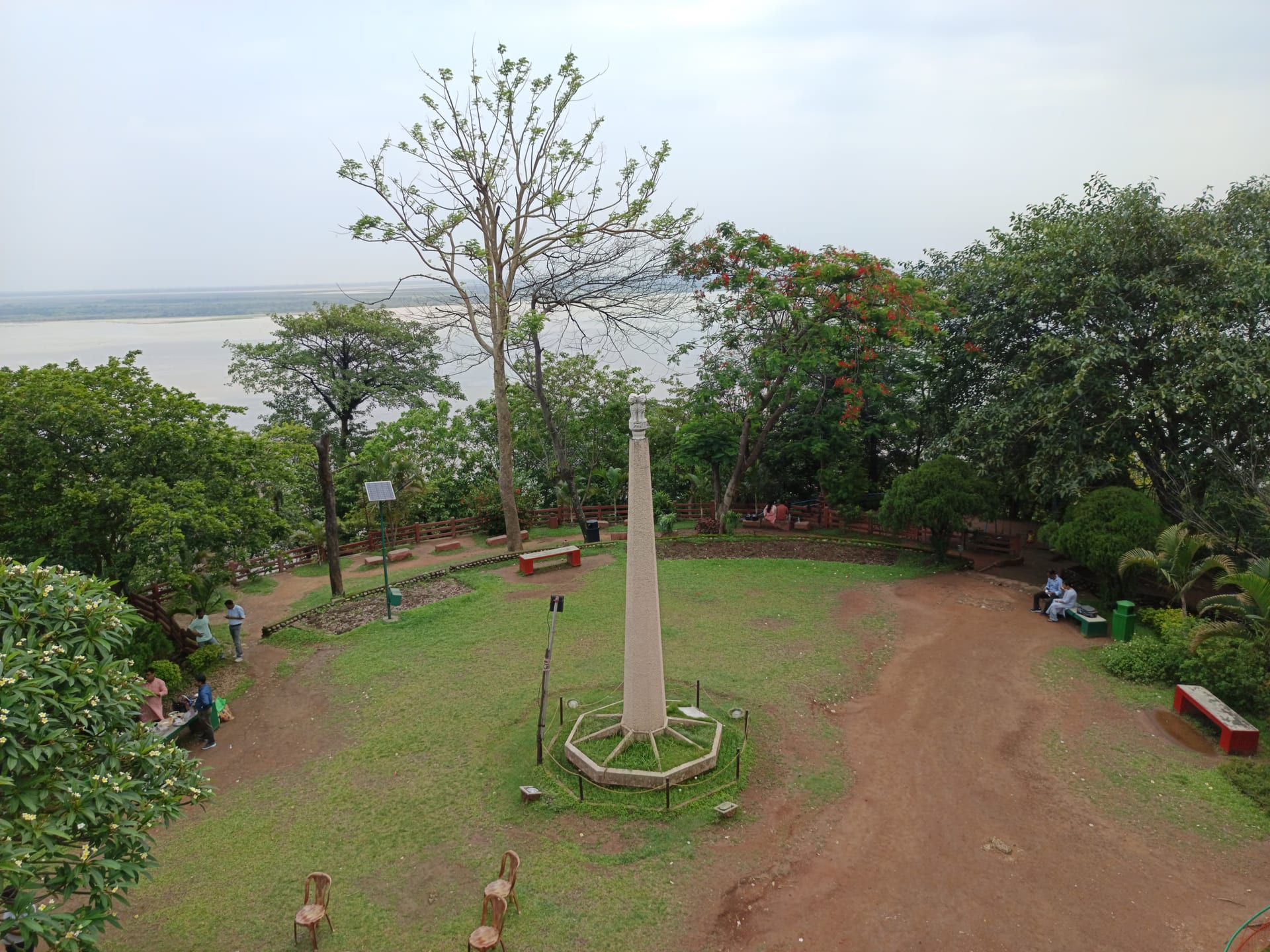
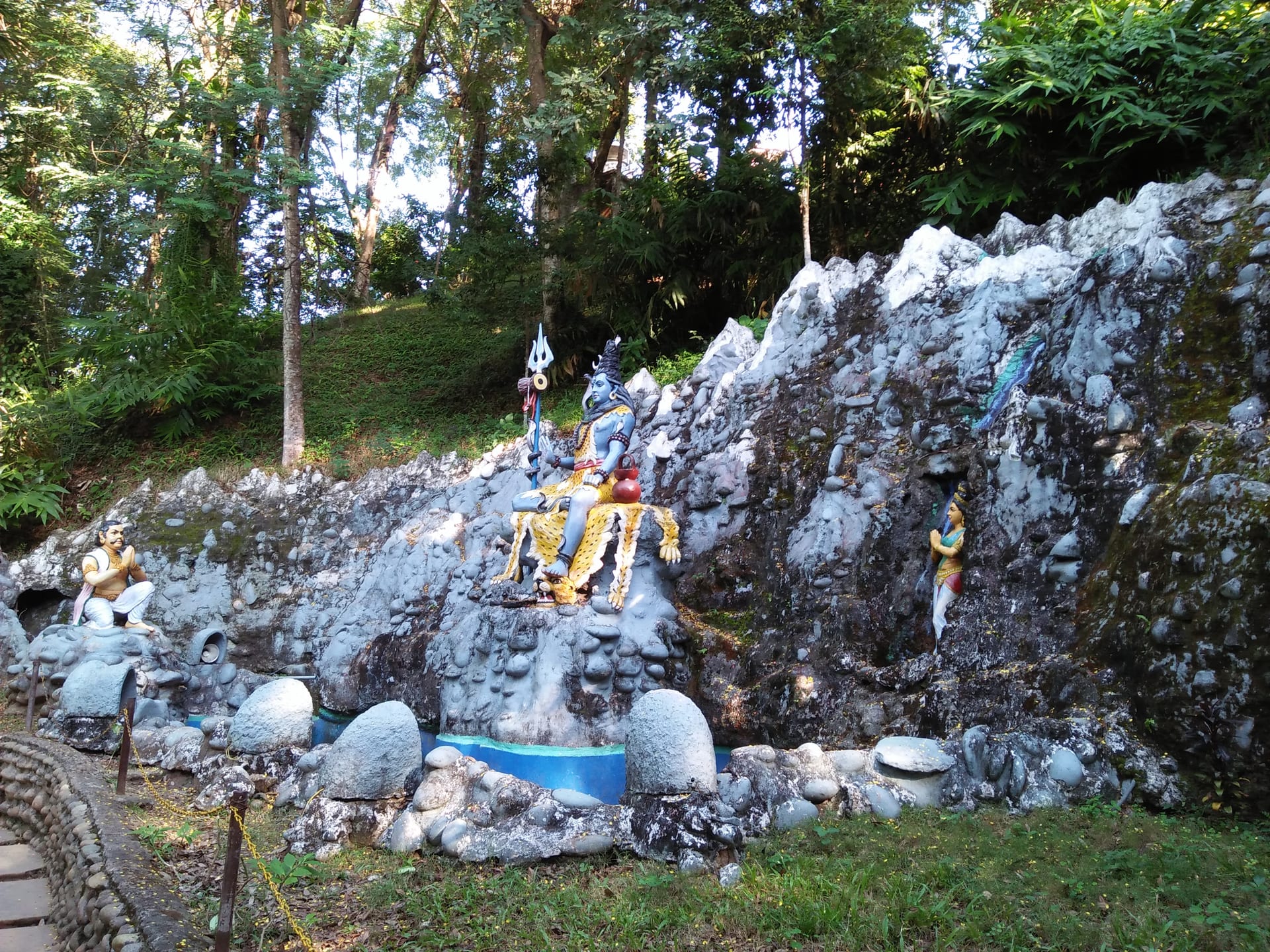
Upriver the same legend surfaces again. Banasura is said to have wanted a new Kashi at the meeting of the waters, and the north-bank temple town of Biswanath Ghat keeps that ambition in its name. Agnigarh itself is a landscaped hill today, spiralling paths and sculpted panels that set the tale out in stone for whoever climbs it. From the summit the Brahmaputra opens out below, braided around its sandbars. A hill named for a father’s fire, above a town named for a god’s blood, and both names older than any record that holds them.