
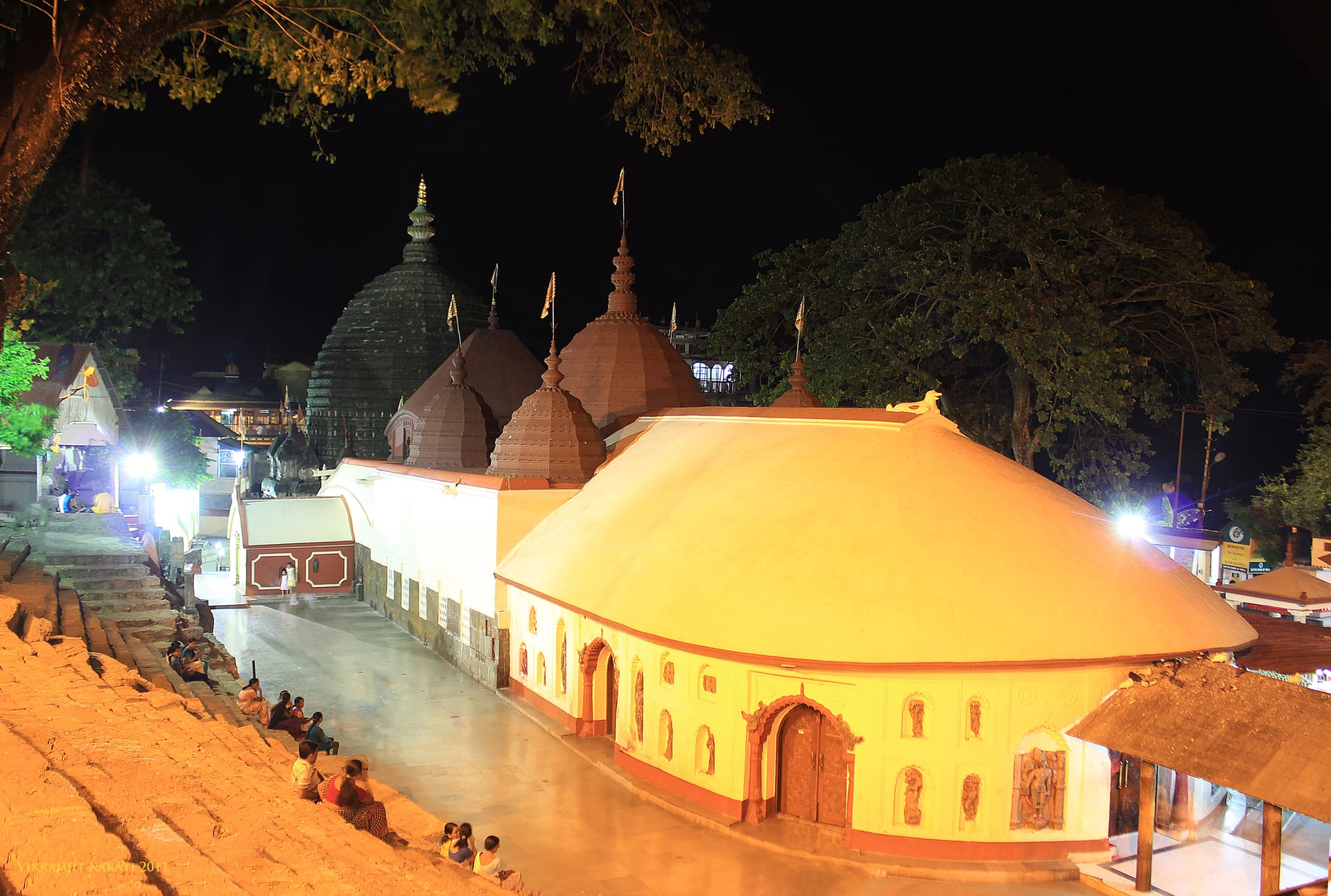
Somewhere in the tenth or eleventh century, in the kingdom of Kamarupa, priests composed the Kalika Purana, the region’s own scripture. They knew the goddess’s hill at Kamakhya and the water that swept beneath it, and into their text they set the birth of that river. Their account turns on a sage’s wife, the creator god, a lake locked among the eastern peaks, and an axe that had killed a mother. It is the story that gave the Brahmaputra its name. Almost a thousand years later it still draws tens of thousands of people each January to the far eastern edge of the Assamese world.
A sage’s wife and the creator
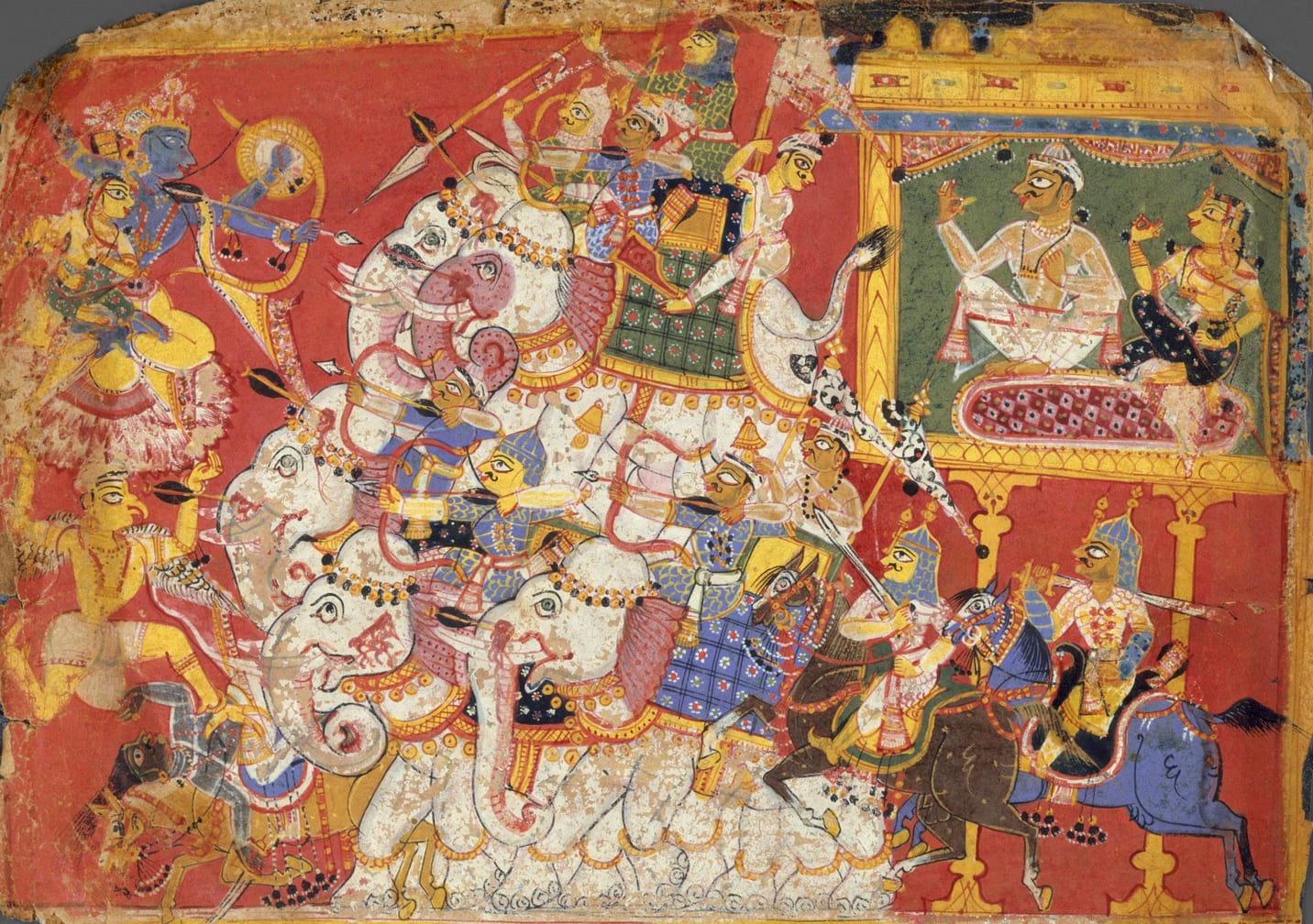
The story begins in a hermitage among the eastern mountains, where the sage Shantanu lived with his wife Amogha. Her beauty and her virtue were famous enough to reach heaven, and Brahma the creator came down to her. He arrived while the sage was away, wearing, in the versions most often retold, her husband’s own form. What was conceived of that visit was no ordinary child. Amogha gave birth to water. Her son was a flood, a living mass that spread and deepened and could be held in no cradle. Shantanu carried the infant up into the high country and laid him between four great peaks, Kailash and Gandhamadana among them. There the child lay and grew, filling the hollow between the peaks. Two things took the creator’s name from that. The hollow became Brahmakunda, the pool of Brahma, and the child lying in it was Brahmaputra, the son of Brahma. He was a child still, a body of water impounded in the mountains, and the name already said what he would be. A male child of the creator, alone of his kind among the great rivers of the subcontinent.
The axe of Parashuram
A lake among four mountains, however divine, is not yet a river. The tradition gives the release of the water to the most troubled figure in the Sanskrit canon. Parashuram, the sixth avatar of Vishnu, was the son of the sage Jamadagni and his wife Renuka. When his father, in a fury of suspicion, ordered his sons to kill their mother, Parashuram alone obeyed. He took her head off with his axe. The axe never forgave him. It fused to his hand, the tradition says, and no rite, no penance and no sacred water in the land could loosen it. He wandered the tirthas of the subcontinent carrying the instrument of his sin in a fist he could not open.
What finally freed him was the child of Brahma. Parashuram reached the mountain lake and bathed in it, and the axe dropped from his hand. Water born of the creator had absolved even a matricide. The freed man’s first act was a gift. With the same axe that had killed his mother he cut through the rim of the mountain basin and let the imprisoned water out. The son of Brahma ran down into the plains and became the river of a whole civilisation. The older Sanskrit registers knew that river by a second name, the Lauhitya, the red one. Traditions do not agree on where the redness came from. In some tellings it is the blood-guilt washed into the water by the sinners the lake had absolved. The name Lauhitya survives on the modern map. Lohit, the easternmost of the three rivers whose meeting at Sadiya begins the Brahmaputra proper, still carries it. The gorge where the Lohit leaves the hills is held to be the place of the cutting. The pool below still bears Parashuram’s name. It is today’s Parashuram Kund, in the Lohit country of Arunachal Pradesh.
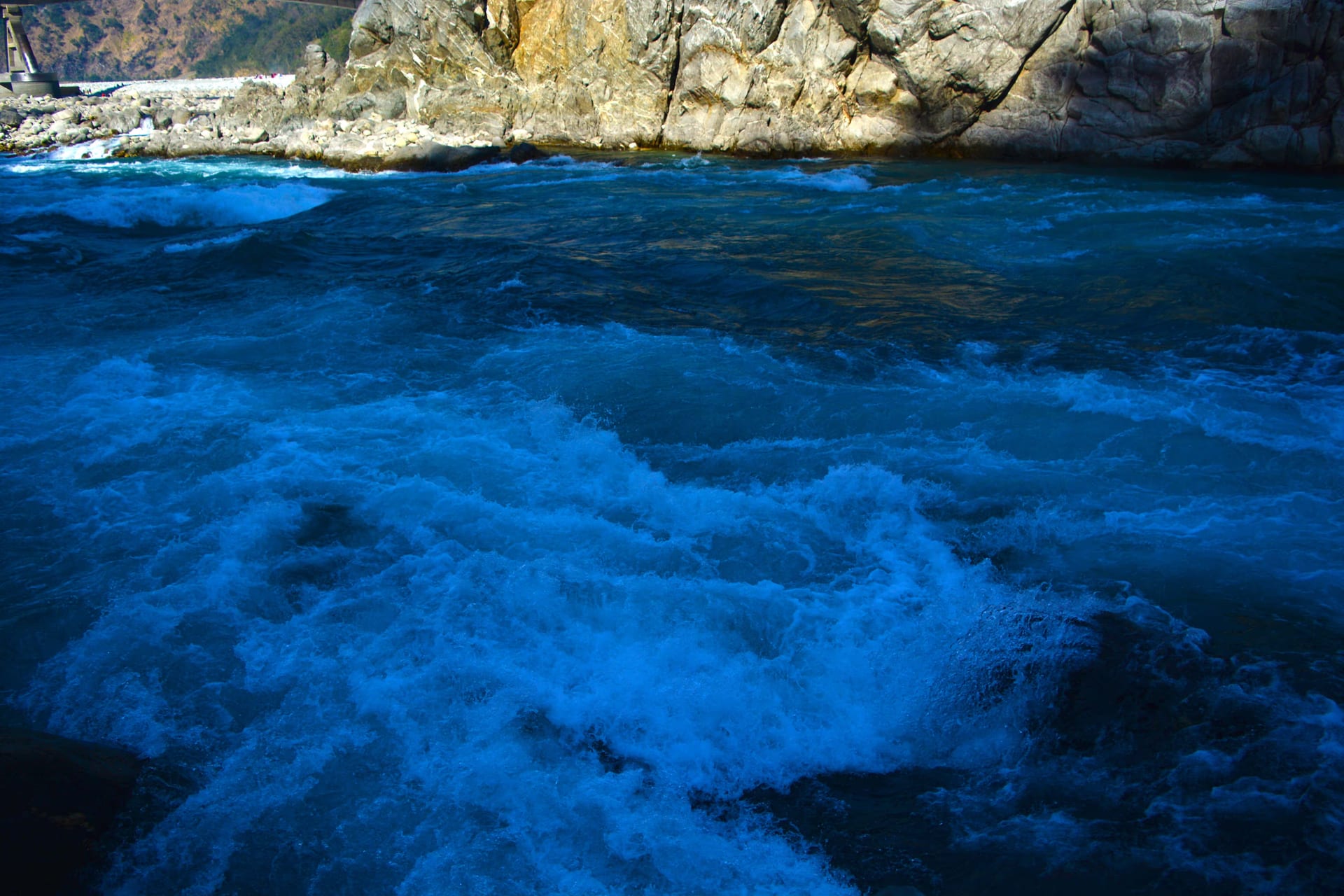

The kund is not a literary relic. Every January, at Makar Sankranti, pilgrims come down to it in their tens of thousands, from Assam and far beyond. They bathe in the coldest water of the year at the spot where the axe fell. The promise is the one the myth first made, that water which absolved Parashuram can absolve anyone. Even the land’s convulsions have not broken the habit. The great earthquake of 1950 rearranged the upper river itself. It shattered the rock basin of the kund and buried the old bathing pool, and the pilgrimage simply carried on in the changed one, a ring of fallen boulders in the riverbed. Most of the pilgrims come up through the far east of Assam, out of Dibrugarh and the Tinsukia country. The road runs past the river islands of Dibru-Saikhowa and the rainforest of Dihing Patkai before it climbs into the Lohit hills. Tezu, some forty-eight kilometres short of the pool, is the last town of any size on the way.