Manas sits where the Himalaya meets the plain, on the foothills of the Bhutan border. Here the Manas river leaves the mountains and fans out across the Brahmaputra valley. That transitional position gives the park an ecological richness, and a list of rare species found in few other places. It also carries an unusual stack of titles. It is a UNESCO World Heritage Site, inscribed in 1985. It is a Tiger Reserve, an Elephant Reserve, a Biosphere Reserve, and a National Park all at once. It is also the park with the hardest recent history in Assam. It was all but destroyed in the insurgency years, then hauled back from ruin in one of the region's great conservation recoveries.
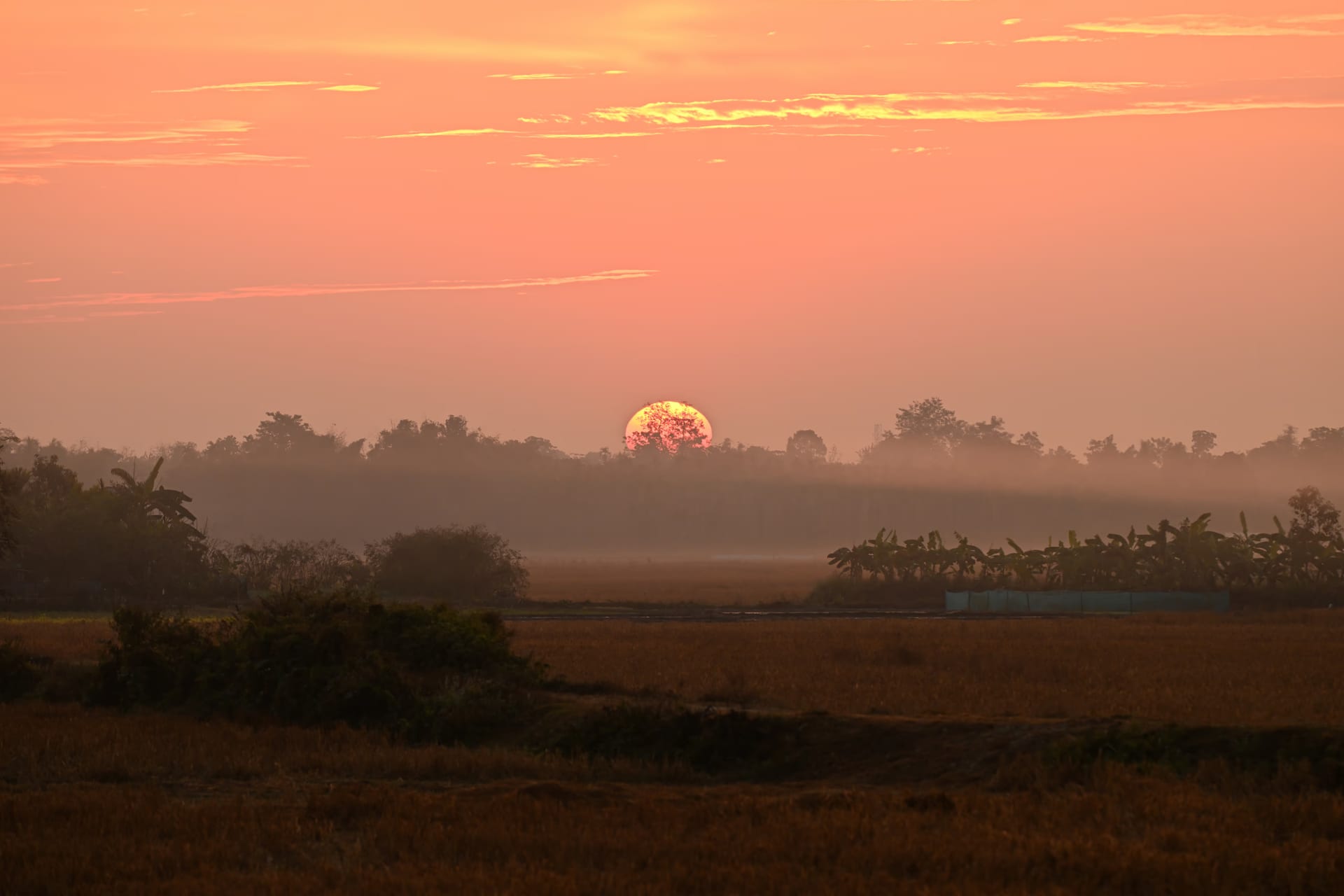
A Himalayan-plain transition
The park straddles the contact zone between the Eastern Himalaya and the Indo-Gangetic plain. It runs continuous across the international border with Bhutan's Royal Manas park. Its habitats grade from the wooded foothills down through the bhabar and terai belts. Coarse boulder-and-gravel slopes give way to fine alluvial grassland, and then to the riverine tracts of the Manas and Beki. This gradient of altitude and moisture packs an unusual variety of ecosystems into one landscape: tall alluvial grassland, semi-evergreen and moist deciduous forest, and the braided channels of the rivers themselves. It is the grassland, above all, that makes Manas. It is the rare wet terai grass that holds the species the park is famous for.
A refuge of rarities
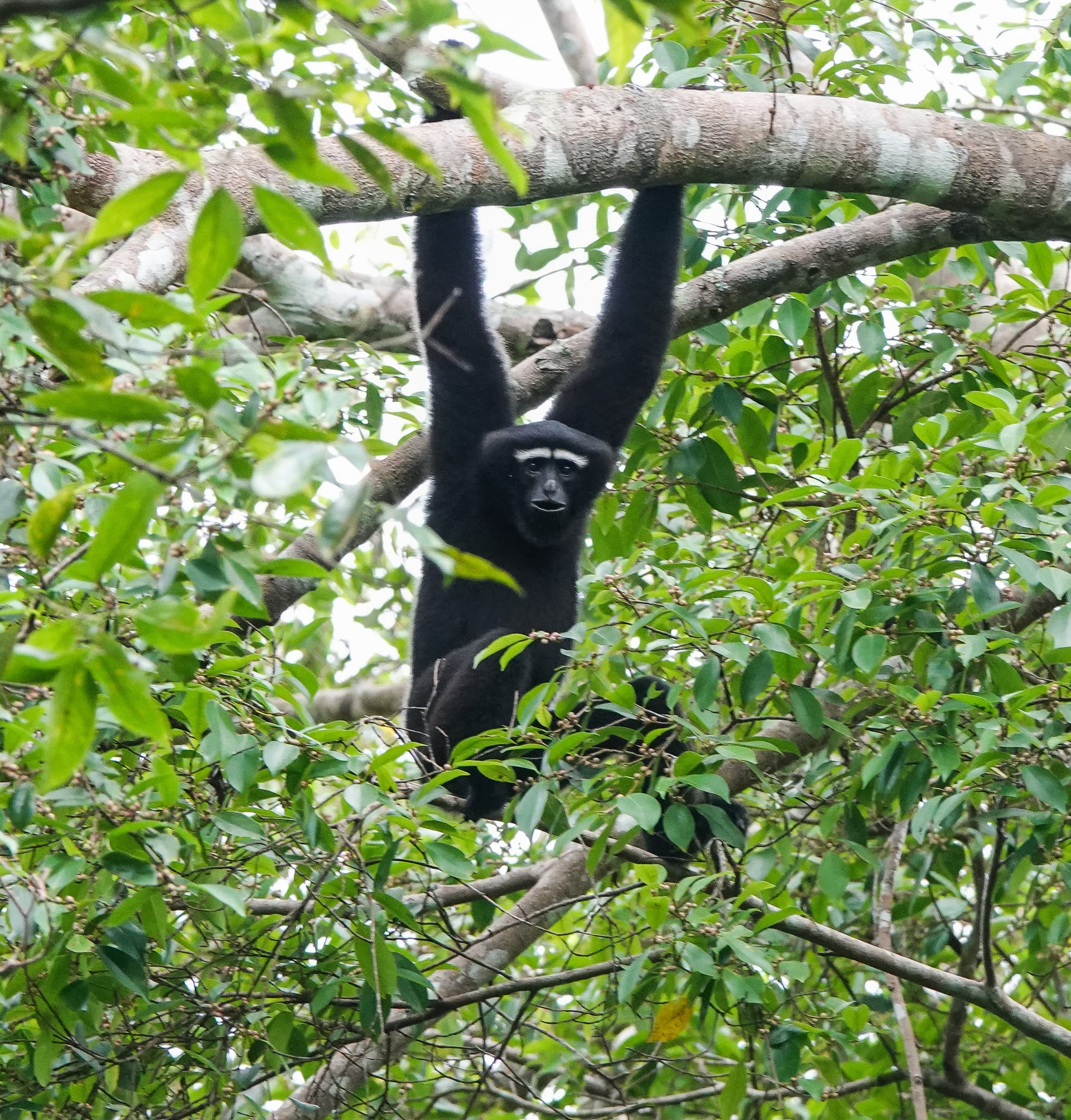
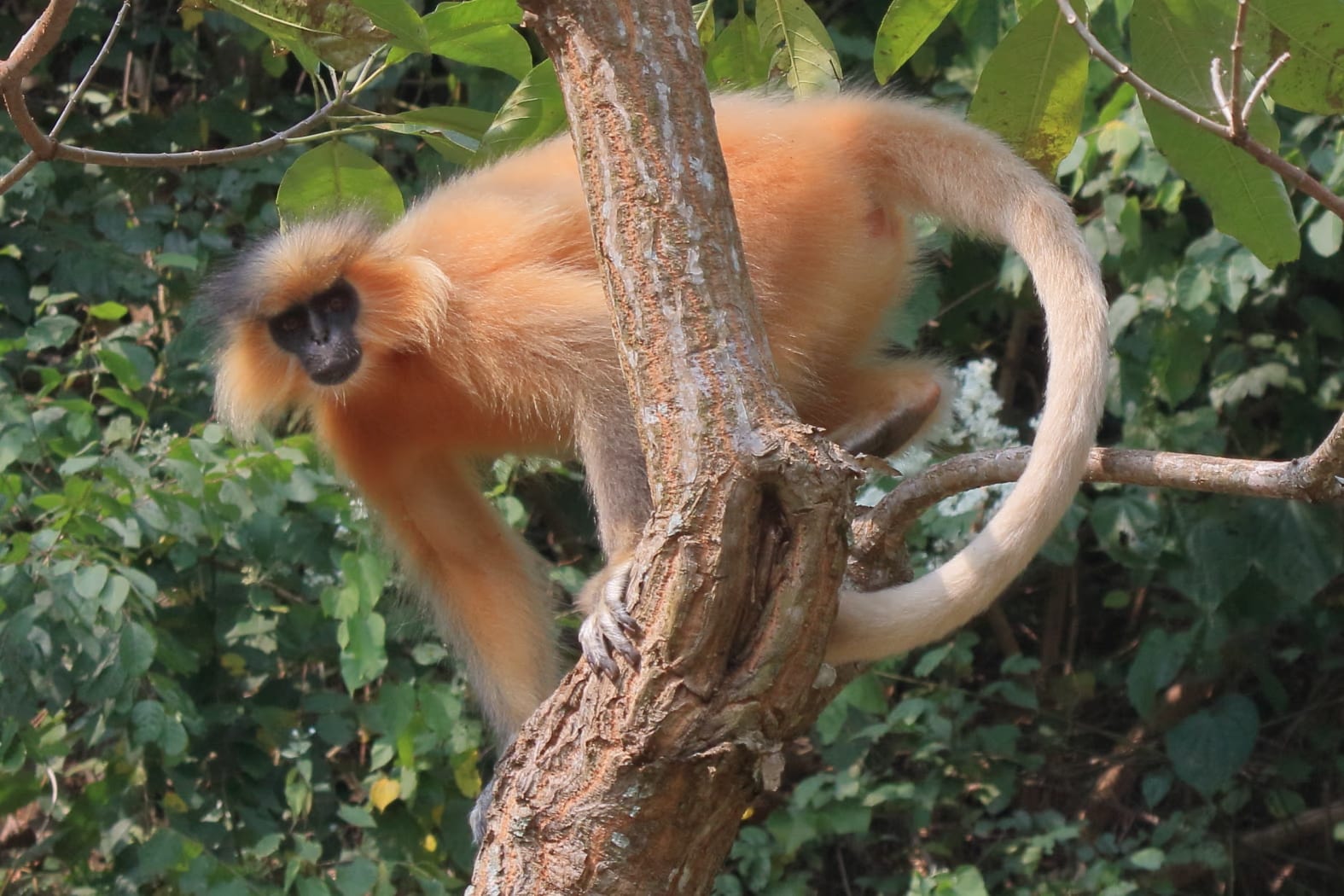
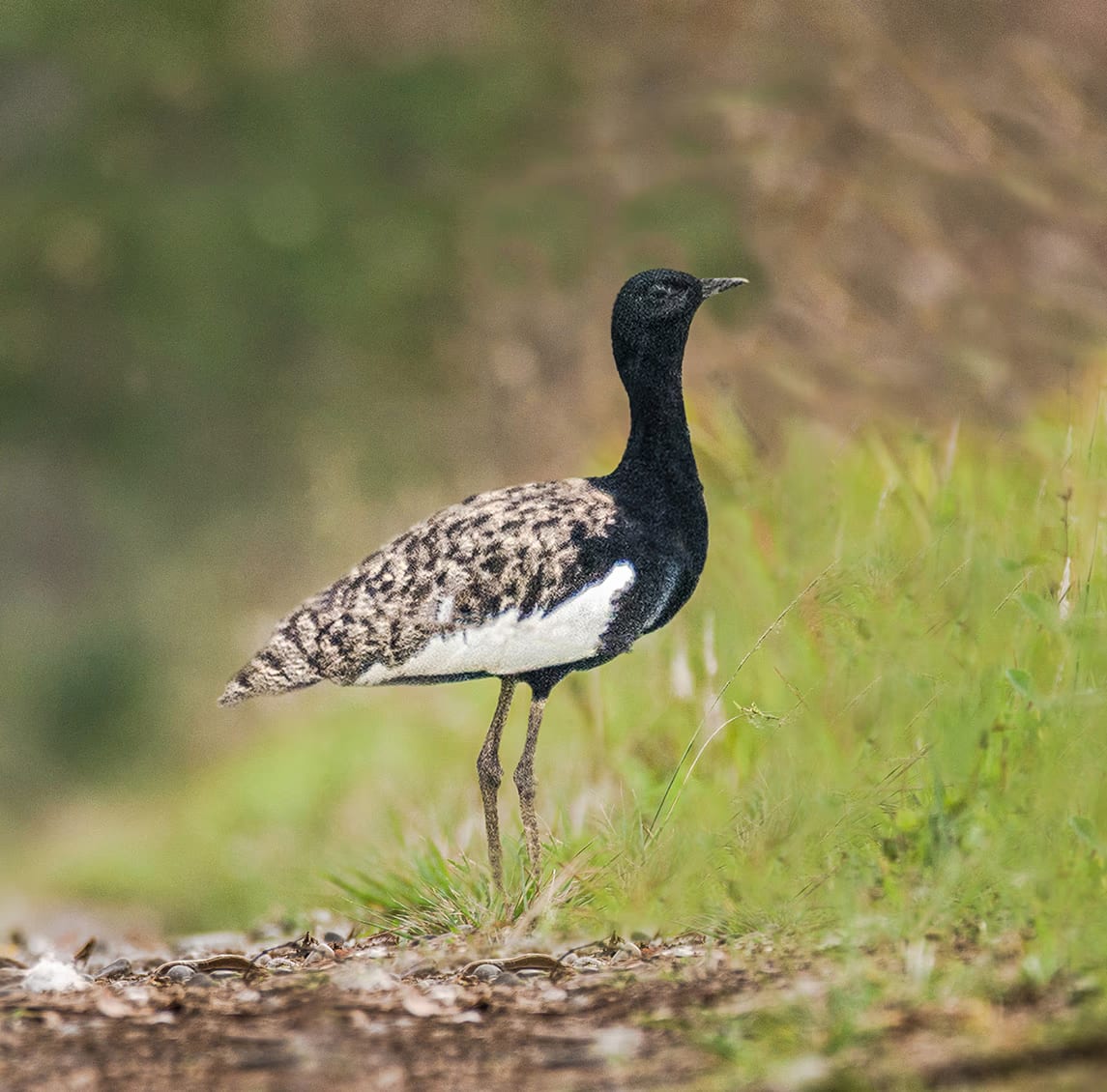
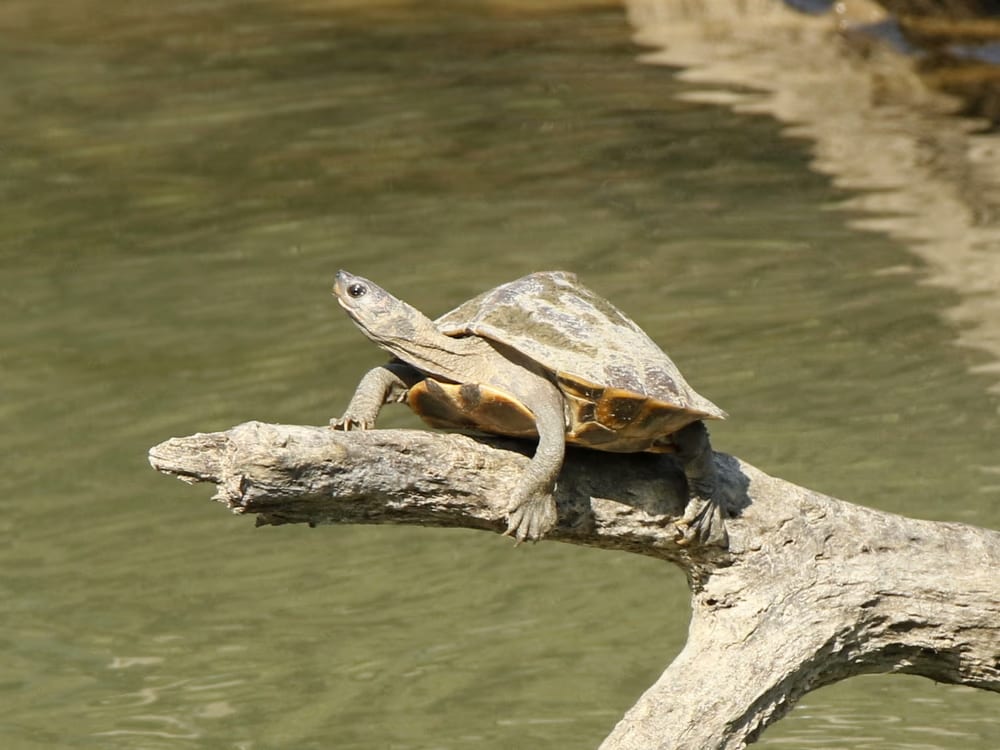
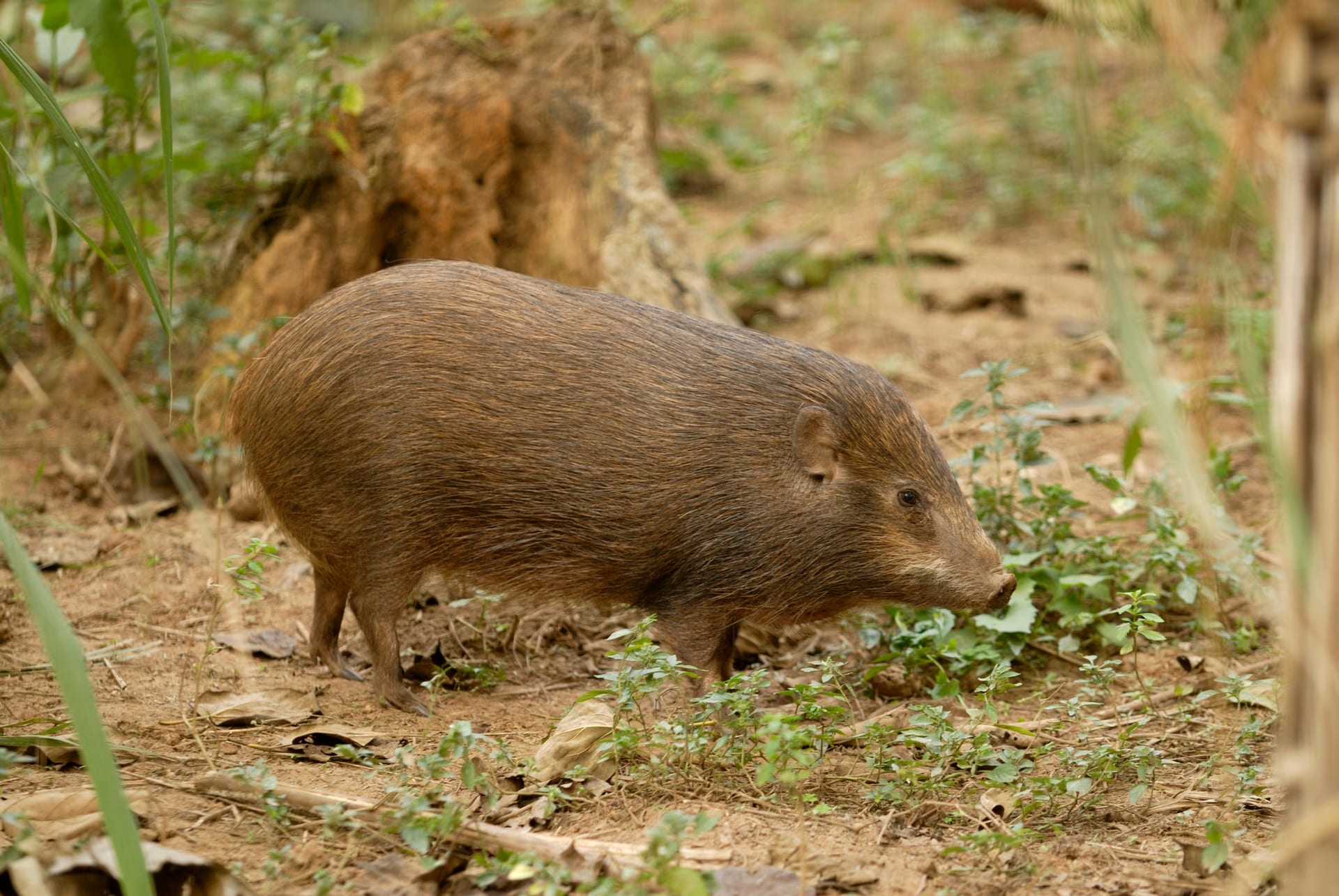
Manas is celebrated above all for the rarities it shelters. Several of them are found almost nowhere else on earth. It is the last natural home of the pygmy hog, the world's smallest wild pig. This cat-sized animal was first described far to the west in the Sikkim terai, and the grasslands here are its only surviving natural home, the one place the species never died out. Manas is also a stronghold of the golden langur, the pale, golden-coated monkey of the Assam-Bhutan border. It shelters the hispid hare, the “bristly rabbit” of the tall grass. It holds the Bengal florican, the rare grassland bustard, and the Assam roofed turtle. Its bird life numbers more than four hundred and fifty species, gathered at the meeting of Himalayan and plains avifaunas. That makes it among the richest of any Indian park, and that is why Manas is one of the country's great birding destinations.
From the pygmy hog in the grass to the great wheeling display of the peafowl on a forest track, the park's variety is what its protectors fought to keep.
The big mammals
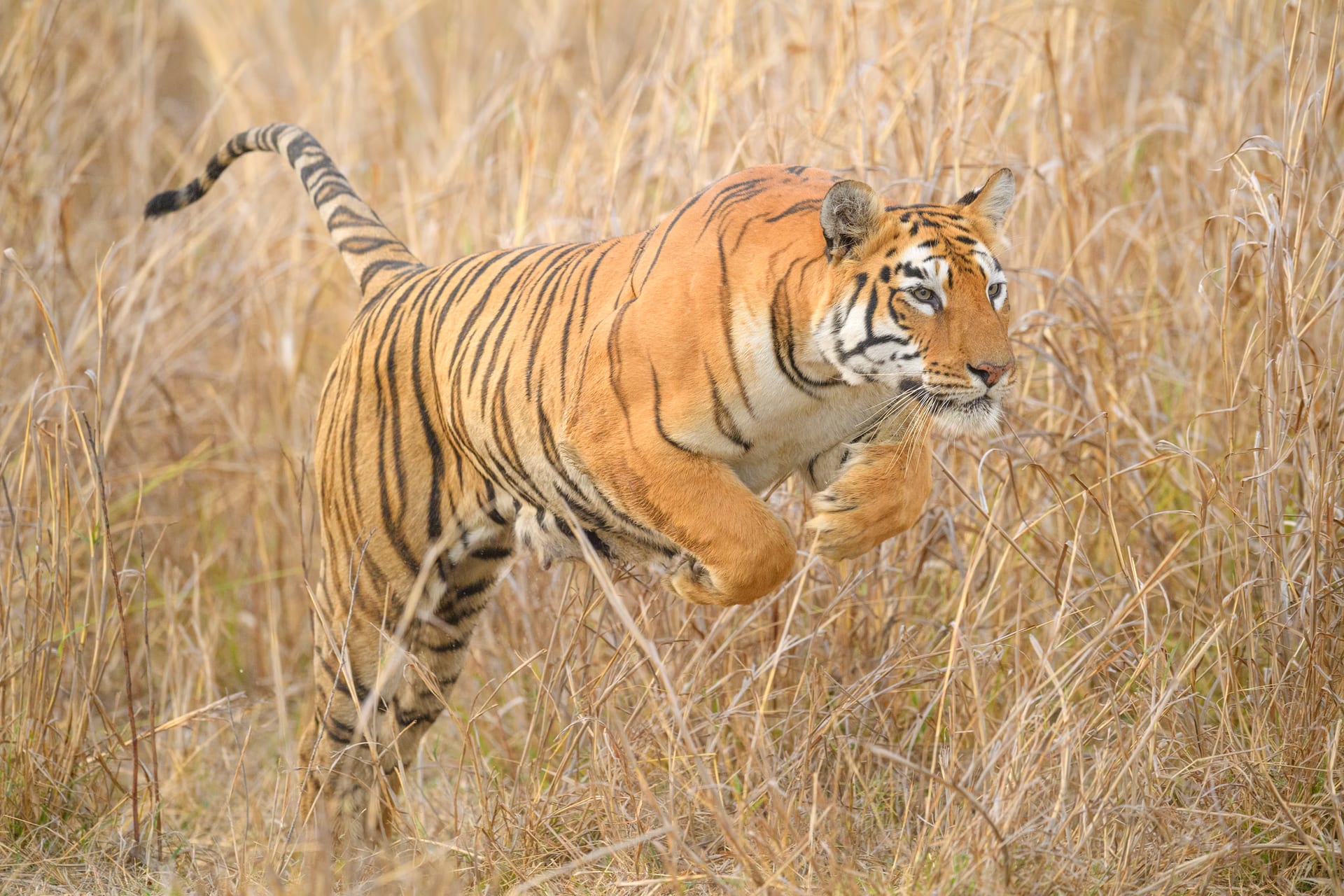
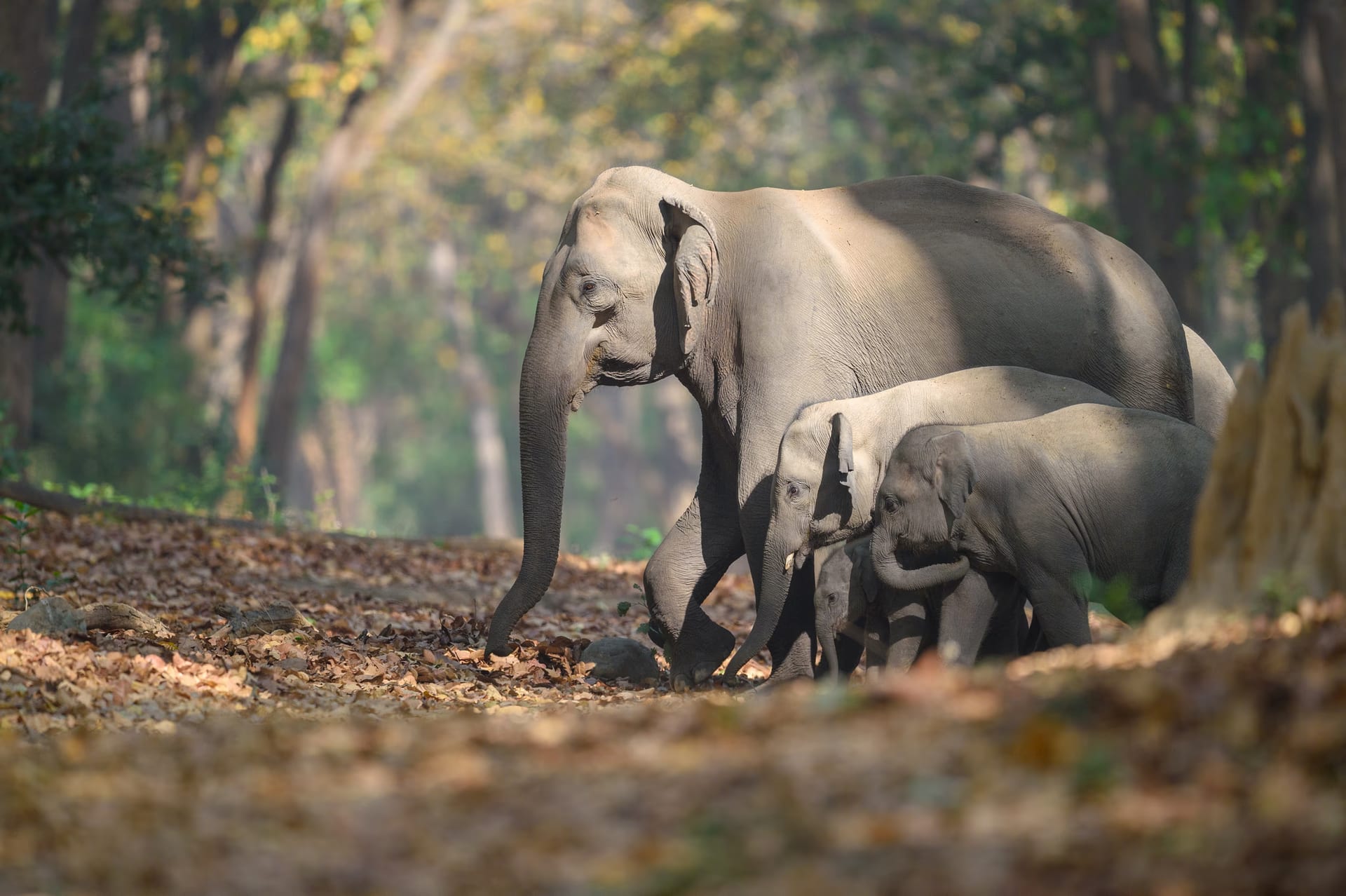
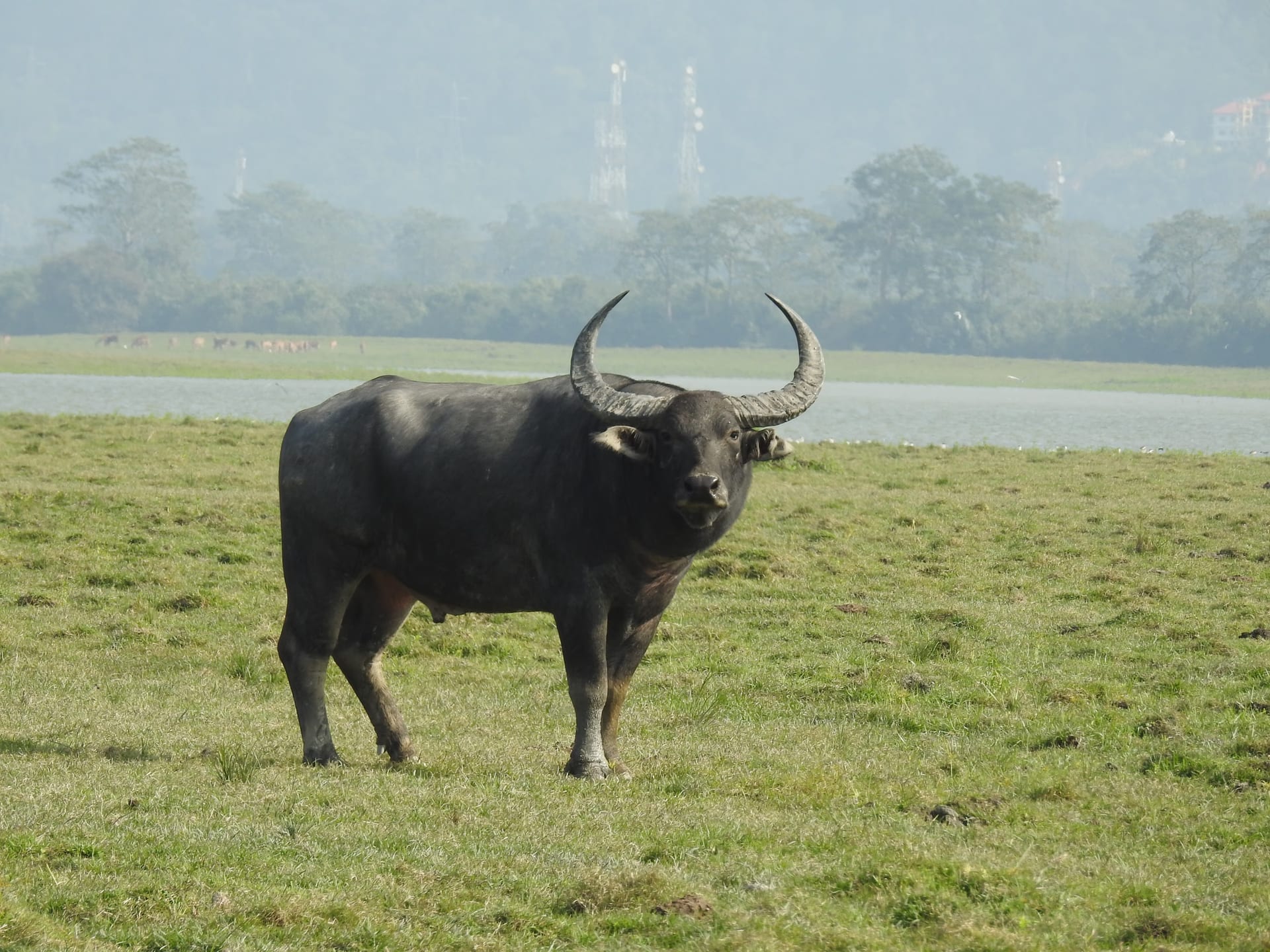
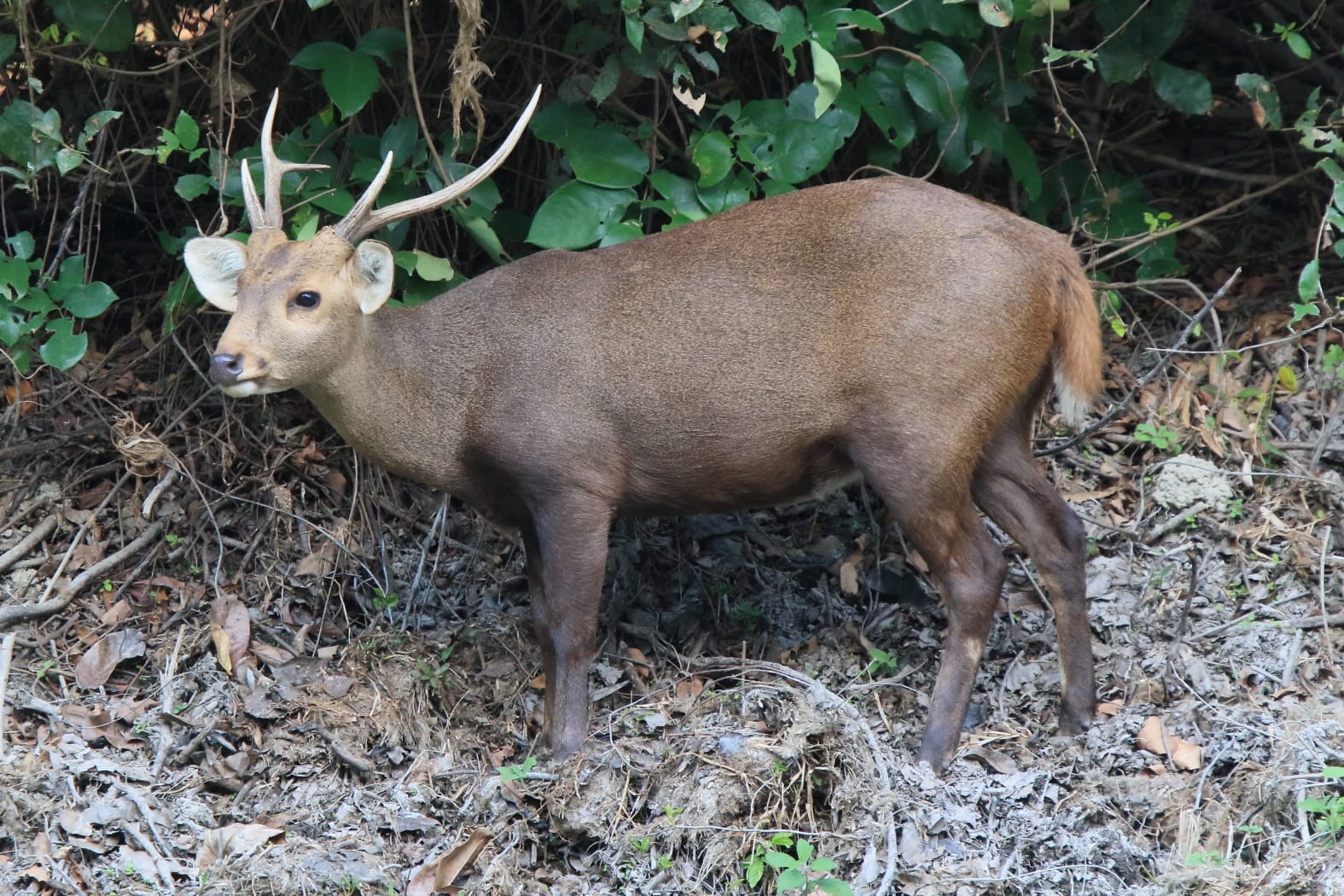
Alongside the endemics, Manas holds the full assemblage of the great floodplain mammals it shares with Kaziranga. There is the tiger, for which it was among the first parks brought under Project Tiger in the 1970s. Manas remains one of the country's designated tiger reserves, and the big cat holds the top of the food chain across its grassland and forest alike. There are resident herds of elephant, which range freely up into the Bhutan hills and back. There is the wild water buffalo, the heavy-horned bovid of the wet grassland, and the eastern swamp deer, the antlered deer of the same tall grass.
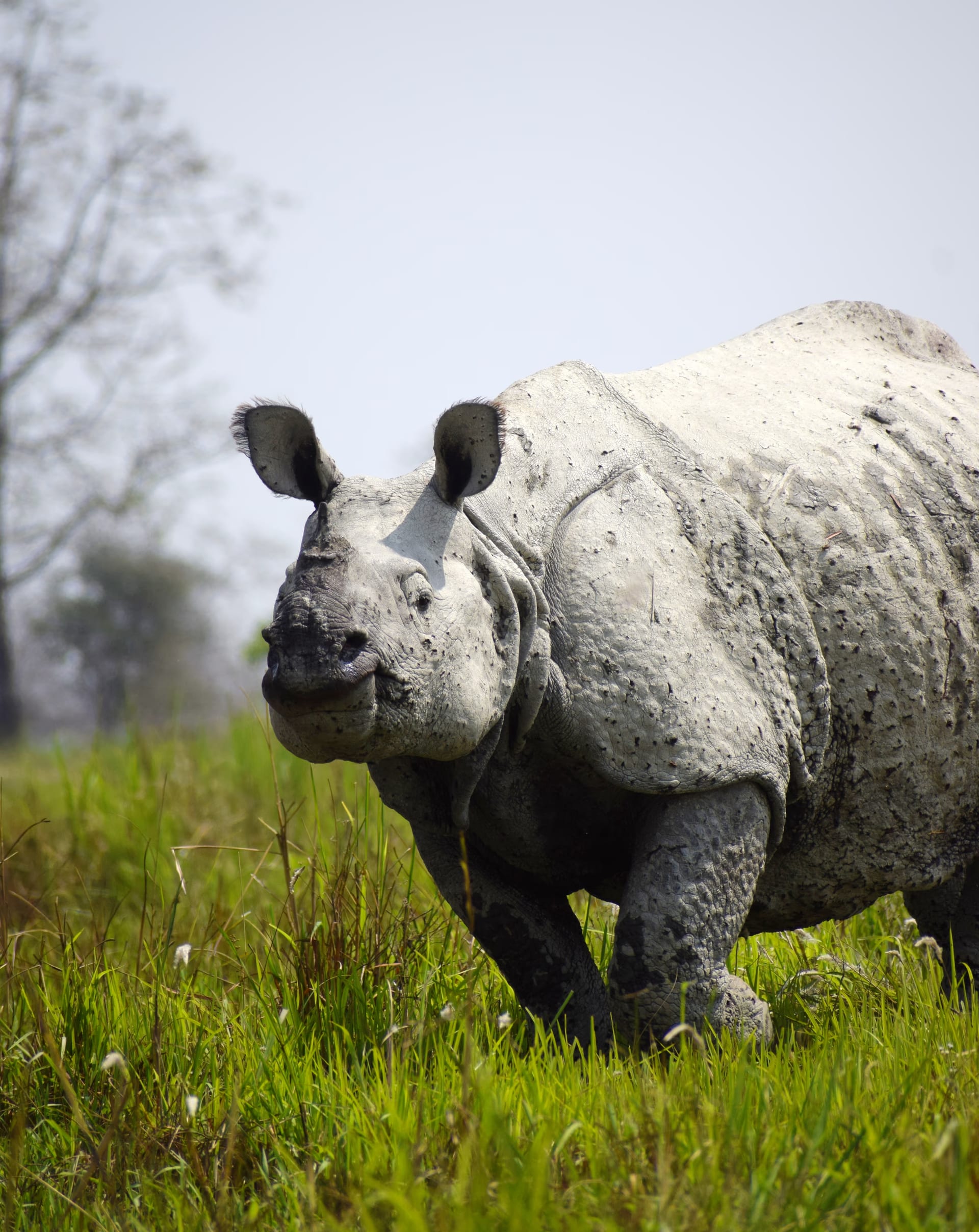
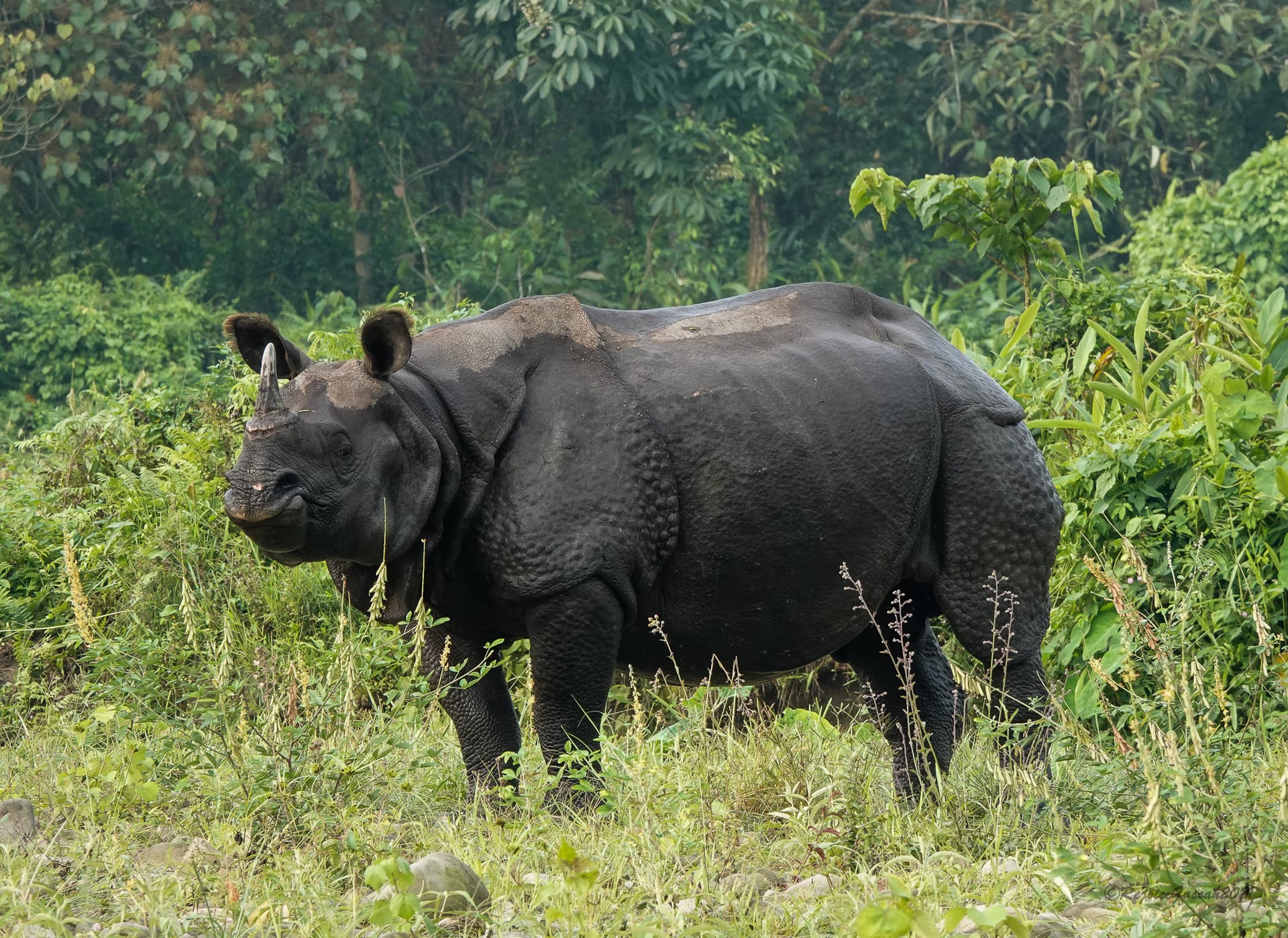
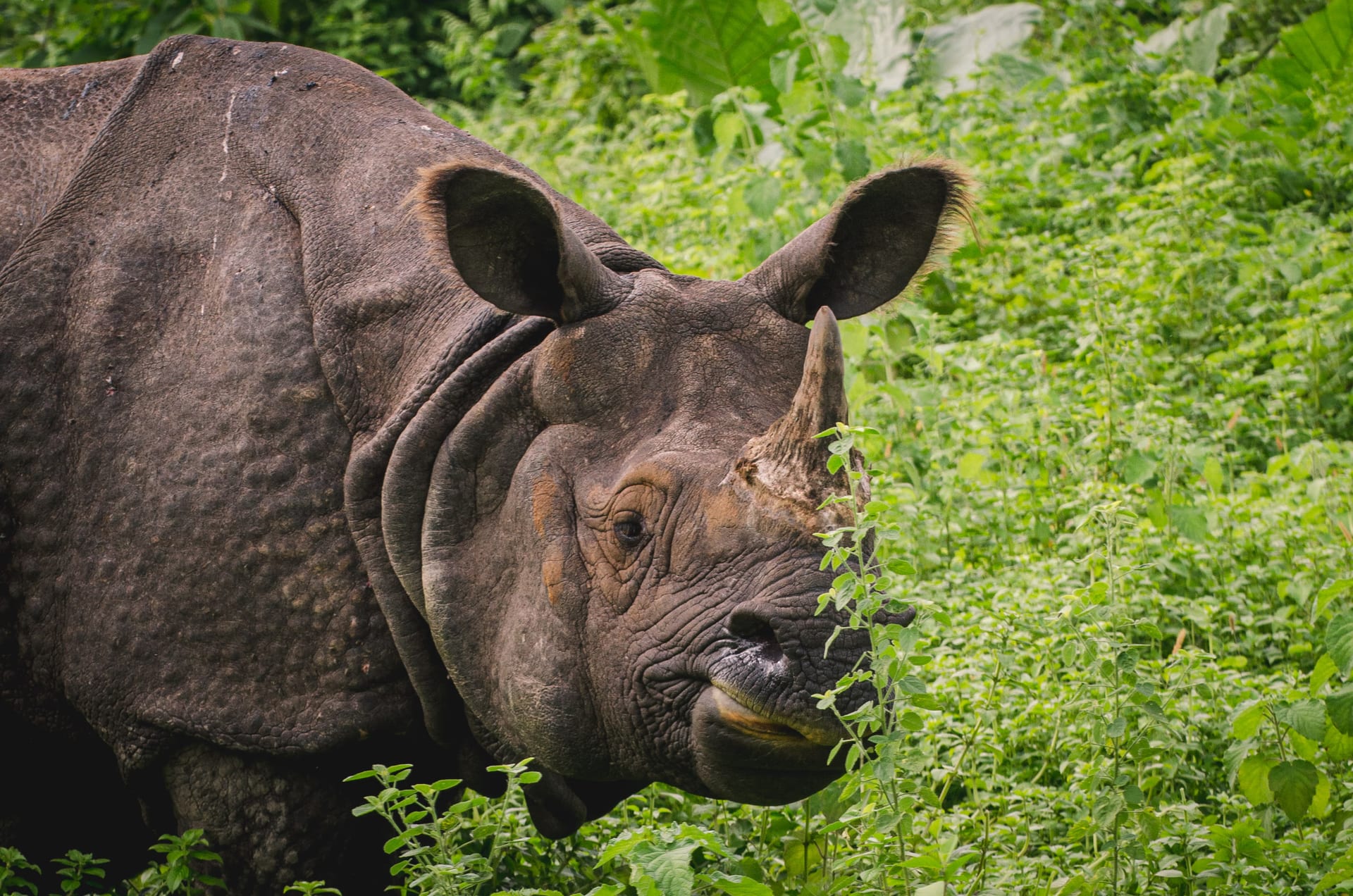
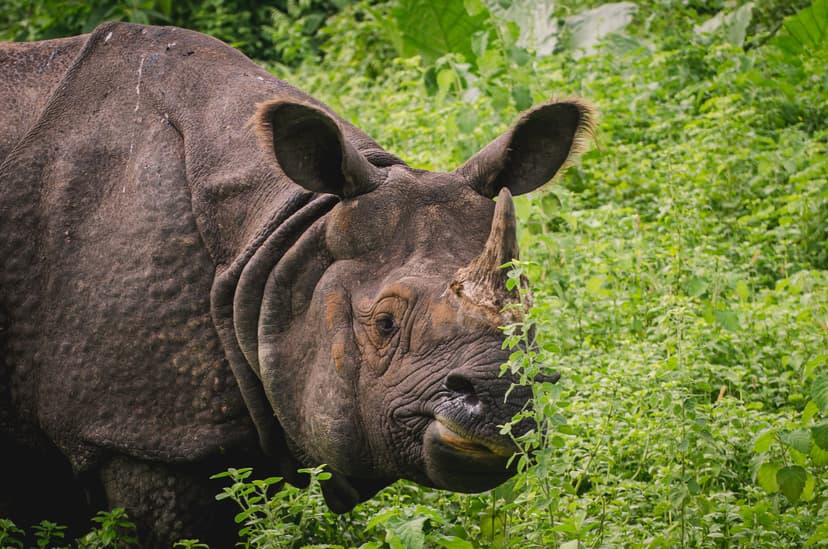
And there is the greater one-horned rhinoceros. Here it is not a survivor but a returnee, brought back to a park from which it had been entirely shot out. That sets Manas apart from Kaziranga, where the rhino never disappeared. The two parks now anchor the species between them, one as its long stronghold and the other as the proof it can be restored. The species are catalogued in the searchable list below, with their conservation status and links to the IUCN Red List.
The years of ruin
The ecology of Manas cannot be told apart from its recent history. From the mid-1980s, the armed phase of the Bodo movement for autonomy turned the park into a battleground. Through the late 1980s and 1990s its roughly hundred rhinos were killed to the last. Its swamp deer and tiger numbers collapsed. Guard camps, bridges, and buildings were burned, and the management of the park effectively ceased. In 1992 UNESCO placed Manas on its List of World Heritage in Danger. This was a public mark of how close it had come to losing the values for which it had been inscribed. The last wild rhino in Manas was killed by about 2001. For a time the park stood as a warning of what the loss of order does to a wild place.
The bringing-back
The recovery began with the politics. The creation of the Bodoland Territorial Council in 2003, and the winding down of the conflict, gave the park the stability it needed. It is now run in close partnership with the Bodo communities around it. Former poachers were drawn in as guards and guides who knew the forest better than anyone. On that foundation came the reintroductions. From 2007 the greater one-horned rhino was translocated back from Pobitora and Kaziranga under the Indian Rhino Vision programme, rebuilding from nothing a population that poaching had wiped out. The captive-bred pygmy hog was released back into its home grassland, raised from a handful of animals taken from Manas itself in the 1990s. In 2011 UNESCO removed Manas from the Danger list. This was official recognition that a World Heritage Site had been brought back from the edge. It is a turnaround set within the longer ecological history of Assam's forests that Arupjyoti Saikia has written. That recovery was the work of particular people. Many of them were the very poachers who had emptied the forest and then turned to guarding it, and their turn is told in full as a Lens.
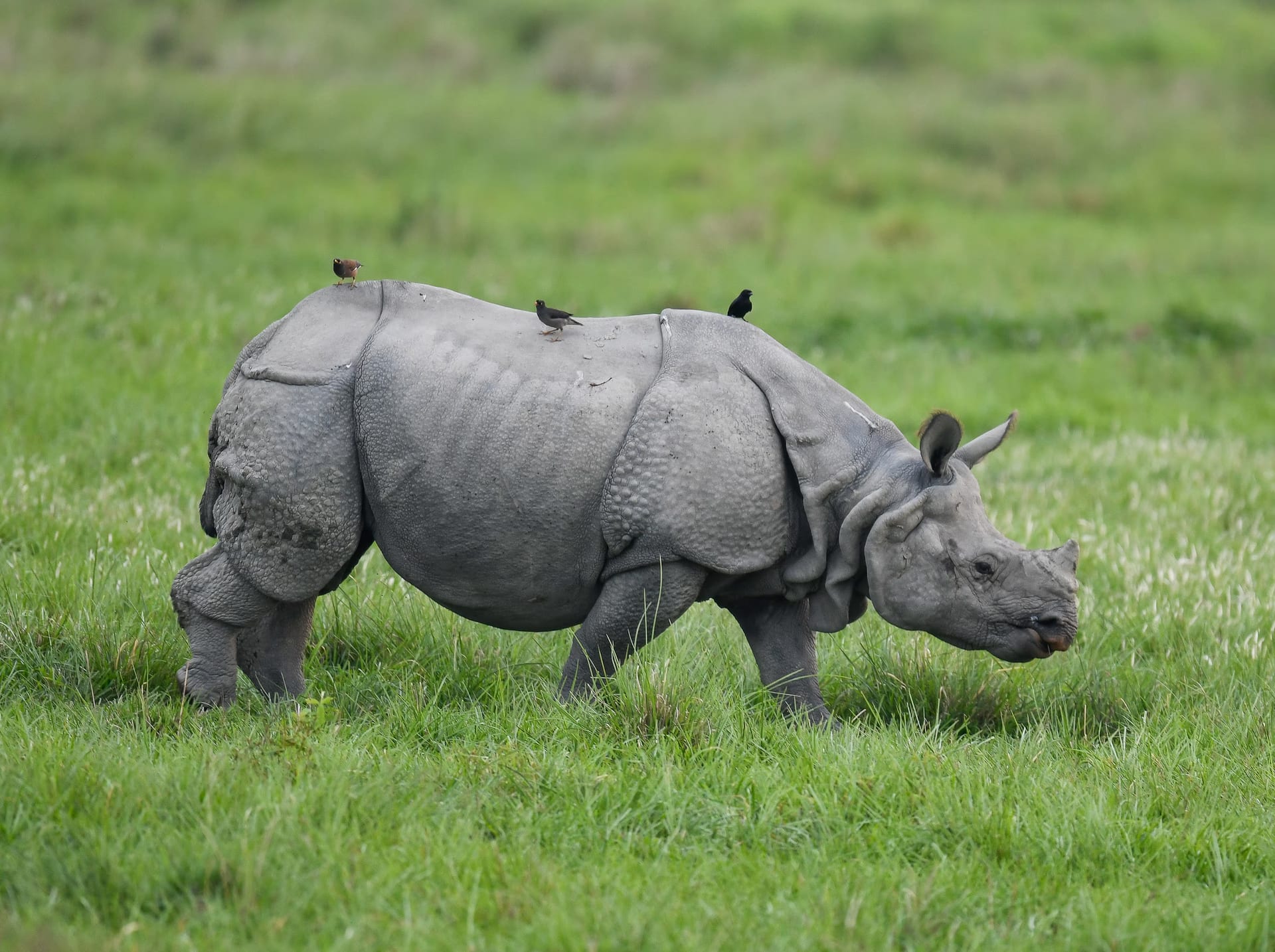
The reintroduced rhino is now the emblem of the park's revival. As a returnee, it bears witness to the species' near-loss and recovery across the whole of Assam.
The shape of the park
Manas is rare in South Asia for running seamlessly across an international border. On the Bhutan side it continues as the Royal Manas National Park. The two together protect one unbroken corridor, from the plains grassland up into the Himalayan foothill forest. Along it, tiger, elephant, and the rest move freely between the countries. That cross-border continuity is paired with the community-linked protection on the Indian side. Together they make Manas a model of a kind of conservation that is transboundary and locally rooted, and unusual in the region.
Within that whole, the Indian park is divided into three ranges, and it is through these that the visitor enters. Bansbari, the central range reached from Barpeta Road, is the main gateway. It has the forest lodge and the classic grassland-and-river safari toward the Mathanguri bungalow on the Bhutan border, where the Manas pours out of the hills. Panbari, the western range, is the quieter, more forested side, good for the golden langur and forest birds. Bhuyanpara, the eastern range, is grassland and woodland that holds tiger, elephant, and rhino. Between them the ranges run the whole gradient of the park, from the riverine grass to the foothill forest under Bhutan.
Visiting
Manas lies in the Bodoland region of western Assam. It is reached from Barpeta Road, an easy half-day from Guwahati. The park is open in the dry season, roughly November to April. Game-viewing is by jeep through the ranges, and, where permitted, on elephant-back at dawn. There are river trips on the Manas, with the dramatic backdrop of the Bhutan hills. The riverside rest house at Mathanguri, looking across into Royal Manas, is one of the great positions in any Indian park. To make a wider Bodoland circuit of it, pair Manas with the golden-langur forests of Raimona at the western end of the same belt, and with the wetland-and-grassland reserve of Chakrashila down toward the Brahmaputra. The species catalogue below lists what may be seen, with conservation status and best months.