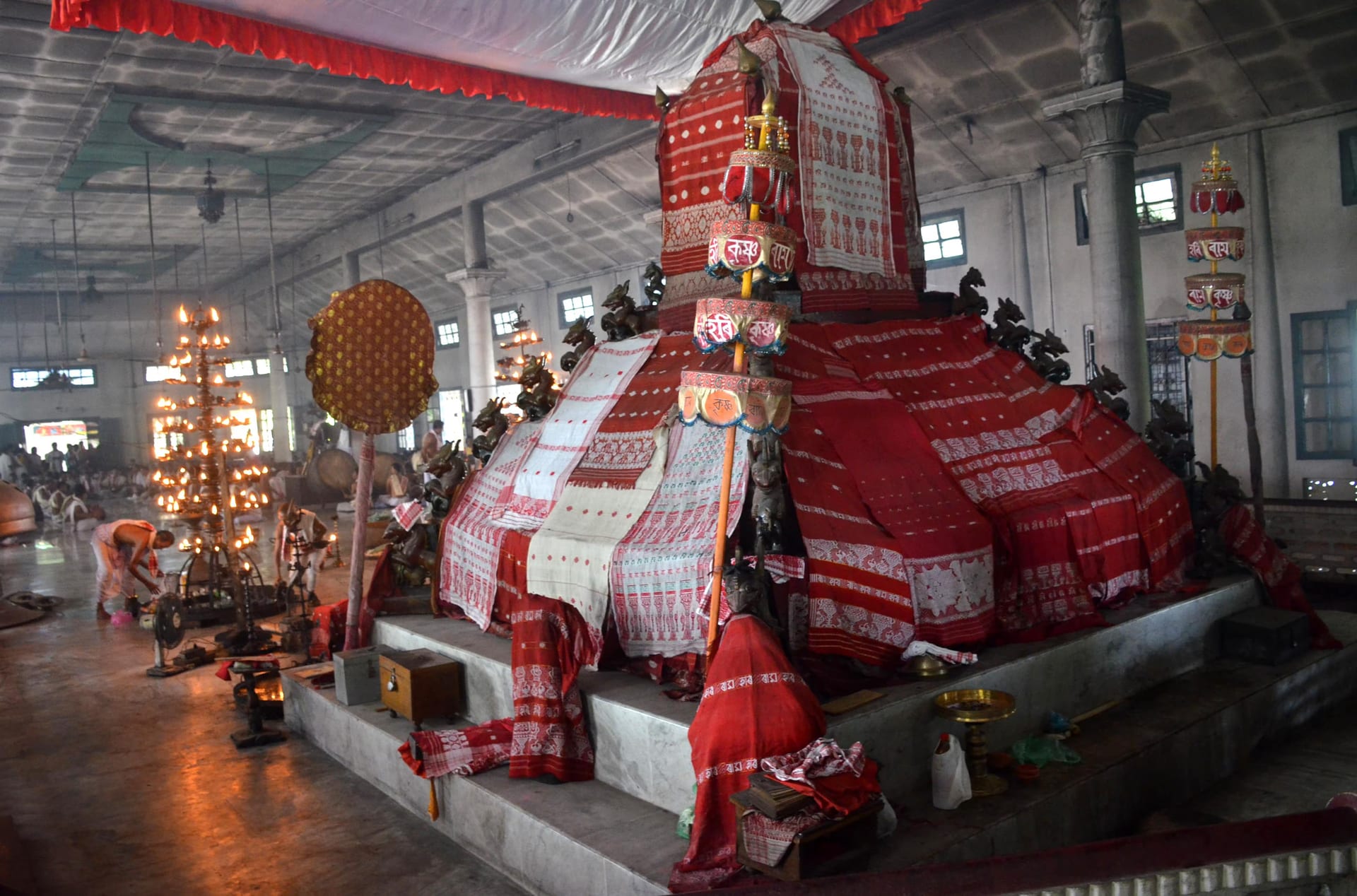
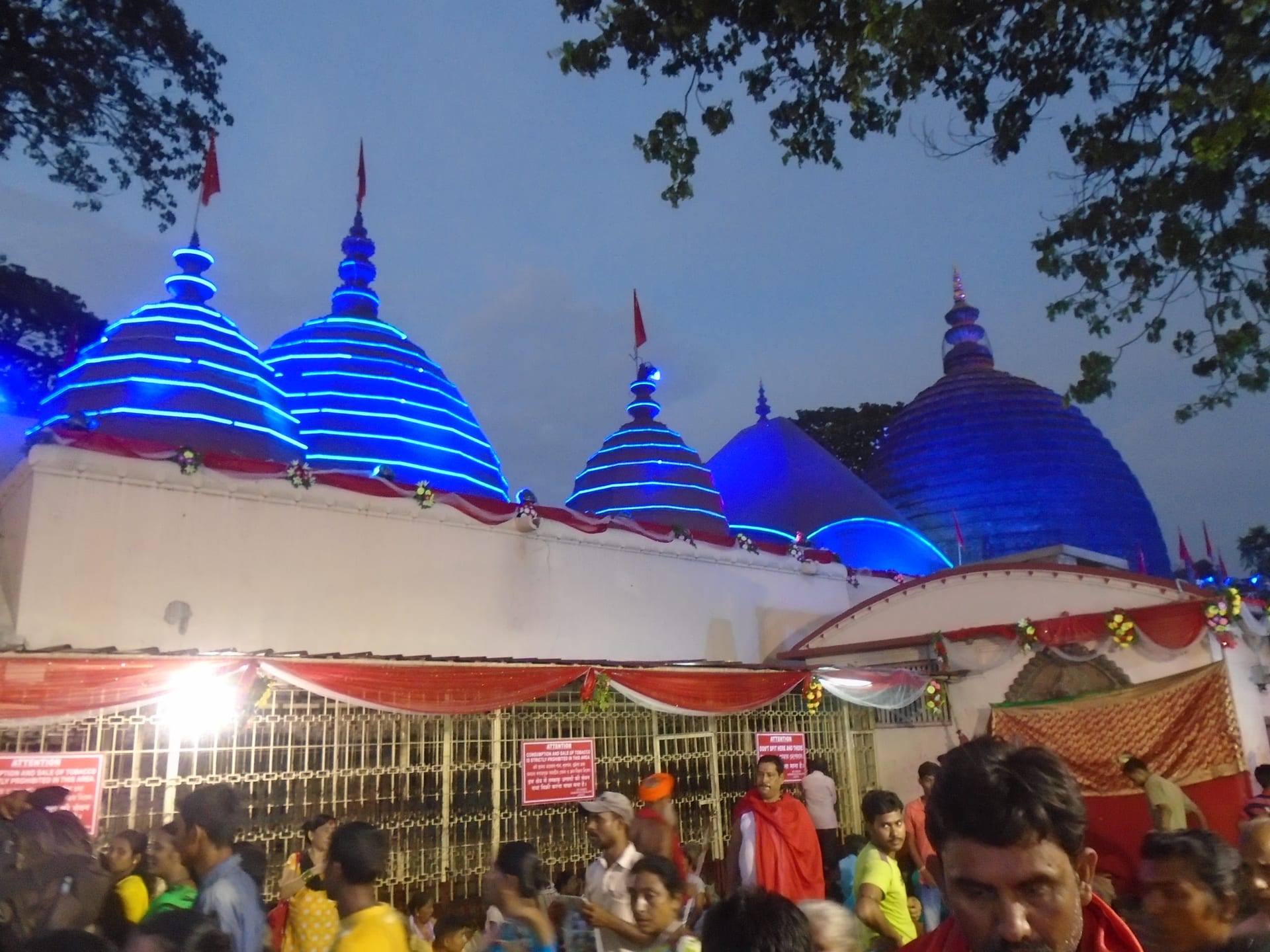
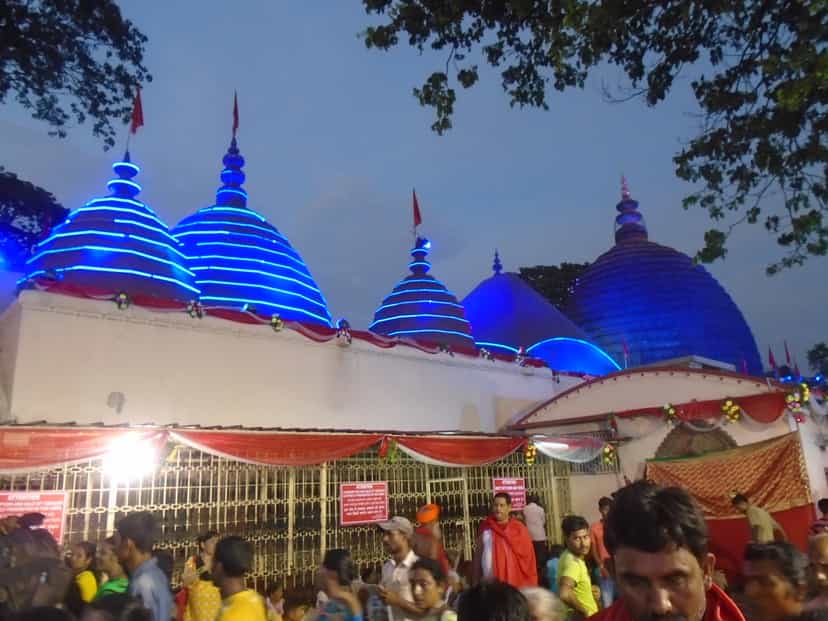
Saktism is the worship of the Goddess as the supreme divine power. It is the oldest and deepest religious stratum of the Brahmaputra valley, and Assam is one of its great heartlands. Its centre is the temple of Kamakhya, on the Nilachal hill above Guwahati. Kamakhya is reckoned among the oldest and greatest of the fifty-one Shakti peethas, the seats where parts of the body of the goddess Sati are held to have fallen. The cult of the Goddess has shaped the valley’s religion from before the historical record to the present day.
Across India, Saktism divides broadly into two great streams. One is the Srikula, the family of the gentle Tripura Sundari, strongest in the south. The other is the Kalikula, the family of the fierce Kali, which dominates the east and north-east. Assam belongs firmly to this second, Kali-centred stream. Its Goddess is worshipped in her powerful and fearsome forms, and her worship carries the strong tantric colour of the eastern tradition.
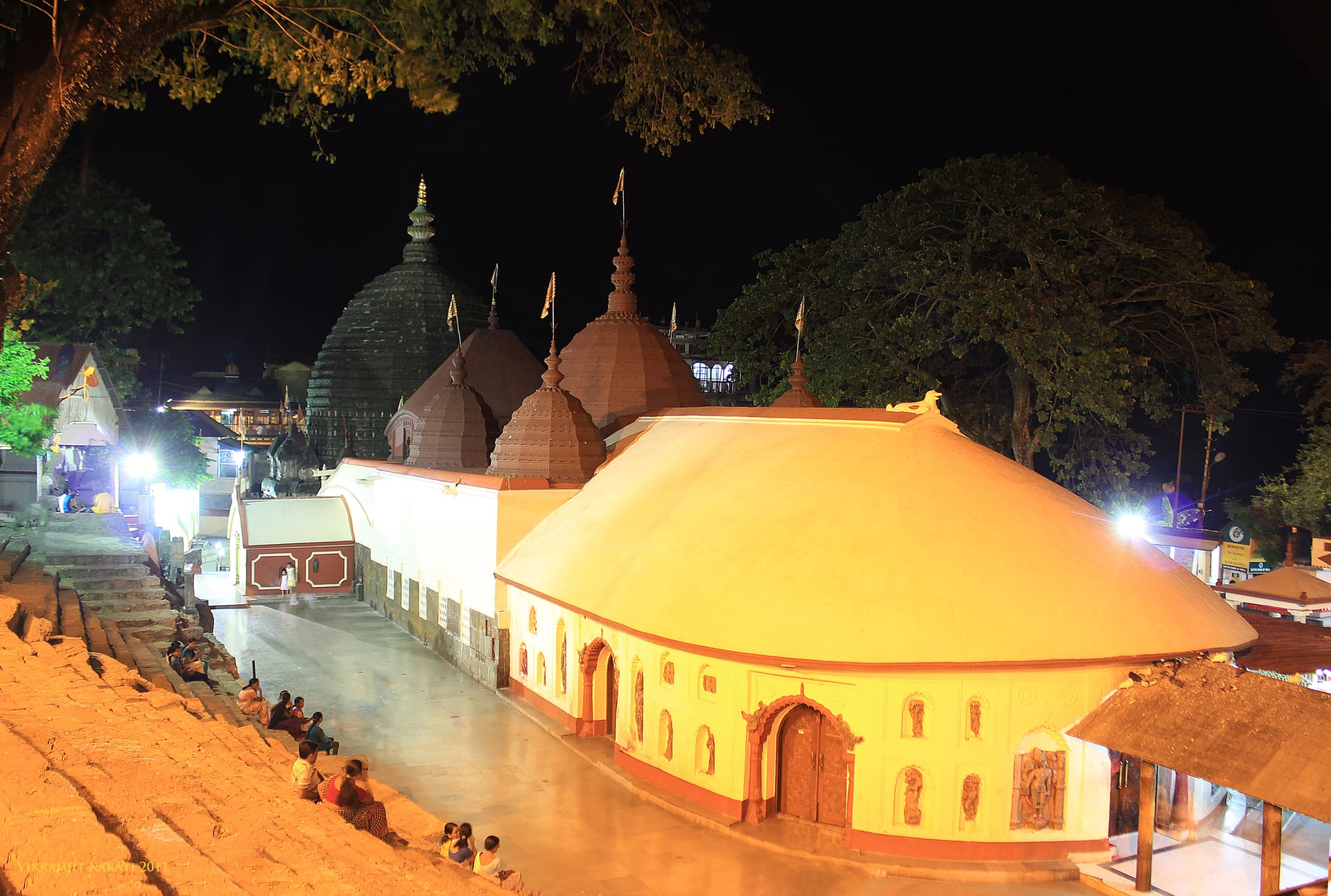

An ancient, layered cult
The classic study of Kamakhya argues that beneath the Sanskritic Sakta cult lies something far older. This is a non-Aryan mother-goddess and fertility worship. It was the kind widespread among the indigenous, Tibeto-Burman peoples of the region. Strikingly, the tradition itself preserves this memory. Both the Kalika Purana and the Yogini Tantra state plainly that the religion of the Kamakhya seat is of Kirata origin, that is, of the hill and forest peoples rather than the Brahmanical mainstream. By tradition the Garos, Koch, Rabha and other communities once worshipped on the hill, and the goddess has been linked to a much older tribal mother-deity. Over time this stratum was absorbed into Brahmanical Hinduism and given a Puranic genealogy.
On this reading the Saktism of Assam is not an import laid over a blank ground. It is a fusion, an indigenous Goddess re-clothed in Sanskrit. The moist rock-cleft at Kamakhya’s heart is older than any text that explains it. There is no image in the inner sanctum. What is worshipped is a natural fissure in the rock, kept damp by an underground spring, honoured as the yoni of the Goddess. Myth says the temple marks the spot where that yoni of the dismembered Sati fell to earth. That myth gave the ancient seat its place in the pan-Indian Goddess geography. The founding of Assamese Saktism is thus a process of layering rather than a single act. The carved walls of Kamakhya hold the Goddess in her many forms in stone.
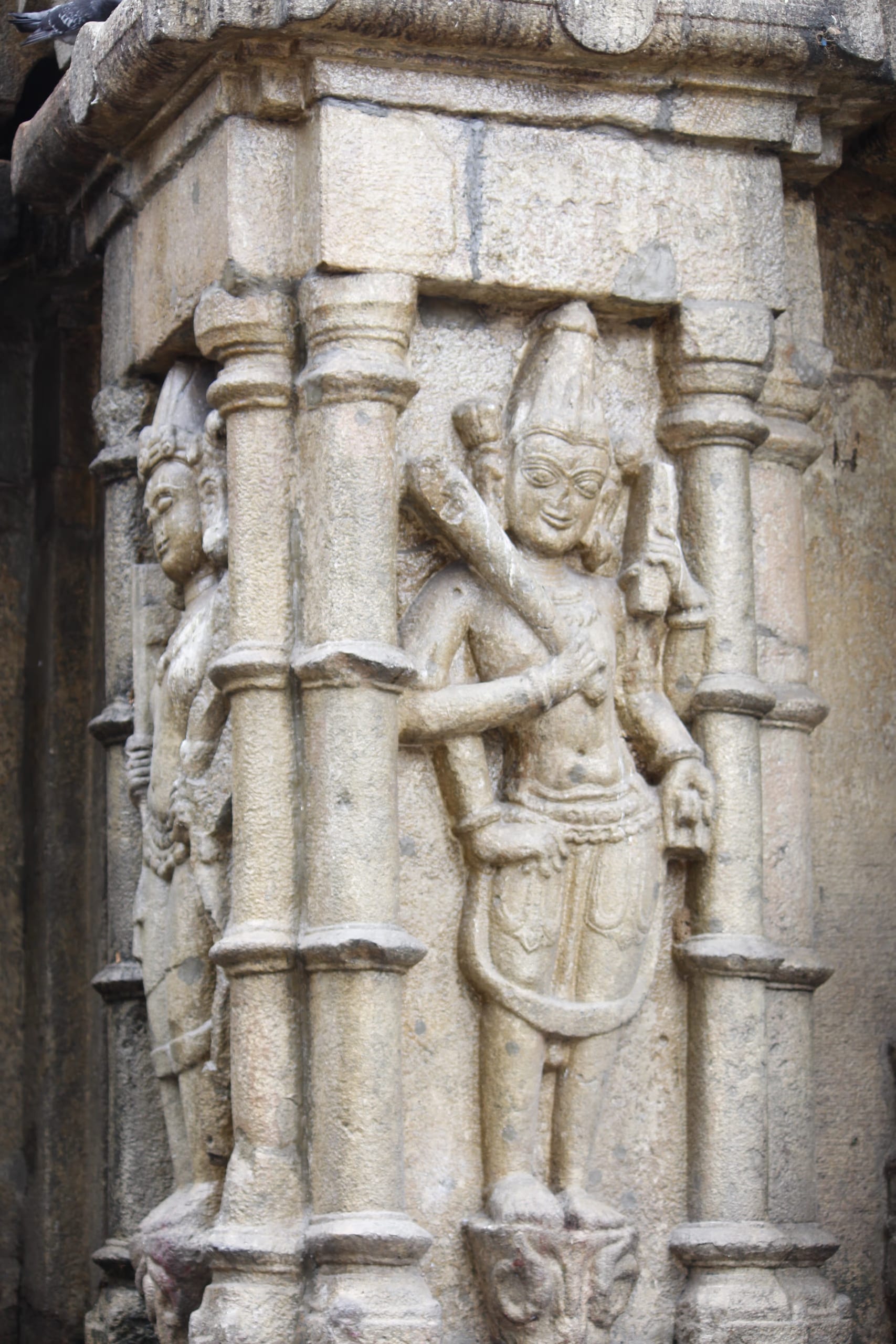
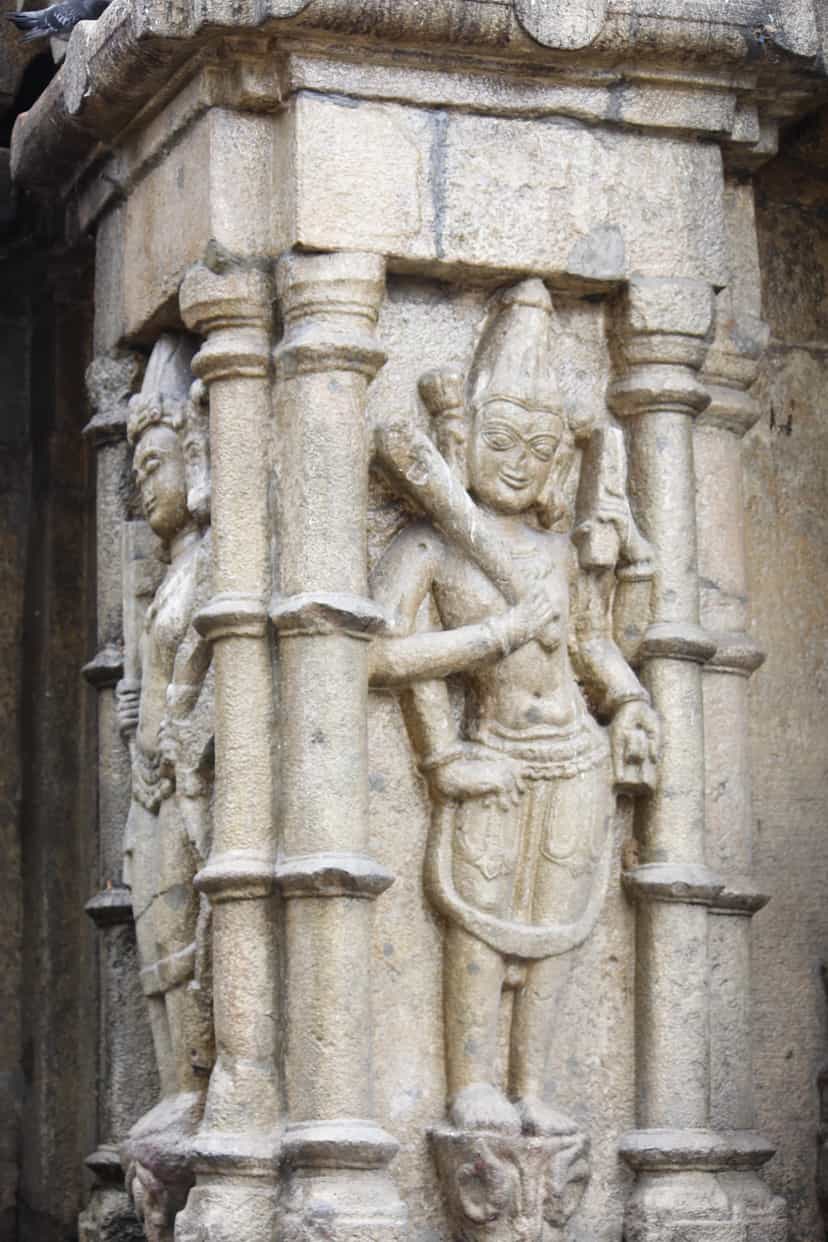
Assam was not only a centre of Goddess worship. It was also a place where her scriptures were made. The Kalika Purana and the Yogini Tantra are two of the major texts of the eastern Sakta and tantric tradition. Both are held to have been composed in this country, and they fix Kamakhya at the centre of the Goddess’s world. The Kalika Purana in particular is the great ritual manual of the seat, and it is generally dated to about the tenth century.
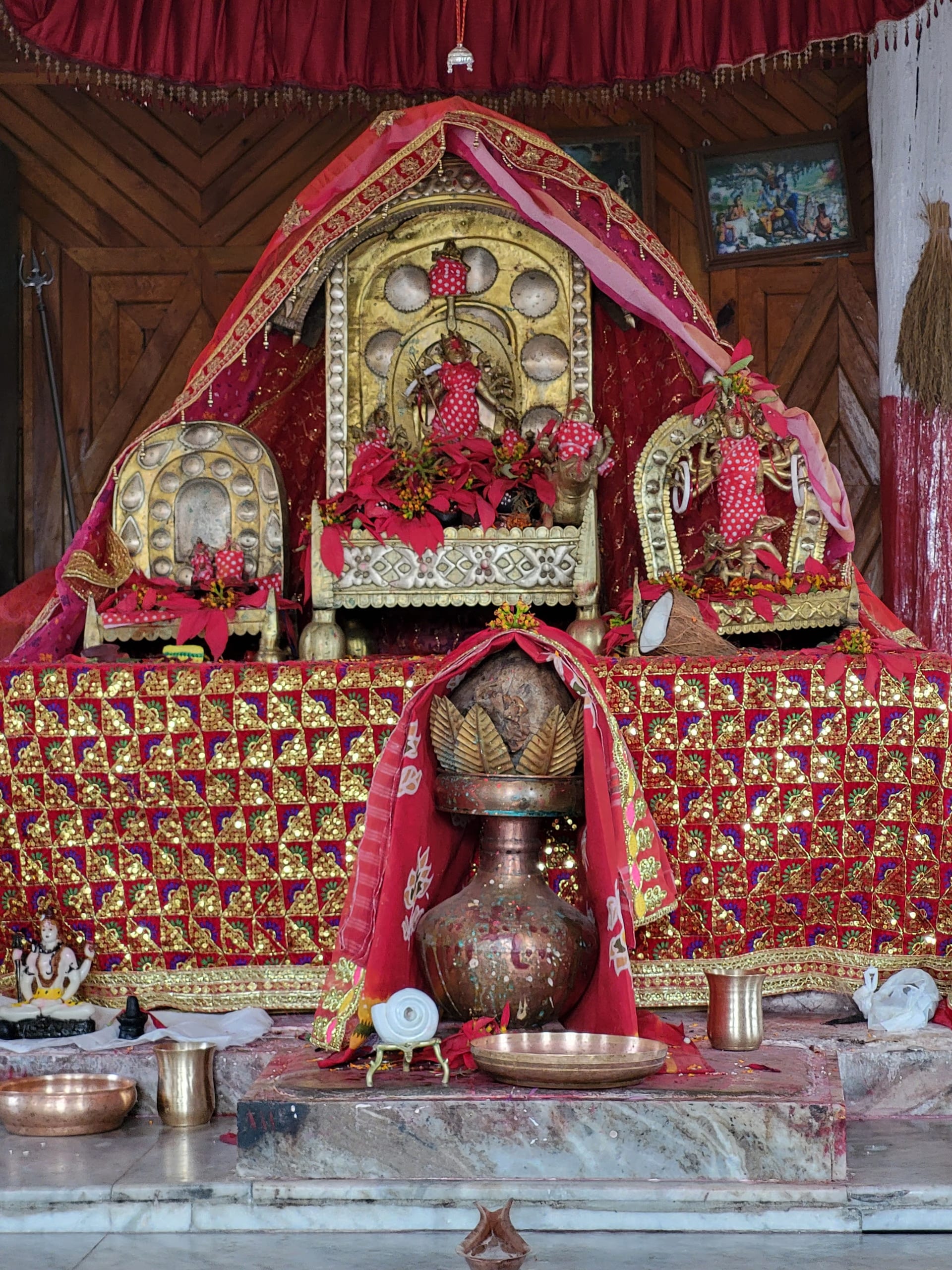
On the Nilachal hill the Goddess is worshipped not alone but as a circle of forms. The ten Mahavidyas, the “great wisdoms” of the Sakta tantra, are each present here, several housed in their own shrines around the main temple. They run from Kali and Tara through Tripura Sundari, Bhuvaneshwari, Bhairavi, Chhinnamasta, Dhumavati, Bagalamukhi and Matangi to Kamala. Having the whole set gathered on one hill is rare, and it marks Kamakhya as a complete map of the Goddess in her many aspects. Her worship has long included the sacrifice of goats and buffalo, understood within the tradition as an offering the Goddess receives, though female animals are by custom spared. The rites embrace both the “right-hand” path of open, orthodox worship and the secret “left-hand” path of the tantric adept.
The tantric centre
Assamese Saktism is also distinctively tantric, and Kamakhya is among the foremost centres of the esoteric stream of Goddess worship in all of India. For the tantric adept the hill is not merely a temple but a place of power, a seat where the disciplines of the tradition can be pursued at their source. It has long drawn practitioners of the demanding “left-hand” path from across the subcontinent, ascetics and sadhus among them, for whom the shrine of the menstruating Goddess is the supreme field of practice. The valley's Sakta texts, made here, are as much manuals of this discipline as they are works of devotion.
The tradition's public face is the great annual Ambubachi gathering, which draws hundreds of thousands to the hill for the days when the Goddess is held to menstruate, the sanctum then closed and reopened with the distribution of red-stained cloth as her blessing. Around that festival, and through the year, Kamakhya remains a working centre of tantric sadhana rather than a monument to a closed past. The scholar Hugh Urban has placed the temple at the very centre of his study of Tantra and its modern politics, tracing how its esoteric reputation has been both guarded and reshaped in the present. Texts, rites and site run together here as at few other places: the Kamarupa centuries, the temple on the Nilachal hill, and the festival of Ambubachi form one continuous tantric tradition.
The Goddess across the land
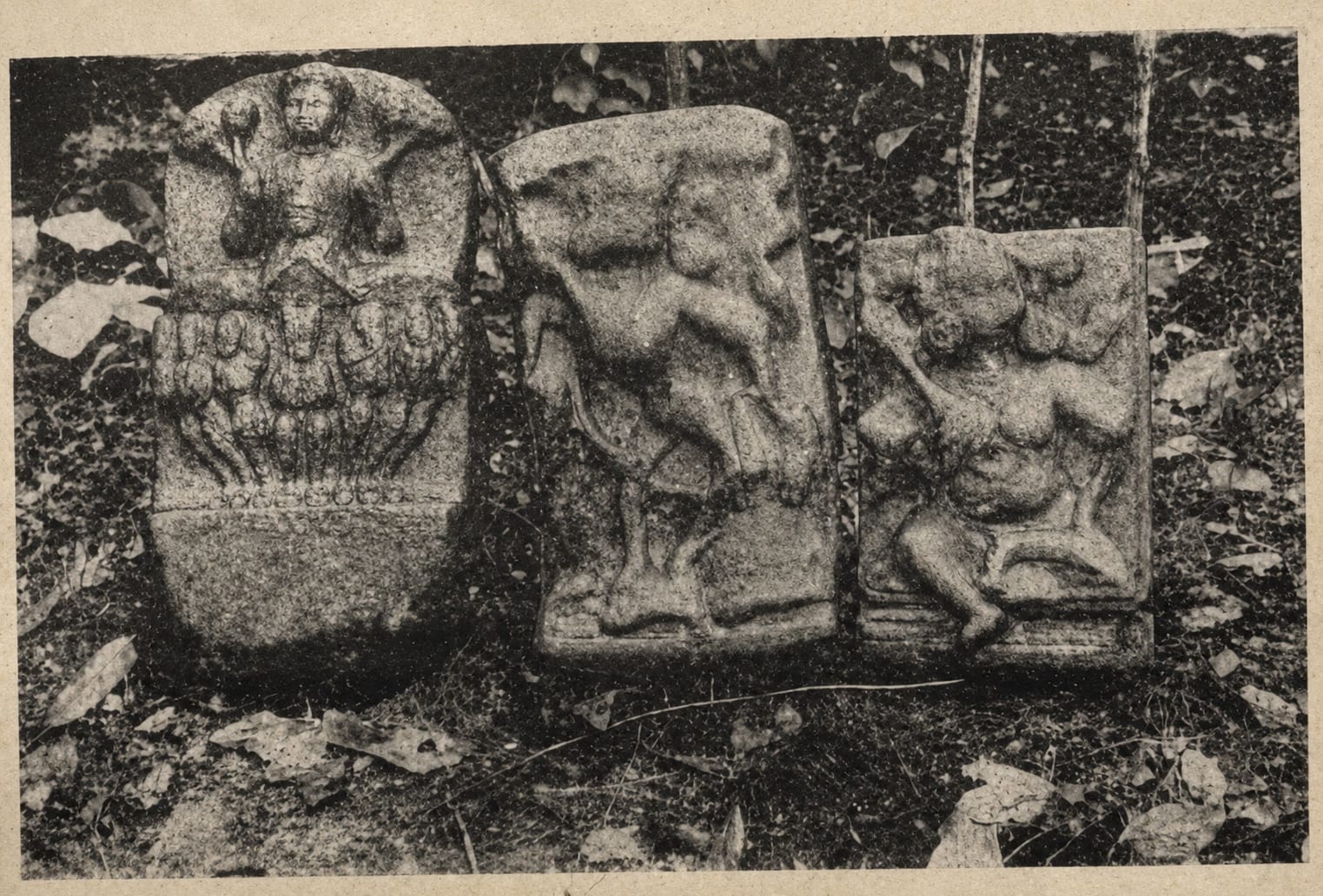
The Nilachal hill was never the whole of it. On the eastern frontier the Goddess was worshipped long before the Sanskrit texts reached it. At Sadiya, on the Paya river, stood the copper-roofed shrine of Tamreswari, home of the goddess Kechai-khati, “the eater of raw flesh.” She was the tutelary deity of the medieval Chutia kingdom, known in the Kalika Purana by the older name Dikkaravasini. Her worship was never Brahmanical. She was served by the tribal Deori priesthood, who keep her rites to this day. The same fierce goddess was honoured across the eastern courts, from the Chutia to the Bodo-Kachari kings. She was one deity on many thrones.

To the west the pattern repeated. The Khen and then the Koch kings of Kamata took the goddess Kamateshwari as their tutelary deity, her shrine beside the capital at Kamatapur. The Mother Goddess is still honoured in that western borderland at Mahamaya Dham. In the Brahmaputra valley itself the Goddess gathered a ring of Durga shrines. The north bank holds Dirgheswari, long treated as a northern counterpart to Kamakhya. Upstream the Ahom kings raised the brick Durga temple at Hatimura about 1745, and the town of Jorhat kept its principal Shakta shrine at Burhi Gosani.
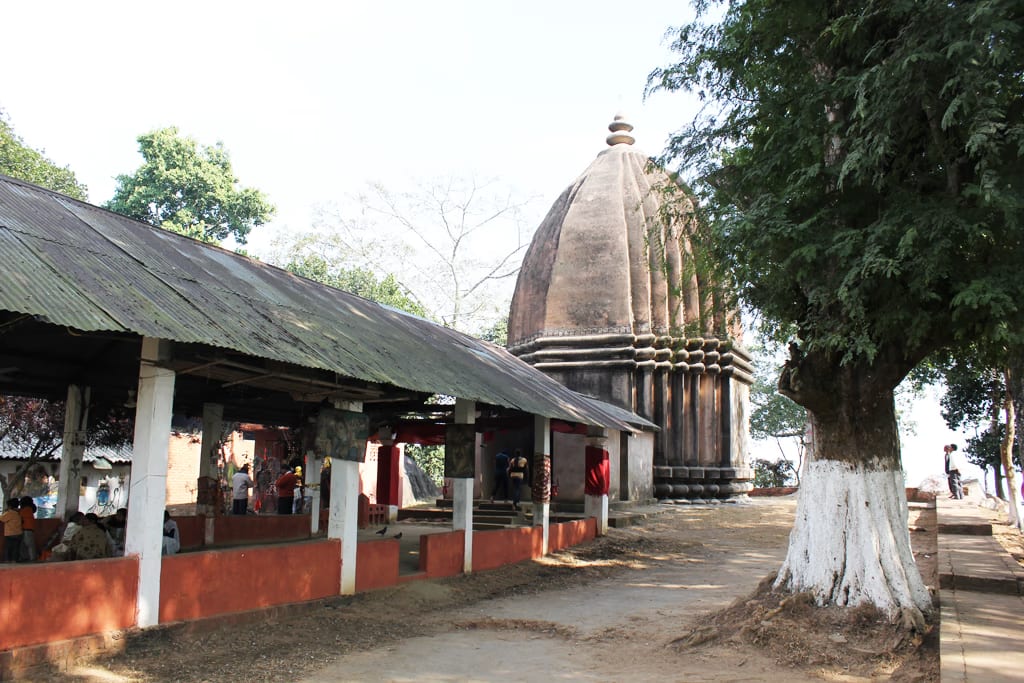

The hills told the same story in their own idiom. In the eastern ranges of what is now Meghalaya, the Jayantia kings took Durga as Jainteswari, the lady of the Jaintias. Her temple at Nartiang is counted among the fifty-one Shakti peethas, the seat where, by tradition, the left thigh of Sati came to rest. Yet she is worshipped in the Khasi-Pnar manner. She is embodied not in a carved image but in a plantain stem dressed with flowers and given at last to the river. The shrine carried a darker fame as well. Its altars were charged with human sacrifice, and that charge became the lever by which the British annexed the kingdom in 1835.
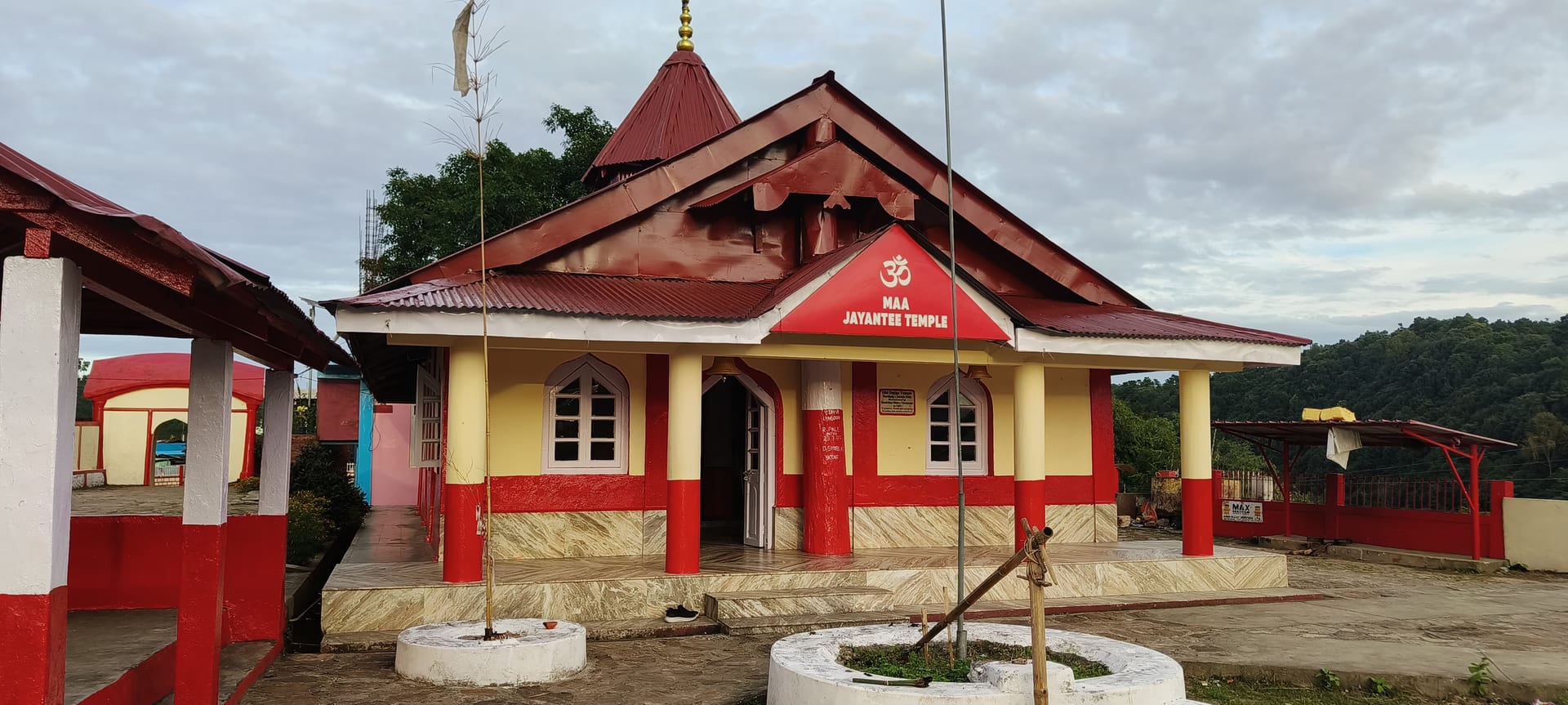

These were not scattered folk shrines. Through the whole age of kingdoms the Goddess was the religion of power, and to hold her seat was often to hold the right to rule. Kamarupa was Sakta country, and the Koch king Naranarayan bound his house to its greatest seat by rebuilding the temple at Kamakhya in 1565. The Ahom kings, Tai in origin, drew close to the same cult. Rudra Singha resolved to take Sakta initiation but died before it was done. His son Siva Singha carried it through under the priest Krishnaram Bhattacharya of the Parbatiya Gosain line, and pressed Saktism as in effect the state religion. Alongside it flowed the very different current of neo-Vaishnavism, and the two coexisted, sometimes in tension and sometimes in accommodation. But Saktism is the one religious tradition every great valley kingdom embraced.